- Best allowed time: 5–7 days
- Includes Picton–Wellington ferry
- Powered sites wise after ferry
- Check Desert Road in winter
- Self-contained freedom camping only
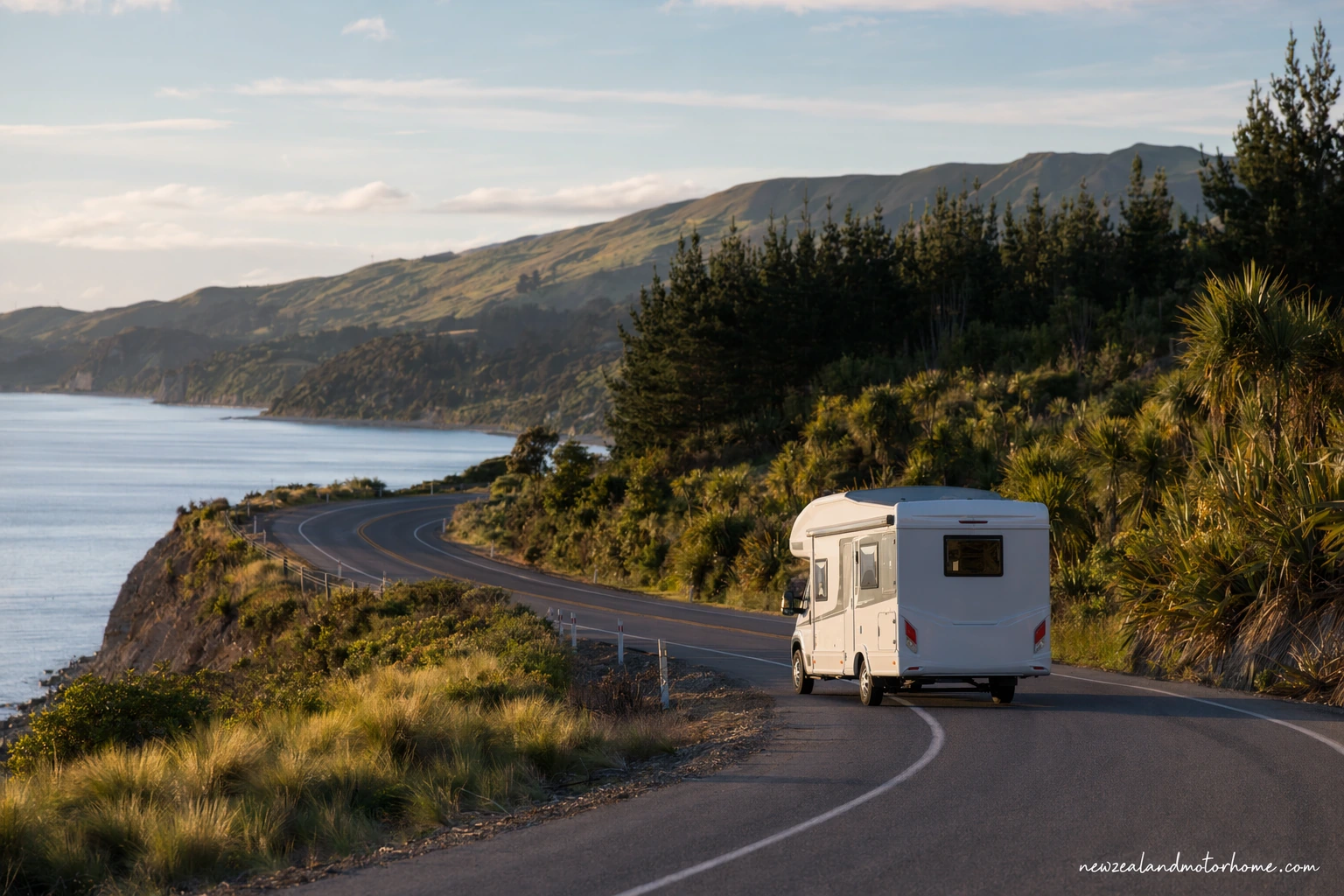
A Christchurch to Tauranga campervan trip is less about one big drive and more about linking two islands properly: Canterbury’s plains, the Kaikōura coast, Cook Strait, the volcanic centre of the North Island, then the warm Bay of Plenty. In a hired motorhome, the ferry booking, where you sleep before and after Picton, and how you handle fresh water, LPG and dump stations matter just as much as the kilometres.
This guide lays out a practical christchurch to tauranga drive for self-contained campervans and motorhomes, with overnight ideas, road notes for bigger vehicles, and where to think ahead for powered sites. It suits travellers who want the freedom of their own van, but would rather not find themselves hunting for a legal overnight stop after dark.
How many days to allow for the route
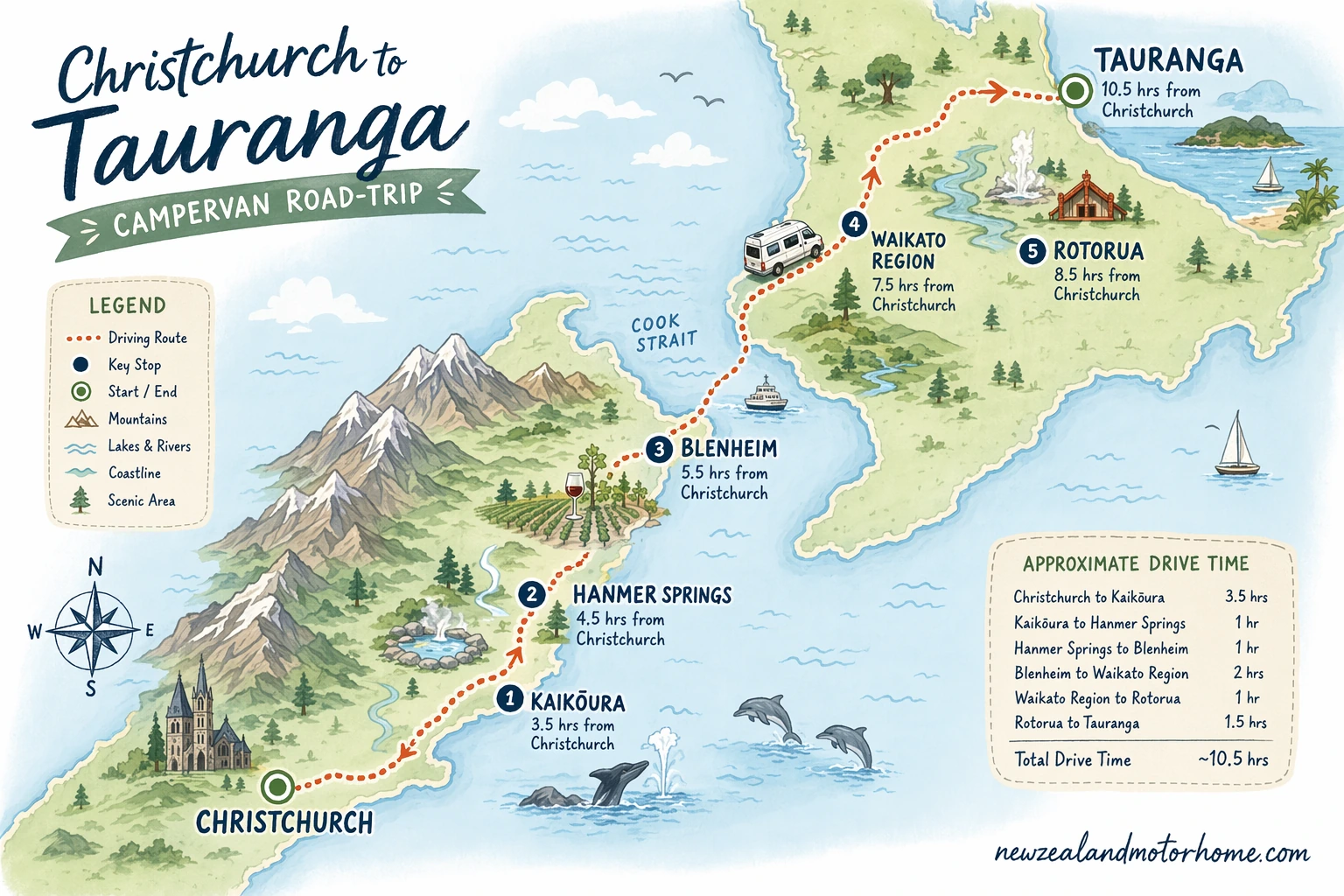
The fastest Christchurch to Tauranga motorhome road trip can be done in three long travel days if the ferry lines up, but it will feel like logistics rather than a holiday. Five to seven days is much kinder in a campervan, giving you time to empty the grey-water tank, refill fresh water, do laundry, and avoid driving unfamiliar roads tired.
A good shape is Christchurch to Kaikōura or Blenheim, then Picton and the Cook Strait ferry, then Wellington or Kāpiti, then Taupō or Rotorua, before finishing in Tauranga. If you have a larger motorhome, build in extra daylight around the ferry and the hill sections near Tauranga.
- 3 days: possible, but only with early starts and a well-timed ferry.
- 5 days: the practical minimum for most campervan travellers.
- 7+ days: best if you want Kaikōura, Wellington, Taupō and Rotorua without rushing.
- Winter: allow buffer time for the Desert Road, ferry weather, and shorter daylight.
Leg 1: Christchurch to Kaikōura, Blenheim or Picton
Leave Christchurch with full fresh water, an empty toilet cassette if possible, and enough LPG for a cool South Island night. The drive north follows SH1 through North Canterbury and along the Kaikōura coast, where the road is spectacular but not a place to hurry a high-sided van. Watch for road works, sea spray, wind, and places where traffic bunches behind slower vehicles.
Kaikōura works well as a first overnight if you want a shorter day and a coastal stop. For a ferry the next morning, Blenheim or Picton is easier; Picton in particular lets you wake close to the terminal rather than pushing over the hills in the dark. Book a powered site if you need to recharge devices, run heating, or get laundry done before crossing Cook Strait.
- Van parking: use marked long-vehicle spaces where provided; central Kaikōura and Picton can be tight in peak season.
- Overnight style: holiday parks and council-approved camping areas are the safest choices; freedom camping rules vary by district.
- Services: dump stations and fresh-water points are available in the wider Christchurch, Kaikōura, Blenheim and Picton areas, but check current council listings before relying on one.
- Road note: large motorhomes should use pull-outs when safe to let faster traffic pass on SH1.
Ferry crossing: Picton to Wellington with a campervan
The ferry is the hinge of this route. When booking, enter the full length and height of your campervan or motorhome, including bike racks, roof pods, aerials and rear storage boxes. Turning up with the wrong dimensions can cause delays, and the marshalling lanes are not where you want to discover your van is taller than you thought.
Before boarding, secure loose items inside the van, turn the gas off at the bottle, and follow the ferry operator’s instructions around LPG and appliances. You cannot usually access the vehicle deck during the sailing, so take warm layers, medication, valuables and anything the kids need upstairs with you.
- Timing: arrive early; campervans are loaded according to vehicle deck planning, not just queue order.
- Food and fridge: cool the fridge beforehand and avoid opening it until you are parked again.
- Pets: check ferry rules before you book, especially if your hire agreement allows animals.
- Wellington arrival: do not plan a tight same-day sprint to Taupō after an afternoon crossing; city traffic and fatigue catch people out.
Leg 2: Wellington to Taupō, Rotorua or the central plateau
From Wellington, most campervans head north on SH1 through Kāpiti, Levin, Bulls and Taihape, then over the central plateau toward Taupō. It is a straightforward route, but it has long open sections, truck traffic and weather that can change quickly around the Desert Road. In winter, check road conditions before committing; snow, ice or high winds can affect high-sided vehicles.
For overnighting, Wellington-region holiday parks, Kāpiti coast stops, Taupō lakefront holiday parks and Rotorua motorhome sites give you a good mix of powered and unpowered options. Freedom camping is tightly managed in many North Island districts, so only use designated areas and only if your vehicle meets current self-containment requirements.
- Good service rhythm: dump and refill before leaving Wellington or Kāpiti, then again around Taupō or Rotorua.
- Powered-site value: useful after the ferry for laundry, battery top-up and a proper reset.
- Parking: in Wellington, avoid tight waterfront and inner-city car parks unless height and length are clearly suitable; consider parking further out and using public transport.
- Road note: the Desert Road is exposed; keep both hands on the wheel in gusty conditions and do not overtake unless you have plenty of room.
Leg 3: Taupō or Rotorua to Tauranga
The final run into Tauranga can be done a few ways. From Taupō, many travellers go via Rotorua, then choose either SH36 over the Pyes Pa side or the longer state-highway option via SH33 and SH2 through the eastern Bay of Plenty approach. SH36 is direct but winding in places; larger motorhomes may prefer the steadier feel of the longer route, even if it adds time.
If you are coming from the Waikato side, SH29 over the Kaimai Range is a major freight route and perfectly normal for motorhomes, but it is steep and busy. Use lower gears on descents, leave space for trucks, and avoid arriving in Tauranga at peak commuter time if you can.
- Before Tauranga: top up fresh water and empty grey water around Rotorua or another official service point so you are not doing chores on arrival.
- Arrival parking: Tauranga and Mount Maunganui beach areas are popular and height-restricted car parks are common; read signs before turning in.
- Overnight style: book holiday parks early in summer, especially if you need a powered site near the harbour or beach.
- Freedom camping: Tauranga rules are specific and enforced; use council-approved locations only, and display valid self-containment certification where required.
Campervan planning notes before you leave Christchurch
This route rewards a little admin. Check your rental agreement for ferry requirements, measure the van, and know where the spare tyre tools, power lead, fresh-water hose and toilet chemicals are before you leave the depot. It is also worth saving offline maps, because some rural stretches have patchy reception just when you are looking for a dump station or late check-in details.
If you want help shaping the number of nights, ferry timing and overnight stops around your actual van size, you can use the plan-your-trip step and we’ll keep it practical rather than over-packed. The aim is a route you can actually drive, park and sleep on comfortably.
- Book ahead: ferry, first night out of Christchurch, and Tauranga-area summer stays.
- Carry coins or a payment card: some public facilities and laundries still need simple payment options.
- Check certification: make sure your self-containment details match current freedom camping rules.
- Drive daylight: especially for Kaikōura coast, the central plateau and the Kaimai or Pyes Pa approaches.
Keep planning
Common questions
Can I drive from Christchurch to Tauranga in a campervan without taking the ferry?
How many nights should I plan for a Christchurch to Tauranga campervan trip?
Is freedom camping easy on this route?
Which route is best from Rotorua to Tauranga in a larger motorhome?
Where should I service the van along the way?
Have a planner shape this for your dates
Send a short outline — your dates, party size, and the kind of trip you want. A planner replies with a vehicle recommendation, a paced route, and the realistic budget.