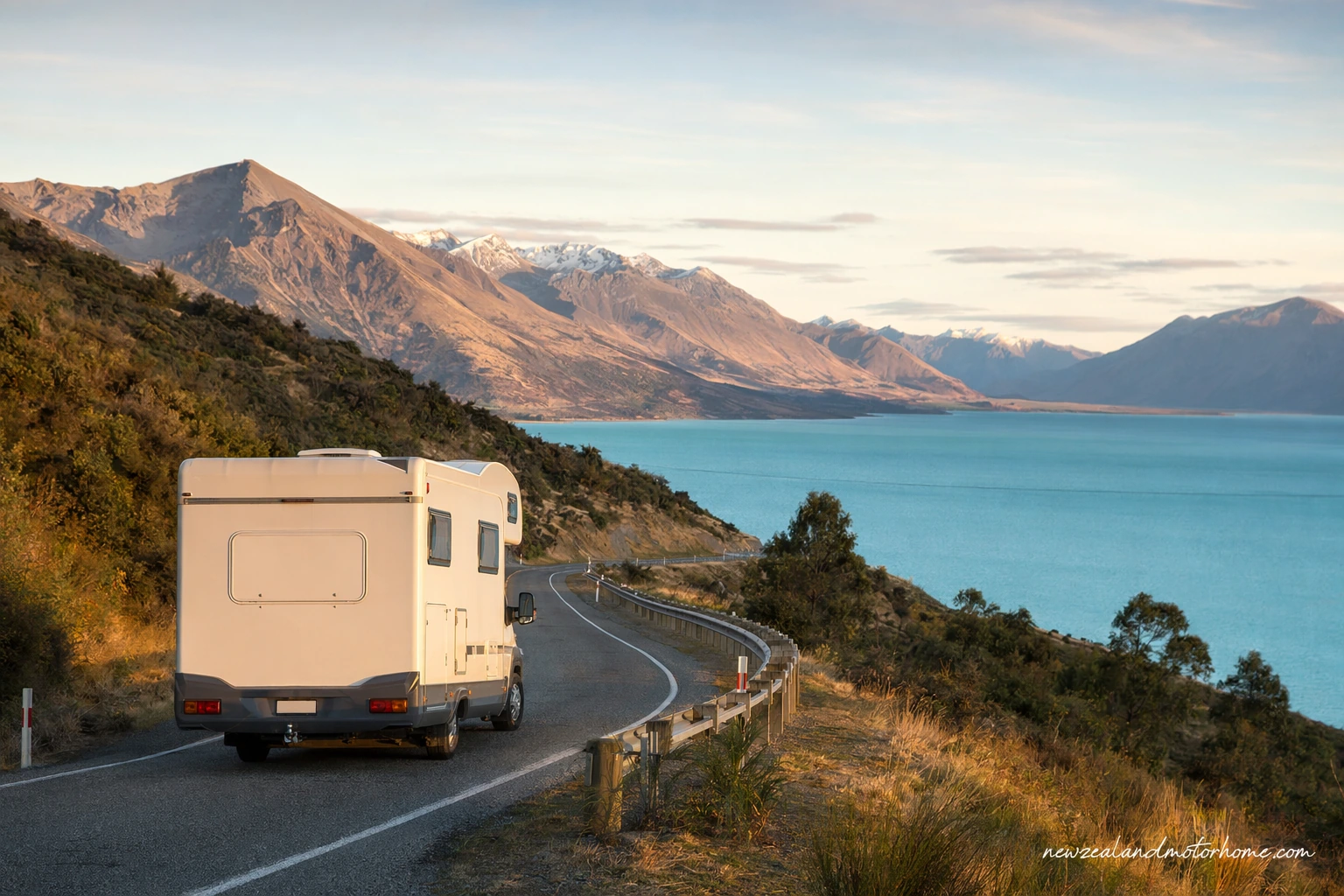
Driving a motorhome in New Zealand: a practical guide for self-drive travellers
- Drive on the left
- Certified self-containment matters
- Powered sites help reset the van
- Plan by time, not just kilometres
- Check height and gravel restrictions
Driving a motorhome in New Zealand is one of the best ways to travel here, but it is not quite the same as hiring a car and booking motels as you go. Your van is your transport, bedroom, kitchen and power supply, so each day works best when you think about driving distance, where you can legally park overnight, and when you need water, LPG or a dump station.
This guide is written for self-drive campervan and motorhome travellers. It covers the everyday details that make a trip feel easy: road pace, vehicle size, powered and unpowered sites, freedom camping rules, safe parking, service stops and how to shape a route that suits the van rather than fighting it.
What driving a motorhome here actually feels like
New Zealand roads are scenic, but they are rarely fast in a motorhome. Even short distances on the map can include hills, tight bends, single-lane bridges, roadworks, town slow zones and pull-outs where you will want to stop. A comfortable motorhome day is usually planned around time behind the wheel, not just kilometres.
You drive on the left, and the driver sits on the right side of the vehicle. If you are arriving from a long-haul flight, it is worth keeping the first day simple: collect the van, buy groceries, learn the controls, and stay somewhere easy with space to park and plug in.
- Allow extra time on coastal roads, alpine passes and routes with one-lane bridges.
- Use slow vehicle bays and safe pull-outs to let faster traffic pass.
- Check your van height before entering covered parking, drive-throughs or low branches at campsites.
- Avoid planning a big driving day straight after an international flight.
Planning routes around the van, not just the highlights
A good motorhome route gives you places to stop before you are tired, not just a famous destination at the end of the day. In New Zealand that often means linking holiday parks, DOC-style campsites, council-approved freedom camping areas and service towns where you can refill, empty tanks and restock.
Try to build in two-night stops when you can. They are useful for laundry, charging devices, topping up fresh water, giving the fridge time on mains power and exploring without packing the van every morning. If you would like help turning a wish list into a van-friendly route, you can talk to us before you lock in your dates.
- Choose overnight stops before choosing every daytime activity.
- Keep bigger driving days between easier nights, preferably at powered sites.
- Check whether a road is sealed if your hire agreement restricts gravel travel.
- Leave slack for weather, ferry timing, road closures and slower scenic detours.
Where you can sleep in a campervan or motorhome
You cannot simply pull over anywhere and sleep in the van. Overnight parking is controlled by a mix of national land rules, local council bylaws and individual site conditions. Some freedom camping areas allow only certified self-contained vehicles, some have marked spaces, and some exclude larger motorhomes or restrict the number of nights.
Holiday parks are the easiest option when you want showers, laundry, a kitchen, a dump station and reliable power. Unpowered campsites can be lovely in quieter places, but you need to watch your battery, toilet cassette capacity, grey water tank and fresh water. DOC-style campsites vary widely, so always check access, size limits and whether bookings are needed in busy seasons.
- Carry proof that your vehicle is certified self-contained if you plan to use freedom camping areas.
- Arrive before dark so you can read signs, find level ground and park without stress.
- Use chocks if the site is sloping and keep access roads clear for other vehicles.
- Do not assume a scenic car park allows overnight stays; check the signs and local rules.
Powered sites, unpowered nights and managing the living systems
The van side of the trip matters as much as the road side. A powered site lets you plug into mains power, recharge the house battery, run appliances designed for 230V use and often enjoy a warmer, easier night in poor weather. Unpowered nights are more independent, but they rely on your battery level, gas, water and toilet capacity.
Most travellers settle into a rhythm: a powered holiday park every few nights, with simpler campsites or legal freedom camping in between. Before you leave a campsite each morning, it is worth doing a quick circuit of the van so you do not drive away with a power lead connected, roof vents open or stabilising gear still out.
- Refill fresh water whenever a safe fill point is available, especially before remote stretches.
- Empty grey water and toilet cassettes only at approved dump stations.
- Keep an eye on LPG for cooking, hot water and heating, particularly in cooler regions.
- Secure drawers, fridge latches, windows and loose gear before driving.
Parking, towns and day stops with a larger vehicle
Town parking is easier when you think ahead. Many New Zealand towns have dedicated long-vehicle spaces, waterfront parking areas or edge-of-centre car parks where a motorhome can fit without overhanging footpaths. In tighter town centres, it is often better to park a little further out and walk in.
For viewpoints, beaches and walking tracks, look at the access road as well as the car park. A narrow entrance, steep camber or busy turning area can be awkward in a long van. If a car park is full, avoid squeezing into unsafe gaps; continue to the next safe pull-out or come back earlier the next morning.
- Reverse slowly and use a spotter if you are travelling with someone.
- Avoid blocking boat ramps, farm gates, bus stops or emergency access points.
- Watch for soft grass after rain; a heavy motorhome can sink quickly.
- Fold mirrors only when parked, not while threading narrow roads where you need visibility.
Weather, seasons and safer driving habits
New Zealand weather can change quickly, especially around alpine roads, exposed coastlines and high country passes. Summer brings longer days and busier campsites, while autumn and spring can be quieter but more changeable. In winter, snow, ice and shorter daylight make route planning and overnight heating more important.
Safe motorhome driving is mostly about patience. Keep left, slow down before bends, brake early on descents and avoid driving when tired. If wind warnings are in place, take them seriously; high-sided campervans and motorhomes can feel unsettled on bridges, open plains and coastal roads.
- Check road conditions before alpine passes and long rural sections.
- Use lower gears on long descents rather than relying only on brakes.
- Plan to be parked before dark in remote areas.
- Carry warm layers even in summer, especially if you are staying at higher-altitude campsites.
Common questions
Is driving a motorhome in New Zealand difficult for first-timers?
Most first-time visitors manage well once they slow down and allow more time than the map suggests. The main adjustments are driving on the left, handling a wider and taller vehicle, and planning where to park overnight legally.
Can I freedom camp anywhere if my motorhome is self-contained?
No. Certified self-containment helps, but local bylaws and site signs still apply. Always check the exact overnight rules for the place you want to stay, including time limits, marked bays and vehicle restrictions.
How often should I stay at a powered campsite?
It depends on your van, weather and power use, but many travellers choose a powered site every few nights. It gives you a reset for batteries, showers, laundry, water, rubbish and waste tanks.
Are New Zealand roads suitable for large motorhomes?
Many main routes are suitable, but some roads are narrow, winding or restricted by your hire agreement. Check vehicle length, height and gravel-road rules before committing to remote detours or tight scenic access roads.
Where do I empty the toilet and grey water?
Use approved dump stations only. Many holiday parks have them, and some towns provide public dump stations near service areas; never empty waste into stormwater drains, toilets not designed for it, or the bush.
What should I do on my first day with the van?
Keep it simple: collect the vehicle, learn the controls, buy food, check fuel and LPG, then stay somewhere easy with room to park. A nearby powered site is ideal while you get used to the van systems.
Have a planner shape this for your dates
Send a short outline — your dates, party size, and the kind of trip you want. A planner replies with a vehicle recommendation, a paced route, and the realistic budget.