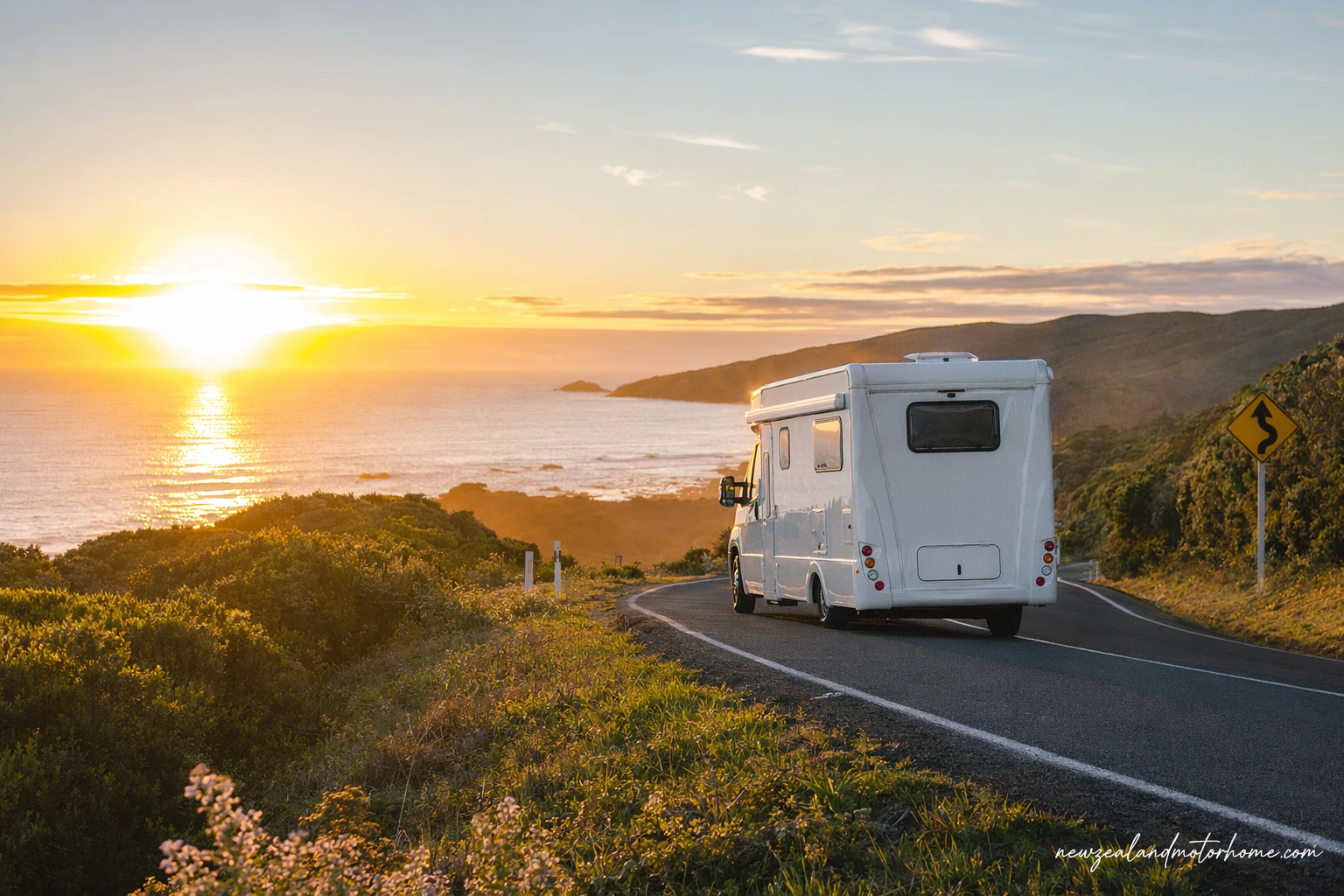
- Drive on the left
- Licence in English or IDP
- Plan slower van days
- Use legal overnight stops
- Dump waste at stations only
Driving a campervan in Aotearoa is wonderfully straightforward once you settle into the rhythm: keep left, give yourself more time than the map suggests, and treat the van like the small home on wheels it is. The biggest adjustment for many visitors is not the road rules themselves, but how they feel from a taller, wider vehicle on narrow bridges, winding passes and busy supermarket car parks.
This guide covers the New Zealand driving rules for tourists from a self-drive motorhome point of view: licences, speed limits, safe driving habits, overnight parking, freedom camping, dump stations, fresh water and the little decisions that make each day easier in a hired van.
Before you collect the van: licence, rest and the first drive
You can usually drive in New Zealand on a valid overseas driver licence for up to 12 months, provided it is current and in English. If your licence is not in English, carry an approved translation or an International Driving Permit as well as the original licence. Check your hire agreement too, especially if your campervan is a larger motorhome with a higher gross vehicle mass.
If you have just landed after a long-haul flight, plan a gentle first night close to your arrival city rather than pointing the van straight at a mountain pass. Supermarkets, fuel stations and holiday parks around airport cities are easier places to learn the van’s mirrors, reversing camera, LPG locker, water filler and power lead than a dark rural lay-by.
- Carry your physical licence, not just a photo on your phone.
- Add every intended driver to the hire agreement before leaving the depot.
- Book a powered site for the first night if you want an easy reset, hot shower and time to unpack.
- Practise reversing and turning in a quiet car park before the road narrows.
Core road rules that feel different in a motorhome
New Zealand traffic drives on the left. Roundabouts move clockwise, and you give way to traffic already on the roundabout. Everyone must wear a seatbelt while the van is moving, and passengers cannot travel in the rear living area unless they are in designated belted seats. Mobile phone use is hands-free only, and drink-driving limits are strict; the easiest rule in a campervan is to park up for the night before opening anything alcoholic.
Speed limits are posted in kilometres per hour. Many open roads are signed at 100 km/h, but that does not mean a loaded campervan should sit on 100 through bends, rain or roadworks. If your motorhome is over 3,500 kg gross vehicle mass, lower heavy-vehicle speed limits may apply, so check the plate and your rental briefing.
- Keep left, especially after fuel stops and scenic pull-ins where habit can slip.
- Use slow-vehicle bays and safe pull-over areas to let locals pass.
- Dip your headlights in rain, mist and low light, even during the day.
- Stop fully at stop signs; a rolling stop is not treated as stopping.
Narrow roads, one-lane bridges and mountain passes
New Zealand looks compact on a map, but campervan days are shaped by corners, hills, weather and photo stops. A 180-kilometre leg through the Southern Alps or around a coastal headland can feel much longer than the same distance on a flat motorway. Build in time to stop, stretch and check the van rather than chasing a tight booking every evening.
One-lane bridges are common outside the main centres. Signs show who has priority, but if in doubt, slow early and be patient. On gravel roads, unsealed side tracks and beach access roads, check your hire conditions first; many campervan agreements exclude some roads, and a heavy van can get stuck quickly on soft shoulders or wet grass.
- Approach blind bends wide enough to protect your left rear wheel from the verge, but stay in your lane.
- Use lower gears on long descents rather than riding the brakes.
- Watch for overhanging branches at campsites, dump stations and rural fuel stops.
- Allow extra turning room at tight town corners and ferry queues.
Parking the van during the day
Day parking is part of driving well in a campervan. In towns, look for signed long-vehicle parks, edge-of-centre car parks or supermarket spaces with room to drive through rather than reverse out. Avoid squeezing into small angled parks if the rear overhang will block the footpath or traffic lane.
Height matters too. Many campervans will not fit under covered car parks, motel-style canopies, low trees or some fast-food drive-throughs. Know your vehicle height and length before leaving the depot, and write them somewhere visible in the cab. If you are unsure, get out and check — it is much cheaper than discovering the air vent is taller than the sign allowed.
- Use mirrors slowly; the rear of the van may swing wider than expected.
- Never park over yellow lines, bus stops, mobility parks or private driveways.
- Leave scenic pull-offs tidy and keep access clear for emergency vehicles.
- In busy lake and beach towns, arrive early or park further out and walk in.
Overnight rules: campsites, freedom camping and self-containment
Driving rules do not stop when you turn the engine off. Where you sleep is governed by local council bylaws, Department of Conservation rules, private campground conditions and, increasingly, whether your vehicle has the right self-containment certification. Do not assume a pretty lay-by is an overnight stop just because another van is there.
Holiday parks and campgrounds are the simplest choice when you want powered sites, showers, laundry, rubbish disposal and a proper place to refill water. Unpowered sites suit travellers who are comfortable managing house battery use and LPG. Freedom camping can be a brilliant part of a New Zealand motorhome trip, but only where it is permitted and only if your van meets the local requirements.
- Check signs at the actual parking area, not just a general camping app pin.
- Keep all wastewater in the van until you reach a legal dump station.
- Use campground kitchens and bins rather than leaving food scraps at remote stops.
- Arrive before dark so you can confirm the site, slope and exit route.
Planning each day around fuel, LPG, water and dump stations
A smooth campervan day is not just a line on a map. You are also managing fresh water, grey water, toilet cassette capacity, LPG for cooking and heating, battery charge and rubbish. In rural areas, services can be spaced well apart, so treat dump stations and water fills as planned stops rather than emergencies.
Top up fuel earlier than you would in a car, especially before remote highways, alpine routes or late arrivals into small towns. Refill fresh water at approved taps, empty grey water and toilet waste only at dump stations, and keep an eye on LPG before a cold high-country night. If you would like a route shaped around sensible driving days and service points, you can start with the talk-to-us trip-planning step and build from there.
- Dump before the cassette or grey tank is full; it is easier and cleaner.
- Carry a drinking-water hose if your hire van provides one, and keep it separate from wastewater gear.
- Use powered sites every few nights if you are running heaters, devices and fridge heavily.
- Do not rely on late-night LPG swaps in small towns; plan during normal daytime travel.
Common questions
Can tourists drive a campervan in New Zealand with an overseas licence?
Usually yes, if your overseas licence is current and in English. If it is not in English, carry an approved translation or International Driving Permit as well as the original licence, and make sure every driver is listed on the campervan hire agreement.
Is it hard to drive on the left in a motorhome?
Most visitors adjust after the first short drive, but fatigue and quiet roads can make old habits return. Take extra care after fuel stops, scenic pull-ins and early mornings, and give yourself a gentle first day rather than starting with a long mountain route.
What speed should I drive a campervan in New Zealand?
Follow posted speed limits, but drive to the conditions and the size of your van. A road signed at 100 km/h may still be too fast for a loaded campervan on bends, in rain or with traffic behind; use safe pull-over bays to let faster vehicles pass.
Can I sleep anywhere if my campervan is self-contained?
No. Self-containment helps, but overnight camping still depends on local signs, council bylaws, DOC rules and private land restrictions. Always check the exact location before settling in, and use legal dump stations for wastewater.
Do campervans need powered campsites every night?
Not always. Many travellers mix powered and unpowered sites, depending on battery use, fridge load, heating, weather and how often they drive. A powered site every few nights is useful for recharging, laundry, hot showers and an easier reset.
What should I know about parking a campervan in towns?
Know your van’s height and length, avoid covered car parks unless clearly suitable, and look for long-vehicle or edge-of-town parking. Leave footpaths, bus stops, driveways and mobility spaces clear, even if you are only stopping briefly.
Have a planner shape this for your dates
Send a short outline — your dates, party size, and the kind of trip you want. A planner replies with a vehicle recommendation, a paced route, and the realistic budget.