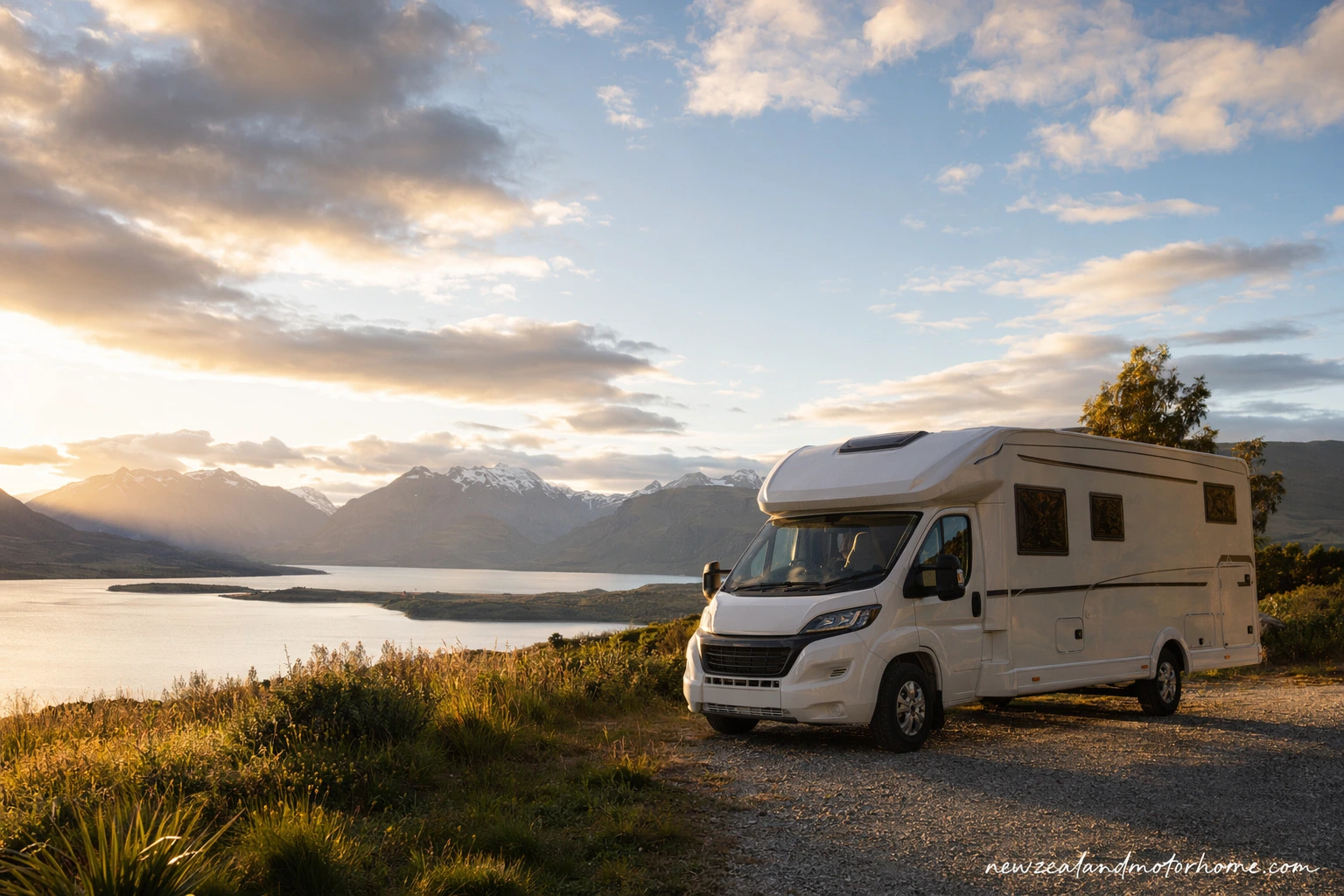
- Tourists can hire with valid licence documents
- Drive on the left in NZ
- Powered sites best for first night
- Self-contained needed for many freedom spots
- Plan water, LPG and dump stops
Yes, overseas visitors can hire and drive a motorhome in New Zealand, provided the driver meets the hire conditions and carries the right licence documents. The bigger question is how to plan it well: where you can sleep in the van, how often you need powered sites, and what to do about water, LPG, toilets and waste.
This guide is written for self-drive travellers who will live out of the van, not just use it for day trips. We’ll cover the practical side of renting a motorhome here, from licence checks and vehicle size to freedom camping rules, holiday parks, dump stations and building a route that feels comfortable on New Zealand roads.
Who can hire and drive a motorhome in New Zealand?
Most visitors can hire a campervan or motorhome in New Zealand if they have a valid full driver licence and meet the hire operator’s age and licence-history requirements. If your licence is not in English, carry an approved English translation or an International Driving Permit alongside the original licence.
Before you collect the van, check exactly who is listed as a driver. Only named drivers are usually covered to drive, and the hire counter will want to sight licence documents, passport details and a payment card for the bond or excess arrangement.
- Carry your physical driver licence; a photo on your phone is not enough.
- Bring an International Driving Permit or approved translation if the licence is not in English.
- Ask what the insurance excess is and whether windscreen, tyre and underbody cover are treated separately.
- Make sure every person who may drive the motorhome is added to the hire agreement.
Choosing the right van for your route
A compact camper is easier to park in town and on narrow scenic roads, while a larger motorhome gives you more indoor space, a fixed bed, bigger fridge capacity and often an onboard toilet and shower. Your choice affects where you can overnight, how often you need to plug into power, and how relaxed the driving feels on winding roads.
Pay attention to the vehicle’s actual height, length and width when you collect it. Write the height on a note near the dashboard if it is not already displayed, because low branches, supermarket car-park signs, ferry decks and older holiday-park trees are all things you’ll think about more in a van than at home.
- Two-berth vans suit travellers who want easier parking and lower fuel use.
- Four- to six-berth motorhomes work better for families or anyone wanting a bathroom onboard.
- Longer vehicles may need end bays at supermarkets and more space for reversing at campsites.
- If you plan mountain passes, coastal gravel side roads or tight urban stops, choose manoeuvrability over lounge space.
Where you can sleep in the van
New Zealand has a mix of holiday parks, Department of Conservation campsites, council camping areas and limited freedom camping spots. The rules are local, not nationwide in one simple blanket, so always check signs at the place you intend to stop rather than assuming a beach car park or lakeside reserve allows overnight stays.
Holiday parks are the simplest first-night option after a long flight: you can plug into a powered site, refill fresh water, use showers, empty waste at a dump station and sort the van without rushing. Unpowered sites are useful once you know your battery, fridge and heater limits, but powered sites give breathing room if you are charging devices or using a microwave, electric heater or induction hob.
- Use powered sites regularly if you rely on 240V appliances or need to recharge house batteries fully.
- Choose unpowered sites when you are confident with battery, gas and water use.
- Only freedom camp where signs and local bylaws allow it, and follow any certified self-contained requirement.
- Arrive before dark when possible, especially at smaller camps where site boundaries and turning areas are harder to see at night.
Self-containment, toilets, water, LPG and dump stations
If you want the flexibility to use many freedom camping areas, hire a motorhome with current self-containment certification and understand what that means before you leave the depot. In practice, you’ll need to manage fresh water, grey water, toilet cassette or black waste, rubbish and gas without leaving anything behind.
Plan your route around services, not just scenery. Fresh-water fills and dump stations are common at many holiday parks and some public service points, but they are not at every roadside stop. LPG bottle swaps or refills are also easier in towns than in remote valleys or on quiet coastal loops.
- Top up potable water from marked drinking-water taps, not streams or random hoses.
- Empty grey water and toilet waste only at designated dump stations.
- Check LPG level before leaving a main town, especially before a cold South Island stretch.
- Keep a small rubbish bag system in the van so recycling and general waste do not take over the living space.
Planning a self-drive route that suits motorhome travel
Distances on a New Zealand map can look short, but a motorhome day is slower once you add supermarket stops, fuel, dump stations, water fills, photo pull-offs and campsite check-in times. A 250-kilometre day through hills, one-lane bridges and village speed limits can feel full, especially if you are new to driving on the left.
Build in two-night stops where you can. They let you park the van once, walk from camp, do laundry, recharge batteries and enjoy a place without packing up every morning. If you want a hand turning flights, pickup points, van size and overnight stops into a realistic loop, you can talk to us before locking in the route.
- Keep arrival day short and book a powered site near your pickup city.
- Avoid planning big drives immediately after long-haul flights.
- Allow extra time for ferry check-in if crossing between the North and South Islands.
- Check whether your hire agreement restricts unsealed roads, beaches or ski-field access roads.
Common questions
Can tourists legally rent a motorhome in New Zealand?
Yes. Tourists can hire a motorhome if they meet the hire operator’s conditions and have the correct driver licence documents. If the licence is not in English, carry an approved translation or International Driving Permit as well as the original licence.
Do I need a special licence for a motorhome?
For many standard hire campervans and motorhomes, a full car licence is usually enough. Always check the vehicle’s weight and the hire terms before booking, as larger vehicles may have specific requirements.
Can I freedom camp in a hired motorhome?
Sometimes, but only where local rules allow it. Many freedom camping areas require a currently certified self-contained vehicle, and some places ban overnight camping entirely, even if your motorhome has a toilet onboard.
Should I book powered sites in advance?
Book ahead in peak summer, school holidays and around popular places such as Queenstown, Wānaka, Rotorua and coastal holiday towns. A powered site is especially useful for the first night, cold-weather travel, laundry days and when you need a full battery reset.
How often will I need a dump station and fresh water?
It depends on your tank size and how many people are travelling, but many motorhome travellers plan service stops every couple of days. Use holiday parks and marked public dump stations, and refill only from potable water taps.
Have a planner shape this for your dates
Send a short outline — your dates, party size, and the kind of trip you want. A planner replies with a vehicle recommendation, a paced route, and the realistic budget.