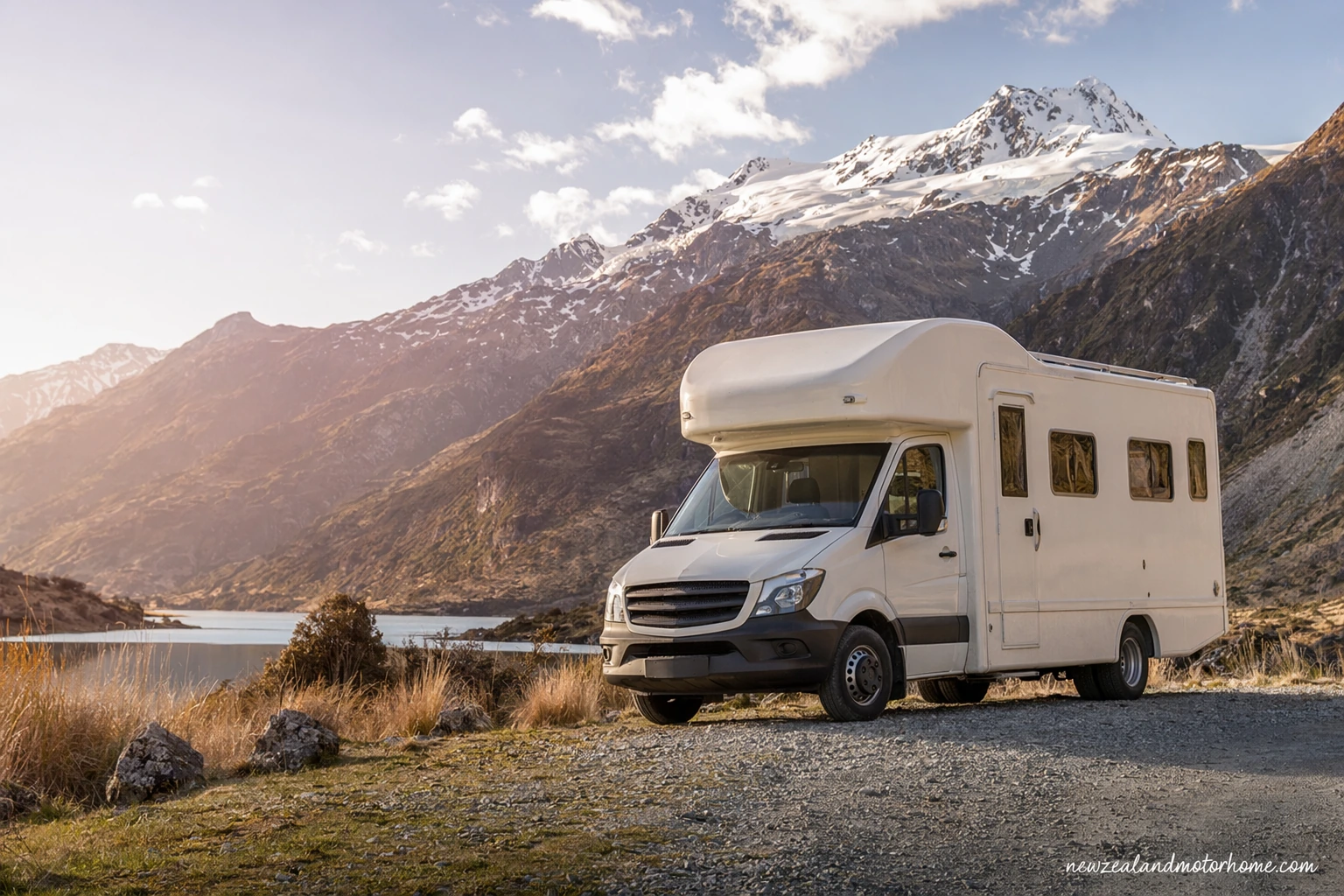
- Full car licence usually sufficient
- IDP or translation if not in English
- Most hires under 6,000 kg GLW
- Check automatic-only licence conditions
- Self-containment affects freedom camping
If you are flying in, picking up a hired campervan, and sleeping in it as you travel, the licence question is one of the first things to get right. The good news is that most motorhomes available for hire in New Zealand can be driven on a full car licence, but there are a few practical details that matter at the depot.
This guide explains the licence rules in plain language for self-drive travellers: overseas licences, International Driving Permits, full-licence requirements, van weight, automatic-only conditions, and the campsite logistics that come with choosing a larger vehicle. It is written for people who will be parking the van, emptying the toilet cassette, filling fresh water, and finding legal overnight stops along the way.
The short answer for most hired campervans
For most campervan and motorhome hires in New Zealand, a current full car licence is enough. In New Zealand terms, a standard Class 1 car licence covers light vehicles up to 6,000 kg gross laden weight, which includes the vast majority of two-berth campervans, family vans, and common four- to six-berth motorhomes offered for self-drive hire.
The important word is full. Hire operators generally do not accept learner, restricted, provisional, or probationary licences for motorhome collection, even if you are confident behind the wheel. If your licence has an automatic-only condition, book an automatic van; do not assume you can take a manual camper because it is available on the day.
- Carry your physical driver licence whenever you drive the van.
- Make sure the name on your licence matches your booking and passport.
- Check any age or experience conditions before choosing a larger motorhome.
- Ask about vehicle weight if you are considering an unusually large or specialist motorhome.
Using an overseas licence or International Driving Permit
Visitors can usually drive in New Zealand on a current overseas driver licence for a limited period after arrival, provided it covers the class of vehicle being driven. If the licence is not in English, you need to carry an approved English translation or an International Driving Permit alongside the original licence. An IDP is not a stand-alone licence; it supports the licence issued in your home country.
At the depot, staff may ask to see your passport, licence, translation or IDP, and the credit card used for the booking. Have these ready before you start inspecting the van, because licence paperwork can take longer than learning where the LPG bottle, fresh-water filler, grey-water outlet, and toilet cassette are located.
- Bring the original licence, not a photo or photocopy.
- Carry an IDP or approved translation if your licence is not in English.
- Check that every named driver is listed on the hire agreement.
- Do not rely on a digital licence unless the hire operator has confirmed it is acceptable.
Licence legalities are only half the van choice
Being legally licensed for a motorhome does not mean every van will feel easy on your first New Zealand day. A compact two-berth camper is simple to park at supermarkets and trailheads; a longer motorhome gives you more living space, a bigger fridge, and often an onboard toilet and shower, but it needs more room at campsites, fuel stops, and scenic pull-offs.
Before booking, think about the places you will actually drive: narrow coastal roads, alpine passes, one-lane bridges, gravel access roads to DOC sites, and small-town main streets. Height matters too. Many campervans will not fit into city parking buildings or under low motel-style canopies, so look for open-air parking and larger end bays where you can swing the rear overhang without clipping kerbs.
- Choose a smaller van if you are nervous about left-side driving or tight parking.
- Check the vehicle length when booking holiday park sites, especially in summer.
- Avoid underground or multi-storey parking unless the height clearance is clearly suitable.
- Use pull-outs to let faster traffic pass on winding roads.
Your first day after collection
If you have just arrived on a long-haul flight, plan a gentle first day. Pick up the van, do the handover properly, buy groceries, then stay somewhere close by rather than driving several hours tired. A powered site at a holiday park is often the easiest first-night choice because you can plug in, test the heater, charge devices, and learn the van systems with help nearby.
Before leaving the depot area, make sure you know how to fill fresh water, connect to 240V power, turn LPG on and off, operate the fridge, find the spare tyre kit, and use the dump-station fittings. If the van has a toilet cassette, ask for a demonstration; it is much easier in daylight than in a queue at a busy dump station.
- Park in open supermarket car parks, not tight basement parking.
- Buy toilet chemicals, rubbish bags, and a small torch if they are not supplied.
- Fill fresh water before your first unpowered night.
- Confirm whether the gas bottle is full and how LPG refills or swaps are handled.
How licence choice connects to overnight stops
Your licence gets you on the road, but your overnight options depend on the van and its certification. If you want to freedom camp where local rules allow it, hire a vehicle with current self-containment certification and carry the paperwork in the van. In many places, a sticker alone is not enough if an enforcement officer asks to see the certificate.
Powered holiday park sites suit bigger motorhomes, winter travel, and travellers who want showers, laundry, and easy dump-station access. Unpowered campsites can be brilliant in scenic spots, but you need to manage battery use, fresh water, grey water, rubbish, and toilet capacity. If you want help matching licence comfort, van size, and overnight style, you can talk to us while shaping your route.
- Use designated dump stations for grey water and toilet waste.
- Top up fresh water before remote or DOC-style camps.
- Book larger powered sites early for peak summer and school holidays.
- Check local freedom camping bylaws before settling in for the night.
Common questions
Can I hire a motorhome in New Zealand with a normal car licence?
Usually, yes, if it is a current full car licence and the motorhome is within the standard light-vehicle weight range. Most hire motorhomes in New Zealand are designed to be driven this way, but always check the vehicle conditions before booking.
Do I need an International Driving Permit to drive a campervan in NZ?
You need an International Driving Permit or approved English translation if your driver licence is not in English. Carry it with your original licence; the permit by itself is not enough to drive or collect the van.
Can a second person drive the hired campervan?
Yes, provided they meet the hire conditions and are added to the rental agreement as an authorised driver. They must carry their own full licence, plus an IDP or translation if required.
Does a bigger motorhome need a different licence?
Most hire motorhomes fit within the normal car-licence category in New Zealand. If you are looking at a very large or specialist vehicle, ask for its gross laden weight and confirm the licence requirement before you pay a deposit.
What happens if my licence is automatic-only?
Book an automatic campervan or motorhome. If your licence restricts you to automatic vehicles, you should not collect a manual van, even if it seems manageable around the depot.
Is self-containment part of the driver licence requirement?
No. Your driver licence is about whether you can legally drive the vehicle; self-containment is about where you may be allowed to camp overnight. For freedom camping, look for a current certified self-contained van and follow local rules.
Have a planner shape this for your dates
Send a short outline — your dates, party size, and the kind of trip you want. A planner replies with a vehicle recommendation, a paced route, and the realistic budget.