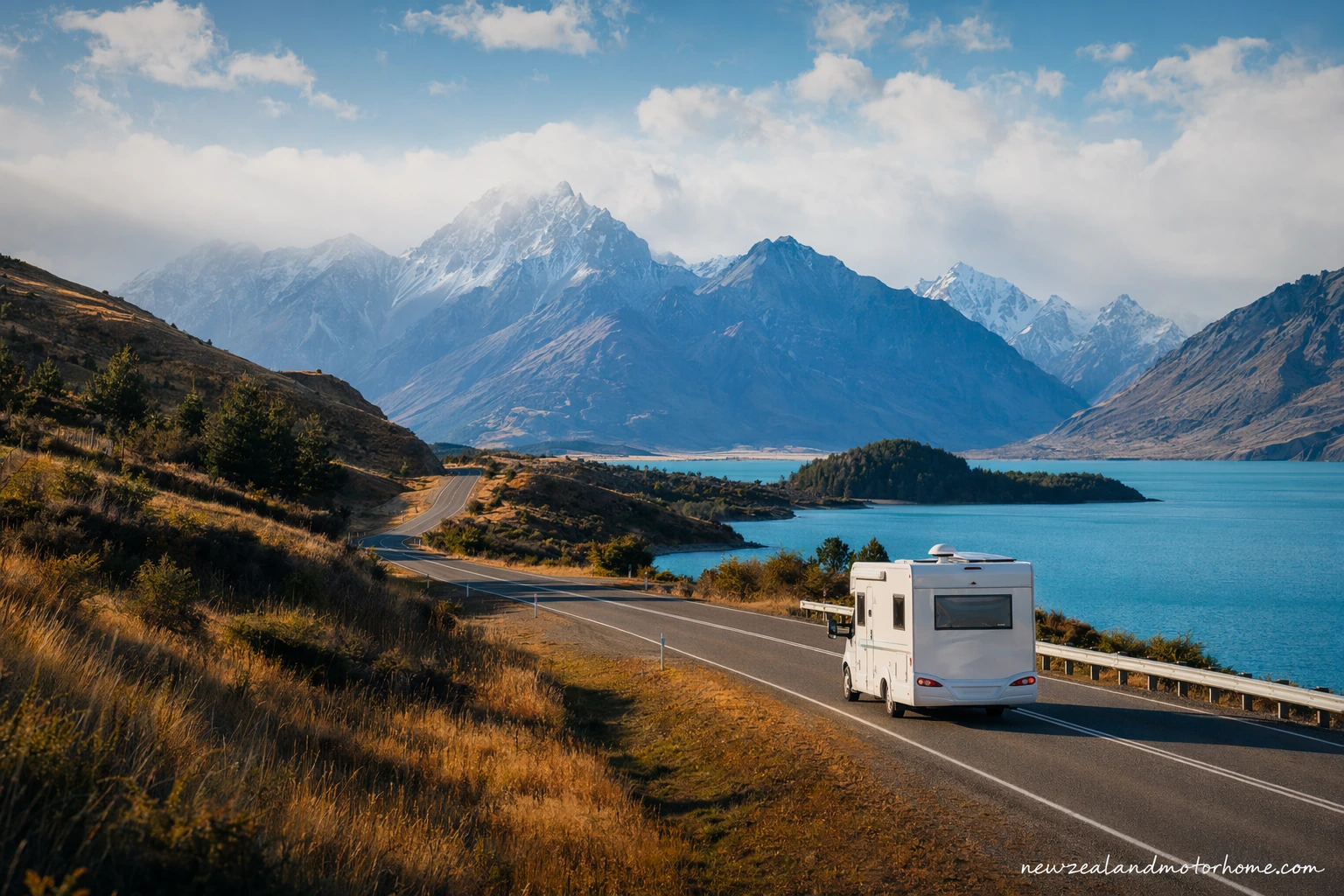
- Best allowed pace: 5–7 days
- Includes Cook Strait ferry
- Main route: SH1 both islands
- Powered sites recommended before ferry
- Check Desert Road in winter
A Dunedin to Hamilton campervan trip is a proper south-to-north crossing: Otago harbour roads, the Canterbury plains, the Kaikōura coast, Cook Strait, then the long North Island run through the central plateau to the Waikato. It is not a route to rush if you are driving a larger motorhome, because the ferry, weather, and overnight parking all need a little forethought.
This guide is written for travellers driving and sleeping in their hired van. You will find sensible legs, where to break the Dunedin to Hamilton drive, what to think about when booking powered or unpowered sites, and how to keep on top of fresh water, LPG, rubbish and dump stations along the way.
How many days to allow for the route
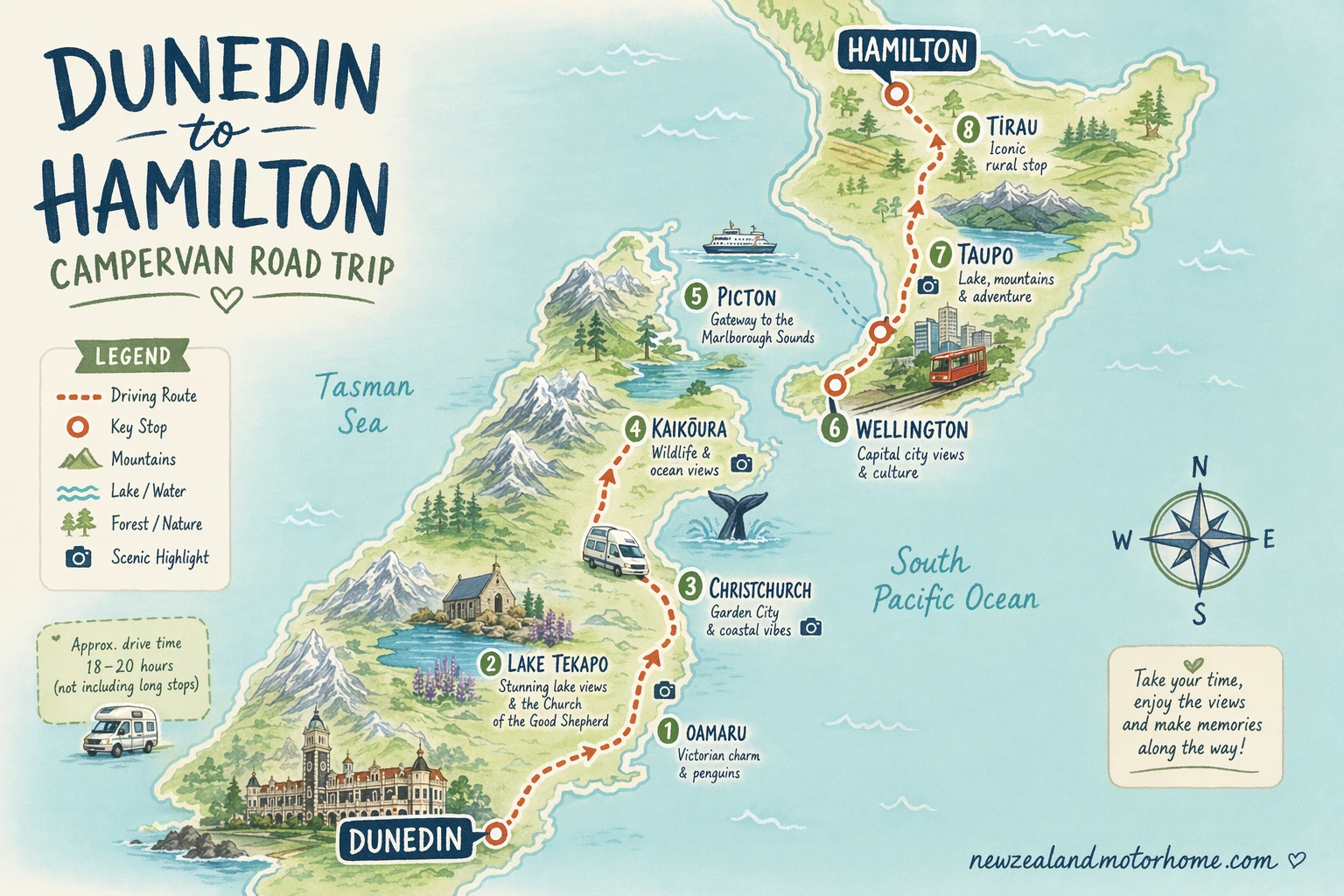
The full Dunedin to Hamilton campervan route is best treated as about five to seven days of travel, not a single push. You can physically cover the distance faster, but doing so means long driving days, late arrivals at campsites, and very little margin if the Cook Strait ferry or Desert Road weather changes.
A comfortable pace gives you time to park the van properly, plug in every second or third night, empty the grey-water tank before it gets tight, and avoid arriving in small towns after dark. If you are hiring a longer motorhome, build in extra time for slower hill sections, fuel stops and reversing into sites.
- Fast but tiring: 3 to 4 days, mostly driving and one ferry day.
- Balanced: 5 to 6 days with stops around Christchurch, Kaikōura/Picton, Wellington or Kapiti, and Taupō.
- Easy touring: 7+ days, with time for Oamaru, Kaikōura, the Wellington waterfront and the central plateau.
- Planning note: if you want help matching ferry sailings with campsite nights, you can send your dates through our plan-your-trip form.
Leg 1: Dunedin to North Otago, Timaru or Christchurch
Leaving Dunedin, SH1 climbs out through the northern approaches before settling into a broad coastal and farmland drive. In a campervan, take the early hills steadily and do not be pressured by faster local traffic; use slow-vehicle bays where they appear and give yourself room on the bends north of the city.
Oamaru is a natural first breather, with level streets, supermarkets, fuel and usually easier daytime parking than central Dunedin. If you are continuing to Timaru or Christchurch, check your water and toilet cassette before you leave town rather than relying on finding a dump station right at the end of the day.
- Good first-night options: Oamaru or Timaru for a gentler start, Christchurch if you want to front-load the distance.
- Site style: holiday parks are the simplest choice for powered sites, showers, laundry and dump facilities.
- Side trips: Moeraki and the Waitaki coast are worthwhile, but confirm parking space before taking a long motorhome down smaller beach roads.
- Van note: keep an eye on crosswinds on open Canterbury sections, especially in high-sided vans.
Leg 2: Christchurch to Kaikōura, Blenheim and Picton
This is one of the best sections of the Dunedin to Hamilton motorhome road trip, but it is also a section where patience helps. SH1 north of Christchurch runs through open country, then tightens along the Kaikōura coast with tunnels, rail crossings, seal pull-outs and sections where roadworks can slow traffic.
Kaikōura is a strong overnight stop if you want a shorter day before Picton. Book ahead in summer, school holidays and whale-watching season, and expect that seafront parking can be busy; use signed campervan areas rather than squeezing into small car parks.
- Powered night: Kaikōura, Blenheim or Picton holiday parks are practical before the ferry.
- Unpowered night: look for designated campgrounds or council-approved areas, not roadside lay-bys.
- Servicing: top up groceries, fresh water and fuel in Christchurch, Kaikōura or Blenheim before heading to Picton.
- Road note: allow more time than the map suggests for coastal SH1, particularly after rain or during holiday traffic.
Booking the Cook Strait ferry with a campervan
The ferry is the hinge of this route. When booking, enter your campervan or motorhome length accurately, including bike racks, rear boxes and tow bars, and check the height category if you are in a high-roof vehicle. Turning up with the wrong vehicle dimensions can cause delays or a different fare class.
Before boarding, secure loose items inside the van, switch off LPG at the bottle as required, and make sure the fridge is set up for the crossing because you generally cannot access the vehicle deck during sailing. Arrive with enough time to queue, especially if you are nervous about manoeuvring a larger vehicle in ferry lanes.
- Picton side: fuel, groceries and dump facilities are easier to sort before check-in than after you are in the ferry queue.
- Wellington side: plan your first North Island overnight before disembarking, as city driving is less relaxing late in the day.
- Weather: Cook Strait can be bumpy and sailings may shift, so avoid a tight connection to a prepaid campsite far up the island.
- Parking: use signed long-vehicle or campervan areas around ferry terminals and avoid blocking car-sized spaces.
Wellington to Hamilton via Kapiti, Taupō and the Waikato
From Wellington, the most direct campervan line to Hamilton follows SH1 north through the Kapiti Coast, Levin, Bulls and Taihape, then over the central plateau past Tūrangi and Taupō before dropping towards Cambridge and Hamilton. It is a big change from the South Island coast: busier traffic, more passing lanes, and longer stretches where weather can turn quickly.
Many van travellers break this leg around Kapiti/Levin, Taihape, Tūrangi or Taupō. Taupō is the most comfortable final staging point if you want an easier run into Hamilton, with plenty of holiday-park style facilities, food shops, fuel and places to reset tanks before the Waikato.
- Desert Road: SH1 can close for snow, ice or strong wind; check road conditions before committing in winter or shoulder seasons.
- Overnight rhythm: choose a powered site after the ferry or before Hamilton if you have been running the fridge, heater and devices off-house battery.
- Hamilton arrival: expect urban traffic and lower bridges in some side streets; know your vehicle height and avoid last-minute central-city circling.
- Dump and water: larger towns on SH1 are the safest bet, but confirm locations before you leave each morning.
Overnight camping, self-containment and van services
Because this route crosses multiple council areas, freedom camping rules change often. A current self-containment certification is essential if you plan to use any freedom camping area that permits self-contained vehicles, but certification alone does not mean you can stop anywhere. Always read the local signs and avoid overnighting in scenic pull-offs unless they specifically allow it.
For a smoother trip, mix powered holiday-park nights with occasional unpowered stays. Powered sites are useful before and after the ferry, during cold weather, or whenever you need showers, laundry, a dump station and a reliable fresh-water fill in one place.
- Dump station towns to plan around: Dunedin, Oamaru, Timaru, Christchurch, Kaikōura, Blenheim/Picton, Wellington region, Levin, Taihape, Taupō, Cambridge and Hamilton.
- LPG: refill or swap in larger towns rather than waiting until the bottle is nearly empty in rural stretches.
- Fresh water: use potable taps only, and keep a short hose handy for awkward campground layouts.
- Rubbish: carry bags until you reach proper bins or transfer stations; do not leave waste at freedom camping spots.
Keep planning
Common questions
Can I drive from Dunedin to Hamilton in a campervan without using the ferry?
Is the Dunedin to Hamilton drive suitable for a large motorhome?
Where should I stop overnight between Dunedin and Hamilton?
Do I need a self-contained campervan for this route?
What is the hardest part of the route for campervan drivers?
Have a planner shape this for your dates
Send a short outline — your dates, party size, and the kind of trip you want. A planner replies with a vehicle recommendation, a paced route, and the realistic budget.