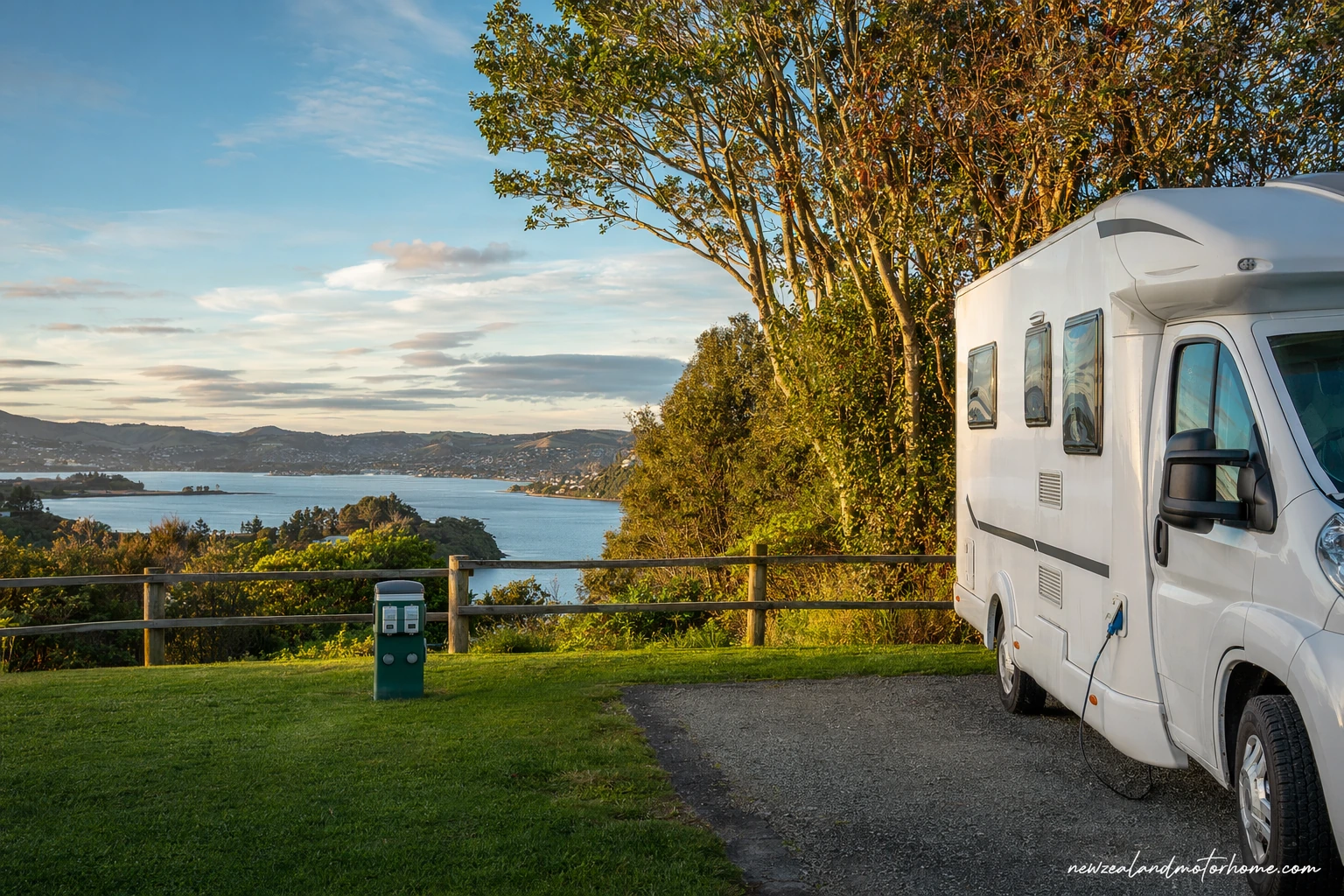
- Best stay: 1-2 nights
- Powered sites useful year-round
- Steep city streets: plan parking
- Check dump station access
- Self-contained rules apply
Dunedin is a very good campervan city if you choose your base carefully. The centre is compact and characterful, but the streets can be steep, the one-way system can catch you out, and not every car park suits a long or high-roof motorhome.
This guide looks at holiday parks Dunedin travellers commonly use as practical overnight bases: beachside stays near St Kilda and St Clair, quieter green pockets around the valley, and options further out towards Mosgiel or the Otago Peninsula. You will find notes on powered and unpowered sites, dump stations, walking access, where to leave the van, and how to make camping Dunedin feel easy rather than fiddly.
Best areas to base your campervan in Dunedin
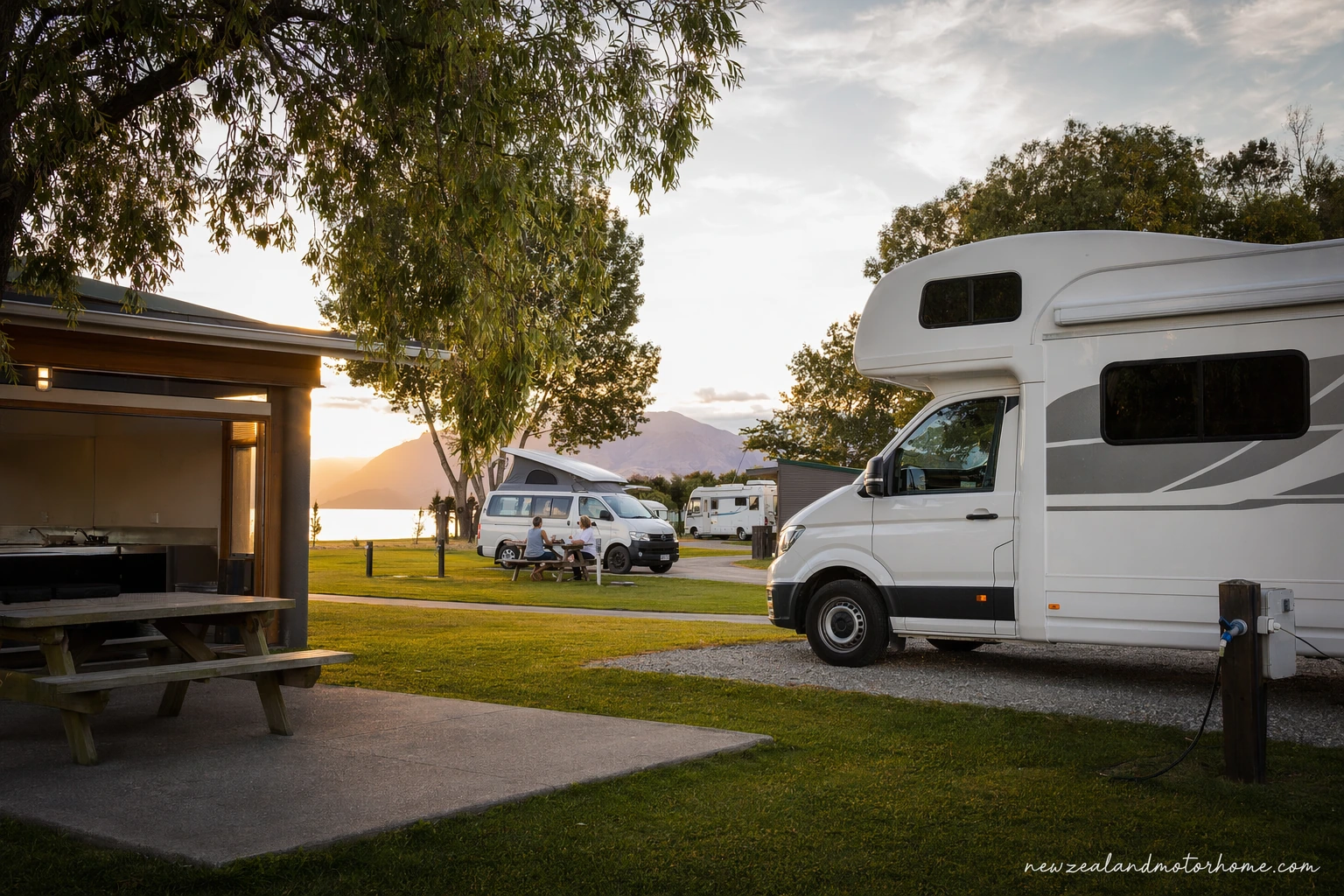
For most self-drive travellers, the easiest Dunedin stay is not right in the Octagon. A flatter holiday park on the beach side of the city lets you park the van, plug in, and use buses, rideshares or a long walk for the central sights. St Kilda and St Clair are especially handy if you want surf, sea air, cafés and room to move a larger vehicle.
Valley and outer-city campsites Dunedin-wide can feel quieter, with more shelter from coastal wind and a simpler run north or south when you leave. If you are heading for the Otago Peninsula, think carefully before taking a big motorhome all the way out for the night; the harbour road is scenic but narrower in places, and you may prefer to visit as a day trip from a city base.
- Beachside: good for St Clair, St Kilda, flat streets, and relaxed evening walks after parking the van.
- North or valley side: useful for the Botanic Garden, university area, and a calmer exit towards Waitati or Oamaru.
- South or Mosgiel side: practical if you are continuing to the Catlins, Central Otago or the Southern Scenic Route.
- Peninsula side: best for confident drivers in smaller vans; check road access, turning space and site length before committing.
Powered sites, unpowered sites and what to check before booking
Powered sites Dunedin travellers choose in winter are worth it for heating, battery top-ups and drying wet gear after a southerly front. Even in summer, Dunedin evenings can be cool, so a powered pitch makes the van more comfortable if you are staying more than one night.
Unpowered sites can work well for certified self-contained campervans with good house batteries, especially if you are only stopping overnight. The main thing is to check whether the holiday park has a level hardstand or grass pitch, because heavy rain can make soft ground less appealing for larger motorhomes.
If you typed dunedin top 10 holiday park into a search box, compare the same practical details rather than just the label or chain style. Your best stay is the one that fits your van length, gives you the facilities you need, and puts you within reach of the sights you actually want to visit.
- Ask whether the site suits your vehicle length, including bike racks or rear storage boxes.
- Confirm if the pitch is powered or unpowered, hardstand or grass, and level enough for sleeping.
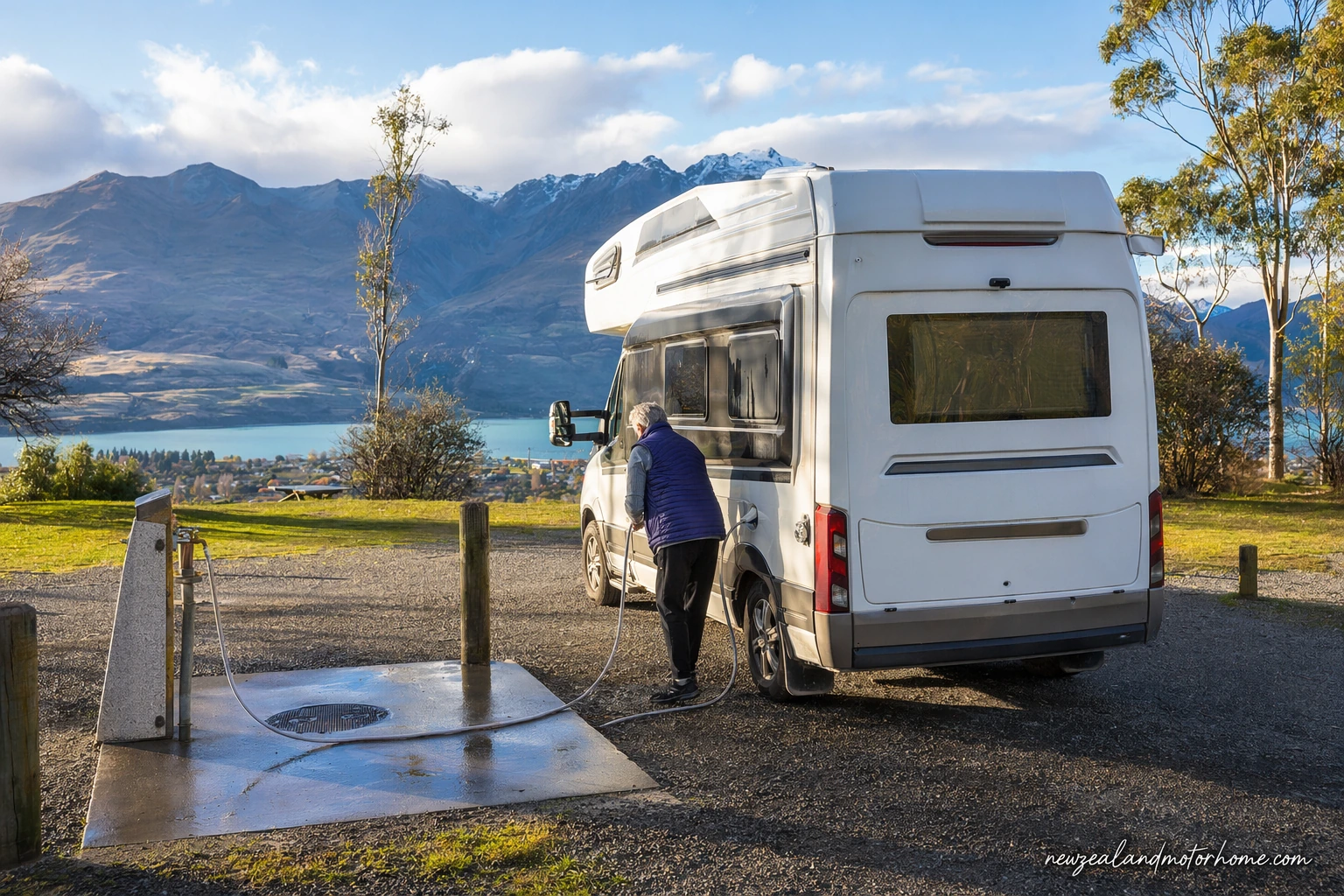
- Check whether there is a guest dump station, fresh-water fill and grey-water disposal on site.
- If travelling with a tall motorhome, ask about trees, awning space and any low entry signs.
Driving into Dunedin and parking the van
Dunedin is not a difficult city to reach by motorhome, but it rewards a slow approach. The motorway and main southern and northern routes are straightforward; the trickier part is deciding whether you really need to drive into the inner city. Streets around the centre can be steep, tight and busy, and some parking areas are designed with cars in mind.
If you are in a longer campervan, leave the vehicle at your holiday park whenever you can and walk, bus or take a short transfer. If you do drive in, look for open-air parking rather than multi-storey buildings, and avoid squeezing into angled parks where the rear overhang blocks the lane.
- Arriving from the north: plan your turn-off before the city traffic builds, especially if heading to beachside parks.
- Arriving from the south: the run in is generally manageable, but allow extra time at peak commuter hours.
- Otago Peninsula roads: Portobello Road is scenic but narrower in places; take it gently and use pull-offs only where safe.
- Steep suburban streets: avoid using minor hill roads as shortcuts unless you know your van handles them comfortably.
What is walkable from Dunedin holiday parks
Beachside holiday parks put you close to the best easy walking in the city: St Kilda Beach, the St Clair Esplanade, ocean views and casual food stops. This is the sort of area where you can settle the van on its pitch, put the kettle on, then head out without thinking about city parking again.
From more central or northern bases, the Botanic Garden, university precinct and parts of the harbour-side route may be realistic on foot depending on where you stay. The Octagon, railway station and museums are usually better reached by public transport or a short transfer if your campervan is large.
- Good without moving the van: beach walks, cafés near St Clair, playgrounds and flat neighbourhood strolls.
- Worth a day outing: the railway station, Toitū Otago Settlers Museum, the Octagon and street art lanes.
- Best planned carefully: Otago Peninsula wildlife areas, because parking and turning space can be limited at busy times.
- Rainy-day note: choose a powered site if you expect to run heating and dry jackets inside the van.
Dump stations, water, LPG and local camping rules
Before you settle in for a night or two, sort the practical jobs: fresh water, grey-water capacity, toilet cassette and LPG. Many holiday parks have guest facilities, but access can vary, so confirm dump station use and water fills when you book rather than assuming you can arrive late and deal with it in the morning.
For LPG, supermarkets and service-station areas around the wider city are generally easier than trying to detour through steep residential streets. If your bottle is getting low, refill or swap before heading onto the Otago Peninsula or further south where options may be less frequent.
Freedom camping in Dunedin is managed by local council rules and is not a park-anywhere situation. Use designated areas only, respect self-containment requirements, and avoid treating scenic beach or harbour parking as an overnight stop unless it is clearly permitted. If you would like help fitting Dunedin into a wider South Island loop, add your dates and van style at talk to us and we can sanity-check the overnight rhythm.
- Travel with a current self-containment certificate if you plan to use freedom camping areas.
- Empty black and grey water only at approved dump stations.
- Fill fresh water before heading into more remote coastal or peninsula areas.
- Keep noise low in holiday parks; Dunedin sites can be close to suburbs and beaches locals use daily.
Keep planning
Wellington to dunedin campervan
Read onVisiting larnach castle dunedin by campervan
Read onQueenstown to dunedin campervan
Read onDunedin to whangarei campervan
Read onDunedin to tauranga campervan
Read onDunedin to rotorua campervan
Read onCommon questions
Do I need a powered site in Dunedin?
Can I freedom camp in Dunedin instead of using a holiday park?
Are Dunedin holiday parks suitable for larger motorhomes?
Is it easy to park a campervan in central Dunedin?
Which area is best for camping Dunedin with kids?
Have a planner shape this for your dates
Send a short outline — your dates, party size, and the kind of trip you want. A planner replies with a vehicle recommendation, a paced route, and the realistic budget.