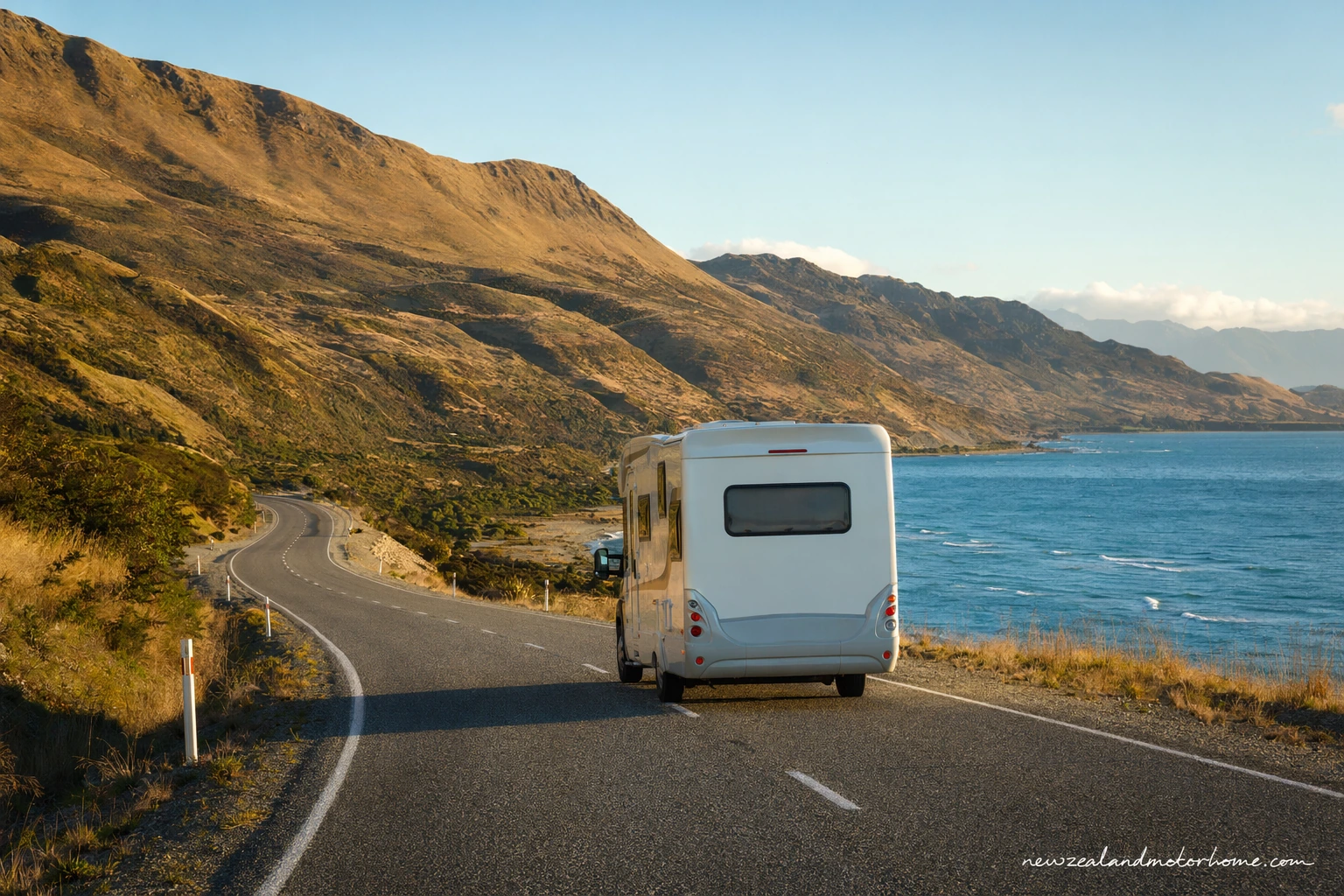
Wellington to Dunedin campervan route: ferry, coast and high country
- Best in spring to autumn
- Allow 5–7 days
- Cook Strait ferry required
- SH1 suits most motorhomes
- Mix powered and self-contained stops
A Wellington to Dunedin campervan trip is not just a long drive south. It starts with a Cook Strait ferry, then rolls through Marlborough harbours, Kaikōura coastline, Canterbury plains, limestone country around Ōamaru and finally the hills and harbour roads of Dunedin.
This guide is written for travellers driving and sleeping in their own hired van or motorhome. You will find realistic legs, overnight stop ideas, road notes for longer vehicles, and the practical bits that matter on the road: powered sites, self-containment rules, dump stations, fresh-water fills and where it is worth slowing down.
How many days to allow for the Wellington to Dunedin drive
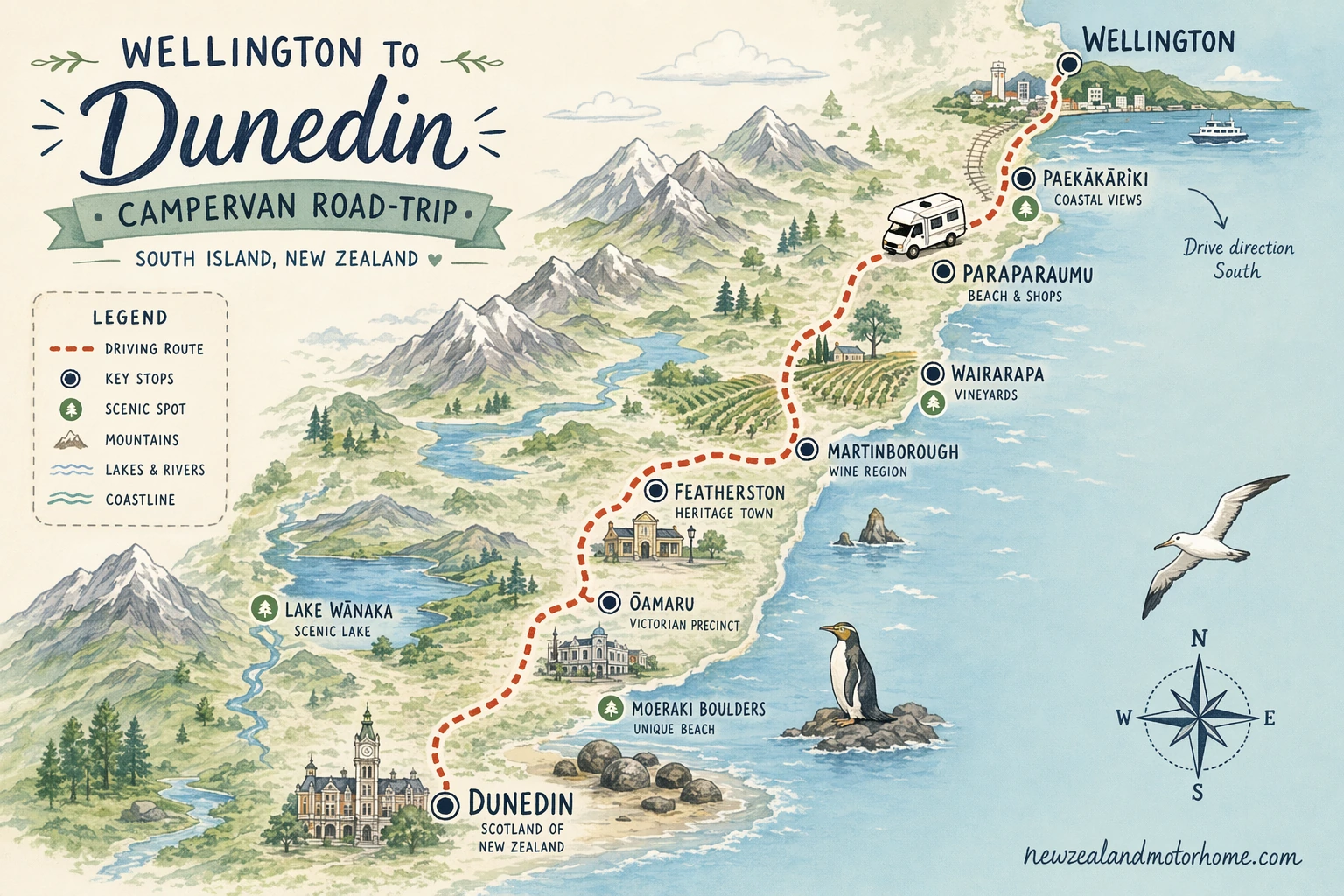
The direct Wellington to Dunedin drive, including the ferry and main highway legs, is roughly a full two-day push if everything lines up. In a campervan, that is not the nicest way to do it. Allow five to seven days and the route becomes a proper South Island motorhome road trip with time to check in before dark, cook in the van, empty your waste responsibly and take the coastal stops without rushing.
A practical pace is Wellington or nearby overnight, ferry to Picton, Kaikōura, Christchurch or Banks Peninsula, Ōamaru or Moeraki, then Dunedin. Add an extra night if you want whale watching, Akaroa, the Waitaki valley, or time on the Otago Peninsula.
- Fast but tiring: 3 days, mainly driving and one short sightseeing stop.
- Comfortable campervan pace: 5 days, with daylight arrivals and easier camp set-up.
- Best touring pace: 7 days, with room for weather, laundry, powered nights and side trips.
- Total road distance: around 700 kilometres from Picton to Dunedin, plus the ferry crossing from Wellington.
Wellington, the ferry and getting the van across Cook Strait
Book the ferry with your exact vehicle length and height, including bike racks, rear boxes or roof vents if they change the profile. Motorhomes are usually straightforward on the crossing, but you still need to follow ferry instructions for LPG bottles, handbrake, alarms and access to the vehicle deck. Once parked on board, you normally cannot return to the van during the crossing, so take jackets, medication, snacks and chargers with you.
Wellington itself is compact and hilly, so do not plan on drifting around the city centre in a large van looking for a casual park. Use a proper holiday park, designated motorhome parking area, or a suburban stop with enough room to manoeuvre, then use public transport or walk in. If you have an early sailing, staying north of the central city can make the morning less tense.
- Before boarding: fill fresh water only if you need it; a lighter tank is easier on fuel and handling.
- Waste: use a dump station before the ferry if your grey or black tank is getting close to full.
- Timing: arrive with the check-in buffer stated on your booking, especially in summer and school holidays.
- Food in the van: secure fridge contents and cupboards before the ramp and ferry movement.
Picton to Kaikōura: Marlborough roads and the coastal run
Rolling off the ferry in Picton, give yourself a few minutes to reset before heading south. The Picton waterfront is pleasant, but parking a larger motorhome can be easier on the edges of town rather than right by the busiest cafés. If you arrive late, Picton or Blenheim makes a sensible first night, with holiday parks offering powered sites, showers, laundry and a chance to top up water after the crossing.
The Picton to Kaikōura leg follows State Highway 1 through Marlborough and then down the coast. It is a beautiful drive, but it is still a working highway with trucks, rail crossings, occasional roadworks and windy sections near the sea. Take the signed slow-vehicle bays when traffic builds behind you; it keeps the drive calmer for everyone.
- Overnight options: Picton or Blenheim for an easy first South Island night; Kaikōura for the coastal stop.
- Campervan services: look for dump stations and potable water in Picton, Blenheim and Kaikōura rather than leaving it until a smaller roadside settlement.
- Freedom camping: only use permitted areas and check current district rules; a certified self-contained van does not mean you can stop anywhere.
- Road note: coastal winds can be sharp on high-sided motorhomes, so slow down around exposed headlands.
Kaikōura to Christchurch or Banks Peninsula
Kaikōura is one of the best places on the route to pause rather than just refuel and leave. Park the van where motorhomes are clearly allowed, then walk the peninsula tracks, visit the shoreline viewpoints, or book a marine activity if the weather is settled. Campsites here can fill in peak season, so a powered site is worth reserving if you need to recharge batteries, run a heater legally, or get laundry done.
South of Kaikōura, the road gradually opens out towards North Canterbury and Christchurch. Christchurch is easier in a campervan if you choose a holiday park or designated overnight area first, then explore from there. Central parking has height barriers, bus lanes and tight streets that are not relaxing in a long vehicle.
If you detour to Akaroa or Banks Peninsula, remember it is not a flat coastal cruise. The road includes hills, bends and narrower sections, especially for larger motorhomes. It is doable in a well-driven van, but take it slowly, use lower gears on descents, and avoid arriving after dark if you are new to the vehicle.
Christchurch to Ōamaru: plains, small towns and Waitaki limestone
The Christchurch to Ōamaru section is a classic middle leg of a Wellington to Dunedin motorhome road trip: long, mostly open driving with good places to break the day. Rakaia, Ashburton, Timaru and Waimate all work as practical stops for fuel, groceries, coffee and campervan services. On hot nor-west days, the Canterbury plains can feel tiring, so plan proper breaks rather than pushing from one white line to the next.
Timaru is a useful halfway pause, with waterfront walks and town services. Ōamaru is more atmospheric for an overnight, especially if you want the Victorian precinct, harbour area and blue penguin viewing. Park only where overnighting is allowed; harbourfront spaces can have time limits or restrictions, and rules change, so check signs before settling in.
- Powered night idea: choose Ōamaru if your batteries are low after several free or unpowered nights.
- Dump and water: larger towns along SH1 are your safest bet; do not rely on tiny coastal detours having facilities.
- Moeraki Boulders: the access road and car park can be busy, so arrive earlier or later and avoid blocking turning space.
- LPG: top up in larger service towns rather than waiting until the bottle is almost empty near the coast.
Ōamaru to Dunedin: final leg, hill roads and where to base the van
The last leg into Dunedin is shorter, but it deserves care. State Highway 1 south from Ōamaru is generally straightforward, with the Moeraki area and Palmerston making natural breaks. As you approach Dunedin, the terrain becomes hillier and the urban streets tighter, so have your overnight plan sorted before you arrive.
Dunedin is not a city where you want to freestyle in a large motorhome. Choose a holiday park, permitted self-contained site, or designated campervan area, then use smaller local trips, buses, cycling or walking for the central city. The Otago Peninsula is a highlight, but roads such as the harbour-side route can feel narrow and busy; take your time, pull over where safe, and be realistic about vehicle length at viewpoint car parks.
If you want help shaping the route around your ferry time, van size and preferred mix of powered, unpowered and freedom camping nights, you can talk to us before locking in the plan. A small tweak, like sleeping in Blenheim instead of Kaikōura after a late ferry, can make the whole southbound run feel easier.
Keep planning
Visiting zealandia wellington by campervan
Read onVisiting weta workshop wellington by campervan
Read onVisiting te papa wellington by campervan
Read onVisiting larnach castle dunedin by campervan
Read onHoliday parks wellington
Read onHoliday parks dunedin
Read onCommon questions
Can I drive from Wellington to Dunedin in a campervan in two days?
You can, but it is a tiring way to travel once the ferry, check-in time, fuel stops and camp set-up are included. For most campervan travellers, five days is the better minimum, with seven days giving you time to enjoy Kaikōura, Canterbury and Ōamaru without arriving in the dark.
Do I need to book the ferry differently for a motorhome?
Yes. Book using the full length and height of your motorhome, including anything attached to the rear or roof. Check the ferry instructions for LPG and vehicle deck access, and keep essentials with you because you usually cannot return to the van during the crossing.
Is freedom camping possible on the Wellington to Dunedin route?
It is possible in some places if your campervan is certified self-contained and the site permits overnight stays. Rules are set by local councils and can change, so always check signs and current maps, and never assume a beach car park allows camping just because other vans are there.
Are the roads suitable for a large motorhome?
The main Picton to Dunedin route on SH1 is suitable for large motorhomes when driven carefully. The trickier parts are urban Wellington and Dunedin, exposed coastal wind near Kaikōura, and side trips such as Banks Peninsula or the Otago Peninsula, where roads can be hillier and narrower.
Where should I plan dump stations and fresh-water fills?
Use the bigger stops: Wellington before the ferry, then Picton, Blenheim, Kaikōura, Christchurch, Timaru, Ōamaru and Dunedin. It is better to empty and refill before remote or scenic detours, especially if you are using unpowered or freedom camping nights.
What is the best season for this route?
Spring to autumn gives the easiest driving, longer daylight and more pleasant outdoor stops. Winter is still possible, but allow extra time for short days, wet roads, colder nights in the van, and the need for more powered-site stays if you are running heaters or charging regularly.
Have a planner shape this for your dates
Send a short outline — your dates, party size, and the kind of trip you want. A planner replies with a vehicle recommendation, a paced route, and the realistic budget.