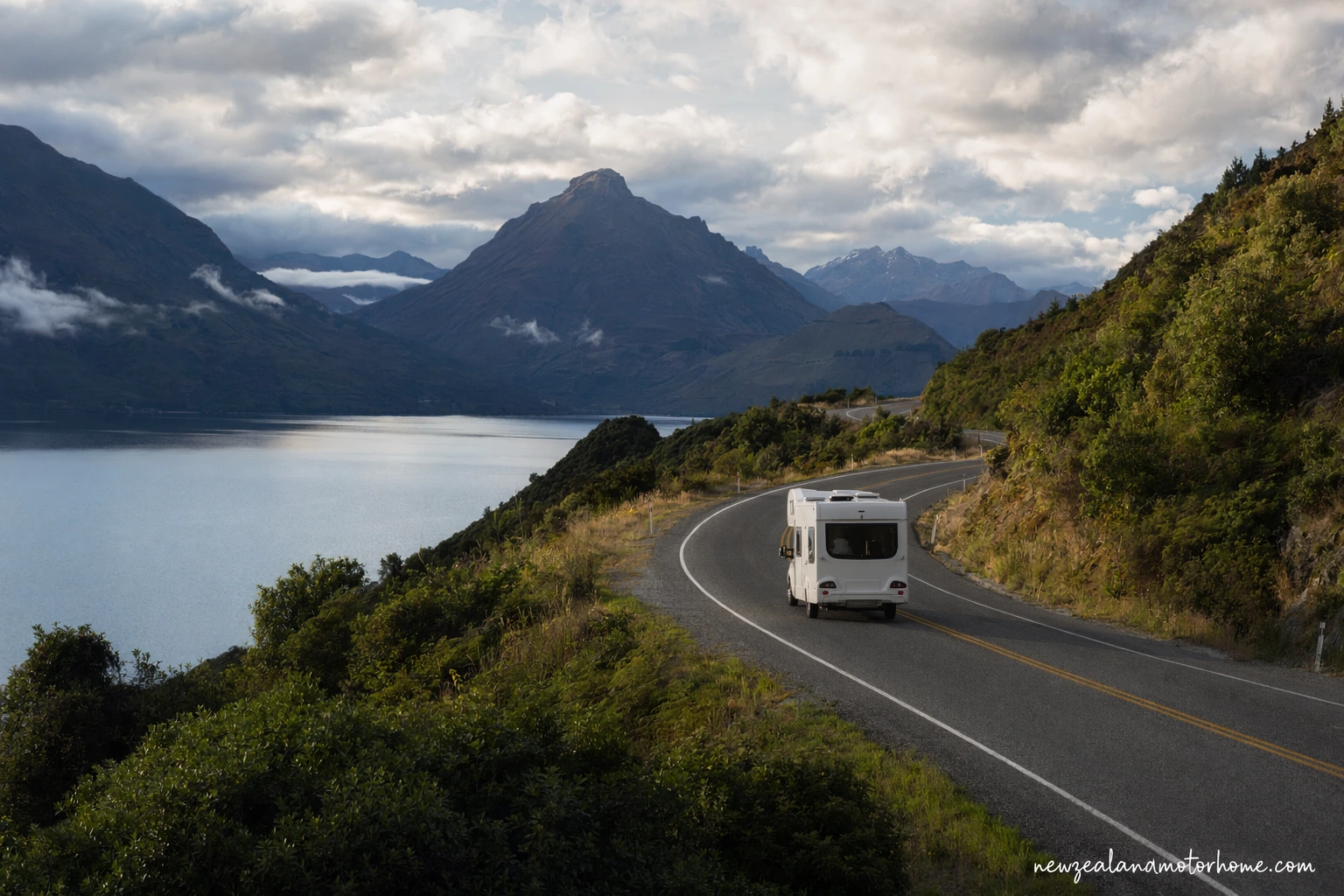
Dunedin to Rotorua campervan route: South Island coast to geothermal North Island
- Allow 5–7 days comfortably
- Includes Cook Strait ferry
- Best with certified self-contained van
- Powered sites useful before ferry
- Winter caution on central plateau
A Dunedin to Rotorua campervan trip is a proper cross-country run: Otago harbour roads, the Canterbury plains, Kaikōura coast, a Cook Strait ferry crossing, then the volcanic plateau into Rotorua. It is not a quick point-to-point dash if you are sleeping in the van, filling water, emptying grey waste and giving yourself time to enjoy the stops.
This guide is written for self-drive campervan and motorhome travellers, with realistic legs, overnight ideas, road notes and places to think about powered sites, freedom camping, dump stations, LPG and fresh-water fills. Use it as a practical framework, then adjust the pace around ferry times, weather, your vehicle size and how often you want to plug in.
How long to allow for the Dunedin to Rotorua drive
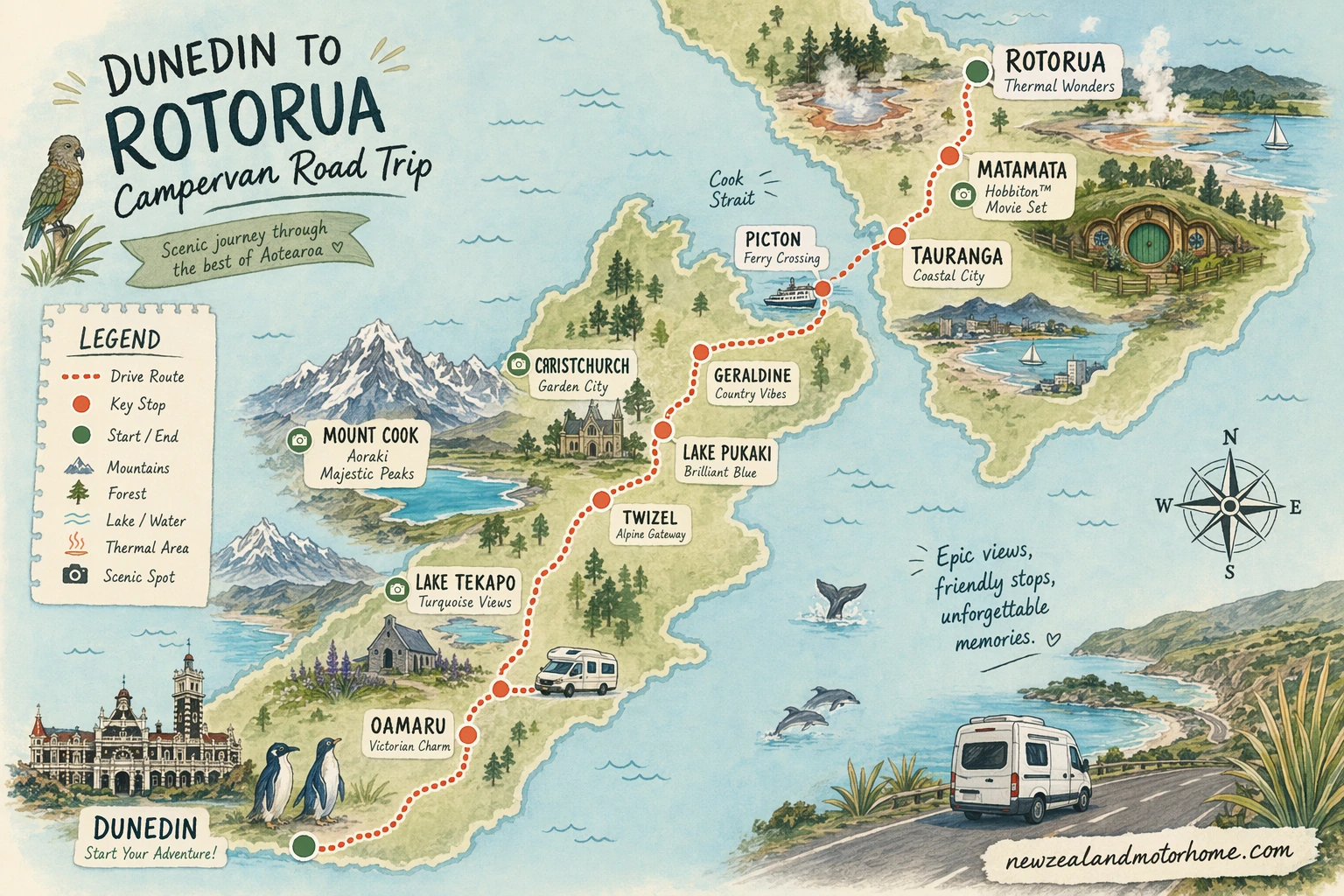
The Dunedin to Rotorua drive is roughly a two-island journey rather than one long road day. In a campervan, a comfortable pace is usually 5 to 7 days, allowing for the ferry, slower coastal sections, food and fuel stops, and proper overnight stays. Four days is possible, but it will feel like a relocation run with early starts and little margin for bad weather.
A sensible rhythm is Dunedin to Oamaru or Timaru, then Christchurch, Kaikōura or Blenheim, Wellington after the ferry, Taupō, and Rotorua. If you want extra time for the Otago Peninsula, Aoraki/Mount Cook side trip, whale-watching territory around Kaikōura, or geothermal stops near Taupō, add nights rather than stretching the driving days.
- Fastest practical campervan pace: 4 days, with limited sightseeing and a fixed ferry booking.
- Comfortable pace: 5 to 7 days, with time for powered-site nights and laundry.
- Slow scenic pace: 8+ days, especially if adding Aoraki/Mount Cook, Hanmer Springs or the Wairarapa.
- Best planning buffer: keep one flexible night near Picton, Wellington or Taupō in case ferry or weather timing shifts.
Leg 1: Dunedin to Oamaru or Timaru
Leaving Dunedin, give yourself time if you are starting near the harbour, St Kilda or the one-way streets around the central city. Larger motorhomes should take corners gently through the city and avoid squeezing into small supermarket car parks when a roomier edge-of-town stop will do. SH1 north is straightforward, with coastal views, service towns and easy refuelling.
Oamaru makes a relaxed first night if you want a shorter day. Look for established holiday parks or council-approved camping areas rather than assuming you can sleep anywhere near the historic precinct or waterfront. Timaru is a better reach if you want to bank more kilometres on day one; it has more service options and usually works well for a powered-site reset.
- Van stops: Waikouaiti, Moeraki, Oamaru and Timaru all have easier parking than central Dunedin, but use long bays or edge streets where possible.
- Overnight style: holiday park powered sites are the simplest option; freedom camping is council-controlled and only suitable where signage allows it.
- Servicing: top up fuel before leaving Dunedin or in Oamaru/Timaru; check council-listed dump stations rather than relying on roadside toilets.
- Road note: SH1 is sealed and van-suitable, but allow extra time for traffic through towns and for wind across open farmland.
Leg 2: Timaru or Oamaru to Christchurch, then Kaikōura or Blenheim
From South Canterbury into Christchurch the driving is mostly open and efficient, but it can be tiring in a high-sided campervan when the nor'west wind is up. Keep both hands on the wheel, take breaks in larger towns such as Ashburton or Rolleston, and avoid peak commuter times if you need to cross Christchurch.
North of Christchurch, the route tightens as you approach the Kaikōura coast. This is one of the prettiest parts of the Dunedin to Rotorua motorhome road trip, with sea on one side and steep hills on the other, but it is not a place to rush. Use signed lay-bys, not narrow shoulders, and be patient around roadworks, rail crossings and slower trucks.
- Christchurch stop: stay at an established holiday park if you need laundry, showers, fresh water and a dump station before the coastal section.
- Kaikōura stop: book ahead in summer; powered sites are useful after cooler South Island nights.
- Blenheim option: a practical pre-ferry night with supermarkets, fuel, LPG bottle swaps and more room to organise the van.
- Vehicle note: long rear overhangs need care in tight coastal pull-outs and when rejoining SH1.
Cook Strait ferry: Picton to Wellington in a campervan
The ferry is the one fixed piece of this route, so plan around it early. When booking, enter the full length and height of your campervan or motorhome, including bike racks, roof boxes, solar gear or rear storage. Arrive with enough time to queue, switch off LPG as directed, secure loose items inside, and take valuables with you to the passenger decks.
Picton has limited room for casual overnight parking, so do not assume you can sleep near the terminal. If your ferry is early, stay at a proper campground in Picton or Blenheim the night before. On the Wellington side, traffic can be sharp after disembarking; if you are tired, stay locally rather than pushing straight onto the expressway in the dark.
- Before boarding: empty rubbish, check fridge latches, turn gas off as instructed and keep ferry documents handy.
- Water and waste: service the van in Blenheim, Picton, Wellington or the Hutt Valley depending on timing.
- Overnight choice: powered site before or after the crossing helps with fridge batteries and damp towels.
- Weather note: Cook Strait can affect sailing times; keep your next night flexible if possible.
Leg 3: Wellington to Taupō and Rotorua
From Wellington, most campervan travellers follow SH1 north through Kāpiti, Levin and Taihape, then across the central plateau towards Taupō. It is a big day to Taupō, so start early if you are leaving from a Wellington campground and allow time for fuel, groceries and a proper lunch stop. The road is sealed and suitable for campervans, but there are long climbs, exposed sections and winter weather risks around the Desert Road.
Taupō is the natural final overnight before Rotorua. It has supermarkets, fuel, dump station options, fresh-water fills and a wide choice of powered and unpowered sites. From Taupō to Rotorua, SH5 is a shorter final leg through geothermal country; expect winding sections and take care with speed on descents, especially in a heavier motorhome.
- Good stopovers: Kāpiti Coast, Whanganui, Taihape, Turangi or Taupō depending on how you want to break the North Island leg.
- Dump and fill: look for official dump stations in Taupō and Rotorua before settling into your final campground.
- Winter note: check road conditions for the central plateau; snow, ice and high wind can change the day quickly.
- Rotorua arrival: choose a campground or certified overnight area before exploring town, as central parking can be busy and sulphur steam can make visibility patchy in places.
Overnight stops, freedom camping and van servicing
Because this route crosses several council regions, freedom camping rules change often. A certified self-contained campervan gives you more options, but it does not mean you can park anywhere overnight. Always check current signs, local council maps and any time limits before putting the kettle on and calling it a night.
For this length of trip, mix powered and unpowered nights. Powered sites are worth it after cold South Island evenings, before or after the ferry, and before reaching Rotorua if you want charged devices and a settled fridge. Unpowered sites can work well when your house battery, solar, water and toilet capacity are in good shape.
As a rough servicing pattern, empty grey and black waste every couple of days, refill fresh water whenever you pass a reliable tap, and sort LPG before heading into smaller holiday-period towns. If you want help shaping the exact number of nights and stops for your van size and travel style, use the talk-to-us step before you lock in ferry times.
- Carry: drinking-water hose, levelling ramps, power lead, rubbish bags and toilet chemicals suitable for your cassette.
- Watch: low branches at older campgrounds, tight dump station approaches and steep supermarket exits.
- Book ahead: Kaikōura, Picton, Wellington, Taupō and Rotorua during school holidays and long weekends.
- Respect limits: use official dump stations only and leave freedom camping areas cleaner than you found them.
Keep planning
Visiting polynesian spa rotorua by campervan
Read onVisiting larnach castle dunedin by campervan
Read onVisiting agrodome rotorua by campervan
Read onHoliday parks rotorua
Read onHoliday parks dunedin
Read onFarmers markets rotorua
Read onCommon questions
Can I drive from Dunedin to Rotorua in a campervan in two days?
Technically it is possible only with very long days, a perfectly timed ferry and almost no sightseeing, but it is not a comfortable campervan plan. Allow at least 4 days for a relocation-style trip, or 5 to 7 days for a safer, more enjoyable route.
Do I need to book the Cook Strait ferry for my motorhome?
Yes, book ahead and enter the correct vehicle length and height, including anything fitted to the rear or roof. Ferry space for larger vehicles can fill during busy periods, and your sailing time will shape the rest of the route.
Is the Dunedin to Rotorua route suitable for large motorhomes?
Yes, the main route uses sealed state highways and is suitable for larger motorhomes. Take extra care on the Kaikōura coast, through Wellington traffic, on the central plateau and in older town centres where parking bays and turns can be tight.
Can I freedom camp on this route?
Only where local rules and signage allow it, and usually only in a certified self-contained vehicle. Because the route crosses many council areas, check the current rules each day rather than relying on what was permitted in the last town.
Where should I plan dump station stops?
Good servicing points to plan around include Dunedin, Oamaru or Timaru, Christchurch, Kaikōura or Blenheim, Wellington, Taupō and Rotorua. Use official dump stations only, and refill fresh water whenever you have a confirmed potable tap.
Which direction is better: Dunedin to Rotorua or Rotorua to Dunedin?
Both directions work well in a campervan. Dunedin to Rotorua gives you a gradual shift from southern coast to geothermal North Island, but ferry availability, wind, season and your hire depot arrangements are usually more important than direction.
Have a planner shape this for your dates
Send a short outline — your dates, party size, and the kind of trip you want. A planner replies with a vehicle recommendation, a paced route, and the realistic budget.