- Allow 9–11 days comfortably
- Cook Strait ferry required
- Best in spring, summer or autumn
- Powered nights useful every 2–3 days
- Check SH1 conditions in Northland
A Dunedin to Whangarei campervan trip is one of those proper end-to-end New Zealand drives: southern harbour, Canterbury plains, the Kaikōura coast, Cook Strait, the central North Island and finally the warm, green run into Northland. It is a long route, but in a self-contained motorhome it becomes manageable when you break it into sensible legs with good overnight stops and service points.
This guide is written for travellers driving and sleeping in their hired van. You’ll find practical notes on where to pause, when to book powered sites, how to handle the ferry with a motorhome, and the road stretches that need extra patience in a larger vehicle.
How many days to allow from Dunedin to Whangarei
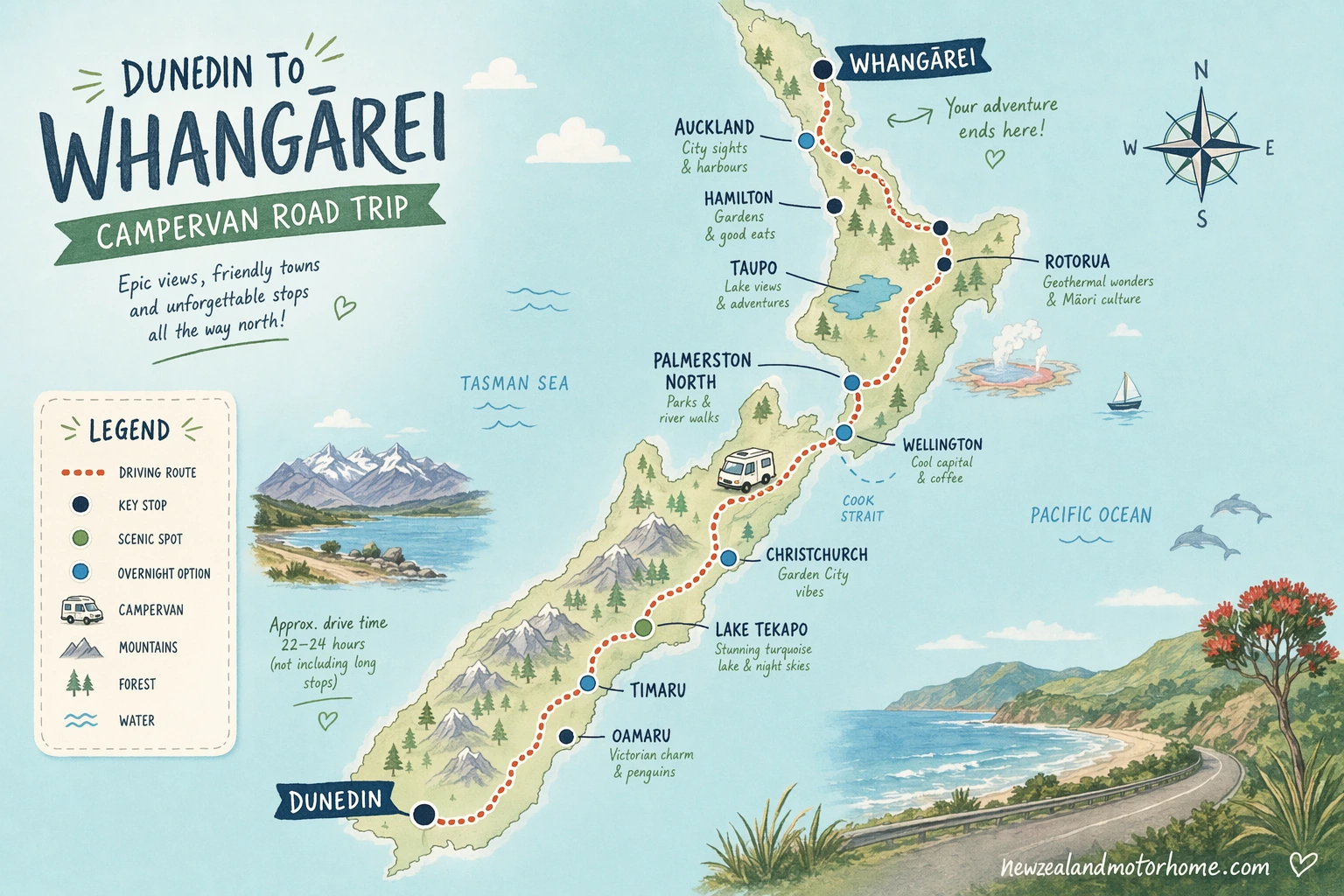
The direct Dunedin to Whangarei drive is a big one: roughly the length of the country, plus a Cook Strait ferry crossing. In a campervan, the trip is far more comfortable if you treat it as a northbound relocation with time for laundry, fresh-water fills, dumping waste and the odd weather delay.
Seven days is possible if you are experienced and mostly driving. Ten to twelve days feels better for most motorhome travellers, especially if you want to stop at Kaikōura, Wellington, Taupō or Rotorua rather than simply pass through.
- Fast but tiring: 6–7 days, with several long driving days and booked sites near the ferry.
- Balanced: 9–11 days, allowing shorter legs, powered nights and a rest day in the North Island.
- Unhurried: 12–16 days, with time for the Waitaki coast, Kaikōura, Wellington, thermal country and Northland beaches.
- Best rhythm: drive early, park the van before dark, then plug in or level up while the campground is still easy to navigate.
South Island legs: Dunedin to Picton
Leave Dunedin on SH1 and take the northern motorway with care if your van is tall or heavily loaded; the gradients are not dramatic, but crosswinds and wet weather can make the first hour feel busy. Oamaru, Timaru and Ashburton all make practical pauses for groceries, fuel and a leg stretch before the long Canterbury Plains section into Christchurch.
North of Christchurch, the road tightens as it reaches the Kaikōura coast. This is one of the prettiest parts of the Dunedin to Whangarei motorhome road trip, but it is not a place to rush a wide vehicle. Expect rail crossings, coastal curves, seal-viewing traffic and occasional roadworks after slips or weather events.
- Good first nights: Oamaru or Timaru if you want a gentle start; Christchurch if you are covering distance.
- Powered-site strategy: book a powered site every second or third night to recharge house batteries, run heaters safely and do laundry.
- Kaikōura stop: park in marked larger-vehicle areas and avoid squeezing into tight seaside streets with an overhang.
- Before Picton: Blenheim and Picton are sensible places to dump waste, refill fresh water and top up groceries before the ferry.
Cook Strait ferry planning for a motorhome
The ferry is the hinge point of this route, so book it early and enter the correct campervan length and height. If you have bikes, a rear box or a longer-than-standard vehicle, include that in your booking details. Arrive with enough time to queue calmly; Picton’s ferry approaches are straightforward, but turning around in a long van once you have missed a lane is no fun.
Ferry operators have specific rules for LPG bottles, generally requiring gas to be turned off before loading. Fridges should be prepared in advance, and anything loose in cupboards should be stowed because Cook Strait can be bumpy. If your crossing is late in the day, plan an overnight stop near Wellington, Porirua or the Hutt Valley rather than trying to drive north tired.
- Before boarding: dump the cassette, fill drinking water only if needed, secure cupboards and switch off LPG as instructed.
- On arrival: follow marshal directions; motorhomes are usually parked among larger vehicles and may unload later than cars.
- Overnight tip: choose a booked campground or holiday park after the ferry, especially in peak summer or on public-holiday weekends.
North Island legs: Wellington to Auckland and beyond
From Wellington, SH1 takes you north through the Kāpiti Coast and then up towards the central plateau. Transmission Gully has made the exit from Wellington easier, but winds can still buffet a high-sided campervan. Further north, the Desert Road section near Tongariro can be cold, foggy or icy in winter, so check conditions before committing to that leg.
Taupō, Rotorua, Cambridge or Hamilton are all useful overnight choices depending on your pace. They give you access to dump stations, supermarkets, LPG bottle swaps or fills, and powered sites before the Auckland motorway run. Try not to arrive into Auckland at peak commuter time in a large motorhome; lane changes, toll-road decisions and height-clearance signs are easier when traffic is flowing.
- Central North Island stops: Taupō for lake views and services; Rotorua for thermal parks and campground choice; Cambridge or Hamilton for an easy pre-Auckland night.
- Fuel planning: do not let the tank run low before long rural sections or late-night arrivals.
- Auckland note: motorways are fine in a van, but avoid city-centre streets unless your campground or service stop is clearly mapped.
- North of Auckland: the Northern Gateway Toll Road is common on this route; pay it online through the official channel after checking your hire agreement.
Final approach to Whangarei and where to base the van
The last run to Whangarei follows SH1 through Warkworth, Dome Valley and the Brynderwyn Hills area. It is a slower, more winding finish than the map suggests, and closures or detours can happen after heavy rain or roadworks. Check current highway conditions before leaving Auckland or Warkworth, particularly if you are driving a longer motorhome.
Whangarei is a good place to pause rather than immediately pushing further into Northland. Look for a holiday park or council-approved camping area that suits your certification and power needs. If you are freedom camping, you must follow local bylaws and only use sites that allow your vehicle type; being certified self-contained does not mean you can park overnight anywhere.
- Van-friendly bases: Whangarei town for services, Tutukākā coast for beaches, or Waipū/Mangawhai if you want a softer approach from the south.
- Services to handle on arrival: dump grey and black water, refill fresh water, restock food, check LPG and give the van a proper tidy-out.
- Parking note: Whangarei’s central streets can be tight for long vehicles, so use larger public car parks where permitted and walk into the basin area.
- Trip help: if you want this route shaped around ferry times, van size and overnight preferences, you can start with our plan-your-trip chat.
Freedom camping, dump stations and practical van habits
Because this route crosses many council regions, freedom camping rules change often. A certified self-contained campervan gives you more options, but each district can still restrict streets, beaches, reserves and time limits. Always read the signs on arrival and check council information rather than relying on an old app pin.
Dump stations are available in many larger towns and at numerous holiday parks, but do not leave waste management until the cassette is full. On a long northbound run, it is easier to build a service stop into the morning: dump, refill fresh water, take rubbish to the correct bins, then drive with the van lighter and cleaner.
- Service towns to think about: Dunedin, Oamaru, Timaru, Christchurch, Kaikōura, Blenheim, Picton, Wellington, Taupō, Rotorua, Hamilton, Warkworth and Whangarei.
- Powered vs unpowered: unpowered sites are fine in mild weather if your battery is healthy; powered sites are worth booking after cold nights, heavy device charging or several days off-grid.
- Water habit: fill only what you need before steep or windy sections; a full tank adds weight and can change how the van handles.
- Rubbish habit: keep a small day bag in the cab and empty it at proper facilities, not at scenic lay-bys.
Keep planning
Common questions
Can I drive from Dunedin to Whangarei in a week by campervan?
Yes, but it will be a driving-focused week with limited sightseeing. For most self-drive campervan travellers, 9 to 11 days is a better minimum because it allows for ferry timing, laundry, dump stations and a slower final run into Northland.
Do I need to book the Cook Strait ferry for my motorhome?
Book ahead, especially in summer, school holidays and around public holidays. You need to provide the correct vehicle length and height, including racks or rear storage, and follow the ferry operator’s LPG instructions before boarding.
Is the route suitable for a large campervan?
Yes, the main Dunedin to Whangarei drive uses major highways and is suitable for motorhomes. The slower parts are the Kaikōura coast, Wellington wind zones, the central plateau in winter, and the winding roads north of Auckland, so allow extra time and avoid driving tired.
Where should I stop overnight between Auckland and Whangarei?
Warkworth, Waipū, Mangawhai and Whangarei all work, depending on how far you want to drive. Choose a legal campground, holiday park or approved freedom camping area that matches your self-containment status and vehicle size.
Can I freedom camp all the way from Dunedin to Whangarei?
Not everywhere. Freedom camping rules differ by council area, and some popular coastal or urban spots are restricted even for certified self-contained vehicles. Mix approved freedom sites with powered holiday park nights so you can recharge, dump waste and refill fresh water properly.
Have a planner shape this for your dates
Send a short outline — your dates, party size, and the kind of trip you want. A planner replies with a vehicle recommendation, a paced route, and the realistic budget.