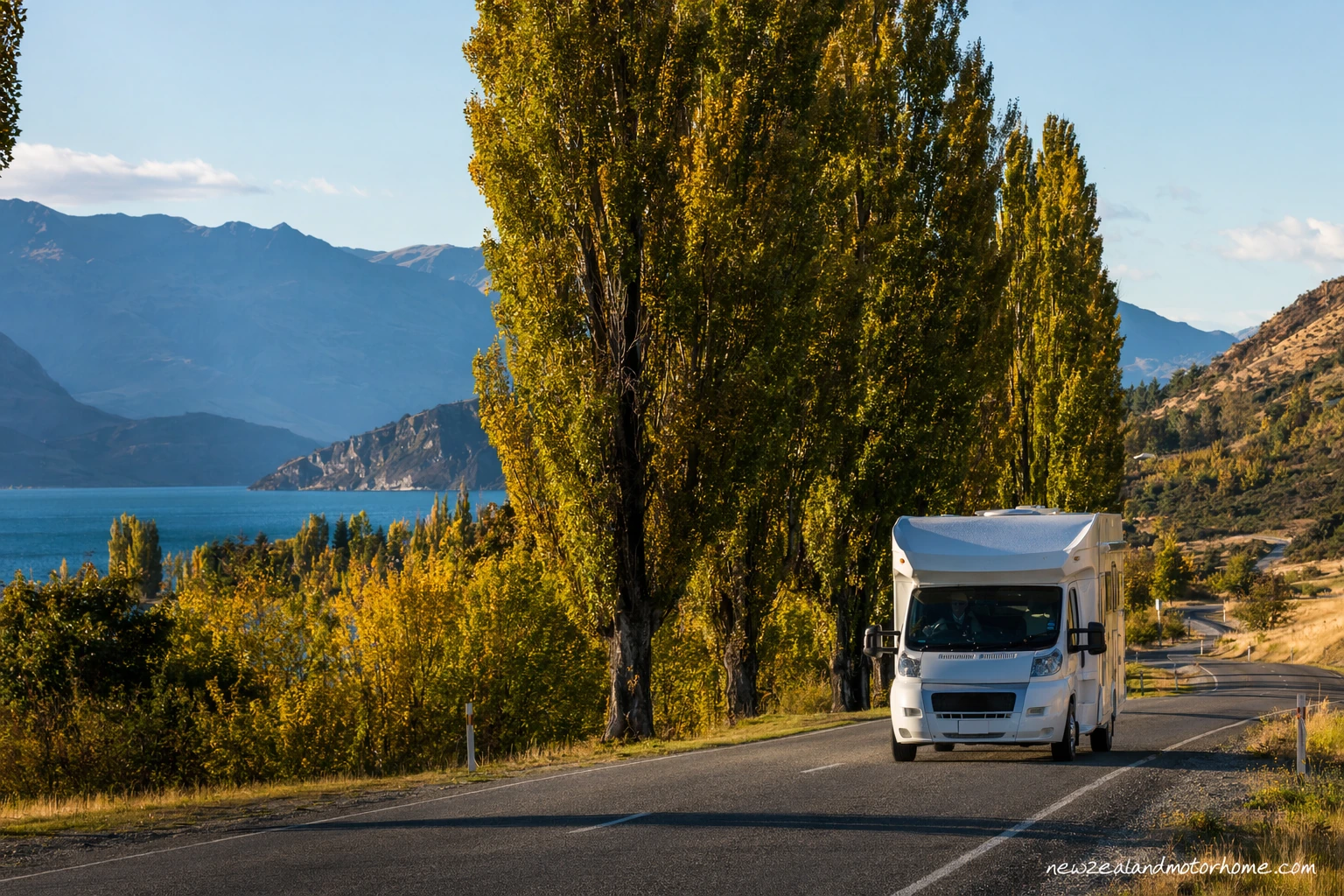
- Best in 2 to 4 days
- Sealed SH6 and SH8 route
- Good powered-site towns en route
- Self-contained freedom camping only
- Watch steep Dunedin streets
The Queenstown to Dunedin campervan route is one of those South Island drives where the scenery changes by the hour: lake edges and schist hills out of Queenstown, wide Central Otago valleys, old gold towns, then the greener run into Dunedin and the Otago Harbour.
You can drive it in a long day, but it is far better in a van over two to four days. This guide is written for self-drive motorhome travellers, with practical notes on where to park the van, where to overnight, how to manage water and waste, and which roads feel comfortable in a larger vehicle.
How many days to allow for the Queenstown to Dunedin drive
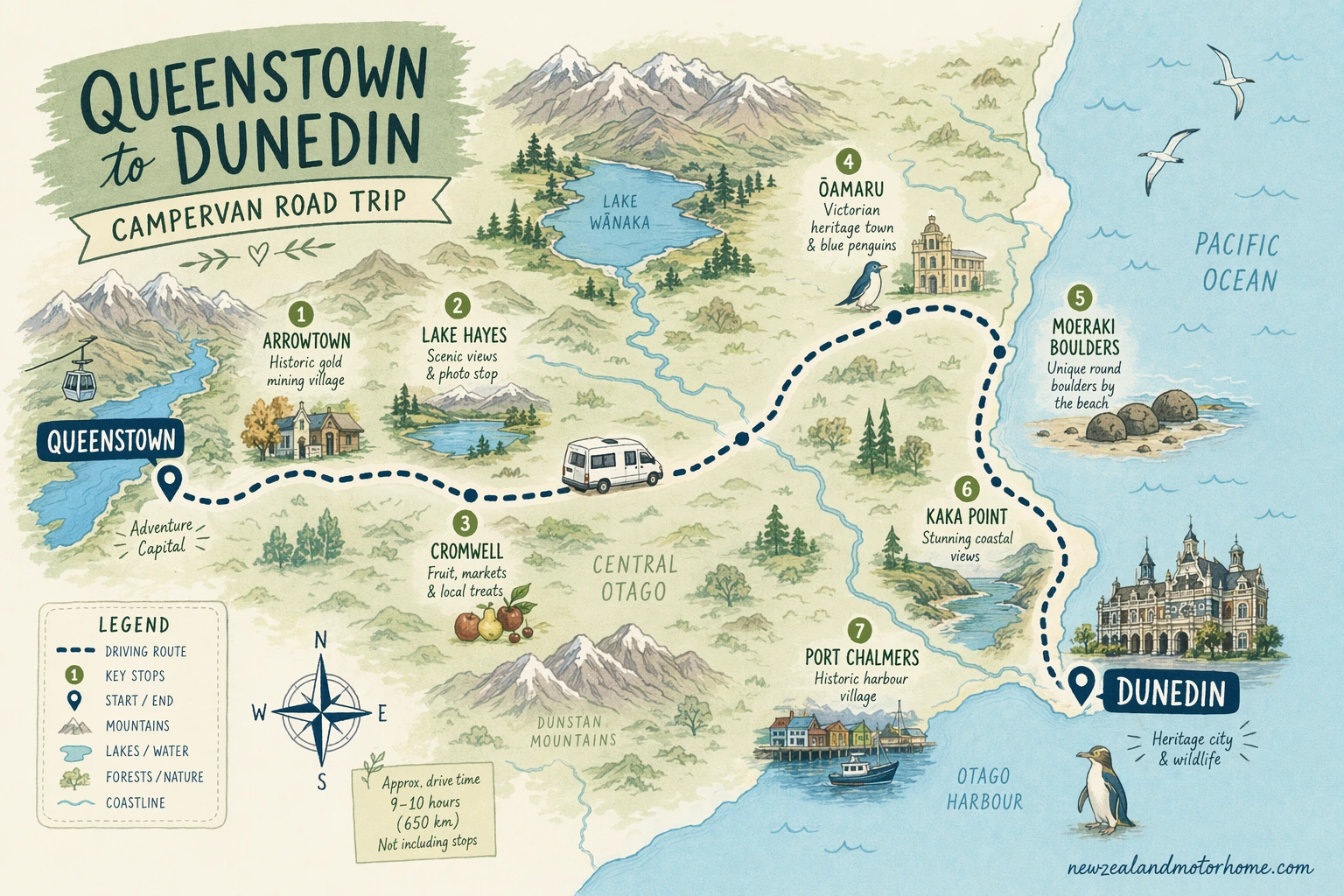
The direct Queenstown to Dunedin drive is about half a day of wheel time if you keep moving, but that misses the point in a campervan. Central Otago rewards slow travel: short walking stops, river picnics, fruit stalls with sensible parking, and small towns where it is easier to find a level site than in Queenstown itself.
For most motorhome travellers, two nights is the sweet spot. One night around Cromwell, Clyde, Alexandra or Roxburgh breaks the trip neatly, while a second night near Lawrence, Milton, Taieri Mouth or on the edge of Dunedin lets you arrive without trying to thread a large van through the city at dusk.
- 1 day: Possible, but only if you are relocating the van and have an early start.
- 2 days: A comfortable minimum, with one Central Otago overnight stop.
- 3 to 4 days: Best for walks, cycle trails, heritage towns and a relaxed Dunedin arrival.
- Winter note: This route avoids the Crown Range, but you can still meet frost, fog and short daylight hours inland.
Best campervan route: SH6, SH8 and the approach to Dunedin
The simplest van-friendly line is Queenstown to Cromwell on SH6 through the Kawarau Gorge, then SH8 through Clyde, Alexandra, Roxburgh and Lawrence, before joining the route towards Milton and Dunedin. It is sealed all the way and used by trucks, buses and rental motorhomes, but it still asks for patience in a larger van.
The Kawarau Gorge has tight bends, rock faces and limited passing space in places. Use the slow-vehicle bays when traffic builds behind you, and pull into proper formed lay-bys rather than gravel shoulders. Long rear overhangs can swing wider than you expect on tight car park exits around viewpoints.
Avoid adding the Crown Range Road unless you are very confident with steep grades and your hire agreement allows it. The official Queenstown to Dunedin motorhome road trip is easier and less tiring via SH6 and SH8, especially in winter or in a high-roof vehicle.
- Fuel and LPG: Fill before leaving Queenstown if you are low; Cromwell, Alexandra, Milton and Dunedin are sensible service points.
- Fresh water: Top up at holiday parks or signed public taps where potable water is clearly marked.
- Dump stations: Plan around Queenstown, Cromwell, Alexandra, Roxburgh, Milton and Dunedin, and confirm access on the day as some sites have seasonal or maintenance closures.
Where to stop between Queenstown and Central Otago
Leaving Queenstown, give yourself time to clear the busy Frankton traffic and supermarket area before settling into the gorge drive. If you need groceries, water or LPG, it is usually easier to sort that before you leave rather than stopping in a tight roadside car park with a full-size motorhome.
The Kawarau Bridge area is a classic stop, but the car park can be busy and awkward for long vans at peak times. If it looks packed, keep moving rather than forcing a squeeze. Cromwell is a much easier pause, with lakefront walks, Old Cromwell Town, larger parking areas, supermarkets and access to camping options nearby.
- Good first-night bases: Cromwell, Bannockburn, Clyde, Alexandra or Roxburgh.
- Site types: Expect a mix of powered holiday park sites, unpowered council or domain-style sites, and limited freedom camping where local rules allow.
- Freedom camping: Only use designated areas and only if your van meets the current self-containment requirements displayed on the vehicle.
- Parking tip: In historic town centres, park on the edge and walk in; older streets and angled parks are not always friendly to long vehicles.
Central Otago overnights: Clyde, Alexandra, Roxburgh and Lawrence
Clyde and Alexandra are good places to slow down. They suit travellers who want a powered site, a proper shower, laundry time and a dump station reset before continuing. The river trails and old stone buildings are close enough that you can leave the van parked and explore on foot or by bike.
Roxburgh makes a quieter overnight stop, especially if you like the rhythm of river country and wide evening light. It is also a useful mid-route place to check grey water, fresh water and gas before the more rural stretch towards Lawrence. Always check whether a dump station has potable water as well; the two are not automatically provided together.
Lawrence is a good final small-town stop before the run to Dunedin. It has heritage streets, gentler parking than the city, and a calmer feel for anyone who prefers not to arrive in Dunedin late in the day. If you would like help choosing between a powered park, an unpowered stop or a freedom-camping option that suits your van, you can use the soft planning step at /talk-to-us/ before you lock in the route.
Arriving in Dunedin with a motorhome
Dunedin is rewarding in a campervan, but it is not a city where you want to wander into the steepest streets by accident. The CBD has hills, one-way streets, tighter parking and busy student traffic. If your van is long or high, park on the flatter fringe where permitted, then walk or use local transport for the Octagon, railway station and warehouse precinct.
For beaches and wildlife, consider where you will sleep before you head out to the Otago Peninsula. The peninsula road is scenic but can feel narrow in places, especially with oncoming traffic and cyclists. Take it slowly, avoid stopping on blind bends, and use proper bays or settlement parking rather than squeezing onto the harbour edge.
- Powered sites: Useful in Dunedin if you need heating, battery recharge or a full reset after several free or unpowered nights.
- Unpowered sites: Fine in settled weather if your house battery and water tanks are in good shape.
- Freedom camping: Dunedin has strict local rules and designated areas; check current signage before setting up.
- Dump and water: Empty and refill before parking up for the night, especially if you are heading onto the peninsula or to a beachside area.
Seasonal road notes and practical van checks
Summer brings long daylight and busy parking around Queenstown, Cromwell and Dunedin beaches. Start early, keep your overnight plan flexible, and do not leave your site search until after dinner in peak holiday periods. Autumn is beautiful through Central Otago, with cooler nights that make a powered site more appealing.
In winter, expect frosty mornings inland and occasional fog around valleys. This route is generally more forgiving than high alpine passes, but a heavy motorhome takes longer to stop, and shaded corners can stay cold. Check tyre condition, screen wash, LPG levels and heater operation before you leave Queenstown.
- Before departure: Empty grey and black water, fill potable water, secure cupboards and check LPG.
- On the road: Use lower gears on descents and let faster traffic pass when safe.
- At camp: Park level where you can, avoid blocking turning areas, and keep awnings within your marked site.
- Self-containment: Carry proof of certification and follow the specific bylaw for each district you stop in.
Keep planning
Visiting skyline queenstown gondola by campervan
Read onVisiting larnach castle dunedin by campervan
Read onHoliday parks queenstown skyline
Read onHoliday parks queenstown lakes
Read onHoliday parks queenstown
Read onHoliday parks dunedin
Read onCommon questions
Can I drive from Queenstown to Dunedin in one day in a campervan?
Yes, but it makes for a fairly focused driving day and leaves little time for stops. In a motorhome, two days is more comfortable because you can break the journey around Cromwell, Alexandra or Roxburgh and arrive in Dunedin rested.
Is the Queenstown to Dunedin campervan route suitable for large motorhomes?
The main route via SH6 and SH8 is sealed and generally suitable for larger vans. Take extra care through the Kawarau Gorge, use slow-vehicle bays, and avoid tight town-centre parking when there are easier edge-of-town options.
Where should I stay overnight between Queenstown and Dunedin?
Cromwell, Clyde, Alexandra, Roxburgh and Lawrence all work well as overnight bases. Choose a powered site if you need heating, battery charging or laundry, and only freedom camp where local signage allows it and your van is certified self-contained.
Are there dump stations on the Queenstown to Dunedin drive?
Yes, there are dump station options in the larger towns along the route, including around Queenstown, Cromwell, Alexandra, Roxburgh, Milton and Dunedin. Check current access as facilities can close for maintenance, and remember that potable water is only safe to use where it is clearly labelled.
Should I take the Crown Range Road on this trip?
Not for the standard Queenstown to Dunedin motorhome road trip. The easier route is via SH6 through the Kawarau Gorge and Cromwell; the Crown Range is steeper, higher and less comfortable in many hired campervans, especially in winter.
Is freedom camping allowed in Dunedin?
Freedom camping around Dunedin is restricted to specific areas and conditions. Always check the latest local bylaw and on-site signs, and make sure your campervan meets the current self-containment requirements before staying anywhere outside a campground.
Have a planner shape this for your dates
Send a short outline — your dates, party size, and the kind of trip you want. A planner replies with a vehicle recommendation, a paced route, and the realistic budget.