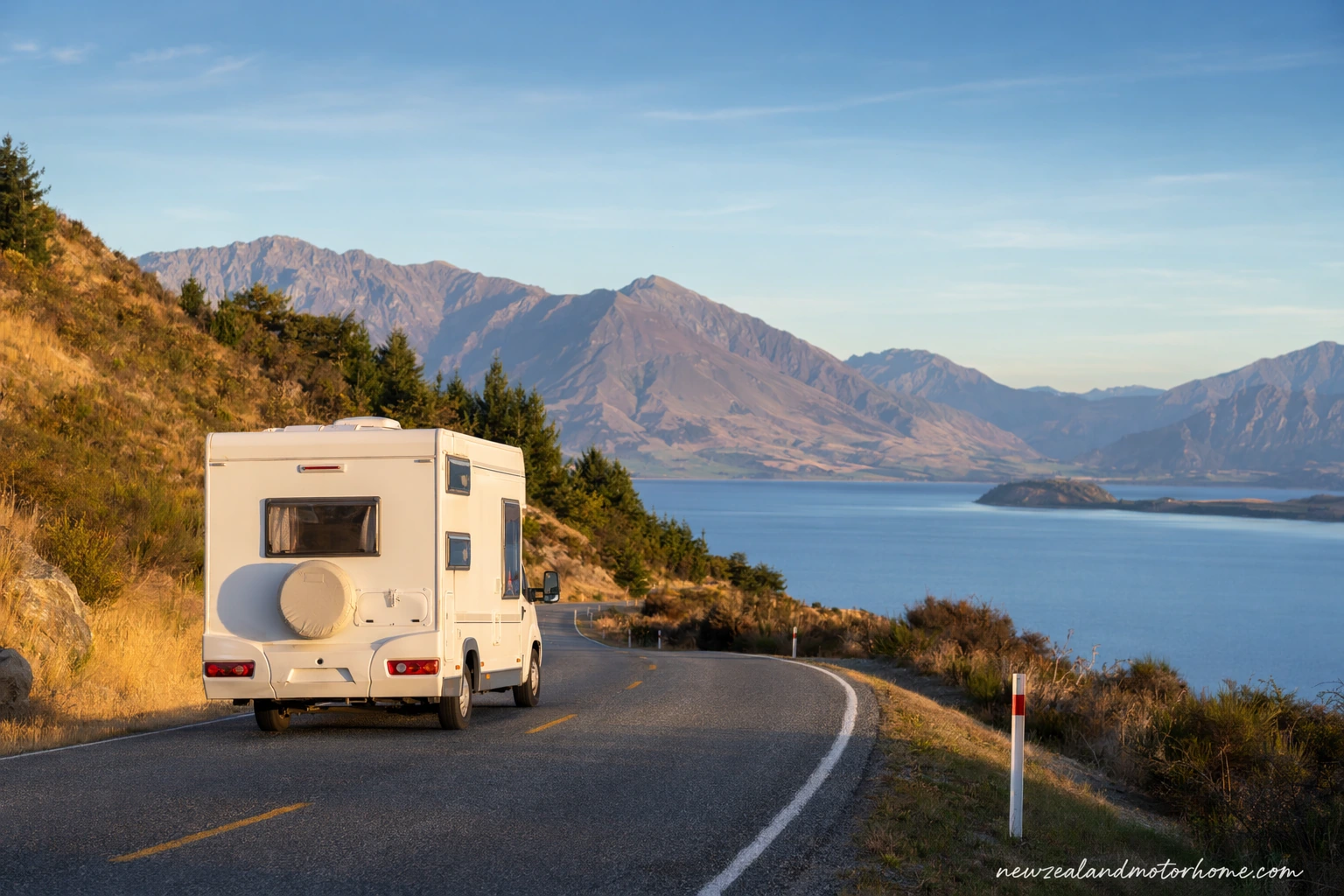
- Best pace: 4 to 6 days
- Main roads: SH1 and SH6
- Book powered sites in summer
- Watch wind on open plains
- Self-contained rules vary by district
The Dunedin to Nelson campervan route is a proper South Island crossing: southern harbours and old stone towns, the Waitaki country, big alpine light around Tekapo, then the Kaikōura Coast and the vineyards before you roll into Tasman Bay. You can drive it in two long days, but it is much better as a four to six day motorhome road trip with time to plug in, empty tanks, refill fresh water and not arrive frazzled.
This guide is written for travellers sleeping in the van, not just passing through. It covers sensible driving legs, places to pause with a larger vehicle, overnight styles from powered holiday park sites to properly self-contained freedom camping options, and the road notes that matter when your home for the week is taller and heavier than a car.
How many days to allow, and the best overall route
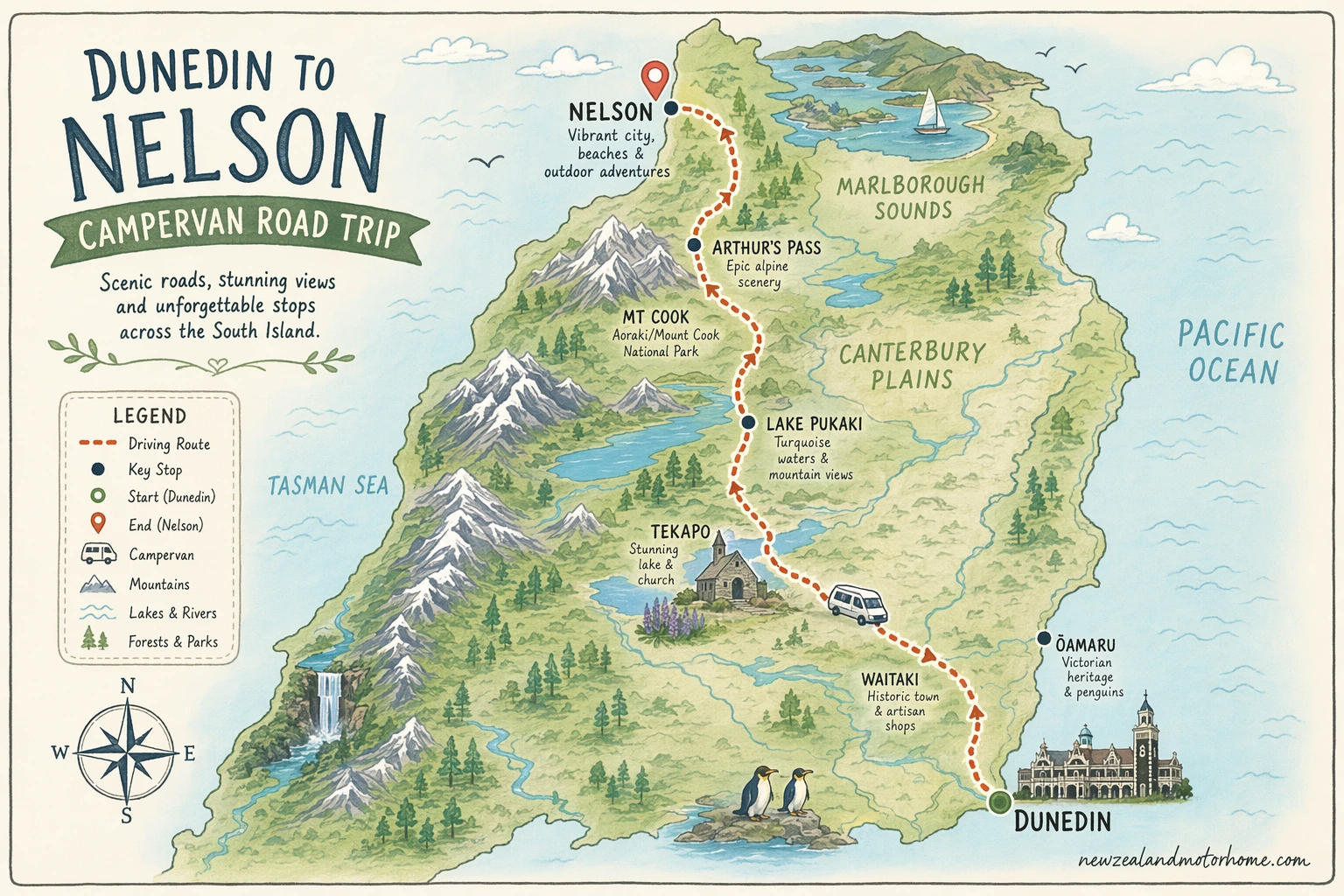
The most useful Dunedin to Nelson drive for a campervan is usually Dunedin to Oamaru, through the Waitaki and Mackenzie country, across Canterbury, then north via Kaikōura, Blenheim and the Whangamoa Saddle into Nelson. It keeps you mostly on state highways, gives you regular service towns, and avoids trying to stitch together too many small inland roads in one day.
Allow at least three days if you are moving with purpose. Four to six days is the sweeter pace: you can have one shorter scenic day around the lakes or coast, one powered-site night for laundry and charging, and enough daylight for the more winding sections north of Kaikōura and near Nelson.
- Fast but tiring: 2 days, with long driving hours and limited sightseeing.
- Comfortable: 4 days, using Oamaru or Twizel/Tekapo, Christchurch or North Canterbury, and Kaikōura or Blenheim as stops.
- Relaxed: 5 to 6 days, adding lake time, a coastal walk, or a winery-area night before Nelson.
If your van is over 7 metres, or you are new to driving on the left, build in more daylight. South Island roads can be easy in distance but slow in feel, especially when you are managing camber, wind, road cones and slower hill climbs.
Leg 1: Dunedin to Oamaru, then into the Waitaki
Leave Dunedin with full fresh water, an empty grey tank and a topped-up LPG bottle if you can. The first stretch north on SH1 is straightforward by South Island standards, with passing lanes in places and service towns where you can pull in without threading the van through tiny streets. In Dunedin, use a proper supermarket or large retail car park for stocking up rather than squeezing into the Octagon area.
Oamaru is a good first stop if you have collected the motorhome late or want an easy first night. Look for holiday park options if you need power, showers and a dump station, or check current council rules for any self-contained overnight areas. Park on the edge of the Victorian Precinct rather than hunting for a narrow kerbside space; it is easier to walk in than to reverse a high-roof van around busy corners.
- Good first-night plan: Dunedin to Oamaru, then a powered site to get used to the van systems.
- Longer first day: Continue inland through the Waitaki Valley toward Kurow, Omarama, Twizel or Lake Tekapo.
- Services to think about: fuel in Oamaru, fresh water and dump station checks before heading inland, LPG if your bottle is low.
The Waitaki road is scenic but can be exposed. In a high-sided campervan, treat strong nor'west winds with respect and do not rush the open sections near the lakes. Pull off only where the lay-by is long enough for your full vehicle length, and avoid soft lake-edge verges after rain.
Leg 2: Mackenzie Country to Canterbury
Twizel and Lake Tekapo both work well as overnight bases on a Dunedin to Nelson motorhome road trip. Tekapo is the postcard stop, but it is also busy, and not every lakefront-looking space is legal for overnight camping. Use designated campgrounds or clearly signed self-contained areas only, and book powered sites ahead in peak summer and school holidays.
From Tekapo or Twizel, the drive toward Geraldine and across the Canterbury Plains is generally van-friendly, but it is not a place to zone out. Long straight roads, irrigation traffic, crosswinds and bright glare can make this leg more tiring than the map suggests. Geraldine and Ashburton are useful reset towns for groceries, fuel, cafés with easier parking nearby, and checking dump station locations before you commit to the next overnight.
- Van parking tip: in small towns, use signed public parking or larger edge-of-centre streets, then walk in.
- Powered-site logic: after an unpowered lake night, plug in around Geraldine, Ashburton or Christchurch to recharge devices and house batteries.
- Water and waste: do not leave this until Christchurch traffic; dump and refill earlier if you see a convenient approved station.
If you want help choosing where to break this middle section around your flight time, vehicle size and comfort with longer days, you can talk to us before you lock in the route.
Leg 3: Canterbury to Kaikōura and Blenheim
North of Christchurch, the route starts to feel properly coastal. SH1 to Kaikōura is one of the memorable parts of the trip, with sea on one side and steep hills on the other, but it demands concentration in a campervan. Expect curves, occasional road works, narrow-feeling sections, and plenty of traffic wanting the same photo stops.
Kaikōura is a natural overnight stop because it breaks the journey before the final push to Nelson. Choose a campground or signed self-contained area rather than assuming any oceanfront lay-by is fair game. For wildlife viewing and the peninsula walk, park the van in a suitable public area and keep to formed surfaces; seals and soft edges are both good reasons not to nose the van too close to the coast.
- Best use of Kaikōura: arrive mid-afternoon, park up, walk rather than drive between short stops, and leave the next morning with full water.
- Road rhythm: slower coastal curves to Kaikōura, then more open sections toward Blenheim.
- Service check: fuel, dump station and groceries in Kaikōura or Blenheim depending on your tank levels.
Blenheim is practical rather than dramatic, and that is exactly why it works for motorhomes. It has bigger-town services, easier restocking, and overnight options before the winding road through Havelock and over the Whangamoa Saddle to Nelson.
Final approach: Blenheim to Nelson via Havelock and the Whangamoas
The Blenheim to Nelson section is not especially long, but it is the part where many drivers underestimate the road. SH6 through Havelock and over the Whangamoa Saddle has bends, shade, damp patches after rain, and slower climbs where a loaded motorhome will not behave like a car. Take your time, use slow-vehicle bays where provided, and avoid letting following traffic push your pace.
Havelock is a pleasant stop for a leg stretch and harbour views, but park with care. A campervan needs a space you can drive out of cleanly, not a tight angle park that depends on reversing into traffic. If you plan to explore the Marlborough Sounds by side road, check road width and turning options first; some routes are beautiful but not relaxing in a large van.
- Before leaving Blenheim: empty grey water, top up fresh water, and check fuel.
- On the saddle: keep left, watch for cyclists and logging traffic, and descend in a lower gear if needed.
- Arriving in Nelson: choose your overnight site before you drive into the centre, as waterfront and city parking can be tight for longer vans.
Nelson has holiday parks and designated camping options around the wider area, but summer fills quickly. If you need a powered site, book ahead rather than relying on a late arrival. For freedom camping, check the current Nelson Tasman rules and only use areas allowed for your vehicle type and certification.
Overnight stops, freedom camping and van services
This route has enough infrastructure that you do not need to push your tanks to the limit. A sensible pattern is one unpowered or self-contained night, then one powered holiday park night for charging, hot showers, laundry and a proper dump station. In winter, powered sites are also useful for running a heater without worrying about the house battery.
Freedom camping rules vary between districts on this drive, including Dunedin, Waitaki, Mackenzie, Canterbury, Kaikōura, Marlborough and Nelson Tasman. Your vehicle must meet current self-containment requirements where those apply, and even then you need to obey local signs. If a spot is unclear, assume you need to check the council map before settling in for the night.
- Reliable service towns: Dunedin, Oamaru, Twizel or Tekapo, Geraldine, Christchurch, Kaikōura, Blenheim and Nelson.
- Dump station habit: empty grey and toilet waste before scenic detours, not after the warning light comes on.
- LPG: refill or swap in larger towns; do not expect every small settlement to handle your bottle type.
- Fresh water: use potable taps only, and carry a hose fitting that suits typical campground taps.
Keep your last night flexible if you are dropping the van in Nelson. It is easier to clean, dump, refill and pack at a powered site close to town than to do a dawn scramble from a remote freedom camping area.
Keep planning
Visiting larnach castle dunedin by campervan
Read onHoliday parks nelson tasman
Read onHoliday parks nelson
Read onHoliday parks dunedin
Read onFarmers markets nelson tasman
Read onCampervan supplies nelson
Read onCommon questions
How long is the Dunedin to Nelson campervan drive?
Can I freedom camp all the way from Dunedin to Nelson?
Is the road suitable for a large motorhome?
Where should I stop overnight on this route?
Do I need to book campervan sites in advance?
What should I do before arriving in Nelson?
Have a planner shape this for your dates
Send a short outline — your dates, party size, and the kind of trip you want. A planner replies with a vehicle recommendation, a paced route, and the realistic budget.