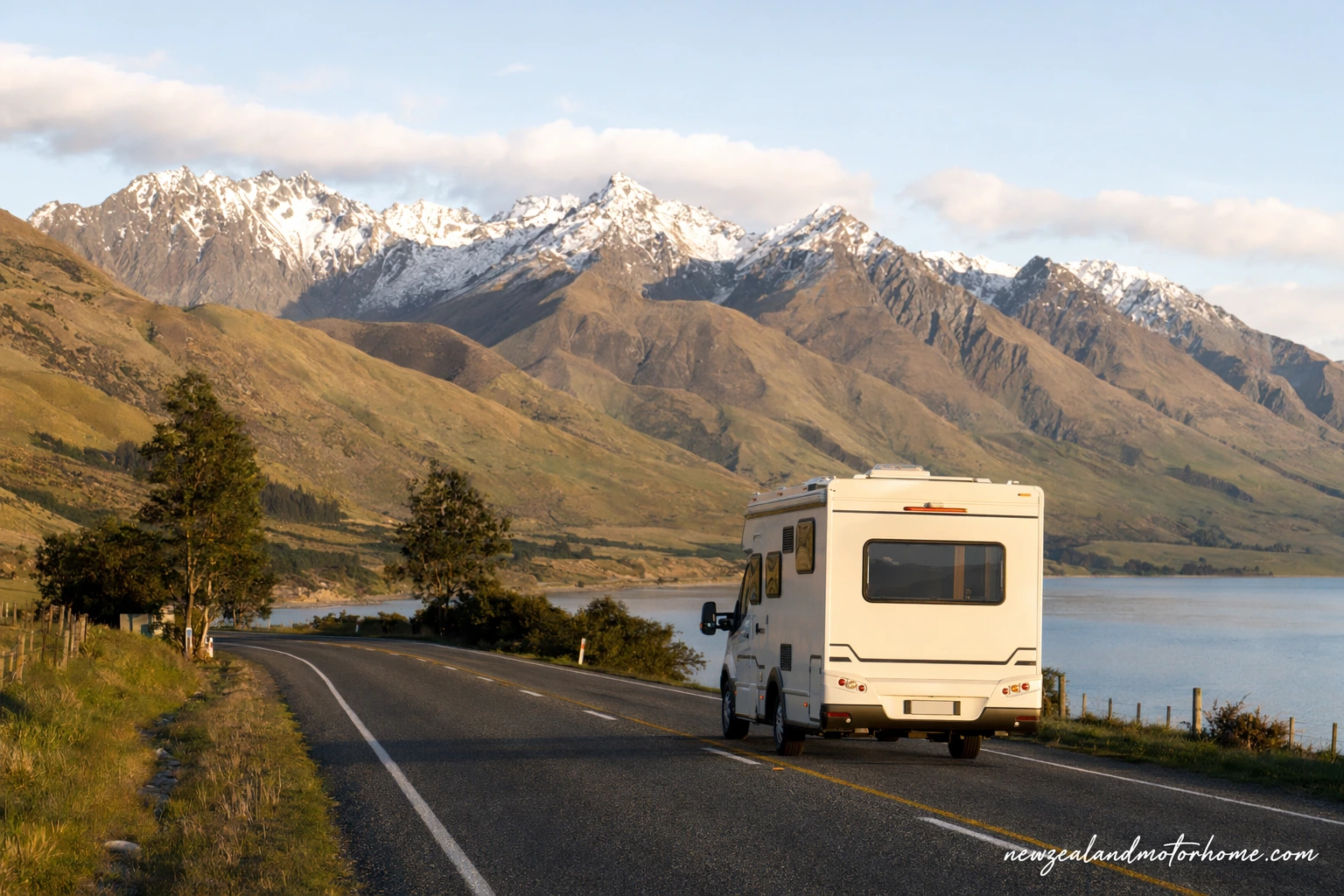
Hamilton to Blenheim campervan route via Wellington and Picton
- Best in spring to autumn; check winter alpine conditions
- Allow 3-5 days for a relaxed campervan pace
- Includes Wellington to Picton ferry crossing
- Powered sites recommended before or after ferry day
- High-roof vans need care in wind on the plateau
A Hamilton to Blenheim campervan trip is a proper cross-island journey: Waikato paddocks, the Central Plateau, a Cook Strait ferry crossing, then Marlborough’s dry hills and vineyard roads. It is not a route to rush unless you enjoy arriving at the ferry tired, with half a grey-water tank and no plan for where the van is sleeping.
This guide is written for travellers driving and sleeping in their hired motorhome or campervan. You’ll find realistic legs, places to break the Hamilton to Blenheim drive, road notes for larger vehicles, and the practical bits that matter on the road: powered sites, freedom camping rules, dump stations, fresh water, LPG and ferry check-in.
How many days to allow for the route
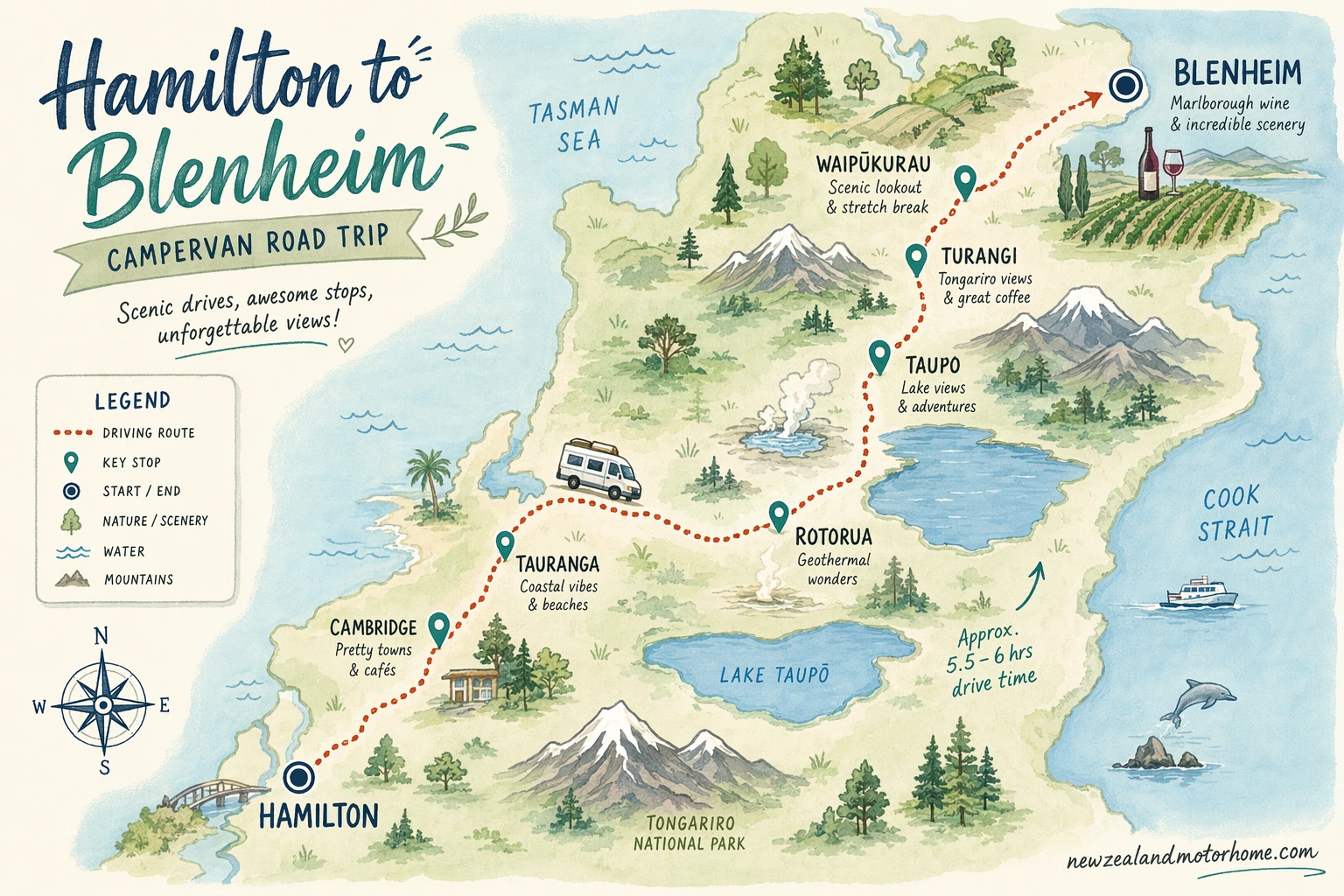
The direct driving distance is roughly 650 kilometres, plus the Cook Strait ferry between Wellington and Picton. In a campervan, the sensible minimum is two long travel days, but four to six days gives you time to manage road conditions, dump and refill properly, and avoid turning the ferry day into a scramble.
A comfortable Hamilton to Blenheim motorhome road trip usually looks like this:
- Fast but workable: Hamilton to Taupō or Tūrangi, then on to Wellington for an evening or next-day ferry, finishing in Blenheim.
- Balanced: Hamilton to Taupō, Taupō or Tūrangi to Wellington, ferry to Picton, then a short drive to Blenheim.
- Slower scenic pace: Add a night around Tongariro, Kāpiti Coast, Picton or the Marlborough Sounds before reaching Blenheim.
If your van is over 7 metres, build in extra time for slower climbing speeds, fuel stops, supermarket runs and finding an easy reversing bay at holiday parks. Ferry sailings can also be affected by weather, so avoid booking a major activity in Blenheim for the same afternoon you cross the strait.
Leg 1: Hamilton to Taupō, Tūrangi or Tongariro
Leaving Hamilton, the easiest campervan line is generally south through the Waikato towards Taupō. The roads are familiar New Zealand highway driving: rolling, busy in places, and with enough fuel and food stops that you do not need to carry a full pantry from day one. If you are new to driving a larger van, this is a good leg for getting used to mirrors, braking distance and letting faster traffic pass where safe.
Taupō is the most convenient first overnight stop for many vans. It has holiday parks with powered and unpowered sites, supermarket access, fuel, LPG bottle swap or refill options depending on supplier, public toilets and dump-station facilities in the wider town area. Tūrangi is quieter and useful if you want to shorten the next morning’s run over the Desert Road.
- Best first night: Taupō for easy services and lakefront walks after driving.
- Quieter option: Tūrangi if you want an earlier start toward the Central Plateau.
- Freedom camping: Only use designated sites and check the latest council signage; self-containment certification is generally required.
- Practical reset: Empty grey and toilet cassette, top up fresh water, and check LPG before heading into the more exposed middle of the island.
Leg 2: Central Plateau to Wellington in a motorhome
The Taupō or Tūrangi to Wellington leg is where the route starts to feel bigger. SH1 over the Central Plateau and Desert Road is spectacular on a clear day, with views toward Ruapehu, Ngāuruhoe and Tongariro, but it is also exposed to wind, ice, snow and sudden closures in winter. In a high-roof campervan, take gust warnings seriously and do not treat the Desert Road like a normal flat highway.
Good break points include Waiouru, Taihape, Bulls, Levin and the Kāpiti Coast, depending on how the day is going. Many travellers prefer to stay north of Wellington the night before the ferry, especially if they have an early sailing; it can be calmer than trying to navigate city streets in the dark. Holiday parks and designated motorhome sites around the wider Wellington and Kāpiti area are more reliable than hoping for a street-side freedom camping spot.
- Road note: Watch for wind on open plateau sections and around trucks; keep both hands on the wheel.
- Van size: Longer motorhomes should plan fuel and toilet stops where there is easy forecourt space and room to turn.
- Overnight strategy: Book a powered site near Wellington or the Kāpiti Coast if you need heating, battery recovery or an easy morning departure.
- Services: Dump stations and fresh-water points are available in several towns on this corridor, but do not leave it until the ferry queue.
Cook Strait ferry with a campervan
The ferry is part of the Hamilton to Blenheim campervan route, not a side detail. You will need to book your vehicle length and height accurately, arrive within the vehicle check-in window, and allow time for traffic around Wellington’s waterfront. If you have bikes, a rear box or a towbar rack, include the full loaded length when booking.
Before boarding, turn off LPG at the bottle, secure cupboards and fridge contents, and keep a small day bag with warm layers, medication, chargers and anything you need during the sailing. You usually cannot return to the vehicle deck while the ferry is at sea. If the weather is rough, stow loose gear so it is not scattered across the van by the time you reach Picton.
On arrival in Picton, do not feel you must drive straight to Blenheim if the crossing has been delayed or choppy. Picton has holiday park options, fuel, food, water and dump-station facilities nearby, and it is a far nicer reset point than trying to make decisions while tired in the dark.
Leg 3: Picton to Blenheim and Marlborough arrival
The Picton to Blenheim section is short compared with the North Island driving, but it still deserves attention in a campervan. SH1 rolls out of Picton through hills before opening into Marlborough’s drier, wider valley. Traffic can be busy after ferry arrivals, and drivers in a hurry sometimes bunch up behind slower motorhomes, so use slow-vehicle bays where available.
Blenheim is a practical place to finish the route because it has supermarkets, fuel, dump stations, fresh-water access in the wider area and a choice of powered and unpowered camping options. It is also a good point to decide whether you are heading west toward Nelson, south toward Kaikōura and Christchurch, or staying around Marlborough for wineries and cycle trails.
- Parking the van: Use marked public parking suited to your vehicle length; avoid squeezing into small town-centre bays if your rear overhang blocks footpaths or traffic.
- Overnight stops: Holiday parks are the simplest choice if you want showers, laundry and power after the ferry day.
- Freedom camping: Marlborough has site-specific rules, so check current council maps and signage before settling in.
- Local driving: Vineyard roads can be narrow with irrigation channels, cyclists and tour traffic; take it slowly in a wider van.
Campervan planning notes before you go
For this route, the biggest planning pinch points are ferry timing, winter road conditions, and arriving with the van serviced. A common mistake is leaving Hamilton with full fresh water, full grey water after a night or two, and no clear dump-station plan before Wellington. Keep the van light where you can, empty the toilet cassette before the ferry day, and refill fresh water once you know where you are staying.
If your hire vehicle has a self-containment certificate, remember it does not give you permission to camp anywhere. It simply helps you meet the requirements at places that allow certified self-contained vehicles. Local council rules, temporary closures and on-site signs are the final word.
If you want help shaping the route around your ferry sailing, van size and how many nights you actually have, you can use the talk-to-us step and we’ll help make the plan feel workable rather than rushed.
Common questions
Can I drive from Hamilton to Blenheim in one day in a campervan?
It is not a sensible one-day campervan trip. The drive to Wellington, ferry check-in, Cook Strait crossing and Picton to Blenheim leg make for a very long day with little room for delays, dumping tanks or safe rest stops.
Where should I stay the night before the ferry?
Many campervan travellers stay around Wellington, Lower Hutt, Porirua or the Kāpiti Coast, depending on ferry time and site availability. A powered site is useful if you need to charge house batteries, run heating or start early without fuss.
Is the Desert Road suitable for a motorhome?
Yes, in normal conditions, but it is exposed and can close because of snow, ice or wind. Check road conditions before leaving Taupō or Tūrangi, drive to the conditions, and allow extra time if your van is heavy or high-sided.
Do I need to book the ferry for my campervan?
Yes. Book the vehicle space using the full length and height of your campervan, including anything mounted on the back or roof. Arrive in time for vehicle check-in and turn off LPG at the bottle before boarding.
Can I freedom camp on the Hamilton to Blenheim drive?
You can only freedom camp where it is permitted, and most places require a certified self-contained vehicle. Always check current council rules and site signage, especially around Taupō, Wellington, Picton and Blenheim.
Where can I empty wastewater and refill fresh water?
Dump stations and fresh-water points are available in larger stops such as Taupō, Tūrangi, towns along SH1, Wellington, Picton and Blenheim. Use official dump stations only, and plan to empty grey water and the toilet cassette before ferry day.
Have a planner shape this for your dates
Send a short outline — your dates, party size, and the kind of trip you want. A planner replies with a vehicle recommendation, a paced route, and the realistic budget.