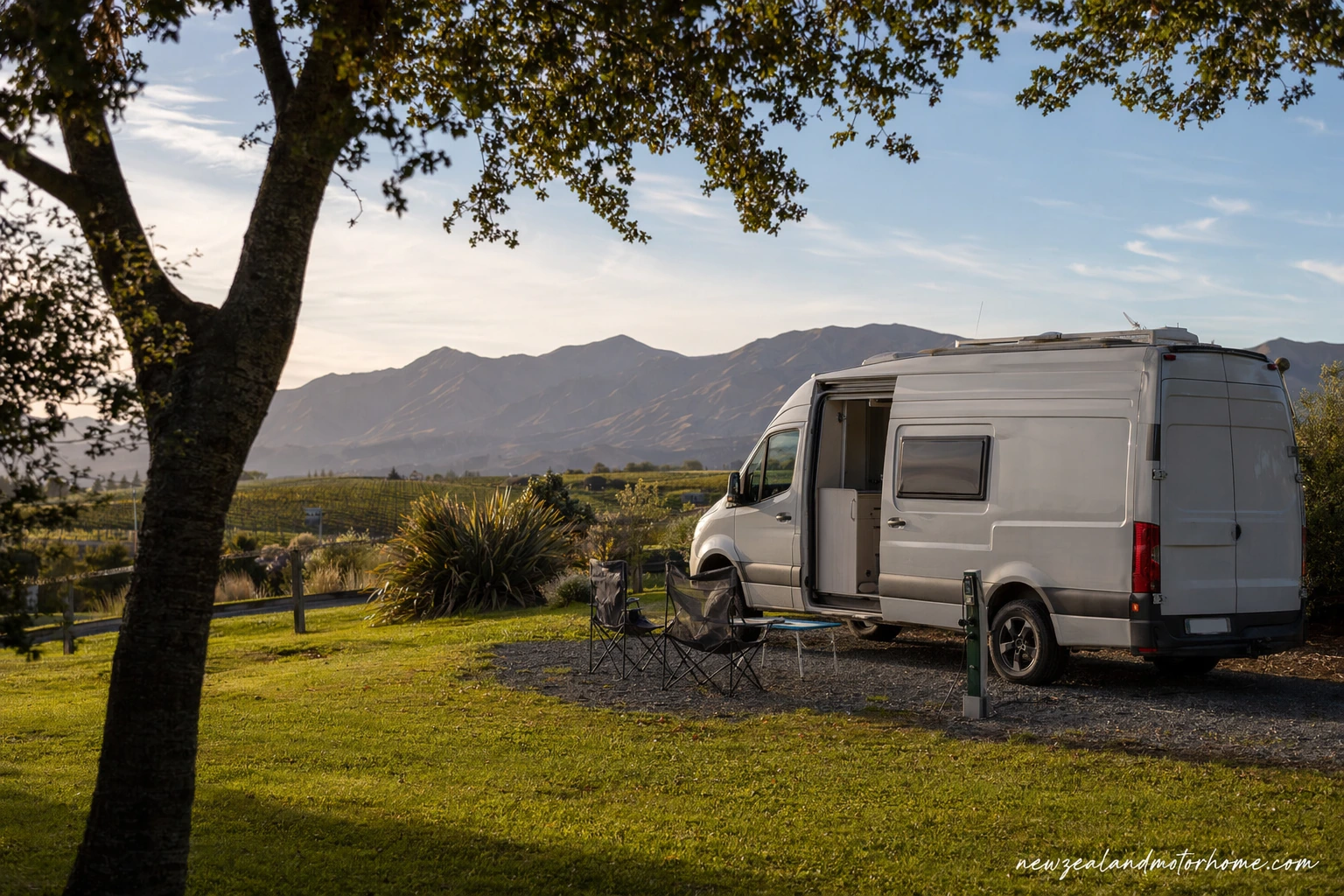
- Best for Picton ferry breaks
- Powered and unpowered sites
- Book ahead in summer
- Check van length when booking
- Self-contained rules still apply
Blenheim is one of those motorhome stops that works better when you choose your base carefully. The town sits flat and sunny between the Taylor River, vineyard roads, SH1 and the route west towards Nelson, so a well-placed holiday park can save you a lot of awkward turning, roadside searching and late-day faffing with water or waste.
This guide is written for self-drive campervan and motorhome travellers looking at holiday parks Blenheim wide, including powered sites, unpowered grass pitches, dump station access, walkable town stops and easy day trips into Marlborough wine country. It is not a list of every campsite; it is a practical way to decide what sort of overnight stop will suit your van, your route and your next driving day.
Where to base the van in and around Blenheim
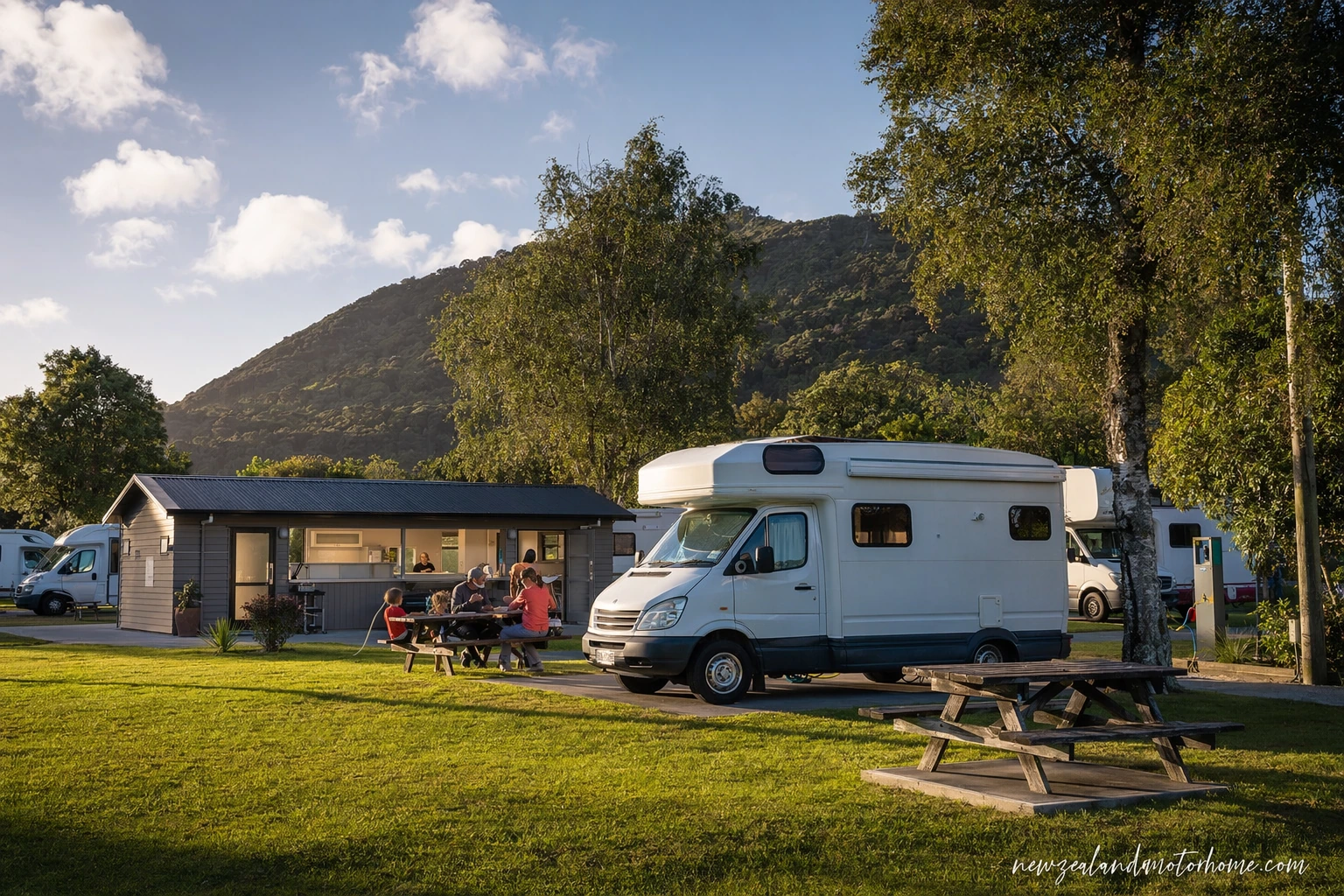
For most campervan travellers, the easiest Blenheim bases are on the town edge rather than right in the tightest CBD blocks. You want a site where you can swing into the entrance without holding up traffic, plug into power if needed, and still get back to the supermarket, cafés or river path without moving the van again.
If you are comparing the Blenheim TOP 10 Holiday Park with smaller campsites Blenheim travellers often use, look beyond the name and check the actual site layout. A longer motorhome or a van with bikes on the back may need a drive-through or generous reversing space, while a compact camper can usually cope with a tighter powered bay.
- Town-side stays: useful if you want groceries, laundry, a meal out and a walk along the Taylor River without driving after arrival.
- Renwick or vineyard-side stays: handy for cellar doors and cycling, but check road shoulder space and whether the park suits larger vehicles.
- SH1 approaches: good for a one-night transit stop between Picton, Kaikōura and Christchurch, especially if you are arriving near dusk.
- Quiet rural campsites: pleasant in summer, but confirm power, fresh-water access and whether there is a dump station before you rely on them.
Powered sites, unpowered sites and what to check before booking
Powered sites Blenheim wide are worth booking ahead in summer, during wine events, and around long weekends. Marlborough can be hot, still and bright, so power is useful for fridge stability, device charging and running approved appliances. If you are in a certified self-contained van and only need a simple overnight, an unpowered site can work well, but check shade and ground conditions after rain.
When you read a holiday park listing, look for the campervan details rather than just the cabin photos. The key questions are whether the site is sealed, gravel or grass; whether you need a long lead to reach the power pedestal; and whether the dump station is inside the park or somewhere you will need to visit before leaving town.
- Ask whether your van length fits the booked site, especially if you are over 7 metres or towing a small trailer.
- Confirm if fresh-water taps are at each site or at a shared fill point.
- Check whether grey-water disposal is at the site, at a central drain, or only via a dump station.
- If you need LPG, plan a bottle swap or refill before you are down to the last gas ring; do not assume every holiday park can handle it.
- Arrive before reception closes where possible, so you can be shown the best approach to your pitch in daylight.
Driving into Blenheim by motorhome
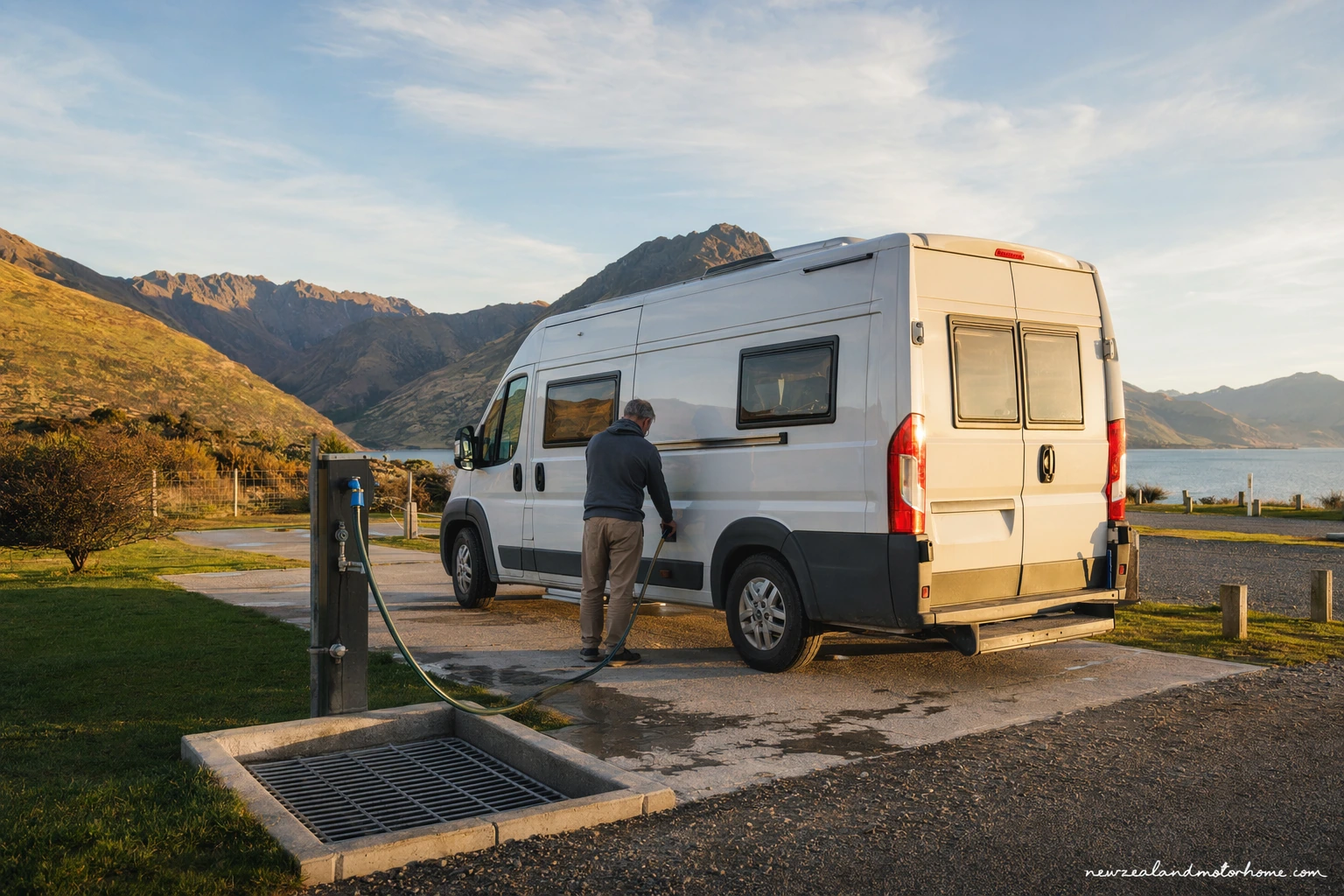
Blenheim is straightforward by New Zealand standards, but it is still worth slowing down on the way in. SH1 brings Picton ferry traffic, freight and holiday drivers through the region, while SH6 and SH63 connect across to Nelson, St Arnaud and the lakes. If you have collected a hire campervan in Christchurch or Nelson, Blenheim is a natural first or second night where you can sort bedding, groceries, water and waste without feeling rushed.
The town streets are mostly flat, though some central parking is angled or better suited to cars. For a motorhome, choose edge-of-centre parking where you can pull through or reverse without overhanging footpaths. Always check signs for time limits, height restrictions and any overnight exclusions; a daytime car park is not automatically a legal camping spot.
- From Picton: allow for ferry traffic waves and do not plan a tight late check-in if your sailing is delayed.
- From Kaikōura: SH1 is scenic but can be tiring in wind or rain, so a powered site in Blenheim makes a sensible reset.
- From Nelson or St Arnaud: fill fuel and water before you arrive if you are heading onward into quieter country.
- Through vineyard areas: expect narrow side roads, cyclists, farm vehicles and uneven shoulders; leave the big van parked if you are tasting.
What is walkable once the van is parked
The best thing about camping Blenheim in a holiday park is being able to park once and use your feet or bikes. From many town-edge sites, you can reach the Taylor River path, cafés, supermarkets or the centre without packing away the awning and levelling blocks every morning. Pollard Park is a pleasant leg-stretcher if you want greenery without driving far.
For bigger attractions, decide whether it is worth moving the van or arranging a local transfer. Omaka Aviation Heritage Centre, the Wither Hills area and many wineries are easy enough on a map, but not every road or car park is comfortable for a large motorhome. If in doubt, ask your holiday park where they suggest parking a high-roof campervan for the day.
- Use bikes for short, flat hops where safe, especially around the river paths and some vineyard routes.
- Keep valuables out of sight if you leave the van in a public car park.
- Do not rely on winery car parks for overnight stays unless they clearly allow it and you meet all conditions.
- If you plan a wine-tasting day, organise it so your van stays parked at the holiday park.
Freedom camping, dump stations and a smooth next morning
Marlborough has freedom camping rules, and you should only overnight where it is clearly permitted for your vehicle type. A self-containment certificate helps, but it does not give you the right to camp anywhere. If you are unsure, a holiday park is the simpler choice: you get a legal overnight, toilets, showers, fresh water, waste disposal guidance and a safer place to leave the van while you walk into town.
Before you leave Blenheim, make the practical loop: empty the toilet cassette, drain grey water where allowed, fill fresh water, sort rubbish and check LPG. This is especially important if you are heading south towards the coast, west towards more rural roads, or north to meet a ferry where timing can get tight.
If you would like a route that lines up your Blenheim overnight with Picton ferries, Kaikōura driving times or a Nelson loop, use our talk-to-us step and we can help shape the motorhome rhythm around real driving days rather than just map distance.
Keep planning
Wellington to blenheim campervan
Read onRotorua to blenheim campervan
Read onQueenstown to blenheim campervan
Read onPicton to blenheim campervan
Read onNelson to blenheim campervan
Read onInvercargill to blenheim campervan
Read onCommon questions
Do I need to book holiday parks in Blenheim ahead?
In summer, on public holiday weekends and during Marlborough events, booking ahead is wise, especially if you need power or have a longer motorhome. Outside peak times you may have more flexibility, but it is still worth calling or booking before you drive across town.
Are there powered sites in Blenheim for campervans?
Yes, powered sites are commonly available at holiday parks around Blenheim, though layouts and site sizes vary. When booking, give your vehicle length and mention extras such as a bike rack, rear ladder or awning so you are not squeezed into a marginal pitch.
Can I freedom camp in Blenheim if my van is self-contained?
Only where local rules and signs allow it. Self-containment certification is important, but it is not a blanket permission to overnight in parks, reserves or car parks, so check Marlborough District Council guidance and on-site signs before settling in.
Is Blenheim a good stop before or after the Picton ferry?
Yes. Blenheim is close enough to Picton to work well before an early ferry or after a late sailing, while still giving you supermarkets, fuel, dump station options and a calmer overnight than trying to rush further south.
Can I visit wineries with a motorhome in Blenheim?
You can, but it is usually better to park the van at your holiday park and use bikes, walking routes where safe, or a local transfer. Vineyard roads can be narrow, and not every cellar-door car park suits a high-roof or long motorhome.
Have a planner shape this for your dates
Send a short outline — your dates, party size, and the kind of trip you want. A planner replies with a vehicle recommendation, a paced route, and the realistic budget.