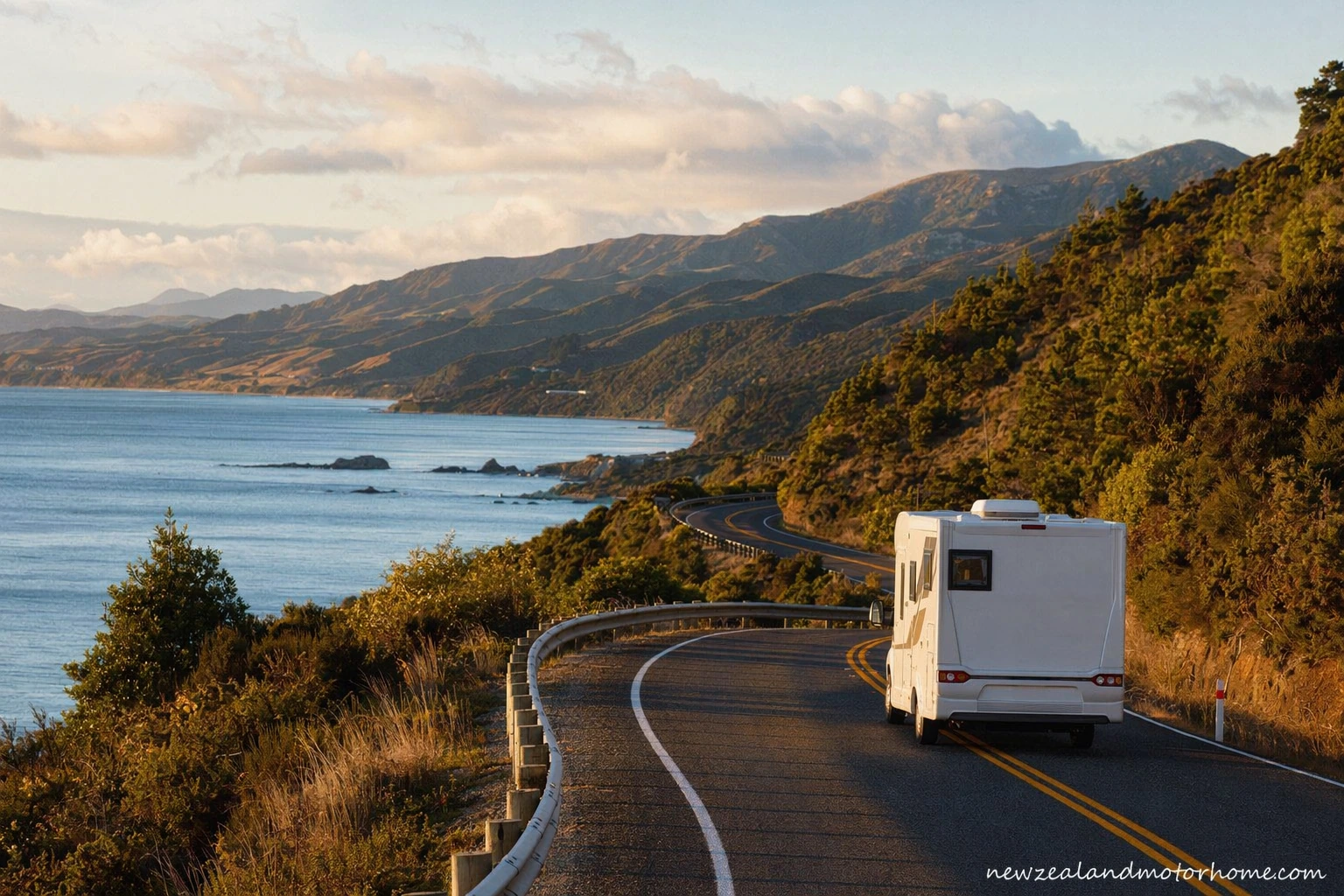
- Best allowed time: 2 days
- Ferry plus 30 km drive
- Powered sites handy pre-ferry
- Self-contained only for freedom camping
- Large vans: use SH1 for easiest road
The Wellington to Blenheim campervan route is short on kilometres but big on logistics: you need to stage the van near the ferry, cross Cook Strait, then drive the easy final stretch from Picton into Marlborough wine country. It is not a long road day, but it pays to plan it like a proper travel day.
This guide is written for self-drive campervan and motorhome travellers sleeping in their own hired van. You’ll find ferry notes, van-friendly overnight ideas, dump station and water planning, road cautions, and a relaxed way to turn the Wellington to Blenheim drive into a one-to-three day motorhome road trip rather than a rushed transfer.
How long to allow for the route
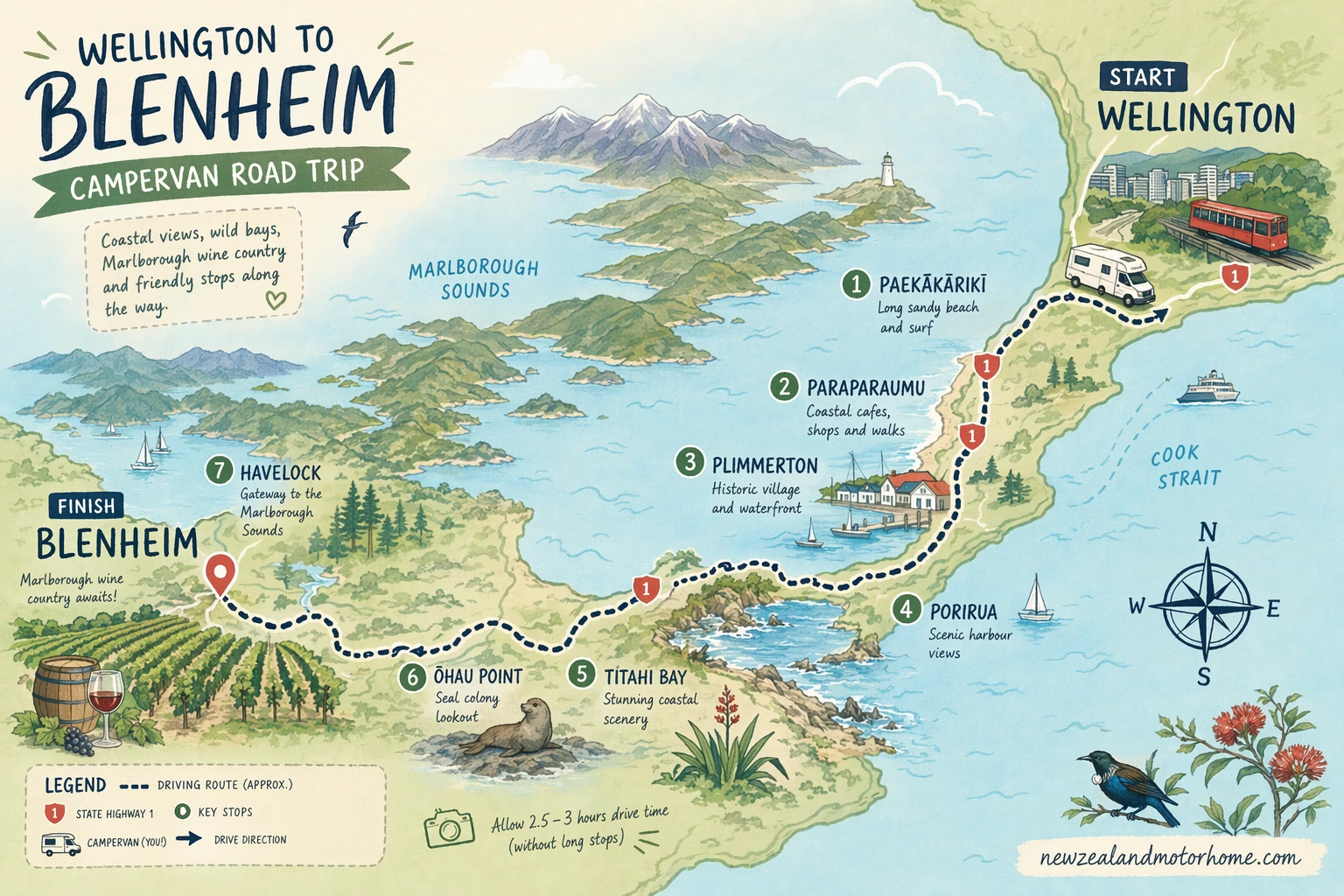
If everything lines up, you can travel from a Wellington campsite to Blenheim in the same day: drive to the ferry terminal, cross Cook Strait, then follow State Highway 1 from Picton to Blenheim. In a campervan, though, the sensible plan is to allow buffers for check-in, loading, weather delays and the slower pace of parking, dumping and refilling.
Most motorhome travellers are happiest with one night in Wellington before the ferry, then either a night in Picton or a gentle run through to Blenheim. If you have time, add a second Marlborough night so you can visit the Sounds or the wineries without needing to move the van after a tasting.
- Fastest practical plan: 1 long travel day from Wellington to Blenheim.
- Comfortable plan: 2 days, with a night either side of the ferry or in Picton.
- Best touring plan: 3 days, adding the Queen Charlotte Drive area or a Blenheim base night.
- Driving distance after the ferry: Picton to Blenheim is about 30 km on SH1.
Leg 1: staging the van in Wellington before the ferry
Wellington is compact, hilly and windy, so choose your overnight stop with the morning ferry in mind. A powered site in the Hutt Valley, Porirua or on the airport side of the city can be easier than trying to tuck a tall motorhome into tight central streets. The waterfront is great for a walk, but it is not the place to assume you can park or sleep overnight in a van.
Before you head to the terminal, top up fresh water if your site has a potable tap, empty grey and black water if there is a dump station, and secure cupboards properly. Cook Strait crossings can be bumpy enough to rearrange a poorly packed galley.
- Powered sites: useful the night before for charging batteries, heating water and resetting the fridge.
- Unpowered sites: fine if your house battery is healthy and you are not running heavy loads.
- Freedom camping: only where Wellington-area bylaws allow it and only with current self-containment certification.
- Parking tip: avoid narrow hillside streets if you are in a larger motorhome or are new to driving a high-sided van in wind.
Cook Strait ferry notes for campervans and motorhomes
The ferry is the part of the Wellington to Blenheim motorhome road trip that needs the most attention. When booking, enter the full length and height of your campervan or motorhome, including bike racks, roof boxes, aerials and anything on the rear. Guessing low can cause problems at check-in.
Arrive with enough time to queue, follow staff directions, and have your gas sorted before loading. Ferry operators usually require LPG bottles to be turned off at the cylinder while the vehicle is on board. Keep a warm layer, wallet, medication and chargers with you, because you generally cannot return to the vehicle deck during the crossing.
- Measure the van: include rear racks and roof-mounted gear, not just the base vehicle.
- Secure inside: latch drawers, close vents and stow loose mugs, pans and coffee gear.
- Fridge plan: chill it properly beforehand and minimise door opening before boarding.
- Weather buffer: build in time for wind or swell delays, especially in winter and spring.
If you want a second pair of eyes on ferry timing, overnight spacing or whether your van size suits a Sounds detour, you can talk to us before locking in the trip.
Leg 2: Picton to Blenheim by the easy SH1 route
Once you roll off the ferry in Picton, the direct drive to Blenheim is straightforward. SH1 climbs gently out of Picton, passes through Koromiko country and drops into the Wairau Plain. It is sealed, well used by freight, and suitable for standard hired campervans and motorhomes in normal conditions.
Do not rush straight out of the ferry queue if you are tired or it is dark. Picton has van-friendly places to pause, buy groceries and reset before the short drive south. Blenheim is the better base if your next day is about wineries, Omaka aviation history, Wither Hills walks or heading further down the east coast.
- Road type: sealed state highway, generally suitable for larger motorhomes.
- Watch for: ferry traffic bunching, trucks, wind gusts and drivers overtaking after the sailing.
- Fuel and LPG: available in Picton and Blenheim, but check opening hours before relying on a late arrival.
- Fresh water and dump: plan around Picton or Blenheim rather than assuming every small stop has facilities.
Where to stay: Wellington, Picton and Blenheim
For a simple run, book a powered site in Wellington the night before and another in Picton or Blenheim after the crossing. Powered sites are especially useful if the ferry timing means a late arrival, because you can plug in, run normal lights and heat, and avoid draining the house battery after a long travel day.
Picton suits travellers who want to slow down after the ferry, walk the harbour, or take a Sounds cruise without moving the van again. Blenheim suits travellers who want a practical base with supermarkets, dump facilities, wineries and easy onward driving. Freedom camping in Marlborough is tightly managed, so read signs on arrival rather than relying on old app comments.
- Wellington: stay near your preferred route to the ferry, not necessarily in the city centre.
- Picton: good first South Island stop, with harbour walks and a calmer post-ferry pace.
- Blenheim: practical for restocking, dumping, water fills and wine country day trips.
- Freedom camping: use only designated areas and only if your van meets current self-containment rules.
- Non-self-contained vans: plan on holiday parks or campgrounds with toilets and waste facilities.
Optional scenic detours for confident van drivers
The direct Picton to Blenheim drive is the easiest choice, but you can turn the day into a proper Marlborough introduction with a detour. Queen Charlotte Drive between Picton and Havelock is beautiful, with bush, bays and lookout pull-offs, but it is narrow, winding and slower in a motorhome. Larger vans should take it carefully and avoid stopping anywhere that blocks traffic.
Another option is to base in Picton and use the van for short hops to walking tracks and viewpoints, rather than dragging a big motorhome around every tight coastal road. In Blenheim, park once and use organised transport, bikes or walking for cellar doors if anyone is tasting.
- Queen Charlotte Drive: scenic but twisty; allow extra time and use low gears on descents.
- Marlborough Sounds roads: check surface, width and turnaround space before committing a long motorhome.
- Winery visits: do not assume overnight parking is allowed unless it is clearly stated by the property.
- Day parking: choose larger public car parks or marked long-vehicle areas where available.
Keep planning
Visiting zealandia wellington by campervan
Read onVisiting weta workshop wellington by campervan
Read onVisiting te papa wellington by campervan
Read onHoliday parks wellington
Read onHoliday parks blenheim
Read onFarmers markets wellington
Read onCommon questions
Can I do Wellington to Blenheim in a campervan in one day?
Yes, if your ferry is on time and you are happy with a full travel day. The actual drive from Picton to Blenheim is short, but ferry check-in, loading, the crossing and unloading make the day feel longer in a motorhome.
Should I stay in Picton or drive straight to Blenheim after the ferry?
Stay in Picton if you arrive late, feel tired, or want an easy harbour stop after the crossing. Drive on to Blenheim if you still have daylight, want better access to supermarkets and services, or are using Marlborough as your next base.
Are there dump stations on this route?
Public or campground dump facilities are available in the wider Wellington area, Picton and Blenheim, but access and potable water can change. Empty before the ferry if your tanks are getting full, and check current council or camping-app listings before relying on a specific facility.
Is Queen Charlotte Drive suitable for a motorhome?
It is sealed and commonly driven, but it is narrow and winding in places. Confident drivers in smaller campervans usually enjoy it; drivers of long motorhomes should allow plenty of time, avoid rushed pull-offs, and take the direct SH1 route if conditions are poor.
Can I freedom camp around Picton or Blenheim?
Only in places where Marlborough rules allow it, and only if your van has current self-containment certification. Many waterfront and urban areas have restrictions, so read local signs carefully and use a campground if you are unsure.
What ferry details matter when booking a campervan?
Book using the full length and height of the van, including bikes, roof gear and rear racks. On travel day, turn LPG off as required, secure the interior, and take anything you need with you before leaving the vehicle deck.
Have a planner shape this for your dates
Send a short outline — your dates, party size, and the kind of trip you want. A planner replies with a vehicle recommendation, a paced route, and the realistic budget.