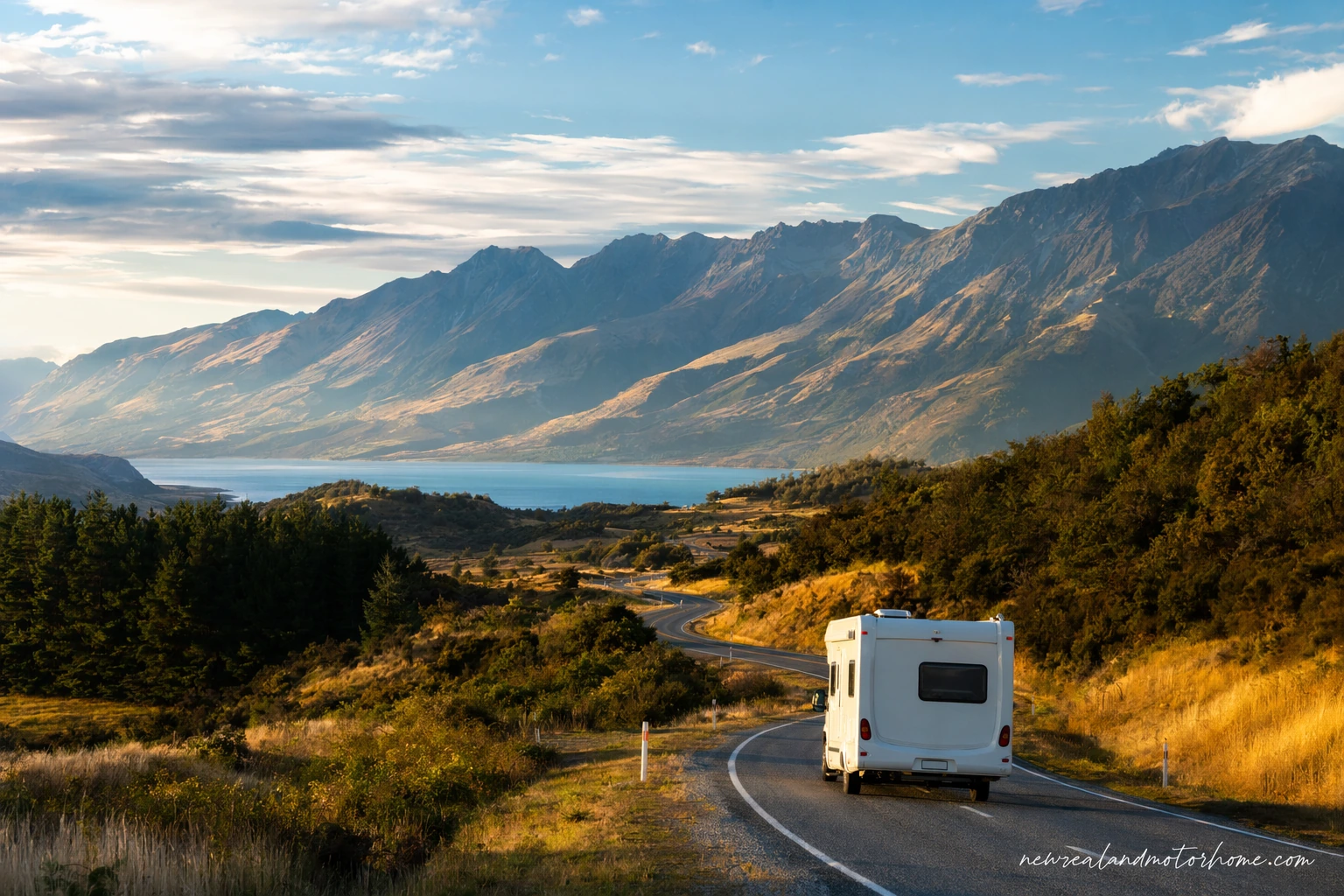
- Allow 3–6 days
- About 480 road km plus ferry
- Cook Strait booking needed
- Check Desert Road weather
- Powered and freedom options
The Rotorua to Blenheim campervan trip links geothermal country, Lake Taupō, the volcanic plateau, Wellington, the Cook Strait ferry and Marlborough wine country. It is not a route to rush in a hired van: you have alpine weather, ferry timing, urban Wellington traffic and a final South Island leg to allow for.
This guide is written for self-drive campervan and motorhome travellers who are sleeping in their vehicle. You will find sensible driving legs, overnight stop ideas, powered and unpowered site notes, freedom camping cautions, dump station planning, LPG and fresh-water reminders, and road notes for larger vans.
The route at a glance: road kilometres, ferry and timing
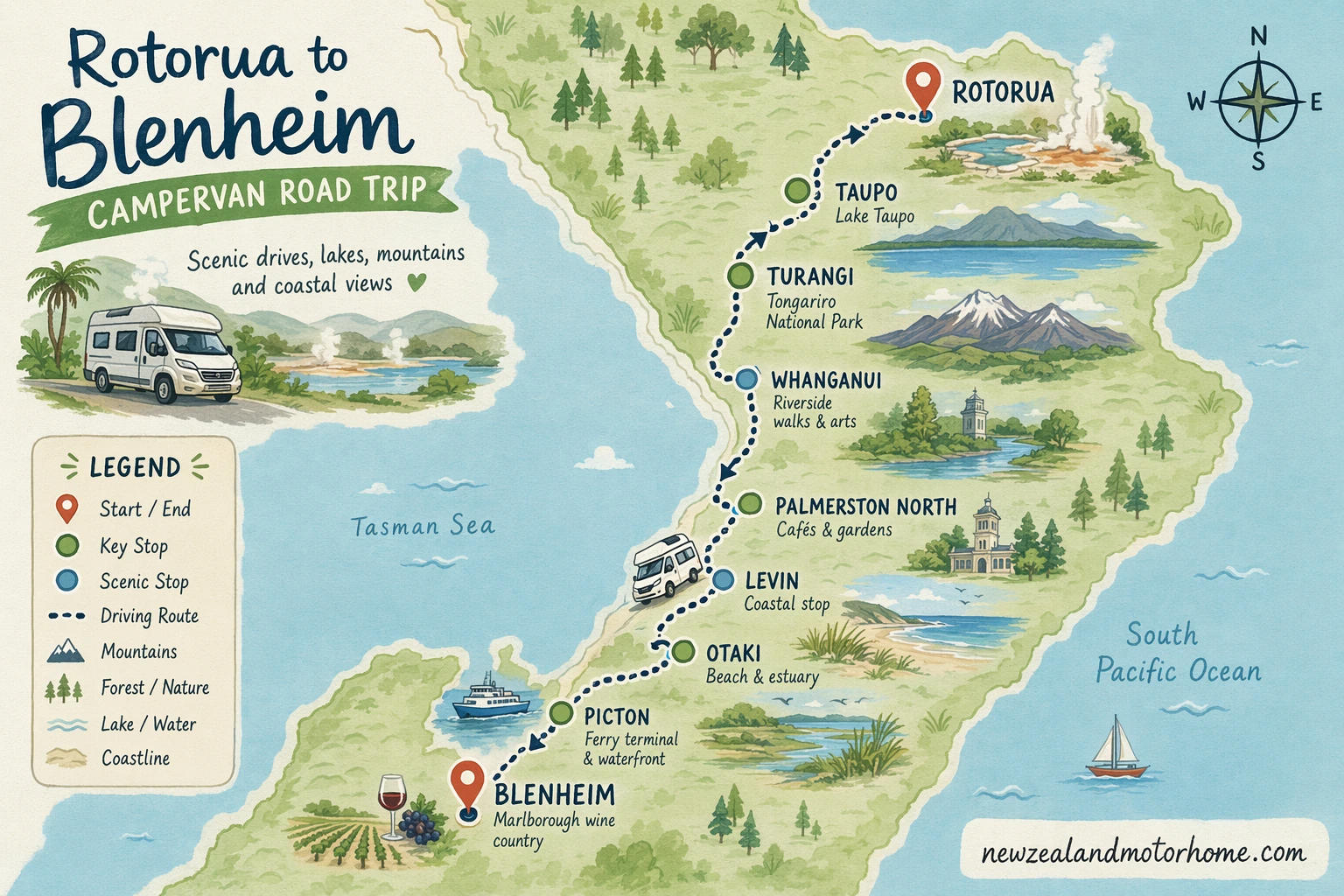
The most direct rotorua to blenheim drive is Rotorua to Taupō, Taupō to Wellington on SH1, the Cook Strait ferry to Picton, then SH1 south to Blenheim. Expect roughly 480 kilometres of road driving, plus the ferry crossing and check-in time. In a campervan, that usually feels like a 3 to 5 day trip, not a single push.
If you have a larger motorhome, build in time for slower hill climbs, fuel stops, supermarket restocking and a proper dump-and-fill before boarding the ferry. Ferry schedules can also decide where you sleep: a morning sailing favours a Wellington-area overnight, while a late sailing may make Picton the better stop before continuing to Blenheim.
- Fast but still sensible: Rotorua to Taupō or Turangi, then Wellington, ferry, Blenheim.
- More relaxed: Rotorua, Taupō, Tongariro or Taihape area, Wellington, Picton, Blenheim.
- Best for first-time van drivers: allow extra daylight around the Desert Road and avoid arriving in Wellington at peak traffic.
Leg 1: Rotorua to Taupō and Turangi
Leave Rotorua with full fresh water, an empty grey-water tank and enough LPG for cooking and heating, especially outside summer. Rotorua has several holiday parks and service points where campervan travellers can sort laundry, plug in overnight and dump before the road south.
SH5 from Rotorua to Taupō is a straightforward van route, but it has forested bends, changing speed limits and patches where it is better to let faster traffic pass. In Taupō, use larger public parking areas rather than tight lakefront spaces if your van is long or has a rear bike rack. Huka Falls is usually easier with a campervan earlier in the day, before carparks tighten up.
- Good overnight pattern: Taupō for lake access and powered sites, or Turangi for a quieter stop before the Desert Road.
- Freedom camping: only use signed, legal areas, and only if your vehicle meets current self-containment requirements.
- Services: plan dump station and fresh-water use in Rotorua, Taupō or Turangi rather than waiting until you are nearly full.
Leg 2: Taupō to Wellington via the volcanic plateau
This is the longest road leg of the rotorua to blenheim motorhome road trip. SH1 climbs from the lake country towards Turangi and the Desert Road, where weather can change quickly. In winter and shoulder seasons, check road conditions before committing; snow, ice, high wind and closures are all possible.
For motorhomes, the Desert Road is fine in settled weather, but it deserves respect. Secure cupboards, keep both hands on the wheel in crosswinds, use engine braking on descents and avoid pulling onto soft shoulders for photos. Waiouru, Taihape, Bulls and Levin are useful places to pause, refuel, buy groceries or give the van a rest.
- Overnight options: Turangi, National Park or Ohakune as a scenic detour, Taihape for a practical mid-route stop, or Kāpiti and Lower Hutt for ferry access.
- Powered sites: useful before the ferry if you want the fridge fully chilled and devices charged.
- Wellington approach: larger vans are easier to handle outside peak commuting times, and suburban holiday parks are often less stressful than hunting for central parking.
Cook Strait ferry planning with a campervan
The ferry is the hinge point of this route. When booking, measure the whole vehicle: length including tow bars, bike racks and rear storage boxes, and height including roof vents, solar panels or aerials. A mistake here can cause delays at check-in.
Before boarding, turn off LPG at the cylinder as instructed, lock the van, take warm clothing and anything you need from the fridge or cab, because passengers cannot normally access the vehicle deck during sailing. If you are carrying food in the fridge, a powered site the night before helps it hold temperature better during the crossing.
- Wellington side: allow time for city traffic, fuel, dump station use and check-in queues.
- Picton side: if you arrive late or tired, stay locally rather than pushing on in the dark.
- Van comfort: close roof vents, secure loose gear and check the fridge latch before leaving the vehicle deck.
Leg 3: Picton to Blenheim and Marlborough van stops
Picton to Blenheim is a short final drive on SH1 through the Wairau Valley, usually around half an hour in a campervan. It is an easier finish than the North Island legs, but watch for wind, local traffic, railway crossings and slower turning movements around vineyard roads.
In Blenheim, choose wider town-edge parking where possible rather than squeezing into compact CBD spaces. Holiday parks around Blenheim and Picton are the simplest choice for powered sites, showers, laundry and reliable fresh-water fills. Unpowered sites can work well in settled weather if your battery and solar setup are coping.
- Dump and water: plan to use official dump stations in Picton or Blenheim before settling in for Marlborough touring.
- Freedom camping: check current council rules, as Marlborough areas can be tightly managed and may require certified self-containment.
- Scenic detour: Queen Charlotte Drive is beautiful but narrow and winding; only take it if you are confident with your van size and have plenty of daylight.
Suggested campervan itineraries
A four-day version suits confident drivers who have already booked the ferry and prefer practical stops. A six-day version gives more breathing room for Taupō, Tongariro, Wellington and Picton, and is kinder if you are new to driving a high-roof campervan on New Zealand roads.
If you want this shaped around your ferry time, van length, travel season and whether you prefer powered sites or freedom camping, you can talk to us before locking in the sequence.
- 4 days: Rotorua to Taupō or Turangi; drive to Wellington; ferry to Picton; Picton to Blenheim.
- 5 days: add a Tongariro or Taihape-area night to break up the plateau and lower North Island driving.
- 6 days: add Wellington and Picton nights so the ferry day is not overloaded.
Keep planning
Visiting polynesian spa rotorua by campervan
Read onVisiting agrodome rotorua by campervan
Read onHoliday parks rotorua
Read onHoliday parks blenheim
Read onFarmers markets rotorua
Read onCampervan supplies rotorua
Read onCommon questions
Can I drive from Rotorua to Blenheim in one day in a campervan?
It is not a sensible one-day campervan trip. The road driving, ferry check-in, Cook Strait crossing and final Picton to Blenheim leg make it too long and too dependent on ferry timing. Allow at least 3 days, with 4 to 6 days much more comfortable.
Do I need a certified self-contained campervan for this route?
You do not need certification to stay in holiday parks or most paid campgrounds, but you will need to meet the current self-containment rules for many freedom camping spots. Always check the local council signs and bylaws before staying overnight outside a campground.
Is the Desert Road suitable for large motorhomes?
Yes, in good conditions it is a standard state highway used by large vehicles. The issues are weather and wind, not the basic road width. Check conditions before leaving Taupō or Turangi, and do not continue if there are snow, ice or closure warnings.
Should I book the Cook Strait ferry before I leave Rotorua?
Yes, especially in summer, school holidays and around long weekends. Book using the full campervan length and height, including bike racks, tow bars and roof fittings. Then plan your Wellington overnight around the check-in time.
Where should I dump grey water and refill fresh water?
Good service points are usually available in the larger stops on this route, including Rotorua, Taupō, Turangi, Wellington, Picton and Blenheim. Do not leave it until tanks are full, as some dump stations can be busy, closed for maintenance or awkward for longer vehicles.
Is Queen Charlotte Drive a good shortcut to Blenheim?
It is scenic, but it is not the easiest road for every campervan. It is narrow, winding and slower than the direct SH1 route from Picton to Blenheim. Larger motorhomes or nervous drivers are usually better staying on SH1.
Have a planner shape this for your dates
Send a short outline — your dates, party size, and the kind of trip you want. A planner replies with a vehicle recommendation, a paced route, and the realistic budget.