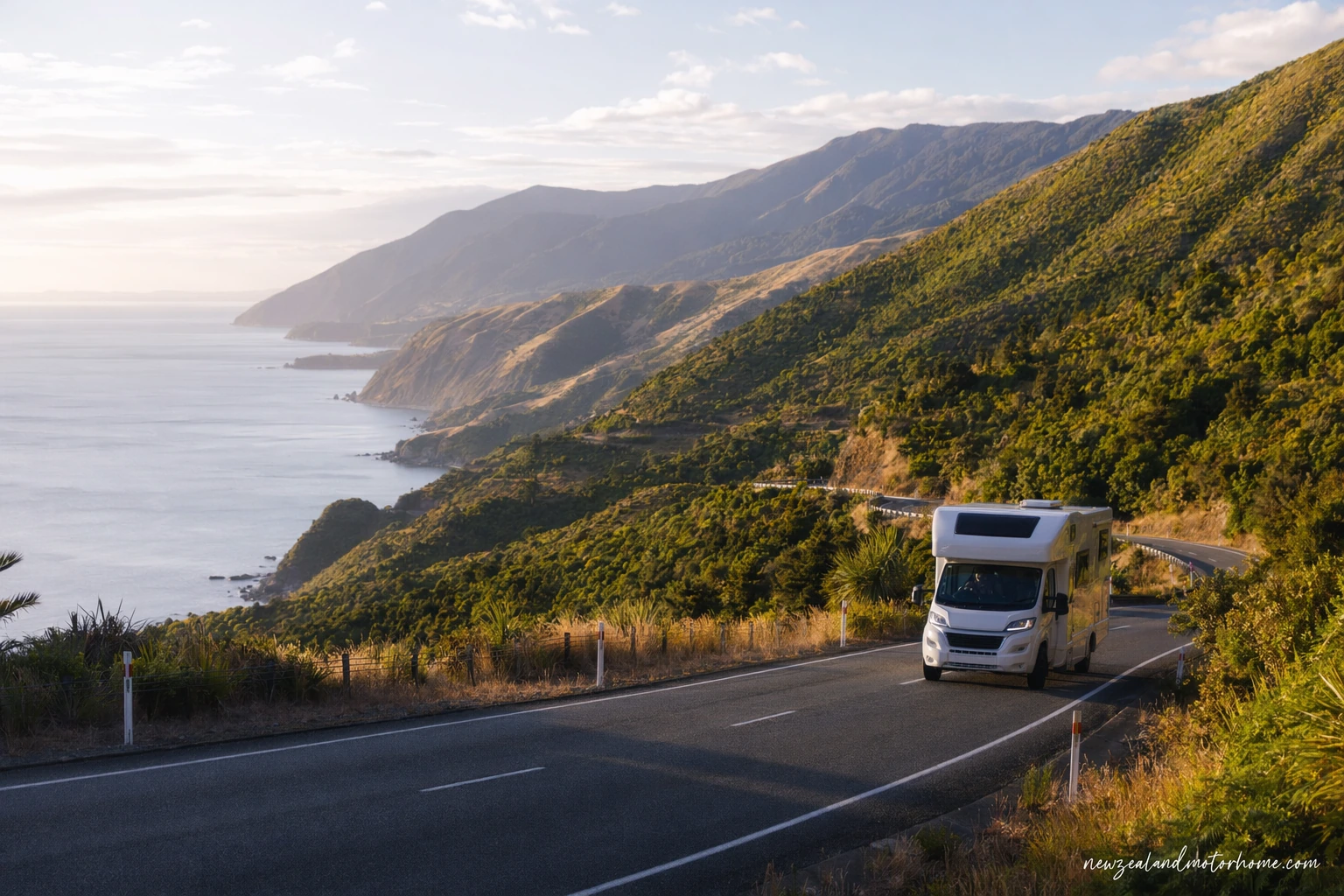
- Direct drive: about 30 km
- Best allowed time: half day
- Suitable for large vans on SH1
- Powered sites in Picton and Blenheim
- Freedom camping only where signed
The Picton to Blenheim campervan run is short on the map, but it is worth treating as more than a ferry-to-wine-country transfer. In under an hour you move from the sheltered Sounds, through Koromiko and Tuamarina, and into the wide Wairau Plain, with several easy places to park the van, sort water and LPG, and decide whether to stay coastal or head inland.
This guide is written for travellers driving and sleeping in their hired campervan or motorhome. You will find road notes for SH1, sensible overnight ideas, freedom camping cautions, dump station planning, and a few low-stress stops that work when your vehicle is taller or longer than a normal car.
How long to allow for the Picton to Blenheim drive
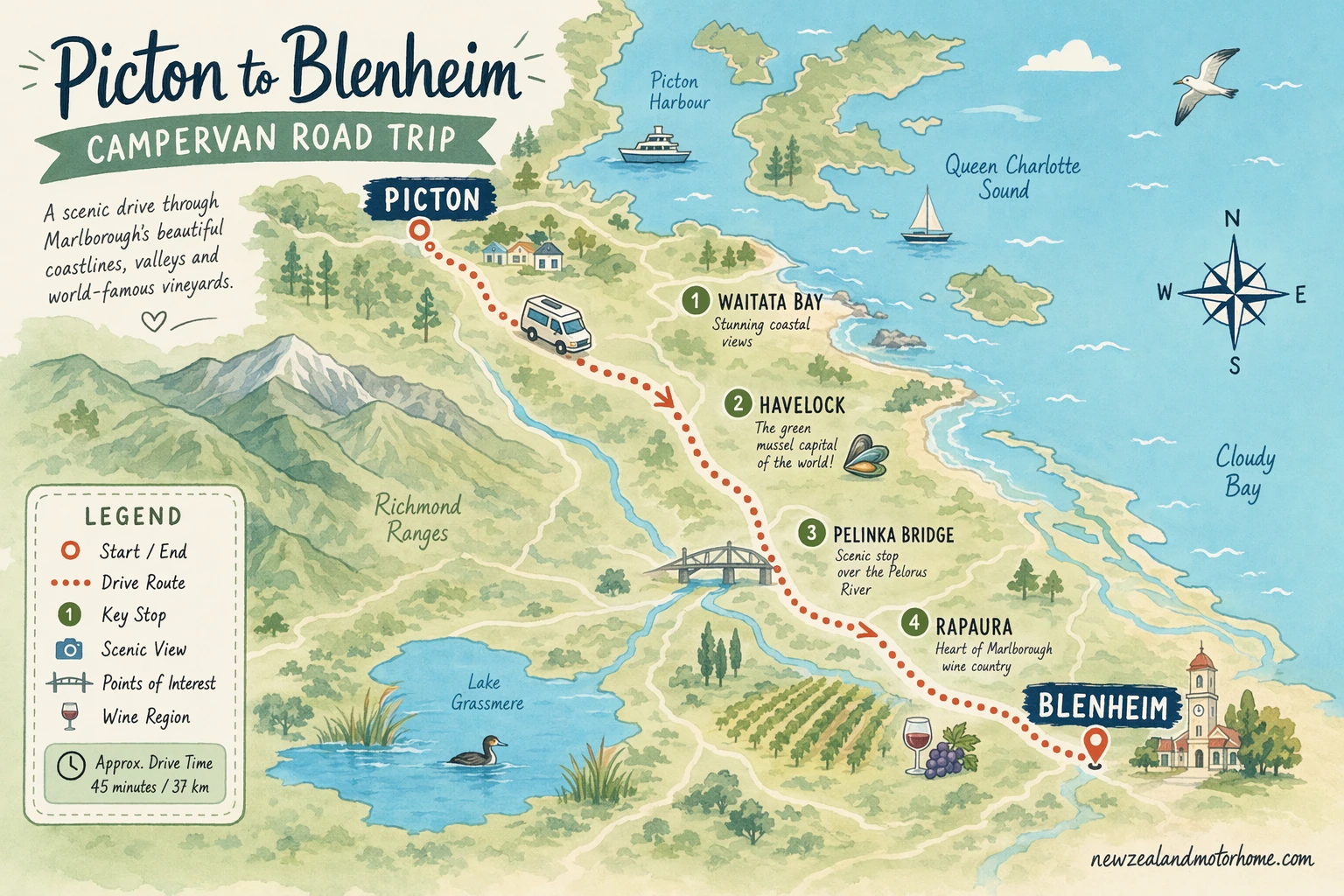
The direct Picton to Blenheim drive on State Highway 1 is about 30 kilometres and is usually a 25 to 40 minute run without long stops. If you have just rolled off the ferry, add time for fuel, groceries, fresh water, and simply getting used to the van before joining the highway.
For most campervan travellers, this route works best as a gentle half-day rather than a dash. Picton is a practical first or last night with ferry timing, while Blenheim gives you more space for supermarket runs, laundry, dump stations, cellar-door visits by arranged transport, and a calmer start toward Kaikōura, Nelson, or the West Coast.
- Quick transit: allow 1 hour including a short stop and careful parking.
- Easy campervan day: allow 3 to 5 hours with Picton foreshore, Tuamarina, and Blenheim stops.
- Relaxed route: stay one night in Picton or Waikawa, then one night in or near Blenheim.
Road notes for vans on SH1
SH1 between Picton and Blenheim is sealed, well used by trucks, and suitable for campervans and motorhomes. The northern end near Picton has bends, changing speeds, and ferry traffic bunching together, so give yourself room, use pull-offs only where they are clearly safe, and do not let impatient traffic push you faster than is comfortable.
Once past the hillier section and into the Wairau Plain, the road opens out, but crosswinds can still nudge a high-sided motorhome. Watch your mirrors when passing cyclists, farm vehicles, and heavy transport, and remember that a fully loaded van needs more braking distance than a car.
If you are tempted by the scenic Picton to Havelock road before looping back to Blenheim, treat it as a separate detour. Queen Charlotte Drive is beautiful but narrow, winding, and slower for larger motorhomes; it is best with daylight, dry weather, and a driver who is already comfortable with the vehicle length and width.
Van-friendly stops between the ferry and Blenheim
Picton itself is the easiest place to pause after the ferry. The waterfront area is pleasant for a leg-stretch, but long-vehicle parking can be limited at busy times, so look for signed larger bays or park slightly back from the foreshore rather than trying to squeeze into tight angle parks.
South of town, Koromiko and Tuamarina are simple short-stop options rather than major sightseeing bases. They are useful for letting ferry traffic spread out, checking cupboards are latched, and having lunch in the van before you reach Blenheim.
In Blenheim, aim for larger supermarket and attraction car parks where you can enter, turn, and exit without reversing into traffic. The town is flat and practical, but not every side street suits a long motorhome, especially when delivery vehicles and parked cars narrow the lane.
- Picton foreshore: good for a walk, coffee, and harbour views; check signs before leaving the van.
- Tuamarina area: handy short pause on the way south, with a quieter rural feel.
- Blenheim town edge: easier for groceries, fuel, LPG, and water than the tighter central parks.
- Wairau viewpoints and riverside areas: only use formed, legal parking areas and avoid soft shoulders after rain.
Where to stay: Picton, Waikawa and Blenheim
For a first night after the ferry, Picton and nearby Waikawa are the most convenient. Holiday parks in this area usually offer powered and unpowered sites, showers, laundry, fresh-water taps, and dump points either on site or nearby. Powered sites are worth considering if you have arrived late, run the fridge hard on the ferry day, or need to recharge devices and house batteries.
Blenheim is the better overnight choice if your next day points south or west. Staying in town or on the edge of town makes it easier to restock, empty waste, fill fresh water, and start the next leg without doubling back to Picton in the morning.
Freedom camping rules in Marlborough are location-specific and actively signposted. Do not assume a waterfront, reserve, or town car park allows overnight stays just because another van is there. You will need a current certified self-contained campervan or motorhome, and even then you should use only places where overnight camping is clearly permitted by council signs or current maps.
- Powered site: best after a ferry crossing, in cooler months, or before a long off-grid stretch.
- Unpowered site: fine for one night if your batteries, water, and gas are in good shape.
- Freedom camping: only where permitted and only with the correct self-containment certification.
Dump stations, water, fuel and LPG
This short route is a good place to reset the van before the longer South Island legs. Picton is practical immediately after or before a ferry sailing, while Blenheim has more choice for fuel, groceries, fresh food, and gas bottle swaps or refills. If you are hiring a motorhome, check whether your LPG bottle is a swap bottle or refillable before you queue.
Public dump stations and holiday park dump points are available in the wider Picton and Blenheim area, but access and hours can change. Check the latest council information, your camping app, and signs on the ground before relying on a particular stop, and never empty grey water onto the road, into drains, or beside vines and paddocks.
Top up fresh water only from taps marked as drinking water. It is common for dump station areas to have separate rinse hoses that are not suitable for filling your tank, so keep your own drinking-water hose handy and store it away from the waste fittings.
A simple 1 to 2 day Picton to Blenheim motorhome road trip
If your ferry arrives in the afternoon, make Picton or Waikawa your first night. Park the van, plug into power if needed, walk the harbour, and leave the SH1 drive until you are rested. This is especially sensible if it is your first time driving a larger campervan on New Zealand roads.
The next morning, take SH1 south when ferry traffic is lighter. Pause at Tuamarina if you want a quiet break, then continue into Blenheim for supplies, a dump station stop, and an easy afternoon around the Wairau Plain. If you are visiting cellar doors, park the motorhome for the night and use local transport or a booked tour arrangement so nobody has to drive after tasting.
If you want help matching ferry times, vehicle size, and overnight stops, you can send us your rough dates through our trip-planning page. It is a small route, but it sets the tone for the rest of your South Island campervan travel.
Common questions
Is the Picton to Blenheim route suitable for a large motorhome?
Yes. The direct SH1 route is suitable for large campervans and motorhomes, with normal care around bends, traffic, and wind. If you choose the scenic Queen Charlotte Drive detour, allow more time and be prepared for a narrower, windier road.
Can I freedom camp between Picton and Blenheim?
Only in places where overnight camping is specifically allowed, and only if your vehicle has the required self-containment certification. Marlborough has restricted areas, especially around popular waterfronts and reserves, so always follow current council signs and maps.
Should I stay in Picton or Blenheim after the ferry?
Stay in Picton or Waikawa if you arrive late, feel tired, or want an easy first night on power. Stay in Blenheim if you arrive early and want to restock, empty waste, and be positioned for the next day’s drive toward Kaikōura, Nelson, or the West Coast.
Where can I empty the toilet cassette on this route?
Plan to use a public dump station or a holiday park dump point in the Picton or Blenheim area. Check current council information and signage before you rely on a location, and use only approved dump points for toilet waste and grey water.
Is there enough time to visit wineries on the Picton to Blenheim campervan route?
Yes, if you treat Blenheim as an overnight stop rather than a quick pass-through. Park the motorhome legally at your campsite first, then use local transport or a sober driver arrangement for cellar-door visits.
Have a planner shape this for your dates
Send a short outline — your dates, party size, and the kind of trip you want. A planner replies with a vehicle recommendation, a paced route, and the realistic budget.