- Best as 2 days / 1 night
- Main route: SH3 via Waitomo and Mōkau
- Winding hill sections after Te Kūiti
- Powered sites easiest in Waitomo and New Plymouth
- Certified self-contained needed for freedom camping
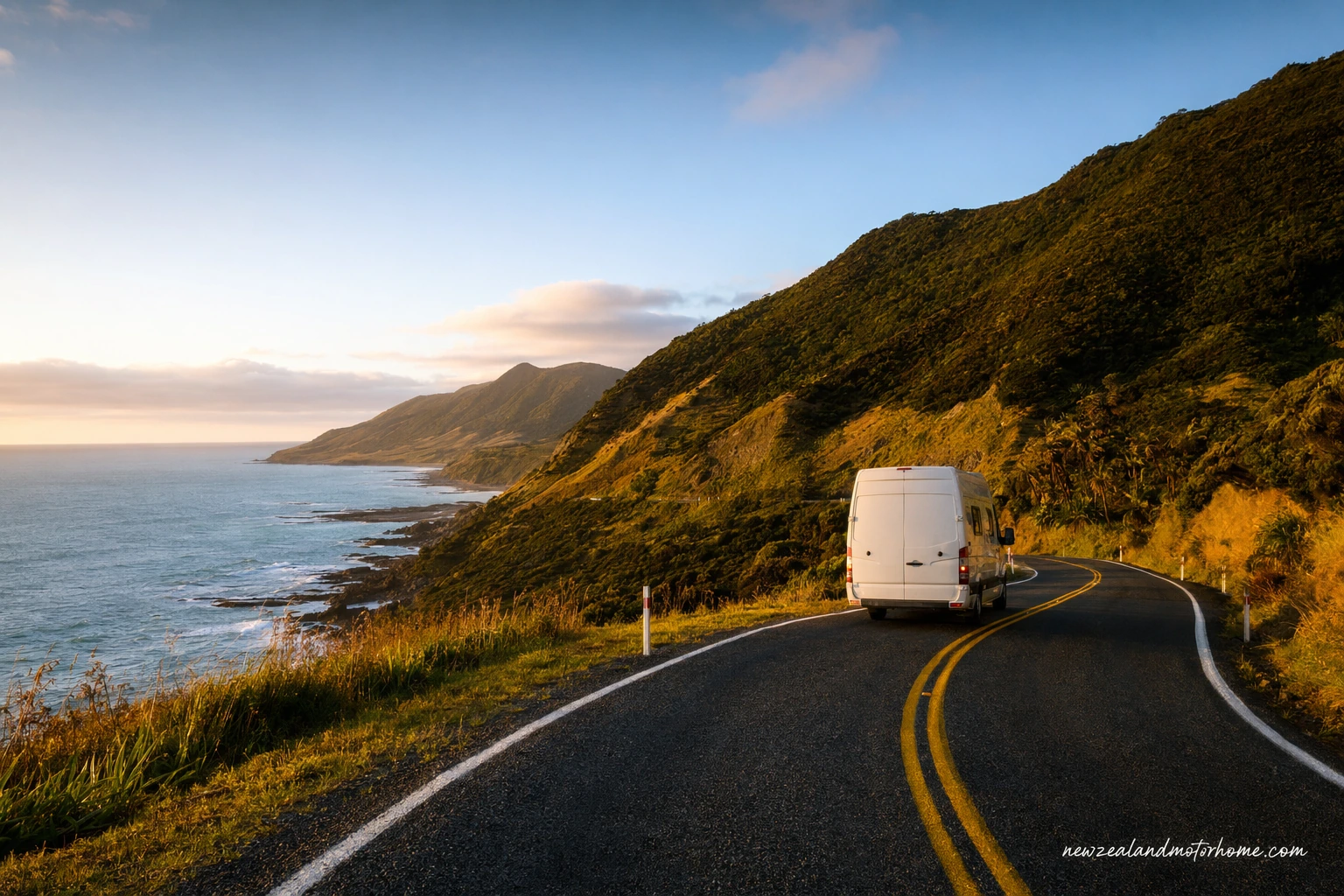
The hamilton to new plymouth campervan route is one of those North Island drives that changes character every hour: Waikato pasture, limestone country around Waitomo, the winding Awakino and Mōkau coast, then the first proper view of Taranaki Maunga as you roll towards the Tasman Sea.
This guide is written for travellers driving and sleeping in their own hired campervan or motorhome. You’ll find practical road notes for SH3, sensible overnight stops, where to think about water, LPG and dump stations, and which detours suit a larger vehicle rather than a nippy car.
Route overview: how long to allow
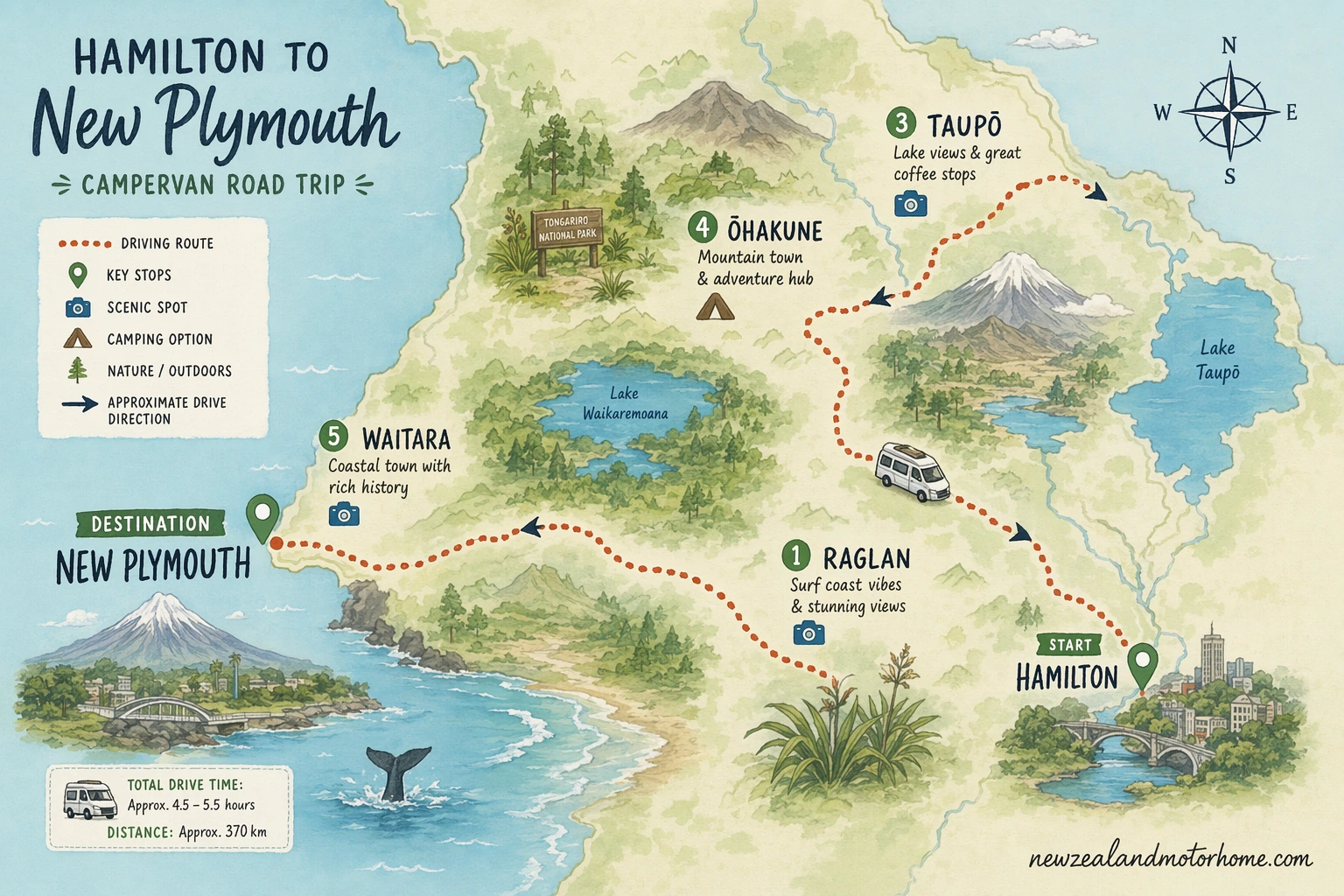
The direct hamilton to new plymouth drive is roughly a half-day in a car, but in a campervan it is much better treated as a relaxed one or two-night route. SH3 is the usual line: Hamilton, Te Awamutu, Ōtorohanga, Te Kūiti, Awakino, Mōkau, Urenui and into New Plymouth.
Allow extra time for slower hill sections, road works, stock trucks, and those moments when you want to pull over for a proper brew rather than eat lunch in a service-station forecourt. If your van is over about 7 metres, be choosy with side roads and scenic lay-bys; some are tight, sloping, or awkward to turn around in.
- Fast but tiring: Hamilton to New Plymouth in one long day, best if you are already stocked and dumped.
- Better pace: one night around Waitomo, Te Kūiti, Mōkau or Urenui.
- Most comfortable: two nights, with time for Waitomo and a coastal stop before New Plymouth.
If you want this route fitted into a wider North Island loop, you can use our talk-to-us step and we’ll help shape the driving days around your van size and travel style.
Hamilton to Waitomo or Te Kūiti: easy roads and useful services
Leave Hamilton with full fresh water, groceries and fuel if you can. The city and nearby towns are the easiest places on this route to sort supermarket supplies, LPG bottle swaps, laundry and dump stations before the road becomes more rural.
SH3 south through Te Awamutu and Ōtorohanga is straightforward for campervans, with normal two-lane state highway driving. Parking is generally easier in town-edge supermarket or visitor car parks than in the tightest main-street spaces, especially if you have a long rear overhang.
Waitomo is the first classic overnight choice. Commercial campgrounds and holiday parks in the village area are useful if you want powered sites, hot showers, laundry and a simple base for glowworm caves. Te Kūiti is more practical if you are mainly looking for supplies, fuel, a dump point check and an early start through the hill country.
- Good van jobs: top up fresh water, dump grey and black water, check LPG and buy food before leaving the Waikato.
- Parking tip: use signed visitor parking around cave attractions; avoid squeezing into roadside verges where the ground is soft.
- Freedom camping: only use designated areas and comply with self-containment rules and local time limits.
Waitomo detours that work in a campervan
Waitomo’s headline caves are manageable in a campervan if you stick to the main village and signed attraction parking. Arrive earlier in the day for easier spaces, because larger motorhomes are much less fun to manoeuvre once the car parks are busy.
The wider limestone country has tempting side roads to natural bridges, waterfalls and blackwater valleys. Some are sealed but narrow, with blind corners, soft shoulders and small pull-offs. In a compact campervan you can include one or two; in a larger motorhome, choose carefully and avoid committing to roads where you cannot see a turning area.
- Best for most vans: Waitomo village, cave tour parking, short walks with signed access.
- Use caution: scenic rural roads west of Waitomo after rain or in strong wind.
- Skip if unsure: any gravel or narrow no-exit road that is not clearly suitable for your vehicle length.
This is a good point to check your waste tanks. Dump stations are easier to plan around in Hamilton, Ōtorohanga, Te Kūiti and New Plymouth than in the smaller settlements between the hills and coast.
Te Kūiti to Mōkau and Urenui: the winding middle of SH3
This is the section that makes the hamilton to new plymouth motorhome road trip feel like a real crossing rather than a simple transfer. SH3 narrows and winds through the Awakino area, then drops towards Mōkau and the Tasman coast. It is sealed and used by heavy vehicles, but you should drive it like a campervan route, not a race.
Use lower gears on descents, let faster traffic pass where it is safe, and avoid pulling into tiny gravel shoulders just because there is a nice view. After heavy rain, watch for debris, slips, temporary speed limits and road-work crews. Check current state highway conditions before you leave Te Kūiti or New Plymouth, especially around the hill and gorge sections.
Mōkau is a lovely pause for the river mouth and coast. Parking is easier if you arrive outside lunch-hour peaks and choose broad, level public areas rather than beach-edge tracks. Urenui is another sensible overnight option before New Plymouth, with a more relaxed coastal feel and access to basic holiday-park style facilities depending on where you book.
- Fuel note: do not rely on every small settlement having fuel or LPG available late in the day.
- Driving note: allow for trucks, campervan-width corners and occasional one-way or controlled road-work sections.
- Overnight note: coastal freedom camping rules are tightly managed; use signed sites only and carry proof of self-containment.
Arriving in New Plymouth: where to base the van
New Plymouth is a friendly campervan finish because you can park up for a night or two and use the Coastal Walkway, beaches, gardens and town centre without moving the van constantly. If you are staying in a commercial campground or holiday park, choose your site with your next day in mind: powered for battery recovery and laundry, or unpowered if you are self-sufficient and want a simpler stop.
For town visits, look for longer public parking spaces away from the busiest central blocks, then walk or cycle in. A tall motorhome may not suit covered car parks, and some beachfront areas fill quickly on sunny weekends. Always check height bars, time limits and overnight restrictions before committing.
New Plymouth, Waitara and inland Taranaki service centres usually give you better options for fuel, groceries, LPG, potable water and dump stations than the smaller coastal settlements. Locations and access can change, so confirm dump-station details locally or with your campground before your tanks are full.
- Powered site: useful after fridge-heavy driving days or poor solar weather.
- Unpowered site: fine for certified self-contained vans with good battery and water habits.
- Freedom camping: possible only where permitted; Taranaki councils actively signpost restrictions.
Optional Taranaki side trips from your New Plymouth base
Once you have reached New Plymouth, it is tempting to point the van at Taranaki Maunga. The mountain roads are beautiful but not all are relaxing in a larger motorhome. Check weather, cloud, wind and road conditions before climbing towards visitor areas, and remember that alpine car parks are generally for day use unless signs specifically allow otherwise.
North Egmont is the most common approach from New Plymouth, with a steady climb and cooler conditions at the top. Dawson Falls and other eastern access roads can feel narrower and more twisting, so they are better tackled in daylight and in a van you are confident driving. Do not assume there will be dump facilities, fresh water or room to turn around at every road end.
- Easy add-on: Coastal Walkway, Pukekura Park, Ōakura and nearby surf beaches from a New Plymouth base.
- Plan carefully: mountain road access, weather changes and no-overnight rules at many conservation car parks.
- Before you go: empty waste, fill fresh water and secure loose gear for hill driving.
Keep planning
Common questions
Can I drive from Hamilton to New Plymouth in one day in a campervan?
Yes, but it is a fuller day than the map suggests. A campervan pace with fuel, lunch, photo stops and slower hill sections is more comfortable if you allow most of the day, or break the trip with a night around Waitomo, Te Kūiti, Mōkau or Urenui.
Is SH3 suitable for a large motorhome?
SH3 is the main route and is used by trucks and buses, so it is suitable for motorhomes when driven carefully. The Te Kūiti to Mōkau section is winding in places, so keep your speed down, use pull-over areas sensibly, and avoid narrow scenic side roads if your vehicle is long or you are not confident turning.
Where should I dump waste on this route?
Plan around larger centres such as Hamilton, Ōtorohanga, Te Kūiti and New Plymouth, plus campground facilities where you are staying. Do not leave it until your tanks are full on the rural middle section, as smaller coastal settlements may have fewer public options or changing access rules.
Can I freedom camp between Hamilton and New Plymouth?
Only in places where local council rules and signs allow it, and generally only in a certified self-contained vehicle. Freedom camping areas can have night limits, seasonal changes and no-camping zones near beaches, so check the sign on site before setting up for the night.
What is the best overnight stop for this route?
Waitomo suits travellers who want caves and a powered site early in the trip. Mōkau or Urenui suit those who prefer a coastal pause before New Plymouth, while Te Kūiti is the practical choice for a simple services stop and an early start.
Do I need to book powered sites ahead?
In summer, school holidays and long weekends, yes, especially around Waitomo, the Taranaki coast and New Plymouth. Outside peak periods you may have more flexibility, but booking a powered site is still wise if you need laundry, charging, showers or a guaranteed dump-station stop.
Have a planner shape this for your dates
Send a short outline — your dates, party size, and the kind of trip you want. A planner replies with a vehicle recommendation, a paced route, and the realistic budget.