- Allow 3–4 days for comfort
- Cook Strait ferry booking needed
- Powered sites useful before sailing
- Watch wind on Desert Road
- Self-containment rules vary
The Hamilton to Picton campervan run is a proper North Island-to-South Island repositioning trip: rolling Waikato farmland, the central plateau, the Kapiti Coast, Wellington’s harbour, then a ferry crossing into the Marlborough Sounds. It is not a route to rush if you are driving a larger motorhome, especially once you factor in dump station stops, fresh-water fills, supermarket parking and the ferry check-in window.
This guide breaks the Hamilton to Picton drive into sensible van-friendly legs, with overnight ideas, road notes, ferry planning and the small practical jobs that make the trip smoother. It is written for travellers sleeping in their hired campervan or motorhome, whether you prefer powered holiday park sites, low-key unpowered stops or certified self-contained freedom camping where it is permitted.
How many days to allow from Hamilton to Picton
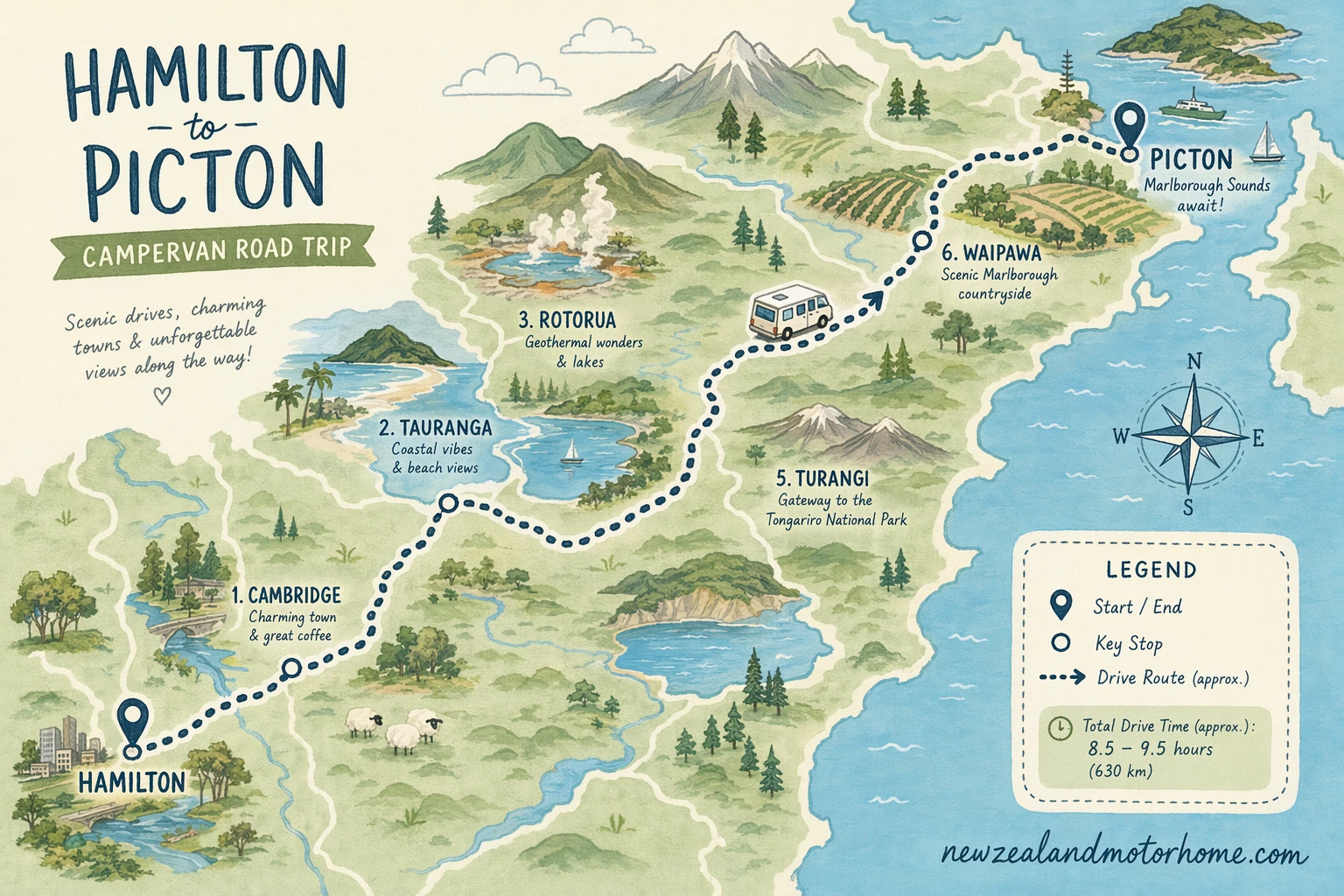
You can drive Hamilton to Wellington in one long day and sail to Picton the next, but in a campervan that often feels squeezed. A better pace is three to four days, giving you time to stock the van, manage grey water, and arrive at the ferry without being tired or tight for time.
The most comfortable Hamilton to Picton motorhome road trip usually looks like this:
- 2 days: possible if you only need to relocate the van and have a pre-booked ferry, but expect long driving days.
- 3 days: a practical minimum, with one central North Island overnight and one Wellington or Kapiti stop before the ferry.
- 4 to 5 days: better for a relaxed route, side trips and a night in Picton before continuing south.
If you are travelling in a longer motorhome, build in extra time for slower hill sections, fuel stops with easy turning room, and the occasional place where you skip a small roadside pull-off because it is too tight for the van.
Leg 1: Hamilton to Taupō or Tongariro National Park
Leaving Hamilton, State Highway 1 takes you through Cambridge and the Waikato before the road opens towards Tīrau and Tokoroa. It is a straightforward first leg for most campervans, with supermarket stops in Hamilton or Cambridge a good idea before you get into smaller towns where parking a long vehicle can be less convenient.
Taupō is the easiest overnight choice if you want services. Holiday parks around town usually suit both powered and unpowered sites, and you will find dump station and fresh-water options in the wider Taupō area. If you are certified self-contained, check the current local freedom camping rules before choosing any lakeside or reserve-style stop, as restrictions can change and some areas are not suitable for overnighting.
If you continue towards Tongariro National Park, expect higher elevation, cooler nights and more exposed weather. The Desert Road section of SH1 can be windy, icy or closed in winter conditions, so check road updates before committing. In a tall motorhome, slow down for crosswinds and leave more space when passing trucks.
Leg 2: Central Plateau to the Kapiti Coast
From Taupō or Tongariro, the route heads south through the central North Island towards Taihape, Bulls and Levin. This is one of the longer driving legs on the Hamilton to Picton campervan route, so start with full fresh water if you are planning an unpowered night and empty your grey water where facilities are available rather than leaving it until the ferry day.
Roadside stops exist, but not all are comfortable for larger vans. Look for wide, sealed pull-offs with clear entry and exit sightlines, and avoid soft grass edges after rain. Taihape and Bulls are useful pause points for fuel, toilets and a leg-stretch, though town-centre parking can be easier early in the day before it gets busy.
The Kapiti Coast makes a sensible overnight before Wellington. Paraparaumu, Waikanae and Ōtaki put you close enough to the ferry for the next day without sleeping in city traffic. Choose a holiday park if you need a powered site, laundry, showers or a top-up of water; if you are relying on freedom camping, confirm the current council rules and make sure your van’s self-containment certification is valid and visible.
Leg 3: Kapiti or Wellington to the Cook Strait ferry
The drive into Wellington can be slow at commuter times, and the final approach to the ferry terminal is not the moment to discover you need diesel, LPG or a dump station. Treat ferry day like a travel day: empty grey water, secure loose gear inside the van, top up what you need, and allow a generous buffer for traffic and check-in.
Wellington has steep streets and tight urban parking, so a central sightseeing stop is easier if you choose a large public car park that allows your vehicle height and length, then walk or use public transport. Do not assume a parking building will fit a motorhome; height barriers are common. If you are staying overnight before the sailing, a serviced campground or designated campervan site outside the tightest city streets is usually less stressful than trying to park in the CBD.
Book the ferry with the correct vehicle length, including bike racks or rear boxes, and declare LPG as required by the operator. Before boarding, turn off gas bottles, latch cupboards, secure the fridge door and keep warm layers handy, as you generally cannot return to the vehicle deck during the crossing.
Arriving in Picton with a campervan
Picton is a compact harbour town, and ferry traffic can make the first few minutes feel busy. Take your time leaving the terminal, then decide whether you are staying the night or continuing towards Blenheim, Nelson or the West Coast. If you have just come off an afternoon or evening sailing, staying locally is often the easiest choice.
Picton has holiday park options suited to campervans, including powered sites for recharging house batteries and unpowered sites if you are self-sufficient. The wider Marlborough area also has dump station and fresh-water facilities, but check locations and access before you arrive, especially if you are travelling after hours. Some freedom camping areas in Marlborough are tightly managed, so read signs carefully and use only places that match your van’s certification and the current rules.
For a first look at the Sounds, park the van in town where it fits legally and walk the waterfront rather than trying to nose into small residential viewpoints. The roads out towards the Sounds can be narrow and winding, with limited turning space for longer motorhomes, so choose side trips carefully and do not take unsealed spurs unless they are suitable for your hire vehicle agreement.
Practical planning notes for this route
The Hamilton to Picton drive rewards tidy planning more than speed. You are linking a long highway run with a ferry crossing, so the best trip is the one where the van jobs are handled early: fuel, LPG, fresh water, grey water, rubbish, battery charging and groceries.
Before you set off, check:
- Self-containment: freedom camping access depends on your certification and local rules.
- Ferry booking: vehicle length, height, LPG requirements and check-in time matter.
- Weather: the Desert Road, Cook Strait and Marlborough Sounds can all be affected by wind or winter conditions.
- Overnight mix: alternate powered sites with unpowered or freedom stops so batteries, laundry and showers stay easy.
- Road comfort: longer vans need more space for passing lanes, town parking and tight pull-offs.
If you want help shaping this into a paced itinerary around your van size, ferry time and first South Island stop, you can use the talk-to-us trip planning step and we will help line up the practical details.
Common questions
Can I drive from Hamilton to Picton in one day in a campervan?
It is not realistic as a single relaxed campervan day because you must drive to Wellington and also cross Cook Strait by ferry. Most travellers should allow at least two days, and three or more is much more comfortable.
Where should I stop overnight between Hamilton and Picton?
Taupō or the Tongariro area works well for the first night, then the Kapiti Coast or Wellington for the night before your ferry. Choose powered sites if you need to recharge, heat the van or use campground facilities before sailing.
Do I need to book the Cook Strait ferry for a motorhome?
Yes, book ahead and enter the correct vehicle length and height, including anything attached to the rear. Ferry space for larger vehicles can be limited, especially in summer and around public holidays.
Is the Hamilton to Picton route suitable for large motorhomes?
The main highways are suitable for large motorhomes, but you need to drive to conditions on the Desert Road, through Wellington traffic and around Picton’s tighter streets. Be cautious with small viewpoints, steep urban roads and unsealed side roads.
Can I freedom camp on this route?
Sometimes, but only where local rules allow it and only if your campervan meets the required self-containment standard. Always read the signs on site and have a backup paid campground in mind, particularly near Taupō, Wellington and Marlborough.
When should I empty grey water before the ferry?
Empty your grey water before you reach the ferry terminal, ideally the day before or on the morning of travel at an approved dump station. It makes the crossing and arrival in Picton simpler, especially if you arrive late.
Have a planner shape this for your dates
Send a short outline — your dates, party size, and the kind of trip you want. A planner replies with a vehicle recommendation, a paced route, and the realistic budget.