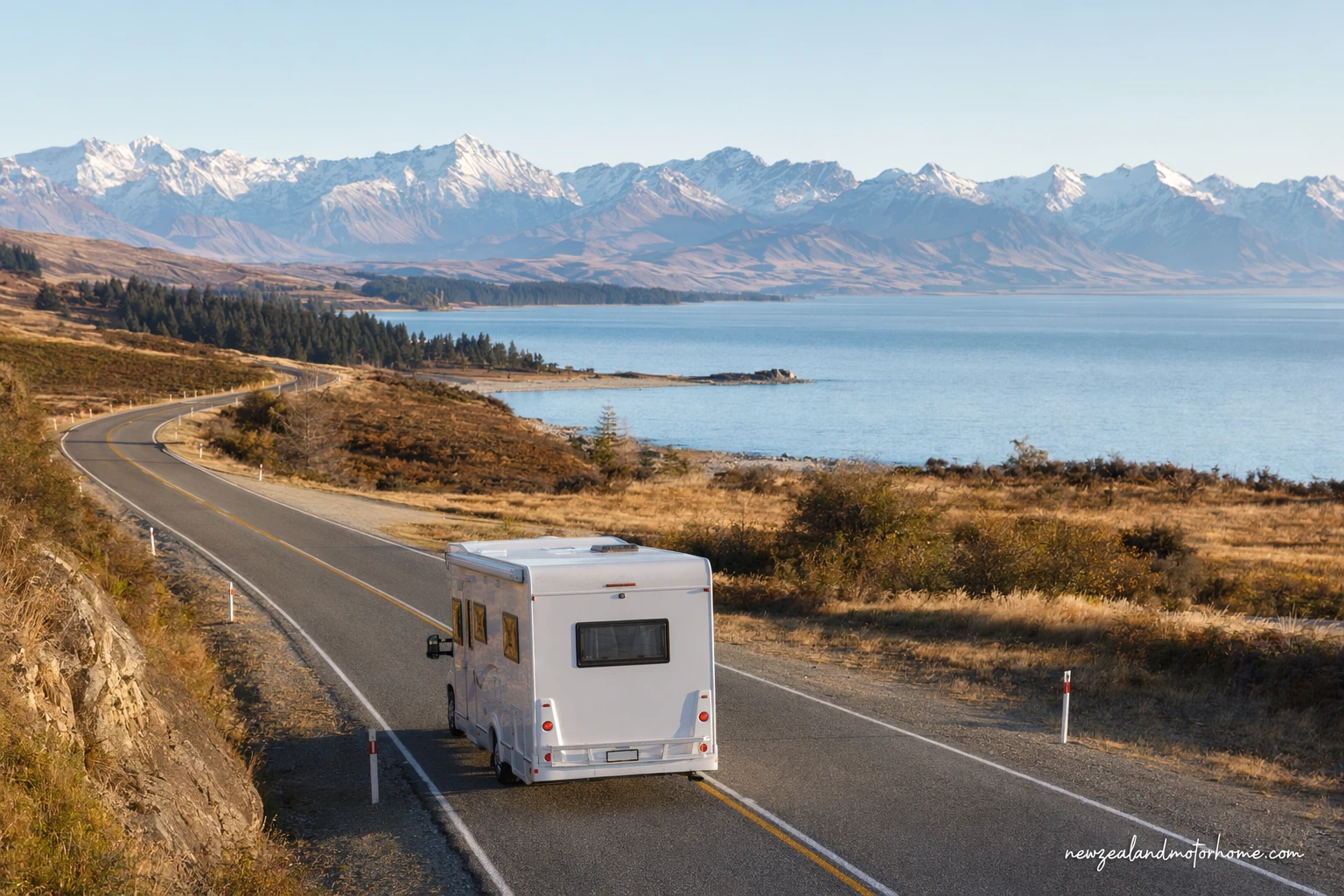
Invercargill to Timaru campervan route for a steady northbound trip
- Best pace: 2 to 4 days
- Direct route: SH1 via Dunedin and Oamaru
- Van note: allow for hills and city parking
- Overnight style: powered sites plus approved freedom camping
- Good reset towns: Gore, Dunedin, Oamaru, Timaru
The Invercargill to Timaru campervan route is a South Island drive with plenty of practical choices: go directly up SH1 through Gore, Balclutha, Dunedin and Oamaru, or slow it down with a Catlins edge before rejoining the main road. In a van, the best version is not the fastest one. It is the one that leaves time for fuel, water, dump stations, weather, and the odd long-vehicle parking hunt in coastal towns.
This guide is written for self-drive campervan and motorhome travellers sleeping in their own hired vehicle. You will find sensible driving legs, where to plan powered or unpowered nights, what to know about freedom camping rules, and the road sections where a taller or longer van needs a little patience.
Best route, distance and how many days to allow
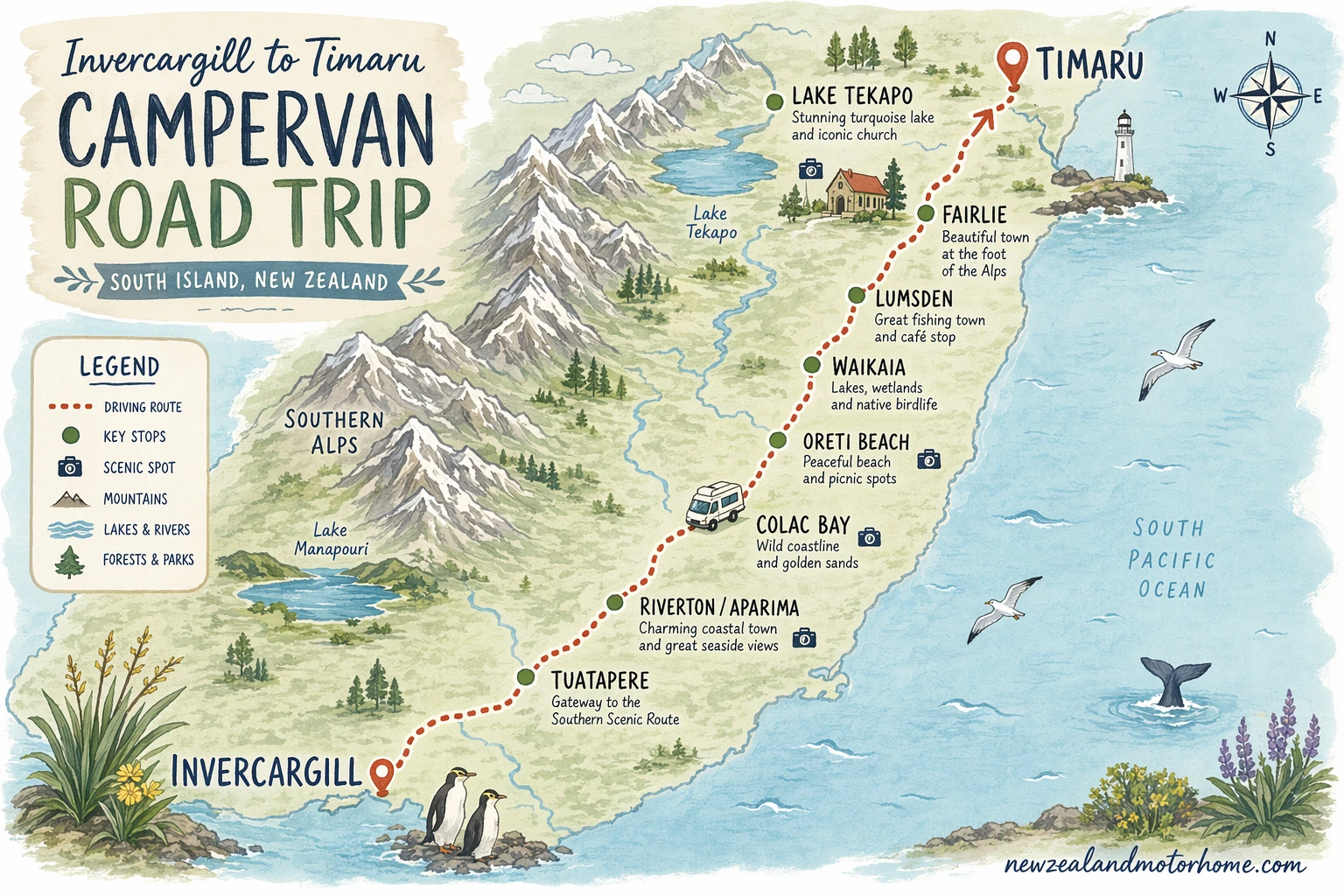
The most straightforward Invercargill to Timaru drive follows SH1 north via Gore, Balclutha, Dunedin and Oamaru before crossing the Waitaki and rolling into South Canterbury. It is a sealed, all-weather state highway route and is generally suitable for campervans and motorhomes, including longer 6-berth vehicles, provided you drive to the conditions and do not rush the hill sections.
As a point-to-point drive it can be done in one long day, but that makes for a fairly joyless motorhome day with limited time for parking, food stops and breaks. Two days is comfortable, and three to four days gives you time to overnight near Dunedin or Oamaru and enjoy the coast without arriving tired.
- Direct route: Invercargill, Gore, Balclutha, Dunedin, Oamaru, Timaru.
- Driving time: allow a full day behind the wheel once van stops are included.
- Better pace: 2 nights if you want the trip to feel like a road trip rather than a transfer.
- Scenic add-on: the Catlins detour adds winding roads and time, so treat it as an extra day rather than a quick shortcut.
Suggested campervan legs from Invercargill to Timaru
For a relaxed Invercargill to Timaru motorhome road trip, break the journey into legs that leave you off the road before dusk. Southland and Otago weather can shift quickly, and in a high-sided van you will feel coastal wind more than you would in a car.
Leg 1: Invercargill to Balclutha or Dunedin. The direct road through Gore is simple to follow and has useful service stops. Gore works well for fuel, groceries and a driver swap, while Balclutha is a practical overnight if you want a shorter first day. If you push on to Dunedin, plan your arrival before commuter traffic and be ready for one-way streets and tighter central parking.
Leg 2: Dunedin to Oamaru. This is a rewarding campervan leg, but do not underestimate the Kilmog hill north of Dunedin. Use lower gears on descents, keep left where safe, and let faster traffic pass at proper pull-offs. Moeraki, Hampden and the Waitaki coast are good pause points, though beach access roads can be narrow and busy in summer.
Leg 3: Oamaru to Timaru. This final run is more open, with SH1 tracking through North Otago farmland and across the Waitaki River. It is an easy half-day in a van, leaving time to park near Caroline Bay, refill supplies and settle into an overnight site rather than searching in the dark.
Overnight stops: powered sites, unpowered nights and freedom camping
The easiest overnight pattern is Invercargill or Gore before you start, then Balclutha, Dunedin or Oamaru on the way north, finishing with a Timaru night. Holiday parks and camping grounds on this corridor usually suit hired campervans well because you can choose a powered site, use showers and laundry, and deal with water or waste before continuing.
Unpowered sites can work nicely if your batteries are topped up and you have not been running heating hard, but Southland and Otago nights can be cool outside summer. If you are travelling in shoulder season, alternate unpowered nights with powered sites so the fridge, lights and device charging do not become the trip admin.
- Invercargill: useful for a powered first night, supermarket stock-up and checking your van systems before departure.
- Balclutha or Kaka Point area: practical if you want a shorter first leg or a coastal pause before Dunedin.
- Dunedin: choose a proper campground if you want to avoid late-night parking stress and city freedom camping restrictions.
- Oamaru: a good final overnight before Timaru, especially if you want time around the harbour and Victorian precinct.
- Timaru: use an approved campground or clearly signed freedom camping area; do not assume any beachfront car park allows overnight stays.
Freedom camping rules vary by district and can change by season or by specific car park. Only use sites that allow your vehicle type, carry and display the correct self-containment certification, and check local council signs before you pull the curtains. If you want help matching your dates to realistic overnight stops, use our plan-your-trip step and we can shape the route around your van and pace.
Dump stations, fresh water, LPG and food resupply
This route is well served for campervan basics, but it still pays to plan them rather than waiting until tanks are full. Invercargill, Gore, Balclutha, Dunedin, Oamaru and Timaru all have public or campground dump-station options in the wider area; confirm the current location in your camping app or on council information before you rely on one.
Fresh-water fills are often available at holiday parks when you stay, and some public dump stations provide potable water where signed. Never assume every tap is drinking water. If you are using a hired motorhome, keep your grey-water and toilet-cassette routine tidy, because the longer urban stretches through Dunedin and Timaru are not the place to be hunting urgently for a legal disposal point.
- Before leaving Invercargill: fill fresh water, empty waste, check LPG level and buy groceries for at least the first night.
- Gore or Balclutha: good mid-route service stops for fuel and supermarket supplies without needing to enter a busy city centre.
- Dunedin: best for a fuller reset, but choose service stations and parking with room for your vehicle length and turning circle.
- Oamaru to Timaru: top up before the final leg if you are arriving after reception hours at your overnight stop.
Road notes and van-friendly parking on the way
SH1 is the dependable choice, but it is still a working highway with trucks, farm traffic, passing lanes and changing speed limits through towns. In a campervan, give yourself more braking distance, pull over only where the shoulder is firm and wide, and avoid squeezing into short angle parks in town centres if your rear overhang will sit out into traffic.
Dunedin is the main place to slow down mentally before you arrive. The central one-way system, steep side streets and tight heritage areas are manageable, but not pleasant if you are guessing. Park on the flatter harbour-side or use a campground as your base, then explore on foot or local transport rather than threading a motorhome through steep suburban shortcuts.
- Gore: easy rest stop town with flatter streets and useful resupply options.
- Balclutha: a sensible driver-break point before the Otago coast and Dunedin traffic.
- Moeraki Boulders: arrive early or outside peak midday times, as access parking can fill quickly and turning space becomes precious.
- Oamaru harbour area: good daytime wandering, but check signs carefully for length limits and overnight restrictions.
- Timaru and Caroline Bay: good for daytime parking and a walk, with overnighting only where clearly permitted.
If you choose the Catlins variation from Invercargill, expect slower, narrower roads, more bends and some side roads that may be gravel or unsuitable for larger vans in poor weather. It is a beautiful addition, but it belongs in a three- or four-day plan, not as a last-minute detour on a one-day transfer.
Common questions
Can I drive from Invercargill to Timaru in one day in a campervan?
Yes, it is possible, but it is a long day once you include fuel, food, dump-station and rest stops. Most campervan travellers will enjoy the route more with at least one overnight stop around Dunedin, Balclutha or Oamaru.
Is the road suitable for a large motorhome?
The direct SH1 route is sealed and generally suitable for larger motorhomes. Take extra care on the Kilmog hill north of Dunedin, in Dunedin city traffic, and anywhere you are turning into small coastal car parks.
Where should I overnight between Invercargill and Timaru?
Balclutha, Dunedin and Oamaru are the most practical overnight points. Choose a powered site if you need a battery reset, laundry or showers, and check local freedom camping rules if you plan to use a certified self-contained site.
Can I freedom camp on this route?
Only in places where the local council allows it and only if your vehicle meets the required self-containment rules. Restrictions can differ between Southland, Clutha, Dunedin, Waitaki and Timaru districts, so always read the signs at the actual car park before staying overnight.
Is the Catlins worth adding to the route?
Yes, if you have extra time and are comfortable with slower coastal driving in a van. It is not the quickest Invercargill to Timaru route, and larger motorhomes should be cautious with narrow side roads, gravel access and busy scenic stops.
Have a planner shape this for your dates
Send a short outline — your dates, party size, and the kind of trip you want. A planner replies with a vehicle recommendation, a paced route, and the realistic budget.