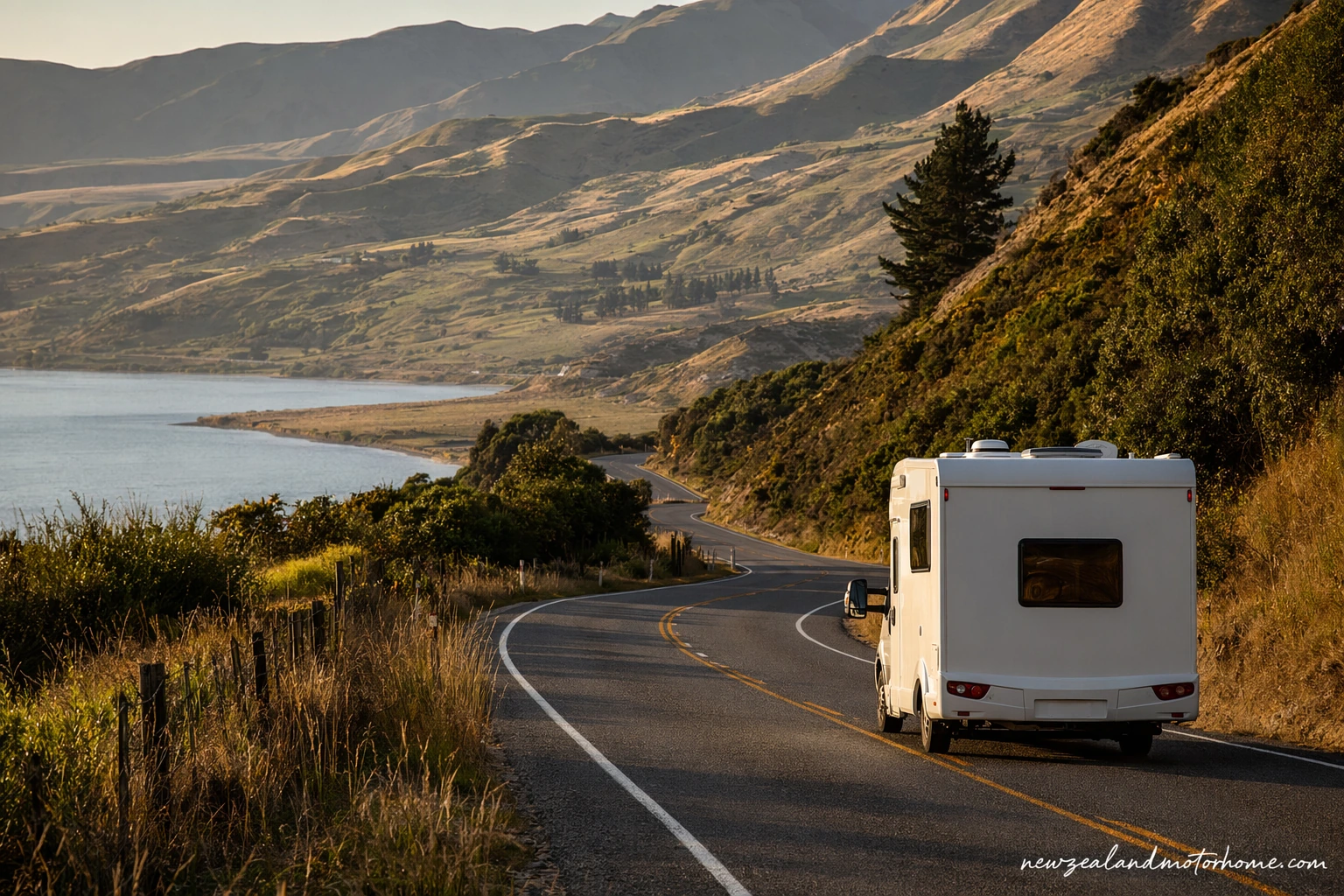
- Best in settled spring to autumn weather
- Allow 4-6 days for an easy pace
- Includes Cook Strait ferry booking
- Large vans: use Blenheim route to Picton
- Mix powered sites with legal freedom camping
The Nelson to Napier campervan route is a proper two-island journey: sunny Tasman Bay, a Marlborough approach to Picton, the Cook Strait ferry, then the Wairarapa and Hawke's Bay on SH2. It is not hard driving, but it does reward a calm plan, especially if your hired motorhome is long, tall, or you are new to ferry travel with a van.
This guide is written for self-drive campervan travellers sleeping in their own vehicle along the way. You will find sensible legs, overnight stop ideas, road notes for larger vans, and the practical bits that make the nelson to napier drive smoother: dump stations, fresh water, LPG, ferry timing, and where not to leave the van overnight unless it is clearly allowed.
Route shape, distance and how many days to allow
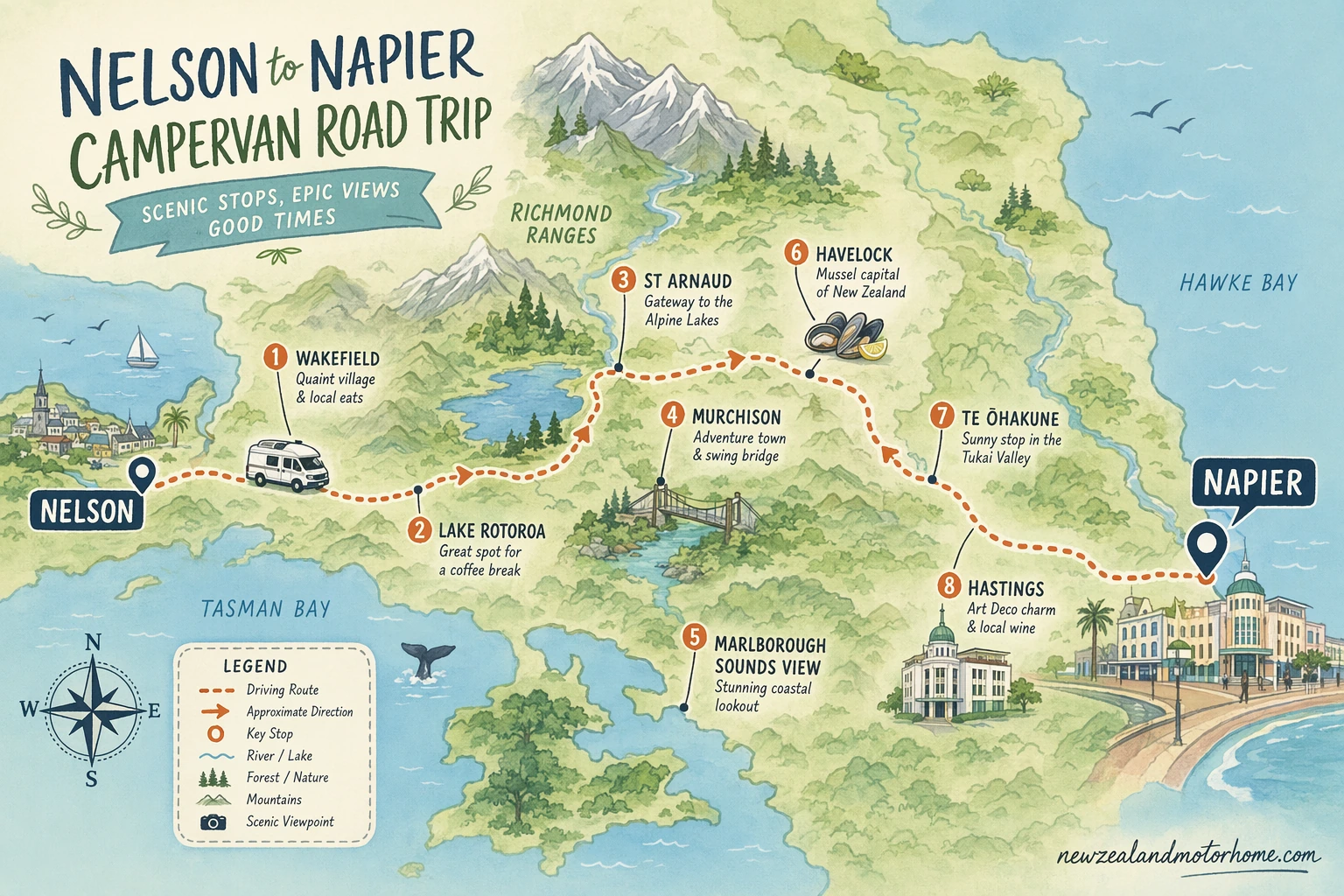
The most straightforward Nelson to Napier motorhome road trip runs Nelson to Picton, crosses Cook Strait by ferry, then follows Wellington, the Remutaka Hill, Wairarapa and Central Hawke's Bay to Napier. Allow around 460 kilometres of driving plus the ferry crossing, depending on whether you take the faster inland highway to Picton or the slower scenic Queen Charlotte Drive.
You can technically move from Nelson to Napier in two very long days if the ferry lines up, but that is a tiring way to travel in a campervan. Four to six days gives you time to drive in daylight, check into sites before dark, and avoid rushing the tighter hill roads.
- Fast but tiring: 2 days, with one ferry day and one long SH2 day.
- Comfortable: 4 days, sleeping near Picton, Wellington or Wairarapa, then Hawke's Bay.
- Better paced: 5 to 6 days, with time for Marlborough Sounds, Wairarapa towns and Te Mata or Napier waterfront.
- Best van rhythm: dump and refill before the ferry, then again before entering Hawke's Bay.
Leg 1: Nelson to Picton without rushing the van
From Nelson, the easy motorhome option is SH6 through Hira, Rai Valley and Havelock, then either continue via Blenheim to Picton or take Queen Charlotte Drive from Havelock. The Blenheim route is generally more relaxed for larger motorhomes, with wider roads, easier passing opportunities and more space for supermarket, fuel and LPG stops.
Queen Charlotte Drive is beautiful, but it is narrow and winding in places, with tight bends, drop-offs, cyclists and limited shoulder space. It suits confident drivers in smaller campervans when the weather is settled. If you are in a long six-berth motorhome, or you are still getting used to the vehicle's width, take the Blenheim approach and save the Sounds views for a day walk or lookout stop.
- Good leg break: Pelorus Bridge has room to park a van for a short walk and lunch stop; check overnight rules before assuming you can stay.
- Havelock: useful for a coffee stop and marina wander, but choose larger public parking areas rather than squeezing into small main-street parks.
- Blenheim: a practical place for groceries, fuel, LPG bottle swaps or fills, and fresh supplies before Picton.
- Picton: stay close to the ferry if you have an early sailing; holiday parks and designated campgrounds are the least stressful choice.
Cook Strait ferry with a campervan
The ferry is the hinge point of this route. When booking, be accurate about your campervan's length, height, bike racks, rear boxes and any trailer, because the vehicle deck allocation depends on those measurements. Arrive early enough to sort the lane, turn off LPG if required, secure loose gear, and let the fridge coast on battery rather than opening it during the crossing.
It is worth dumping wastewater and topping up fresh water before you queue, especially if you are heading straight through Wellington after arrival. Picton and the wider Wellington region have dump stations at council facilities and holiday parks, but not every dump point has potable water, so read the signs carefully.
- Before boarding: close roof vents, latch cupboards, secure the shower door and put heavy items low.
- On the vehicle deck: leave the van in gear or park, apply the handbrake, and take warm layers with you upstairs.
- After arrival: do not plan a tight mountain drive immediately if the ferry is late; book a powered site near Wellington if needed.
- Overnight note: ferry terminal parking is not a default freedom camping option; use a legal campground or clearly signed certified self-contained area.
Leg 2: Wellington to Wairarapa over the Remutaka Hill
From Wellington, SH2 climbs over the Remutaka Hill into Wairarapa. This is a sealed state highway and motorhomes use it every day, but it is steep, winding and exposed in strong wind. Drop your speed, use lower gears on the descent, keep left through bends, and pull over only where a bay is genuinely long enough for your van.
For overnight stops, Featherston, Greytown, Martinborough and Masterton all make more relaxed bases than central Wellington if you want space around the vehicle. Powered sites are useful here after a ferry day, especially if you have been running the fridge, charging devices and using diesel heating in cooler months.
- Wellington parking: avoid threading a tall motorhome through tight central-city parking buildings; use surface parking or go straight to a campground.
- Remutaka timing: drive it in daylight and avoid it during severe wind warnings if you can.
- Wairarapa towns: park on the edge of town centres where bays are longer and turning space is better.
- Services: Masterton is the main practical stop for groceries, fuel, LPG and dump station options before the longer run north.
Leg 3: Wairarapa to Napier on SH2
North of Masterton, SH2 is open rural driving through Eketāhuna, Pahiatua, Woodville, Dannevirke, Waipukurau and Hastings before Napier. It is a good campervan road, but still needs patience: farm traffic, logging trucks, small-town speed changes and occasional roadworks can break the rhythm. Do not treat the last stretch as a motorway dash.
Good daytime stops include Pūkaha National Wildlife Centre near Mount Bruce, town parks where motorhome parking is signed, and the Central Hawke's Bay towns for groceries or a driver swap. As you near Napier, think about where you will sleep before you start exploring; waterfront parking can be busy and some reserves have strict no-camping rules even for certified self-contained vans.
- Waipukurau and Waipawa: useful midway service towns with fuel, food and potential dump station options nearby.
- Hastings: a practical final resupply point before Napier, with larger supermarkets and LPG availability in the wider area.
- Napier: choose a holiday park or designated overnight area first, then take the van into town for daytime exploring.
- Freedom camping: only stay where the local council rules allow it and your van meets current self-containment requirements.
Overnight style: powered sites, freedom camping and van chores
This route works best with a mix of powered and unpowered nights. Use a powered site before or after the ferry, especially if the weather is cold or you have been parked up using lights, heating and charging. Unpowered campground sites are fine for a night or two if your house battery is healthy and you are driving enough to replenish it.
Freedom camping rules vary between Nelson Tasman, Marlborough, Wellington, Wairarapa and Hawke's Bay councils. A certified self-contained campervan does not give you permission to sleep anywhere; it simply means you may use places that allow certified vehicles. Check the current council maps or signage on the day, and never camp at a beach car park, reserve or scenic pull-off unless overnight stays are clearly permitted.
If you would like this nelson to napier campervan route shaped around your ferry time, van size and preferred site style, you can talk to us before you lock the trip in.
- Dump stations: plan on using them around Nelson or Blenheim, Picton or Wellington, Masterton, and again in Hawke's Bay.
- Fresh water: fill only from taps marked potable; not every dump station tap is drinking water.
- LPG: top up in larger centres rather than leaving it to small rural towns late in the day.
- Vehicle size: know your height before entering car parks, service stations with canopies, or motel-style forecourts.
Common questions
How many days should I allow for a Nelson to Napier campervan trip?
Is Queen Charlotte Drive suitable for a motorhome?
Do I need to book the Cook Strait ferry for my campervan?
Can I freedom camp between Nelson and Napier?
Where should I plan to dump and refill water?
Is the Remutaka Hill difficult in a campervan?
Have a planner shape this for your dates
Send a short outline — your dates, party size, and the kind of trip you want. A planner replies with a vehicle recommendation, a paced route, and the realistic budget.