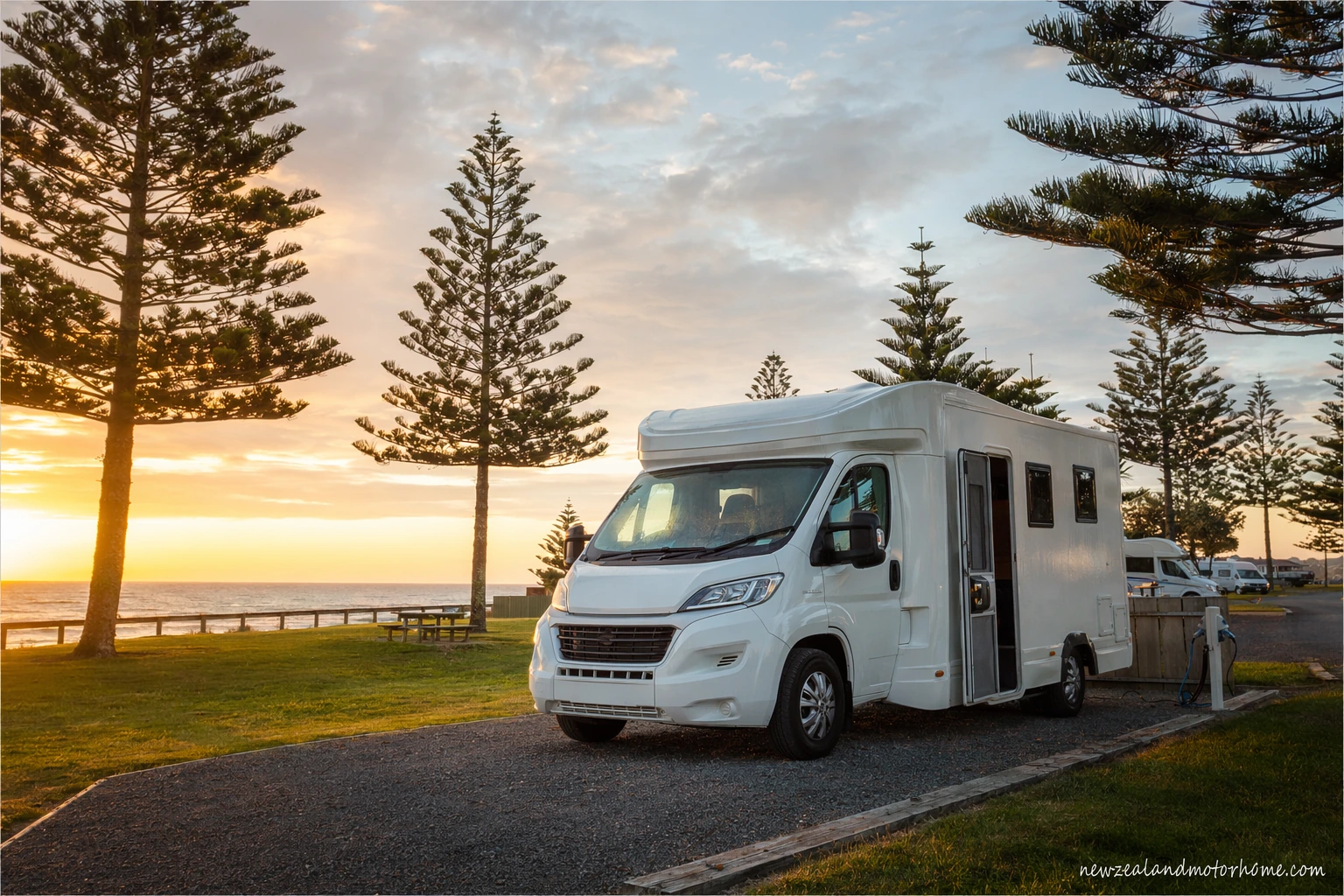
- Best stay: 2–3 nights
- Powered and unpowered sites
- Flat city, easy cycling
- Check van length before booking
- Book early in summer
Napier works beautifully by campervan: a flat seaside city, vineyard country close behind it, and enough holiday park options to choose between beach walks, quieter village edges, or an easy run into town for Art Deco streets and dinner.
This guide is written for self-drive motorhome travellers comparing holiday parks Napier wide — what to look for in powered and unpowered sites, how practical the streets are for longer vans, where dump stations and fresh-water fills usually fit into the plan, and what you can realistically do without moving the van every hour.
Choosing the right side of Napier for your van stay
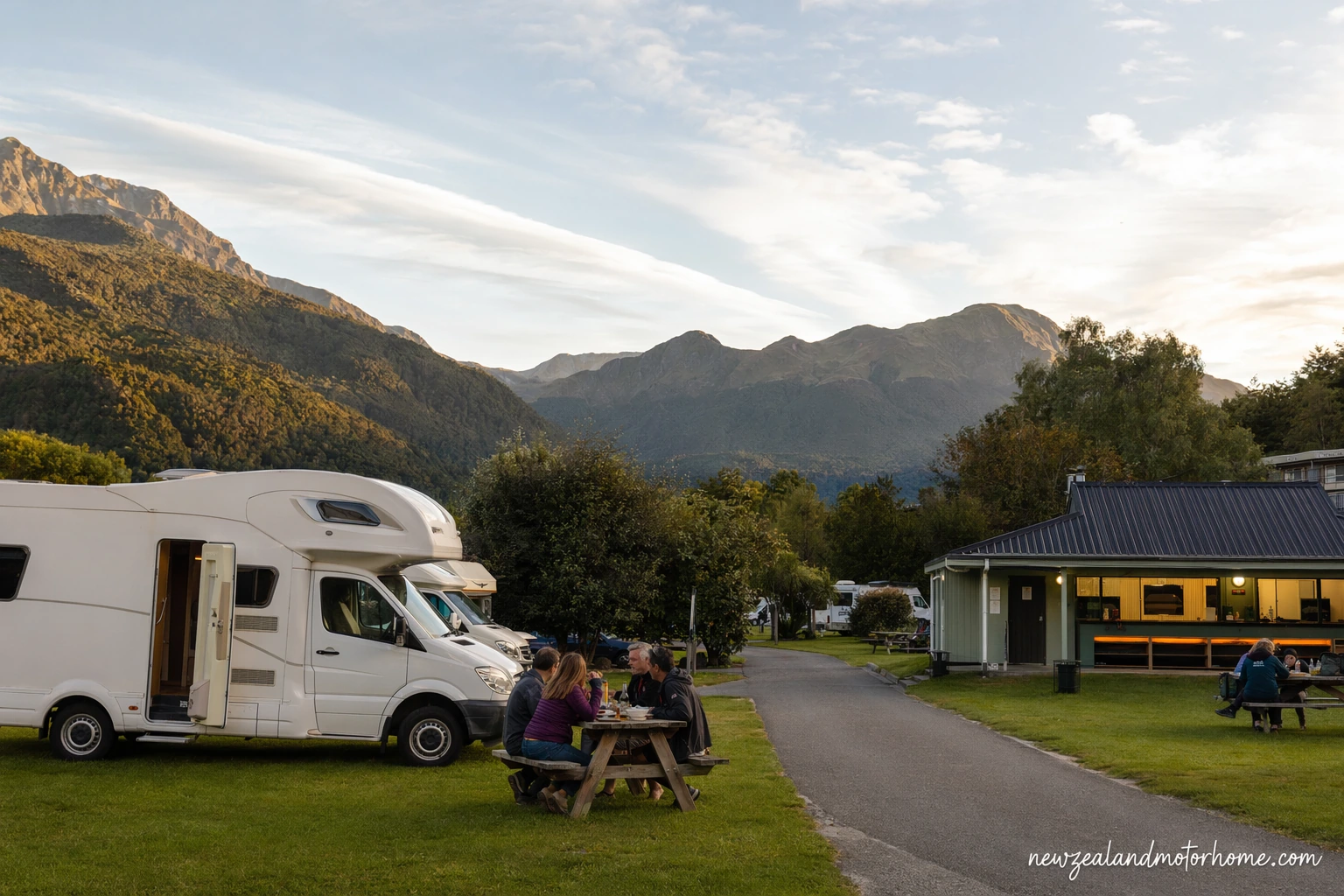
Napier’s holiday parks tend to suit different styles of camping Napier trips. Staying near Marine Parade or the beachfront puts you close to the sea, the aquarium end of town, and the Art Deco centre. Westshore and Ahuriri feel more relaxed for van travellers, with the harbour, cycle trails and flatter access roads. Bay View and the northern edge are handy if you are arriving from Taupō, Wairoa or Gisborne and do not want to thread through town at the end of a long driving day.
If you are comparing campsites Napier wide, think about what you want to do after plugging in. Some parks are better for walking to cafés and the waterfront; others suit a quieter overnight stop with a proper laundry, dump point and space to open the sliding door without feeling squeezed.
- Best for walking: beachfront and inner Napier locations, especially if you want the Art Deco quarter and Marine Parade.
- Best for a calm van night: Westshore, Ahuriri edges, Bay View or rural-facing parks outside the centre.
- Best for onward travel: northern stays for SH2 north, southern or Taradale-side stays for Hastings, Havelock North and the wineries.
Powered sites, unpowered sites and what to check before you book
Powered sites Napier travellers choose are often the easiest option in summer, even if your campervan has good batteries. Hawke’s Bay heat can make a powered site worth it for fridge reliability, charging bikes and cameras, and running appliances overnight. In shoulder seasons, unpowered sites can be perfectly comfortable if your house battery is healthy and you have a certified self-contained van.
Before booking, check the site surface and van length allowance rather than just the word “campervan”. A compact 2-berth fits almost anywhere, but a 7-metre motorhome or a van with a rear bike rack needs a longer bay and a sensible turning angle. Ask whether awnings are allowed, where grey water is handled, and whether the dump station is inside the park or nearby.
- Powered site: best for multi-night stays, hot weather, e-bike charging and families using more devices.
- Unpowered site: good for one night if you have solar, good batteries and do not need mains appliances.
- Hardstand or grass: hardstand is easier after rain; grass can be nicer in summer but may have softer edges.
- Self-containment: still carry and use your onboard toilet and grey-water system correctly, even inside a holiday park.
Driving into Napier and parking without stress
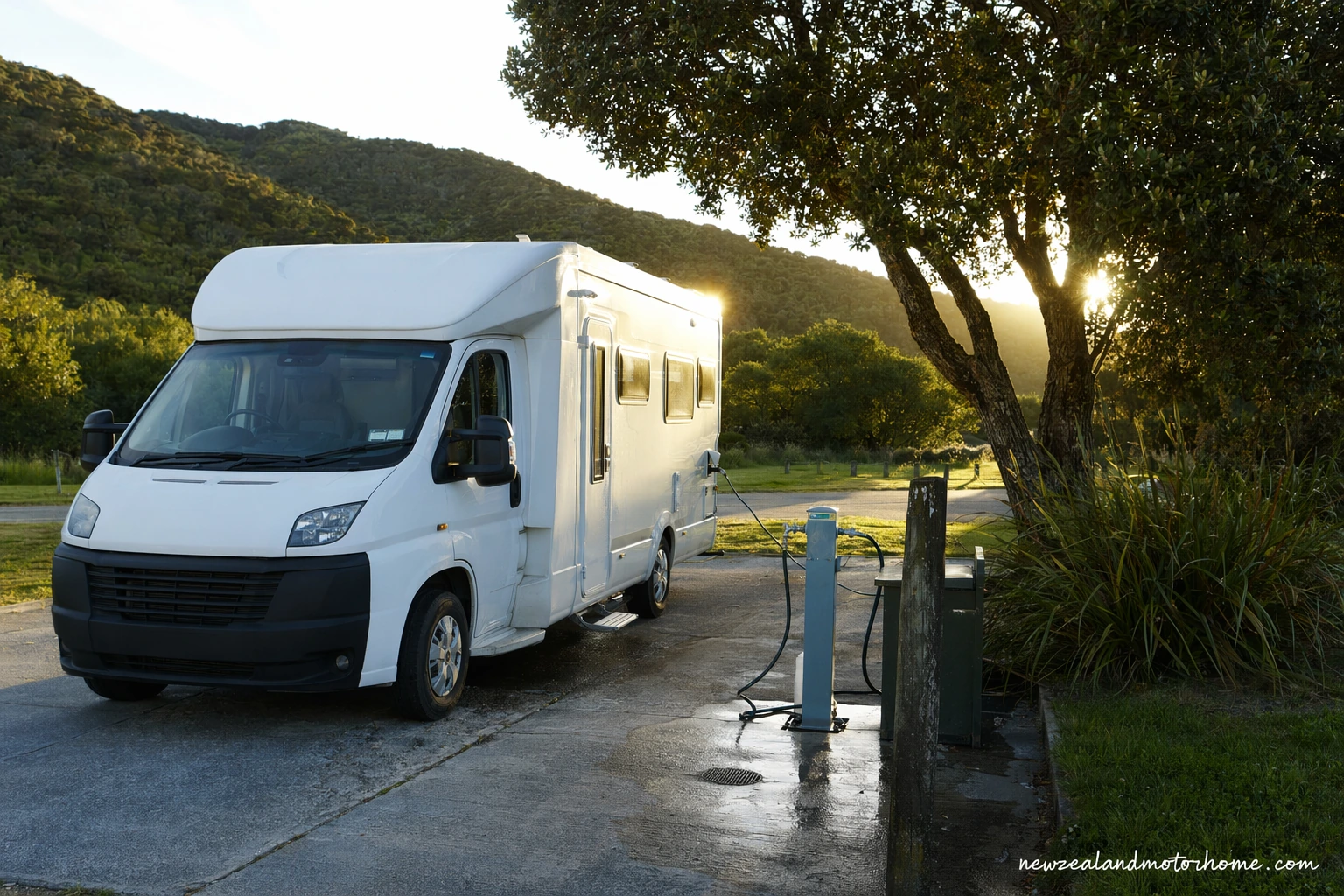
Napier is not a difficult city to drive, but a motorhome feels bigger on the narrower inner streets around the Art Deco centre. Marine Parade is the simplest orientation point: sea on one side, town just inland, and several longer parking areas where you may find more room than in compact CBD bays. Always check signs for time limits, loading zones and any height barriers before committing.
From the south, SH2 and the expressway links make the approach straightforward, but traffic can build around commuter times between Napier, Hastings and Taradale. From the north, the coastal road can feel open and easy, though wind can be noticeable in a high-sided van. If you are arriving late, it is worth choosing a holiday park that does not require a fiddly reverse in the dark.
- Longer vans: aim for end bays or larger beachfront parking areas, not tight angled CBD spaces.
- Height: watch for service-station canopies, trees near older streets, and any signed car park restrictions.
- Fuel and LPG: refill on the main approaches before settling in, especially if you are heading inland next.
- Water: top up fresh water at your holiday park or a confirmed council facility, and never use non-potable taps.
Dump stations, fresh water and practical van chores
A good Napier van stay is partly about timing the chores. Many holiday parks offer a dump station, potable water and rubbish or recycling points, but access can vary between guests only and public use. If you are staying several nights, do the dump-and-fill routine when you arrive or before breakfast rather than when everyone else is trying to leave.
Hawke’s Bay is dry in summer, so treat fresh water as something to plan, not assume. Keep your grey-water tank within limits, use biodegradable products where appropriate, and empty the toilet cassette only at marked dump points. If you are travelling with bikes, ask where they can be stored or washed down; dusty cycle trails and coastal salt can both make a mess inside the van.
- On arrival: confirm dump station location, potable-water tap, rubbish area and quiet-hour rules.
- Before day trips: carry enough fresh water for coffee, handwashing and a post-beach rinse.
- Before leaving: empty grey and black water, secure gas bottles, and check cupboards before the first roundabout.
What is walkable from Napier holiday parks
The best holiday parks Napier offers for a no-drive evening are the ones near the waterfront or Ahuriri. From these areas you can often leave the van level on site and walk to the beach, cafés, the harbour edge or the Art Deco centre, which is much easier than hunting for a long enough parking bay during a busy weekend.
If your park is further out, use it as a calm base rather than forcing every outing on foot. Hawke’s Bay Trails are a strong option for campervan travellers carrying bikes, with flat riding between Napier, Ahuriri, Taradale, Clive and winery country. For Cape Kidnappers / Te Kauwae-a-Māui, check access conditions carefully and avoid taking a large van down minor roads or tight private access without clear permission.
- Easy on foot: Marine Parade, central Art Deco streets, beach paths and parts of Ahuriri.
- Easy by bike: waterfront trails, harbour edges, river paths and winery routes when the wind behaves.
- Better as a day drive: Te Mata Peak area, Havelock North, rural wineries and longer coastal viewpoints.
How long to stay and when to book
One night in Napier is enough to break the journey, plug in, dump and fill, and enjoy a sunset walk along the sea. Two or three nights is better if you want the Art Deco centre, Ahuriri, cycle trails and a winery loop without constantly packing the van away. Summer weekends, public holidays and major local events can book out early, so do not leave your powered site search too late.
When comparing a Napier TOP 10 holiday park with smaller local parks and other campsites Napier has nearby, look beyond the label and match the site to your van. If you want help turning Napier into a wider Hawke’s Bay or East Coast motorhome route, you can talk to us before you lock in your overnights.
- One night: practical stopover with chores and a waterfront walk.
- Two nights: town, beach, Ahuriri and a relaxed morning start.
- Three nights: add cycle trails, wineries or a slower Hawke’s Bay loop.
- Peak season: book powered sites early and confirm late-arrival instructions.
Keep planning
Wellington to napier campervan
Read onRotorua to napier campervan
Read onQueenstown to napier campervan
Read onPicton to napier campervan
Read onNelson to napier campervan
Read onInvercargill to napier campervan
Read onCommon questions
Do Napier holiday parks usually have powered sites for campervans?
Can I freedom camp in Napier instead of using a holiday park?
Where should I park a larger motorhome when visiting central Napier?
Is Napier good for campervan travellers with bikes?
Do I need to book Napier campsites ahead?
Have a planner shape this for your dates
Send a short outline — your dates, party size, and the kind of trip you want. A planner replies with a vehicle recommendation, a paced route, and the realistic budget.