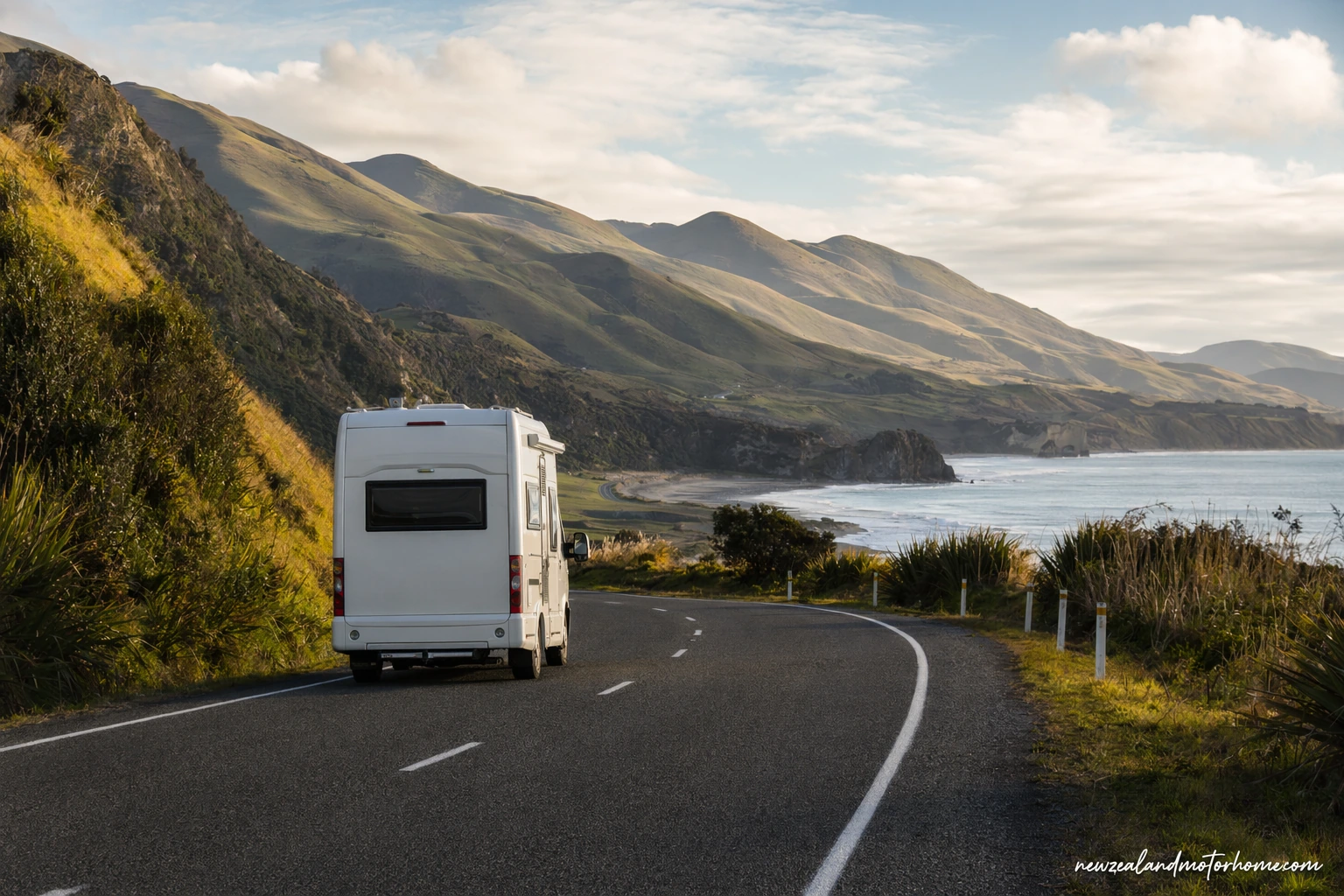
- Best in 2–3 days
- Winding Remutaka Hill section
- Powered sites useful in winter
- Self-contained freedom camping only where signed
- Service towns along SH2
The Wellington to Napier campervan route is one of those North Island drives that changes character quickly: harbour streets, the tight bends of the Remutaka Hill, Wairarapa vineyards and sheep country, then the warmer, drier sweep into Hawke’s Bay. It is a practical point-to-point trip for a hired campervan or motorhome, with enough service towns to keep water, fuel, food and dump-station planning straightforward.
You can drive it in a day, but it is much better as a relaxed two or three-day run, especially if you are new to left-side driving or handling a longer vehicle on NZ roads. This guide breaks the wellington to napier drive into van-friendly legs, with overnight ideas, road notes, freedom camping cautions, and the little logistics that matter when your bed, kitchen and luggage are all travelling with you.
How long to allow for the Wellington to Napier drive
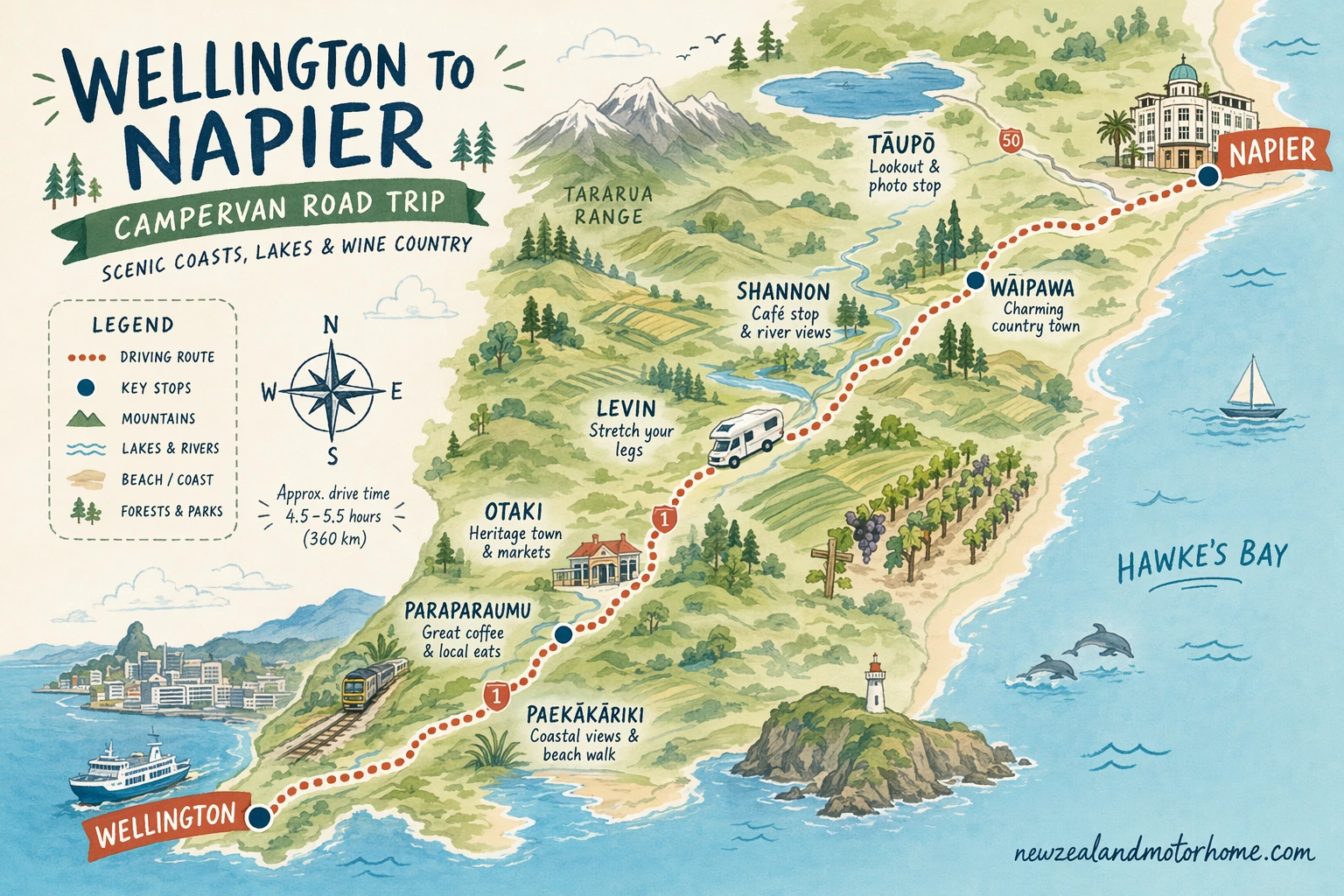
The direct Wellington to Napier motorhome road trip is roughly a full day of driving, depending on traffic out of Wellington, weather over the Remutaka Hill, and how often you stop. In a campervan, plan on a slower pace than a car: you will want wider parking, time to secure cupboards before the hill road, and breaks that let the fridge, water tank and driver all stay happy.
For most self-drive travellers, two days is the sensible minimum: Wellington to the Wairarapa for the first night, then on to Napier the next day. Three days gives you time for Greytown or Martinborough, Pūkaha, Central Hawke’s Bay and a calmer arrival into Napier before choosing a powered or unpowered site.
- Fast but workable: 1 long day, best only if you are confident in the van and the weather is settled.
- Comfortable: 2 days, with an overnight around Featherston, Greytown, Martinborough or Masterton.
- Better for first-timers: 3 days, adding a Central Hawke’s Bay stop before rolling into Napier.
If you want this route fitted around your pick-up time, ferry arrival, van size and preferred camping style, you can talk to us before you lock the itinerary in.
Leg 1: Wellington to the Wairarapa over the Remutaka Hill
Leaving Wellington, follow State Highway 2 through the Hutt Valley towards the Remutaka Hill. This is the most demanding driving section of the route for a campervan: the road climbs, narrows and winds, with tight corners and slow vehicle areas. Take it steadily, use engine braking on the descent, and let faster traffic pass where it is safe.
Before you climb, make sure loose items are packed away and roof vents are shut. High-sided motorhomes can feel crosswinds here, especially in southerlies or nor’westers. The summit car park can be useful for a breather, but larger vans should only pull in if there is room to turn and exit without reversing into traffic.
- Good first stops: Featherston for coffee, toilets and a gentle reset after the hill.
- Day parking: Greytown works well for smaller campervans; larger motorhomes are usually easier on side streets or larger public parking areas rather than tight main-street spaces.
- Overnight options: look for holiday parks or council-approved camping around Featherston, Martinborough, Greytown and Masterton. Choose powered if you need heater use, device charging or a full battery top-up.
Freedom camping rules vary by district and can change by street or reserve. Only stay where signs and council information allow it, and remember that a hired van still needs the correct self-containment certification if you are using any freedom camping area that requires it.
Leg 2: Wairarapa to Central Hawke’s Bay
From Masterton, the route continues north on SH2 through rural Wairarapa towns, past Pūkaha and on towards Eketāhuna, Woodville, Dannevirke and Waipukurau. The road is generally manageable for campervans, but it is not motorway driving: expect rolling country, farm entrances, stock trucks, occasional road works and small-town speed changes.
Pūkaha is a worthwhile daylight stop if you have time, and the larger parking area is usually easier than squeezing a van into a village kerb space. Further north, use towns such as Eketāhuna, Dannevirke or Waipukurau for fuel, groceries and driver breaks. If your van is long, favour supermarkets, recreation grounds or signed public parking over compact main-street angle parks.
- Water and dump planning: do not assume every small town has a public dump station. Check council or camping-app listings before you need one, and use holiday park facilities when you are staying the night.
- LPG and fuel: top up in larger service towns rather than waiting until the cylinder is nearly empty.
- Road rhythm: keep left, build in passing opportunities for locals, and avoid stopping on narrow shoulders for photos.
If you are stretching the route to three days, Central Hawke’s Bay is a useful halfway-feeling overnight. Look for powered or unpowered sites in established campgrounds, or council-approved self-contained areas where they are clearly signed.
Rolling into Napier and choosing where to stay
The final approach into Hawke’s Bay brings you through orchards, vineyards and flatter roads before Napier’s coast and Art Deco streets. Traffic around Hastings, Taradale and Napier can be busier than it looks on the map, so arrive before dark if you can. It makes site check-in, water filling and parking much less fiddly.
For campervan travellers, the easiest first night is often a holiday park or established campground around Napier, Bay View, Westshore, Ahuriri, Clive or Hastings. Powered sites are useful after a few days on the road, especially if you have been using the fridge, lights and water pump heavily. Unpowered sites can be fine in summer if your house battery is healthy and you have not been parked up for too long.
- Central Napier parking: compact vans can usually find day parking more easily than long motorhomes. Check bay length, overhang, payment rules and time limits before leaving the van.
- Marine Parade and waterfront areas: treat them as day-use unless signs specifically allow overnight camping for your vehicle type.
- Freedom camping: Napier and Hastings restrictions are location-specific. Stay only in signed areas and only if your van meets the required self-containment standard.
Once settled, use Napier or Hastings for a proper reset: dump the toilet cassette and grey water at an authorised dump station, refill fresh water, restock food, and check LPG before heading further around Hawke’s Bay or on towards Taupō, Gisborne or the coast.
Campervan logistics that make this route easier
This is not a remote route, but it still rewards tidy planning. Wellington traffic, the Remutaka Hill and the longer rural stretch north of Masterton all feel easier when your van is serviced, tanks are under control, and you are not hunting for an overnight stop after sunset.
Carry enough fresh water for the day, but avoid driving with unnecessarily full tanks if your hire company advises against it for weight and handling. Empty grey water and toilet cassettes only at authorised dump stations. Public taps are not always potable, so check signage before filling your drinking-water tank.
- Vehicle size: long motorhomes need extra care on the Remutaka bends, in village parking bays and when turning into rural attractions.
- Height: watch service-station canopies, tree branches and older motel-style driveways if you stop for supplies.
- Weather: wind can be the biggest issue for high-sided vans; delay the hill crossing if severe wind warnings are in place.
- Season: summer is busy in Hawke’s Bay, while winter brings shorter daylight and cooler nights where powered sites are more comfortable.
The best version of this route is unhurried: start early, stop in real towns rather than on road shoulders, and book your first Napier night if you are travelling during school holidays, long weekends or major Hawke’s Bay events.
Keep planning
Visiting zealandia wellington by campervan
Read onVisiting weta workshop wellington by campervan
Read onVisiting te papa wellington by campervan
Read onHoliday parks wellington
Read onHoliday parks napier art deco
Read onHoliday parks napier
Read onCommon questions
Can I drive from Wellington to Napier in one day in a campervan?
Yes, but it is a long day once you include Wellington traffic, the Remutaka Hill and campervan-style stops. If you are new to the vehicle or arriving off a ferry or flight, overnighting in the Wairarapa makes the trip much more comfortable.
Is the Remutaka Hill suitable for motorhomes?
Yes, motorhomes use it every day, but it is a winding hill road rather than an easy cruise. Drive slowly, use low gear on descents, secure items inside the van, and avoid crossing in severe wind if you are in a high-sided vehicle.
Where should I overnight between Wellington and Napier?
Good campervan stopover areas include Featherston, Greytown, Martinborough, Masterton and Central Hawke’s Bay. Choose established campgrounds for powered sites, showers and dump facilities, or use only council-approved freedom camping areas if your van is properly self-contained.
Are there dump stations on the Wellington to Napier route?
There are dump station options in the larger service towns and at many holiday parks, but locations and access can change. Check official council listings or your camping app before you need to empty, and never dispose of grey water or toilet waste anywhere other than an authorised dump station.
Can I freedom camp in Napier in a hired campervan?
Only in places where local signs and council rules allow it, and only if your campervan meets the required self-containment standard. Napier and Hastings are popular areas with active restrictions, so do not assume waterfront parking means overnight camping is permitted.
Have a planner shape this for your dates
Send a short outline — your dates, party size, and the kind of trip you want. A planner replies with a vehicle recommendation, a paced route, and the realistic budget.