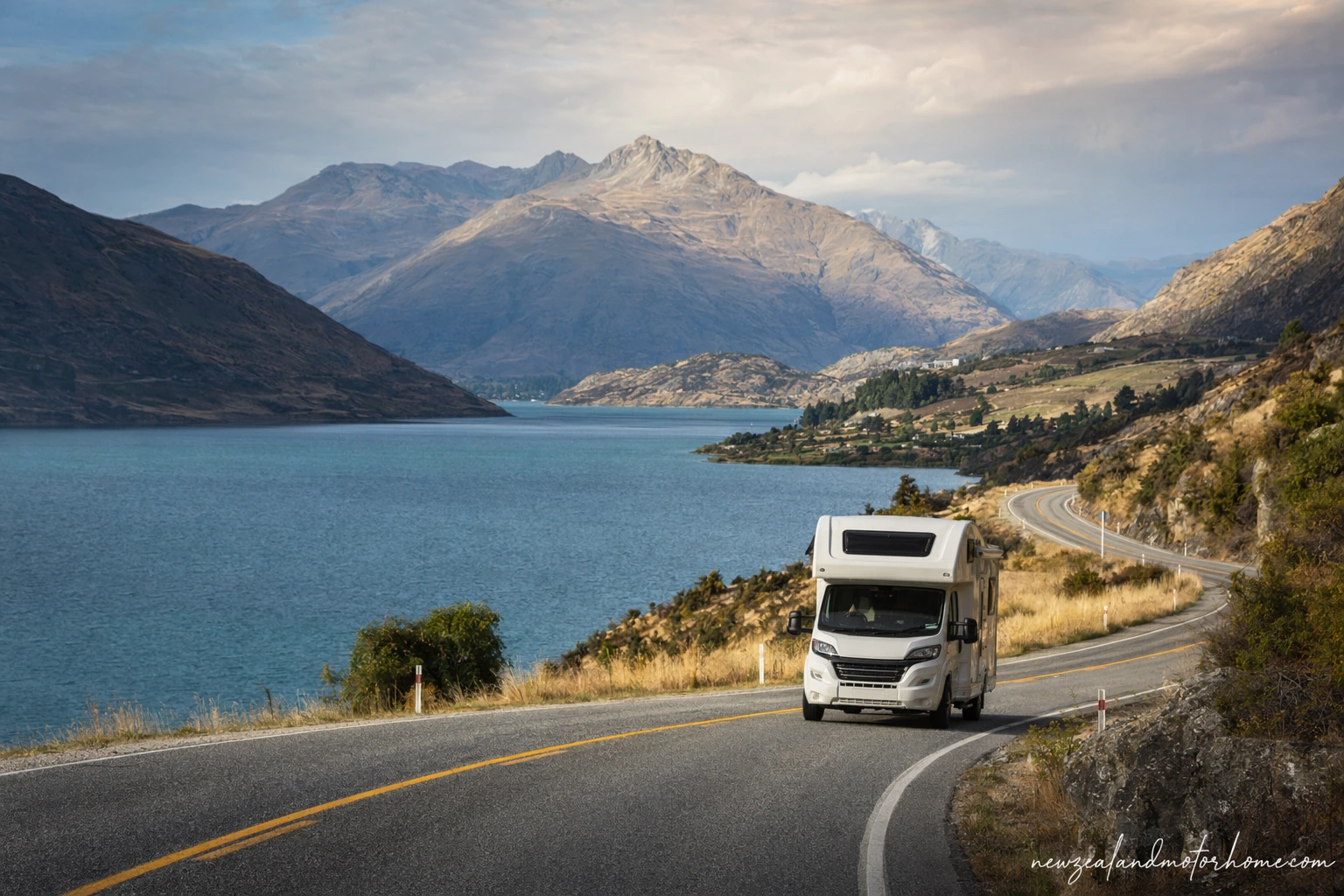
- Allow 5–8 days
- Approx. 1,450 km plus ferry
- Book ferry by van length
- Powered sites useful in winter
- Certified self-contained for freedom camping
A Queenstown to Hamilton campervan trip is a proper cross-country run: alpine passes, big Canterbury skies, the Cook Strait ferry, the Desert Road and an easy roll into the Waikato. It is not a route to rush in two long driving days unless you enjoy arriving tired with grey water full and the fridge rattled loose.
This guide is written for travellers driving and sleeping in their hired van. You will find sensible legs, places to break the journey, powered and unpowered overnight options, ferry notes for motorhomes, dump-station planning, fresh-water and LPG reminders, and road notes for larger vehicles.
How many days to allow for the Queenstown to Hamilton drive
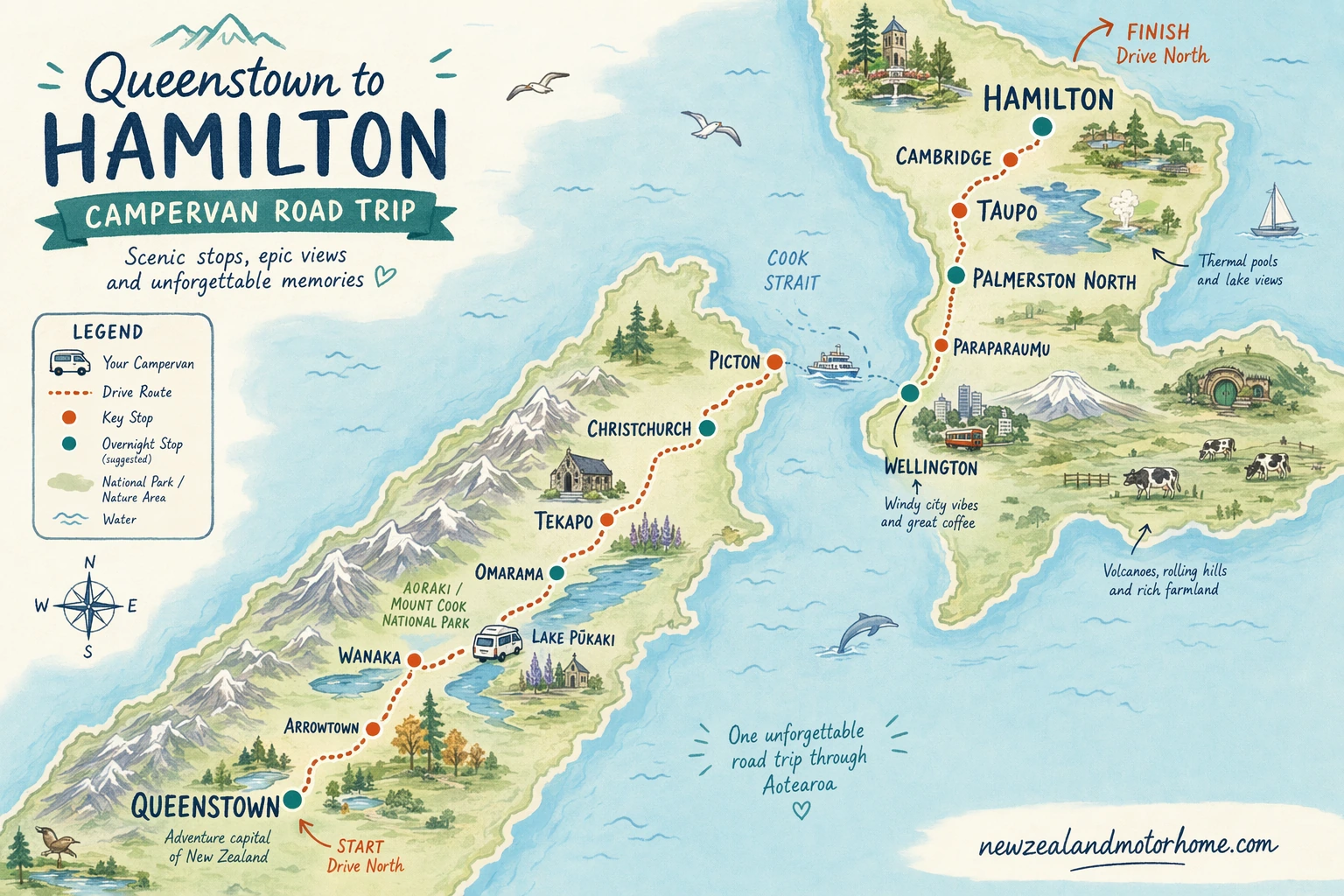
The Queenstown to Hamilton drive is roughly 1,450 kilometres plus the Cook Strait ferry, depending on your exact overnight stops and detours. In a campervan, five days is the practical minimum if you want to stay road-safe and still deal with van life jobs. Six to eight days feels far better, especially if you want a rest night around Lake Tekapo, Kaikōura, Wellington or Taupō.
A motorhome is slower than a car on the Lindis Pass, the Kaikōura coast, ferry loading lanes and the Desert Road. Build in time for supermarket stops, topping up fresh water, emptying waste, checking LPG and arriving at camp before dark.
- Fast but workable: 5 days, with long driving legs and booked sites.
- Comfortable: 6–7 days, allowing for weather, ferry timing and one shorter day.
- Best for first-time NZ van travellers: 8 days, with two-night pauses if the forecast turns.
- Distance feel: expect winding roads and mountain weather, not motorway-style progress.
If you would like help matching the route to your van size, ferry sailing and sleep style, you can use the talk-to-us planning step before you lock in camps and crossings.
Leg 1: Queenstown to Twizel or Lake Tekapo
Leave Queenstown with full fresh water, empty waste tanks and enough LPG for a cold inland night. The usual route runs through the Kawarau Gorge, Cromwell and over the Lindis Pass before dropping towards Ōmarama, Twizel and Lake Tekapo. It is one of the loveliest sections of the queenstown to hamilton motorhome road trip, but it needs respect in wind, ice or snow.
Queenstown itself has limited easy long-vehicle parking in the centre, so do your supermarket and fuel stop on the edge of town where bays are larger. Cromwell is a useful pause for coffee, groceries and a driver swap; look for signed public parking rather than squeezing into small street parks.
- Overnight plan: Twizel and Lake Tekapo both suit campervans, with holiday parks offering powered and unpowered sites.
- Freedom camping: only use clearly permitted areas and only if your vehicle is certified self-contained.
- Road note: Lindis Pass has long climbs, no wide shoulder in places, and winter restrictions can apply.
- Van jobs: top up fresh water before leaving the Queenstown area if your next stop is unpowered.
If the forecast mentions snow or black ice, slow the whole day down. A powered site in Twizel can be more useful than a scenic unpowered spot when you need heat, battery recovery and an early start.
Leg 2: Mackenzie Country to Christchurch or Kaikōura
From Tekapo or Twizel, the route heads across the Mackenzie Basin and down through Fairlie, Geraldine and the Canterbury Plains. Christchurch is the easy logistics stop: larger supermarkets, hardware, LPG bottle swaps or fills, fresh water and dump-station options are all simpler here than in smaller scenic towns.
If your ferry timing allows, continue north to Kaikōura for a coastal overnight. The road north of Christchurch has improved a lot, but it is still a drive where motorhome length matters: keep left, use slow-vehicle bays, and do not stop on narrow shoulders for photos.
- Christchurch stop: good for a powered night, laundry, waste dump and battery reset.
- Kaikōura stop: excellent scenery, but book ahead in summer as van sites fill quickly.
- Parking: use signed campervan or long-vehicle spaces, especially near beaches and town centres.
- Supplies: restock before the ferry leg; small towns can be busy and parking is tighter.
For many travellers, this is the day when the queenstown to hamilton drive changes from holiday mode to transit mode. Keep it civilised: arrive early enough to walk, cook properly and check your ferry documents without doing it in the dark.
Leg 3: Kaikōura or Christchurch to Picton, then ferry to Wellington
The Picton ferry is the hinge point of the route. Book your campervan by correct length and height, including bike racks, rear storage boxes or roof gear. Ferry staff will direct you into lanes, but you still need to know your vehicle dimensions and allow time for check-in, queues and slower boarding.
Before sailing, turn off gas at the bottle as required by ferry procedures, secure cupboard catches, close roof vents and make sure the fridge is set appropriately for the crossing. You will not be able to return to the vehicle deck during the sailing, so take jackets, medication, snacks and valuables with you.
- Picton overnight: useful if you have an early sailing; choose a legal campsite rather than trying to sleep near the terminal.
- Dump and water: sort tanks before the ferry if you are arriving late into Wellington.
- Ferry timing: allow a buffer for road works, weather delays and summer traffic into Picton.
- Wellington arrival: pre-plan your first night; central streets are tight for larger motorhomes.
If your ferry lands after dark, a booked powered site in the Wellington region is far easier than hunting for a last-minute freedom camping space. Wellington wind can be lively around exposed roads and harbour edges, so keep both hands on the wheel and avoid high-sided surprises.
Leg 4: Wellington to Taupō or Tūrangi
From Wellington, most campervans follow State Highway 1 up the Kāpiti Coast, through the central lower North Island and towards Tūrangi or Taupō. This is a long day but manageable if you leave after the morning commuter rush and stop properly. Bulls, Taihape and Waiōuru are useful breaks for fuel, toilets and a walk around the van.
The Desert Road section is exposed and can close in winter due to snow, ice or high wind. In summer it is usually straightforward, but do not underestimate crosswinds in a high-sided motorhome. Check road conditions before committing, and have enough fuel before the central plateau.
- Overnight plan: Tūrangi is quieter and handy after the Desert Road; Taupō has more services and powered-site choice.
- Water and waste: use official dump stations in the Taupō district or at your holiday park before the final Waikato leg.
- Road note: long straight sections still need concentration; fatigue creeps in after the ferry day.
- Freedom camping: local rules vary around the lake, so rely on current council signage, not old forum posts.
A soak, lake walk or early night here is worth more than another two hours behind the wheel. By this stage of a queenstown to hamilton campervan route, batteries, toilet cassette and patience all deserve attention.
Leg 5: Taupō to Hamilton and finishing the trip well
The final run from Taupō to Hamilton is shorter, but it still has hills, merging traffic and busy town approaches. The usual route runs through the central North Island towards Cambridge and Hamilton. The Waikato Expressway is generally van-friendly, though larger motorhomes should stay alert for lane changes, service exits and gusts around open farmland.
Hamilton is a practical place to end a cross-island trip because services are easier than in smaller towns. Before returning or parking up the van, empty grey and black water at an approved dump station, refill fuel as required by your hire agreement, remove rubbish and give yourself time to check cupboards and outside lockers.
- Hamilton arrival: choose accommodation or a campsite with easy access for your vehicle length.
- Final van jobs: dump station, fresh-water hose pack-down, LPG check, rubbish and recycling.
- Parking: avoid tight central-city parking buildings; many have height barriers unsuitable for campervans.
- Optional detour: Waitomo can fit before Hamilton if you add time and book a legal overnight stop.
Do not let the last day become a rush of cleaning, refuelling and looking for a dump station. A calm finish is part of a good Queenstown to Hamilton campervan journey, especially if you are handing the vehicle back the next morning.
Keep planning
Visiting skyline queenstown gondola by campervan
Read onHoliday parks queenstown skyline
Read onHoliday parks queenstown lakes
Read onHoliday parks queenstown
Read onHoliday parks hamilton
Read onFarmers markets queenstown lakes
Read onCommon questions
Can I drive from Queenstown to Hamilton in a campervan in three days?
It is possible on paper, but it is not a sensible motorhome pace for most travellers. You would be combining long driving days with ferry timing, dump-station stops and weather risk. Five days is a safer minimum; six or seven is better.
Do I need to book the Cook Strait ferry for a campervan?
Yes, especially in summer, school holidays and around long weekends. Book using the van’s correct length and height, including any bike rack or rear box. Arrive early and follow the operator’s LPG and vehicle-deck instructions.
Is freedom camping easy on this route?
It is possible in some places, but it is not a backup plan you should rely on every night. You need a certified self-contained vehicle and must obey local council rules and signage. Around Queenstown, Tekapo, Kaikōura, Wellington and Taupō, legal spaces can be limited or tightly managed.
Which direction is easier for a larger motorhome?
Both directions are manageable for a confident driver, but northbound from Queenstown gives you a gradual change from alpine roads to open plains, ferry, then expressway. Take extra care on the Lindis Pass, coastal sections near Kaikōura and the Desert Road in wind or winter weather.
Where should I plan dump stations and fresh-water fills?
Do not wait until tanks are full. Plan to service the van around Queenstown or Cromwell, Christchurch or Kaikōura, Picton before the ferry, Wellington if needed, and Taupō before the final Hamilton leg. Use current council signage or your hire company’s guidance for approved dump points.
Have a planner shape this for your dates
Send a short outline — your dates, party size, and the kind of trip you want. A planner replies with a vehicle recommendation, a paced route, and the realistic budget.