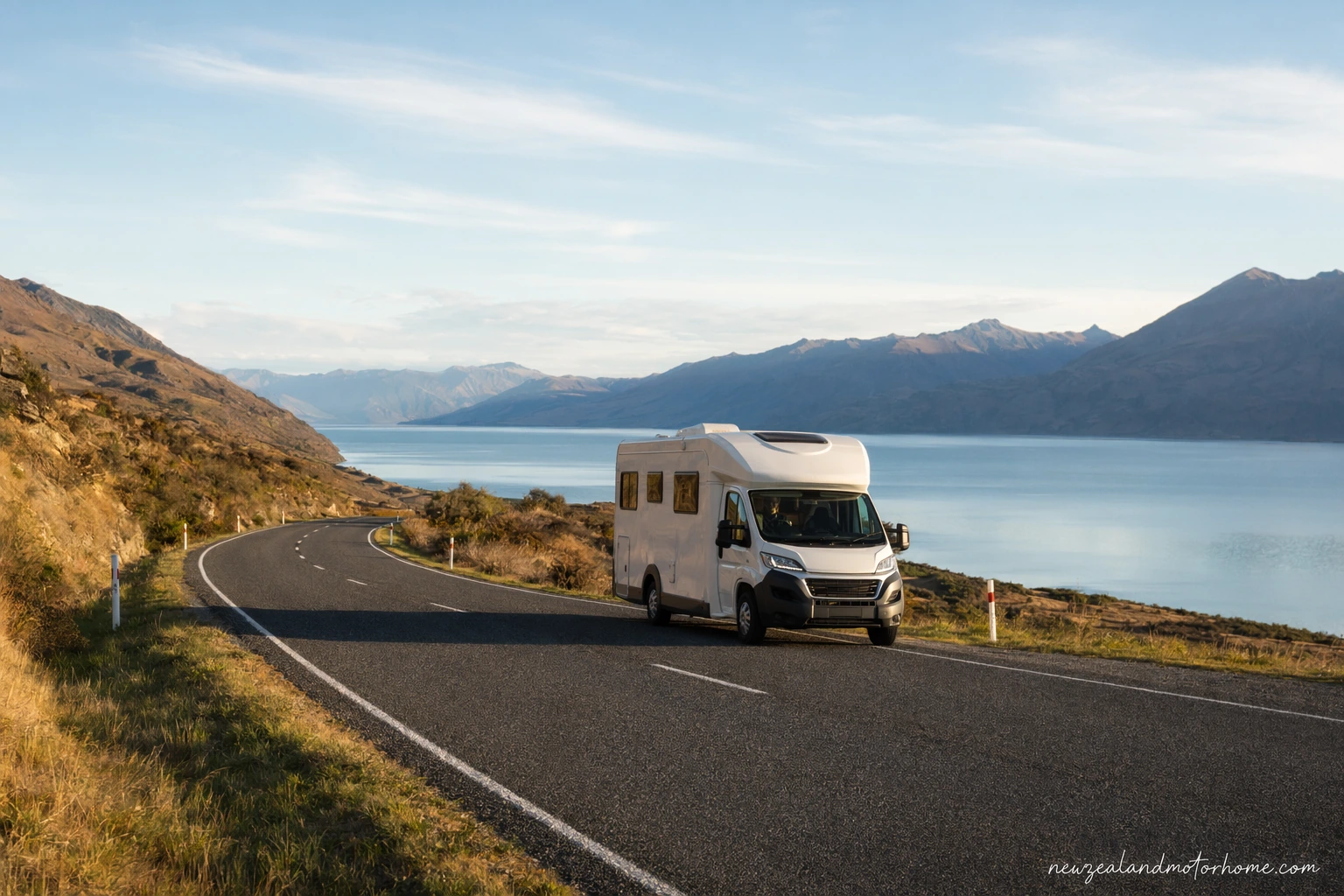
Queenstown to Invercargill campervan route for self-drive vans
- Best in 2 days
- SH6 van-suitable route
- Powered sites in main towns
- Check freedom camping signs
- Good Bluff detour base
The queenstown to invercargill campervan route is a proper change-of-pace drive: alpine lake edges, broad Southland farmland, small service towns, then the flat run into Invercargill and the coast beyond. It is short enough to do in a day, but it works far better in a hired motorhome if you give yourself time to park up, empty tanks, fill fresh water and not rush the bends beside Lake Wakatipu.
This guide is written for travellers driving and sleeping in their own van. You will find the practical bits that matter on the queenstown to invercargill drive: where the road narrows, where to break the journey, how to think about powered versus unpowered nights, and which detours suit a longer or taller vehicle.
Route at a glance: distance, timing and best pace
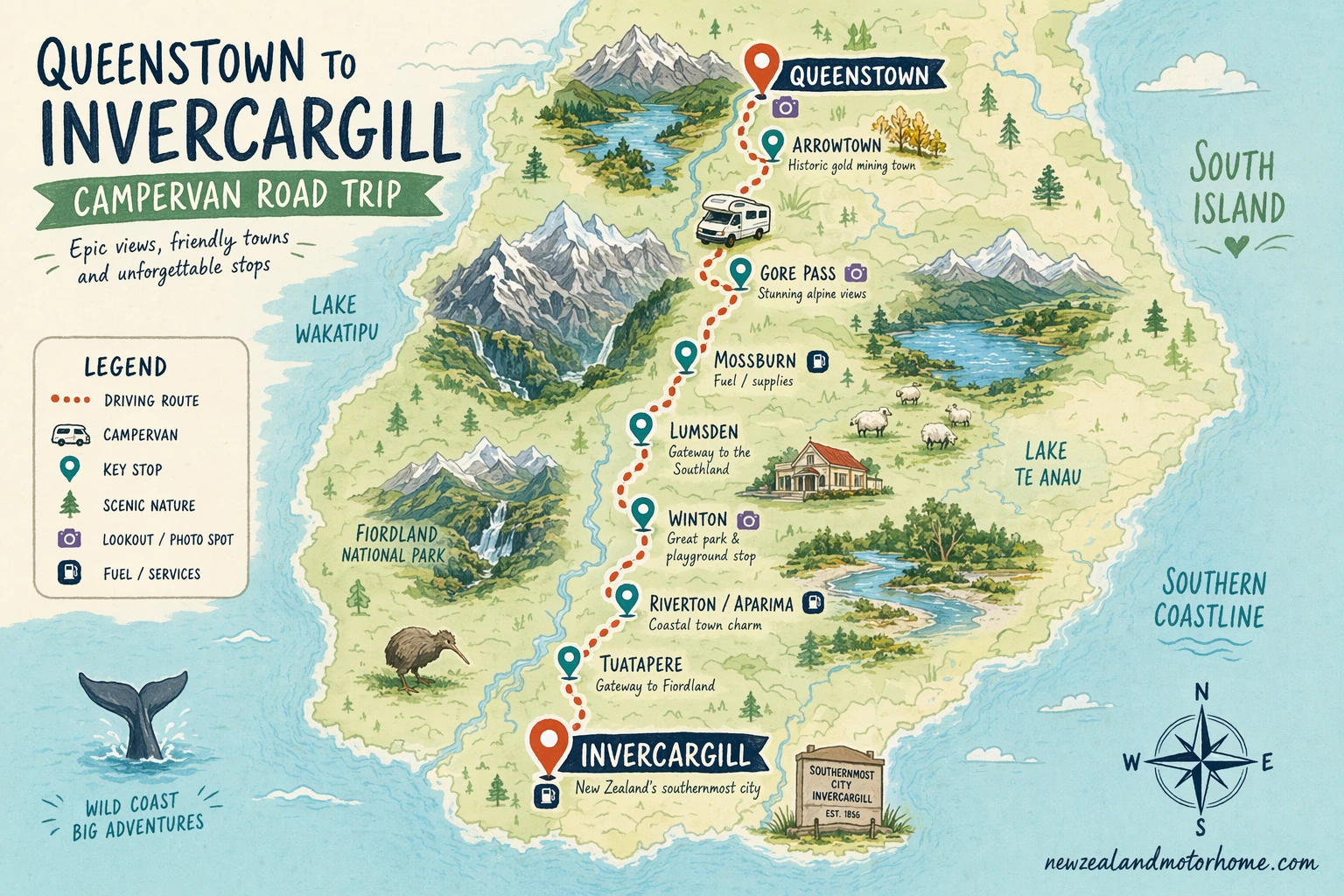
The direct Queenstown to Invercargill route follows SH6 south from Queenstown past Kingston, Garston, Lumsden and Winton before reaching Invercargill. In a car it can look like a quick hop, but in a campervan you will want to allow extra time for slower corners, photo stops, groceries, fuel and finding a level overnight site.
Most vans can drive it comfortably in one day in settled weather. For a more relaxed queenstown to invercargill motorhome road trip, plan two days, or three if you want a coastal add-on to Riverton, Bluff or the edge of the Catlins.
- Direct driving time: allow around 3 hours without long stops, more in a larger motorhome or poor weather.
- Best pace: 2 days is comfortable; 3 days gives you space for Bluff or Riverton.
- Main highway: SH6, generally suitable for hired campervans and motorhomes.
- Key service towns: Frankton/Queenstown, Kingston, Lumsden, Winton and Invercargill.
If you are still choosing dates, van size or overnight rhythm, you can talk to us before you lock the route in.
Leg 1: Queenstown to Kingston along Lake Wakatipu
Leaving Queenstown, the easiest campervan start is from Frankton rather than the tight town-centre streets. Fill fuel, top up groceries and check your fresh-water level before you roll south, because the first section beside Lake Wakatipu is scenic but not a place for distracted driving in a tall van.
The road around the lake includes the Devils Staircase, a winding stretch with rock faces, lake drop-offs and limited pull-outs. Keep left, use the slower-vehicle bays when traffic gathers behind you, and avoid stopping where the shoulder is soft or narrow. In windy weather, expect gusts across exposed corners.
- Parking the van: use marked lake viewpoints only if there is enough length to get fully off the lane.
- Large motorhomes: the highway is used by buses and trucks, but take corners gently and watch overhang on tight bends.
- Overnight idea: Kingston can work as an easy first night if you want a quiet lake-end stop rather than starting from busy Queenstown.
- Supplies: do your main stock-up before leaving the Queenstown/Frankton area.
Freedom camping around Queenstown Lakes is tightly managed, so do not assume a lakeside gravel area is legal just because another van is there. Use signed designated sites only, and only if your vehicle meets current self-containment requirements.
Leg 2: Kingston to Lumsden, Garston and the open Southland road
South of Kingston the road straightens and the traffic usually eases. Garston is a small, useful pause for a leg stretch and a look around, but it is not a place to rely on for a full campervan reset. Treat this leg as your transition from mountain driving into the long, open roads of Southland.
Lumsden is the practical midpoint for many van travellers. It is a good place to look for toilets, food, fuel, rubbish disposal options and council-listed camping information before deciding whether to keep moving to Winton or Invercargill.
- Driving note: straight roads can be deceptive in a motorhome; leave space for trucks and farm vehicles.
- Wind: exposed paddock sections can push a high-roof van around, especially after a front has moved through.
- Overnight stop style: look for a holiday park, campground or officially designated self-contained area rather than pulling into a random lay-by.
- Dump and water: check current public dump-station listings around Lumsden, or use a campground facility if you are staying there.
If you are travelling in winter, this section is usually less alpine than the Queenstown basin, but frosts still matter. Start later in the morning if roads are icy, and keep an eye on highway updates before committing to an early departure.
Leg 3: Lumsden to Invercargill via Winton
From Lumsden, SH6 runs through a series of rural settlements and into Winton before the final approach to Invercargill. This is an easier driving leg than the lake road, but it is still worth keeping your speed steady rather than trying to match local traffic in a heavy van.
Winton is a sensible stop if you need a break before city driving. Use proper parking areas rather than squeezing a long motorhome into short kerbside spaces, and check whether your rear overhang is clear before stepping away from the vehicle.
- Fuel and LPG: plan to refuel in larger centres such as Queenstown/Frankton, Lumsden, Winton or Invercargill rather than waiting until the tank is low.
- Fresh water: refill at holiday parks, approved public taps or dump-station facilities where potable water is clearly marked.
- City arrival: Invercargill roads are wide by New Zealand standards, but choose supermarkets and attractions with open car parks, not tight central-angle parking.
- First-night choice: a powered site in Invercargill is useful if you have been off-grid from Queenstown and need to recharge batteries properly.
On arrival, Queens Park is one of the easier central green spaces to enjoy once you have parked legally nearby. For the coast, Oreti Beach and the estuary areas are better approached with caution: keep the campervan on formed parking areas unless signs and conditions clearly allow otherwise.
Overnight stops, powered sites and freedom camping realities
This route has enough options for every style of van travel, but the right choice depends on your tanks, batteries and self-containment certification. If you are new to New Zealand campervan travel, plan a powered site every couple of nights so the fridge, heater controls, devices and house battery are not all doing the hard work.
Queenstown is busy and often best booked ahead, especially in summer, ski season and around public holidays. Invercargill is usually calmer, but it is still worth securing a legal site rather than arriving late and guessing.
- Powered sites: useful in Queenstown or Invercargill for charging, heating and a proper reset.
- Unpowered sites: fine for certified self-contained vans with good battery charge and sensible water use.
- Freedom camping: only use places where council rules and signage allow it; restrictions differ between Queenstown Lakes and Southland.
- Late arrivals: avoid rolling into small settlements after dark and searching for somewhere to sleep; pre-plan your overnight stop before leaving Winton or Lumsden.
Keep your grey-water and toilet cassette capacity in mind. The distance is not long, but scenic stops, cooking in the van and a couple of off-grid nights can fill tanks faster than expected.
Detours from Invercargill: Bluff, Riverton and the coast
If you have an extra half-day, Bluff is the classic southern add-on from Invercargill. The road is straightforward for most campervans, but once you reach the end points and lookouts, park only where your vehicle fits without blocking turning space for other drivers.
Riverton is a gentler coastal detour and a good choice if you want beaches, cafés and harbour views without committing to a long gravel-road adventure. Some side roads near bays and headlands become narrow quickly, so check the route before following a scenic sign in a large motorhome.
- Bluff: suitable as a day trip from an Invercargill base; use formed car parks and watch wind exposure.
- Riverton: good for a slower coastal stop, with van-suitable parking easier outside peak beach times.
- Cosy Nook and small bays: beautiful but tighter; think twice in a long vehicle if the weather is rough or parking is already full.
- Dump before detouring: empty and refill in Invercargill if you are heading further along the coast.
For many travellers, the best rhythm is Queenstown to Lumsden or Invercargill, then a second night in Invercargill before exploring the coast with a lighter day pack and empty tanks.
Keep planning
Visiting skyline queenstown gondola by campervan
Read onHoliday parks queenstown skyline
Read onHoliday parks queenstown lakes
Read onHoliday parks queenstown
Read onHoliday parks invercargill
Read onFarmers markets queenstown lakes
Read onCommon questions
Can I drive from Queenstown to Invercargill in one day in a campervan?
Yes, the direct drive is very manageable in one day for most hired campervans. Allow extra time for the winding Lake Wakatipu section, slower-vehicle pull-outs, fuel and a proper stop around Lumsden or Winton.
Is the Queenstown to Invercargill road suitable for a large motorhome?
SH6 is suitable for standard hired motorhomes, including larger vehicles, but the section south of Queenstown has tight bends and limited shoulders. Drive conservatively, use pull-outs when safe, and avoid stopping the van half on the lane for photos.
Where should I stay overnight between Queenstown and Invercargill?
Many travellers either stay in Queenstown before leaving, pause around Kingston or Lumsden, or continue to a powered site in Invercargill. Choose a legal campground, holiday park or designated self-contained area rather than assuming roadside freedom camping is allowed.
Are there dump stations on the route?
Dump-station options are generally found in larger service towns and at many holiday parks, with useful checks around Queenstown, Lumsden and Invercargill. Confirm current locations in your camping app or council information before you rely on one, and only use marked potable taps for fresh water.
Is freedom camping allowed on the Queenstown to Invercargill route?
Only in places where local council rules and signage permit it, and usually only for vehicles that meet current certified self-contained requirements. Queenstown Lakes restrictions can be strict, so plan your night before dark and do not treat scenic pull-offs as campsites.
Should I detour to Bluff in my campervan?
Bluff is a worthwhile and easy add-on from Invercargill if the weather is settled. Park in formed areas, be mindful of wind at exposed viewpoints, and consider staying in Invercargill rather than trying to find an unplanned coastal overnight spot.
Have a planner shape this for your dates
Send a short outline — your dates, party size, and the kind of trip you want. A planner replies with a vehicle recommendation, a paced route, and the realistic budget.