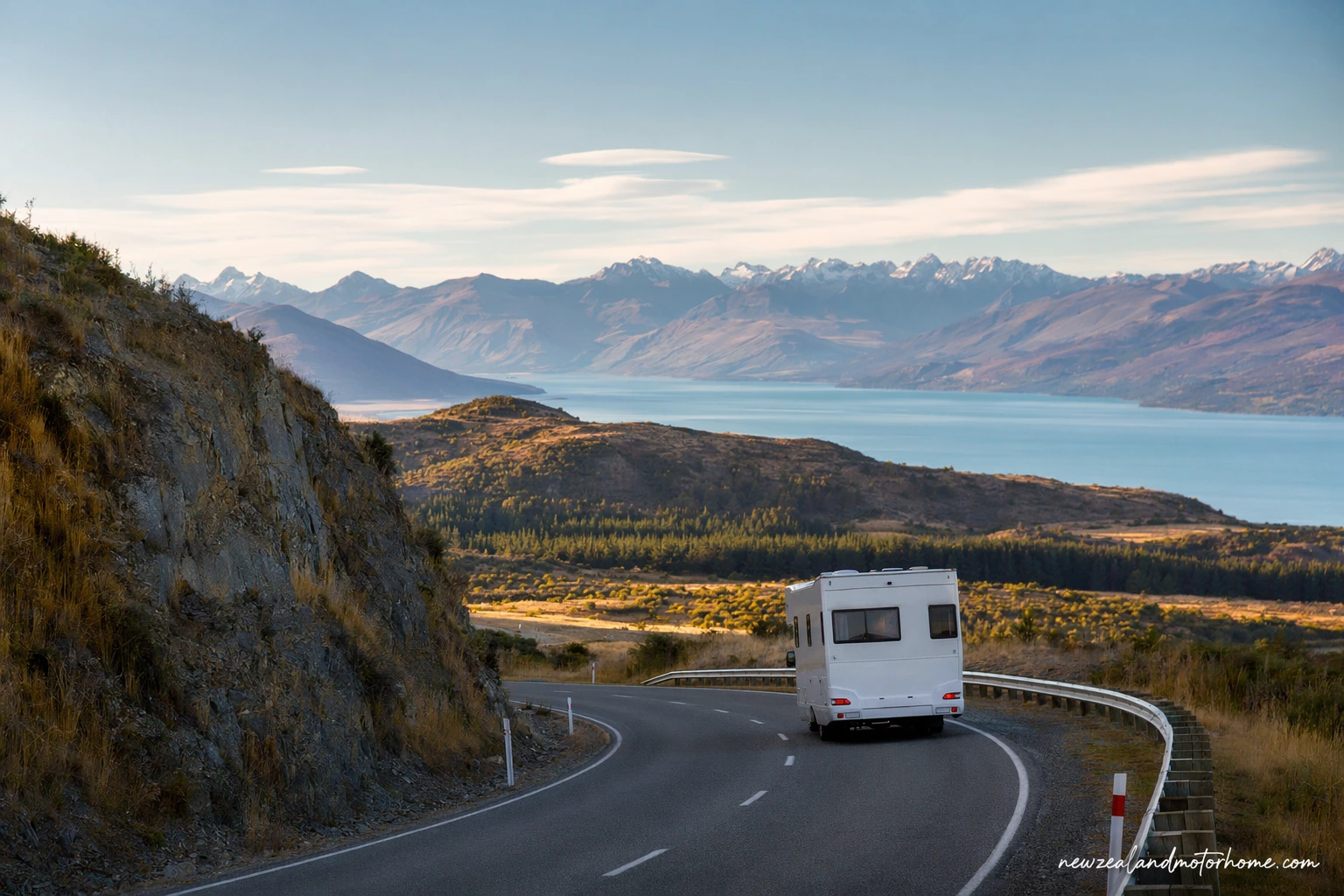
- Allow 5–7 days
- Via SH6 and the West Coast
- Best with a certified self-contained van
- Powered sites useful in wet weather
- Check Crown Range conditions
The Queenstown to Nelson campervan route is one of the South Island’s big scenic drives: alpine lakes, the Haast Pass, glacier country, wet West Coast forest, the Buller Gorge and finally the calmer bays and vineyards around Nelson. It is not a route to rush in a motorhome, especially if you are new to New Zealand’s narrow bridges, winding passes and changeable weather.
This guide is written for self-drive campervan travellers sleeping in the van. You will find sensible driving legs, where to break the journey, what to think about for powered sites versus basic DOC-style stops, and when to top up fresh water, LPG and fuel before the longer gaps.
How long to allow for the Queenstown to Nelson drive
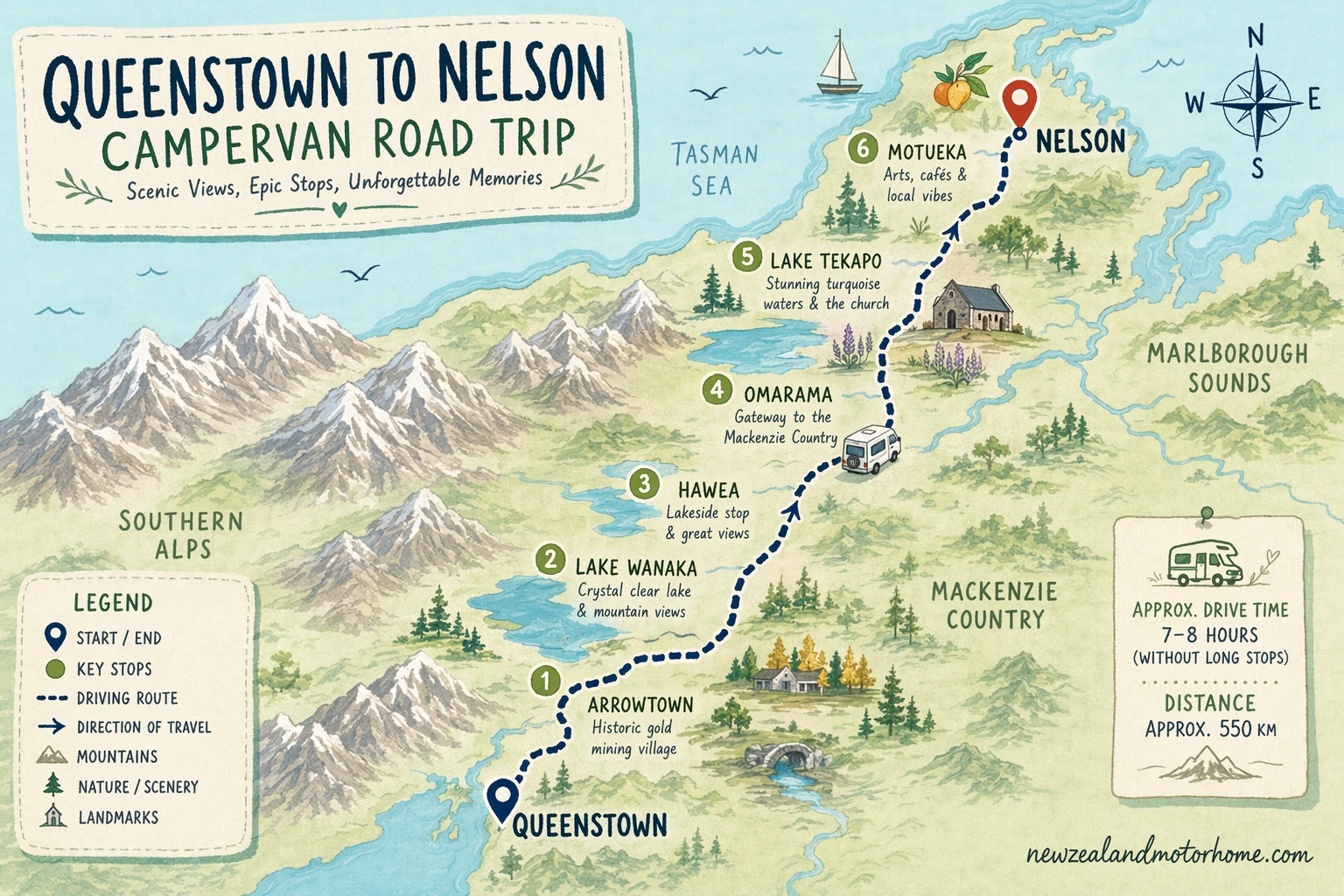
The most natural Queenstown to Nelson drive for a campervan follows State Highway 6 via Wānaka, Haast, the glaciers, Hokitika, the Buller Gorge and Murchison. It is roughly an 800-kilometre journey, but the road is too twisty and too interesting to treat like a straight motorway run.
For a comfortable queenstown to nelson motorhome road trip, allow five to seven days. Three days is possible only if you are mostly relocating the van and prepared for long driving days; seven days gives you time to walk, do laundry, recharge batteries and sit out a wet West Coast afternoon without feeling behind.
- Fast but tiring: 3 days, with long driving legs and little margin for weather.
- Balanced: 5 days, stopping around Wānaka or Makarora, glacier country, Hokitika or Punakaiki, and Murchison.
- Unhurried: 7+ days, adding lake walks, West Coast beaches, Pancake Rocks and a relaxed Nelson arrival.
- Best van rhythm: drive in daylight, book powered sites every second or third night, and dump before remote stretches.
Leg 1: Queenstown to Wānaka, Hāwea or Makarora
Before leaving Queenstown, use the services around Frankton or your holiday park to empty the toilet cassette, fill fresh water and check LPG. Queenstown Lakes District has strict freedom camping rules, so do not assume a lakeside lay-by is an overnight stop just because another van is parked there.
Larger motorhomes often find the Cromwell route easier than the Crown Range. The Crown Range is spectacular, but it is steep, exposed and can be icy or snowy in winter; check your hire agreement and road conditions before taking it in a long or heavy van.
- Good first night options: powered holiday park sites in Wānaka, quieter paid sites around Lake Hāwea, or basic camping further towards Makarora.
- Parking the van: use signed long-vehicle parking in Wānaka and avoid squeezing into tight lakefront streets.
- Supplies: stock food, fuel and gas in Queenstown or Wānaka, as choices thin out after Makarora.
- Road note: leave early enough to enjoy lake stops without driving the Haast Pass in fading light.
Leg 2: Makarora through Haast Pass to glacier country
The Haast Pass is beautiful but it asks for patience in a campervan. Expect damp forest, sharp bends, one-lane bridges, waterfall pull-offs and weather that can change quickly. Keep left, let faster vehicles pass where it is safe, and avoid pulling a high-roof van onto soft gravel shoulders.
Once you reach the West Coast, you can overnight around Haast, Fox Glacier or Franz Josef depending on how far you want to drive. Powered sites are useful here because rain, heater use and short winter daylight can drain house batteries faster than expected.
- Stop style: Haast is quieter and practical; Fox and Franz Josef have more visitor services and glacier access.
- Dump and water: look for official dump stations in the larger townships or at your campground; do not rely on small scenic stops having facilities.
- Van safety: lock up at trailheads and keep valuables out of sight when leaving the campervan for short walks.
- Weather margin: heavy rain can affect slips, visibility and river levels, so build slack into this leg.
Leg 3: Glacier country to Hokitika, Greymouth or Punakaiki
North of the glaciers, SH6 rolls through rainforest, farmland, river bridges and coastal settlements. The driving is easier than the pass but still not fast, especially in a wider motorhome. Hokitika is a practical reset point with supermarkets, fuel, laundry options and places to walk from town without moving the van again.
If you continue to Punakaiki, check where your campervan can legally stay overnight before you arrive. The coastline is narrow in places, and some car parks are for day use only. A paid campsite or holiday park can be the better choice if you want to visit Pancake Rocks early or late without worrying about time limits.
- Good overnight rhythm: powered site in Hokitika or Greymouth after a damp glacier stay; unpowered or basic site further north if your batteries and water are comfortable.
- Dump stations: plan to empty in Hokitika or Greymouth before continuing into smaller coastal settlements.
- Parking tip: in Hokitika, park once and explore the beach, shops and river mouth on foot.
- Driving note: expect single-lane bridges and watch for logging trucks on working sections of road.
Leg 4: Punakaiki or Westport through the Buller Gorge to Nelson
The final stretch turns inland through Westport, the Buller Gorge and Murchison before climbing towards Tasman and Nelson. It is a memorable motorhome drive, but not one for rushing: the gorge has winding sections, shaded corners, occasional rockfall areas and limited safe places to stop a long vehicle.
Murchison makes a useful last inland overnight if you want a shorter arrival into Nelson the next day. Once you reach Richmond and Nelson, traffic becomes more urban, so decide whether you are heading to a holiday park, a booked campground, or a permitted self-contained spot before you get tangled in town traffic.
- Best service stops: Westport, Murchison, Richmond and Nelson are the places to think about fuel, groceries, fresh water and dump stations.
- Nelson arrival: book ahead in summer, school holidays and long weekends, especially if you need a powered site.
- Large van note: use main routes into Nelson rather than narrow residential shortcuts suggested by some apps.
- Planning help: if you want the legs matched to your van size and travel dates, you can talk to us before locking in overnights.
Freedom camping, self-containment and practical van resets
This route crosses several council areas, including Queenstown Lakes, Westland, Grey, Buller, Tasman and Nelson. Each has its own freedom camping rules, and they can change by season or by site. Being certified self-contained does not mean you can sleep anywhere; it only means you may use sites where self-contained vehicles are permitted.
A simple pattern works well: use a powered holiday park every two or three nights, then mix in legal unpowered or basic camps where allowed. That gives you regular showers, laundry, rubbish disposal, battery charging, fresh-water fills and proper dump-station access without turning the trip into a campground-only itinerary.
- Before remote legs: fill fresh water, empty grey water and toilet cassette, and check LPG.
- Overnight checks: look for signage on arrival, not just pins on a map app.
- Rubbish: carry it to town bins or campground facilities; many scenic stops have no disposal.
- Winter: ask your hire operator about snow chains, heater use and any road restrictions before heading over alpine sections.
Keep planning
Visiting skyline queenstown gondola by campervan
Read onHoliday parks queenstown skyline
Read onHoliday parks queenstown lakes
Read onHoliday parks queenstown
Read onHoliday parks nelson tasman
Read onHoliday parks nelson
Read onCommon questions
Can I drive from Queenstown to Nelson in one day in a campervan?
It is technically possible but not sensible for most campervan travellers. The route is long, winding and full of slow sections, and you would miss the main reason to drive it. Plan at least three days, with five to seven days much better.
Is the Crown Range suitable for a motorhome?
The Crown Range can be driven by some campervans in good conditions, but it is steep, narrow in places and affected by ice or snow in winter. Larger or heavier motorhomes are often better taking the Cromwell route. Always check your hire agreement and current road conditions first.
Where should I dump waste and fill fresh water on this route?
Use official dump stations and campground facilities in larger centres such as Queenstown or Frankton, Wānaka, the glacier townships, Hokitika, Greymouth, Westport, Murchison, Richmond and Nelson. Do not leave it until the van is full, because remote West Coast sections have limited services.
Can I freedom camp between Queenstown and Nelson?
Yes, but only where local rules allow it and usually only if your campervan is certified self-contained. This route passes through multiple council areas, so check signs at the site itself and current council information. If in doubt, use a paid campsite or holiday park.
What is the best season for a Queenstown to Nelson campervan trip?
Late spring, summer and early autumn give the easiest daylight and road conditions. Winter can be beautiful, but you need to allow for ice, snow risk on alpine roads, shorter days and heavier battery use for heating. The West Coast can be wet in any season, so keep plans flexible.
Do I need to book campervan sites ahead?
Book ahead for Queenstown, Wānaka, glacier country, Punakaiki and Nelson during summer, school holidays and long weekends. Outside peak times you may have more flexibility, but powered sites can still fill on wet nights when many van travellers want to plug in and dry out.
Have a planner shape this for your dates
Send a short outline — your dates, party size, and the kind of trip you want. A planner replies with a vehicle recommendation, a paced route, and the realistic budget.