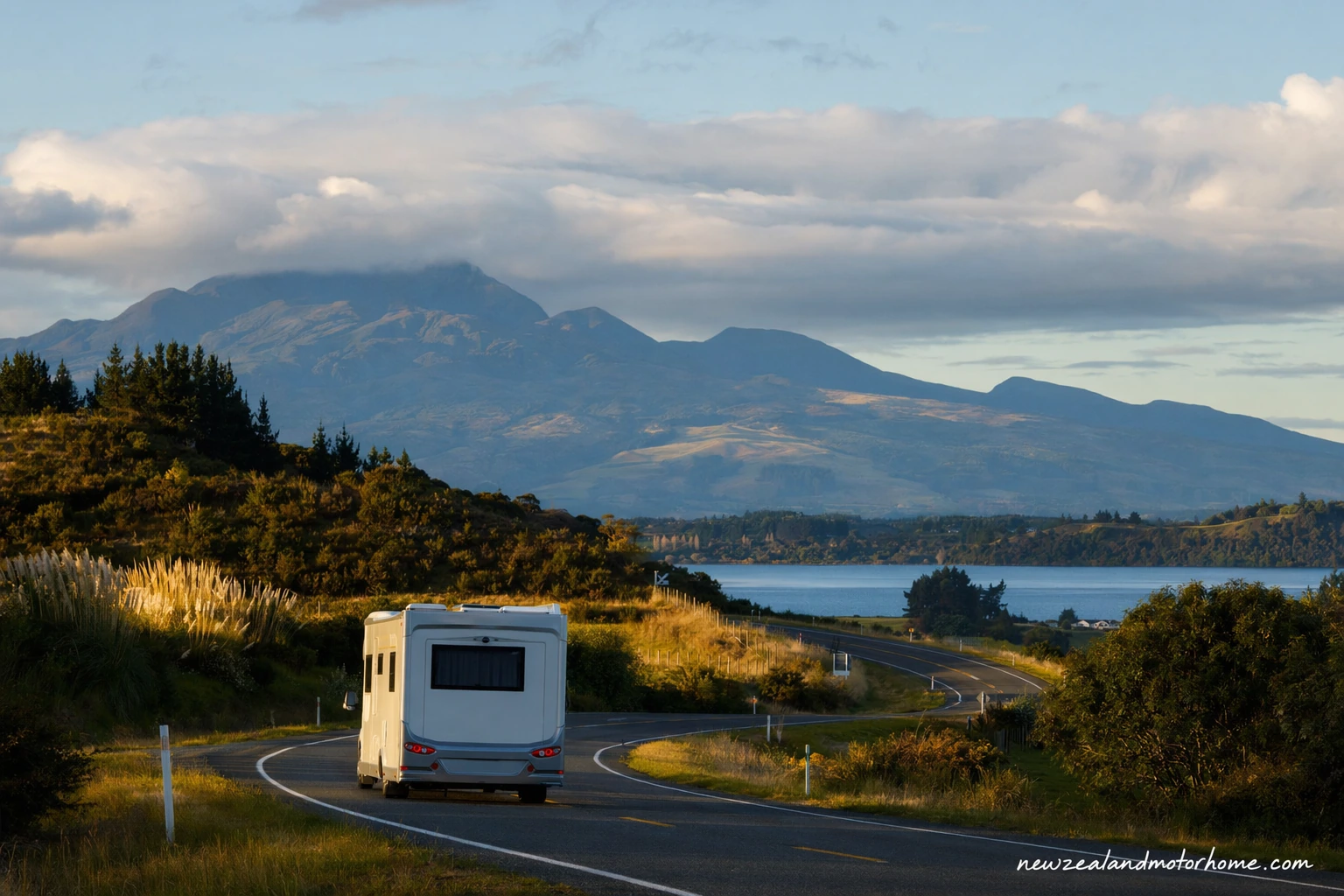
- 1 to 2 days recommended
- Good sealed-road route
- Powered sites easy in Rotorua
- Self-contained needed for freedom camping
- Best with an early Auckland departure
The Auckland to Rotorua campervan route is one of the easiest North Island drives to build into a first or last week in a hired van. You leave the motorway edges of Auckland, cross the Waikato dairy country, and arrive in Rotorua with hot pools, lakeside walks and geothermal steam rising close to town.
This guide is written for travellers driving and sleeping in their own campervan or motorhome. It covers the Auckland to Rotorua drive in practical legs, where to park the van, how to choose powered, unpowered or freedom camping stops, and the road notes that matter when you are higher and heavier than a car.
How long to allow for the Auckland to Rotorua drive
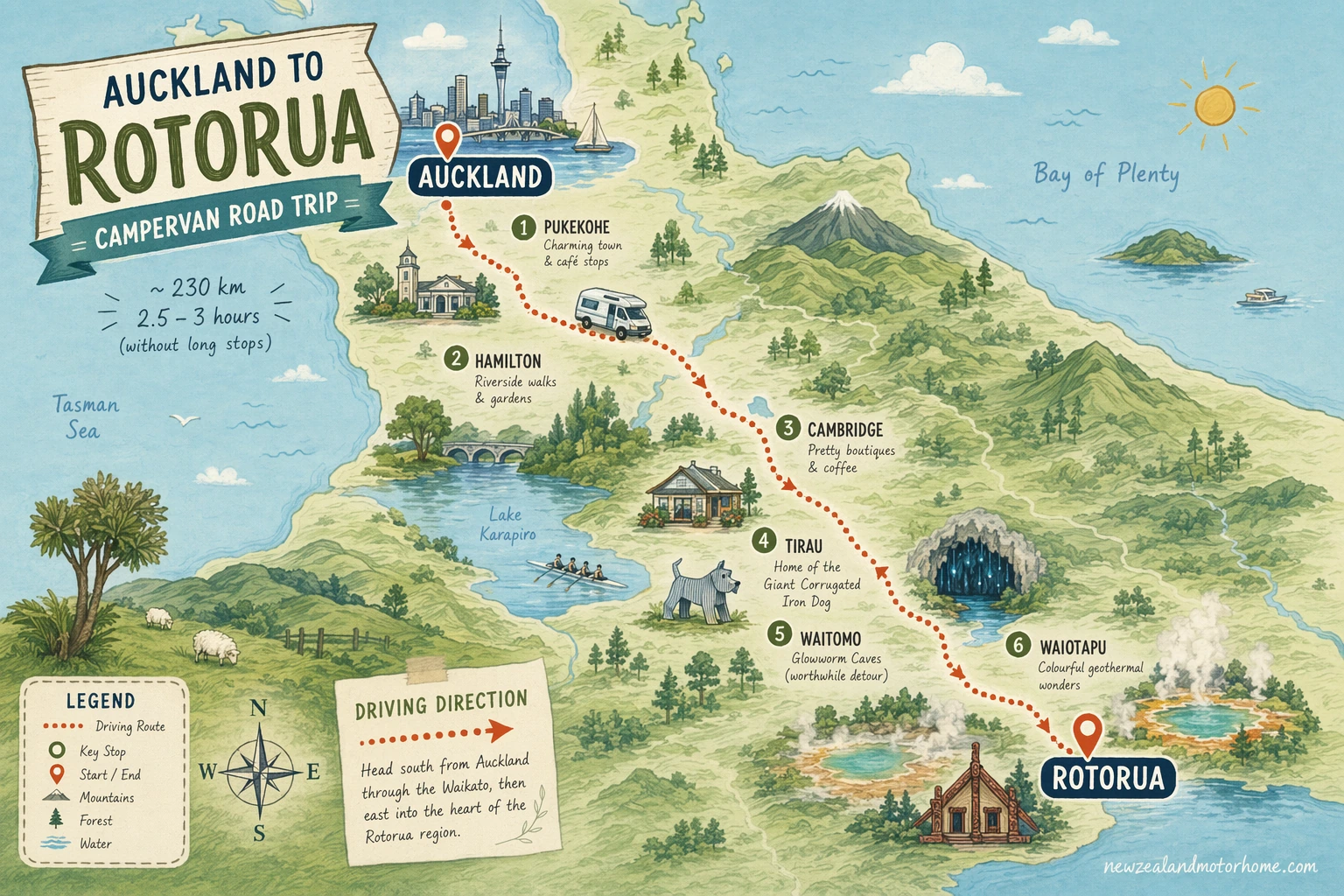
The direct Auckland to Rotorua drive is usually a comfortable half-day in a campervan, but it is not a route to rush if you have just picked up your vehicle. Allow time to buy food, learn where the LPG bottle and fresh-water fill are, and get used to the van’s mirrors, turning circle and height before leaving the city.
Most self-drive travellers do this as either a straight transfer day or a slower two-day hop through the Waikato. If you are arriving from an international flight, a first night south of Auckland can be much easier than pushing on to Rotorua tired.
- Fast plan: 1 day, with a food stop and one proper driving break.
- Easy plan: 2 days, overnighting around the Waikato or Matamata area.
- Family-friendly plan: 2 to 3 days, adding lake time, short walks and an early campsite arrival.
- Best first-night approach: book a powered site so you can plug in, sort the fridge, charge devices and test the heater.
Leaving Auckland in a campervan
Getting out of Auckland is the least scenic part of the route, but it is worth doing calmly. Avoid peak commuter times if you can, especially if this is your first hour in a right-hand-drive van. Motorways are straightforward, though lane changes need more space in a motorhome and some service station forecourts feel tight with a long wheelbase.
Before you leave the urban area, stock up properly. Large supermarkets and fuel stops on the southern side of Auckland are generally easier with a campervan than smaller inner-city car parks. Look for open-air parking rather than low covered parks, and remember that many hired vans are too high for standard height-restricted buildings.
- Fill fresh water before you leave your depot or campsite if available.
- Check the LPG bottle level if you will be cooking or using gas hot water.
- Secure drawers, fridge doors and loose gear before motorway speeds.
- Use designated dump stations only; never empty grey or black water roadside.
Auckland to Waikato: motorway, plains and good break points
The first main leg follows the Southern Motorway and Waikato Expressway through flatter country. It is the easiest driving of the Auckland to Rotorua motorhome road trip: wide lanes, steady speeds and regular fuel stops. Even so, crosswinds can be noticeable in a high-sided campervan, so keep both hands on the wheel and leave a generous gap behind trucks.
Good breaks are found around the larger Waikato towns, where you can use public toilets, grab groceries and park in open car parks away from the busiest shop fronts. If you are in a larger motorhome, choose the edge of a car park and avoid reversing into tight rows when the van is still unfamiliar.
For an overnight stop, the Waikato works well if you want to split the route. Holiday parks give the simplest arrival with powered and unpowered sites, showers, laundry and often a dump station or fresh-water fill. Freedom camping rules vary by district and location, so only use places that are clearly signed as permitted for certified self-contained vehicles.
Optional Matamata stop and rural road notes
Many travellers detour through Matamata on the way to Rotorua, especially if they want a slower rural feel rather than a straight transfer. The approach roads are generally manageable in a campervan, but they are narrower than the expressway and shared with farm vehicles, buses and local traffic.
If you stop in town, park the van where you can drive forward out again if possible. Long rear overhangs can scrape on steep driveways or awkward kerbs, so take supermarket entrances and fuel stations gently. Rural lay-bys are useful for a stretch, but do not treat them as overnight spots unless signage specifically allows camping.
- Road style: sealed rural roads, some narrower shoulders and slower bends.
- Van note: watch for low branches at informal pull-offs and picnic areas.
- Supplies: top up food before Rotorua if you prefer quieter shopping.
- Overnight: use a formal campground or a council-approved freedom camping site if eligible.
Arriving in Rotorua: where to base the van
Rotorua is a practical campervan base because attractions, lakefront walks, supermarkets, laundries and fuel are close together. The town also has geothermal areas, so stick to marked paths and established parking areas; steaming ground and soft edges are not places to improvise with a heavy vehicle.
Holiday parks around town and near the lakes are the easiest choice for most hired vans, particularly if you want powered sites, kitchen facilities, hot showers and straightforward wastewater disposal. Unpowered sites suit travellers with good battery capacity, but in cooler months a powered site can make mornings much more comfortable.
Freedom camping in and around Rotorua is controlled and location-specific. You will need a certified self-contained vehicle where required, and you must follow posted limits on nights, areas and vehicle type. Before settling in, check where the nearest public dump station, fresh-water tap and rubbish facilities are so you are not hunting for them on departure morning.
Make it a better route, not just a transfer
The best version of this route gives you time to arrive in Rotorua before dark, level the van, plug in if needed and walk rather than drive to dinner or a lakeside stroll. Campervan travel is smoother when you stop earlier than a car traveller would, because campsite check-in, water, wastewater and cooking all take a little time.
If you want help matching the Auckland pick-up time, overnight stops and Rotorua activities to your actual van size and travel pace, use the talk to us step and we can shape the route around how you like to drive. This is especially useful if you have a larger motorhome, young children, or a same-day flight arrival.
- Book powered sites ahead during school holidays, long weekends and summer.
- Keep a printed or offline map handy where mobile coverage dips outside town.
- Arrive at freedom camping areas early; legal spaces are limited and first-come, first-served.
- Do your dump station stop before the cassette or grey tank is urgent, not after.
Keep planning
Visiting sky tower auckland by campervan
Read onVisiting rainbows end auckland by campervan
Read onVisiting polynesian spa rotorua by campervan
Read onVisiting agrodome rotorua by campervan
Read onHoliday parks rotorua
Read onHoliday parks auckland
Read onCommon questions
Can I drive from Auckland to Rotorua in one day in a campervan?
Yes, it is very doable in one day if you leave Auckland with supplies sorted and take a proper break on the way. If it is your first day in the van after a long flight, consider stopping in the Waikato overnight instead.
Do I need a certified self-contained campervan for this route?
You do not need self-containment to stay in holiday parks, but you will need it for many legal freedom camping areas. Always check local signs and council rules, because freedom camping permissions change by location.
Are there powered campsites in Rotorua for motorhomes?
Yes, Rotorua has established campgrounds and holiday parks with powered sites suitable for campervans and motorhomes. Book ahead in busy periods, and mention your vehicle length if you are travelling in a larger van.
Is the Auckland to Rotorua road suitable for larger motorhomes?
The main route uses good sealed roads and is generally suitable for larger motorhomes. Take extra care leaving Auckland, entering fuel stations, using rural detours, and parking near busy attractions where turning space can be limited.
Where should I empty wastewater on the way?
Use official dump stations only, either at your campground or public facilities listed by the local council or campervan apps. Plan the dump stop before leaving Rotorua or before a freedom camping night, especially if your grey tank is small.
Have a planner shape this for your dates
Send a short outline — your dates, party size, and the kind of trip you want. A planner replies with a vehicle recommendation, a paced route, and the realistic budget.