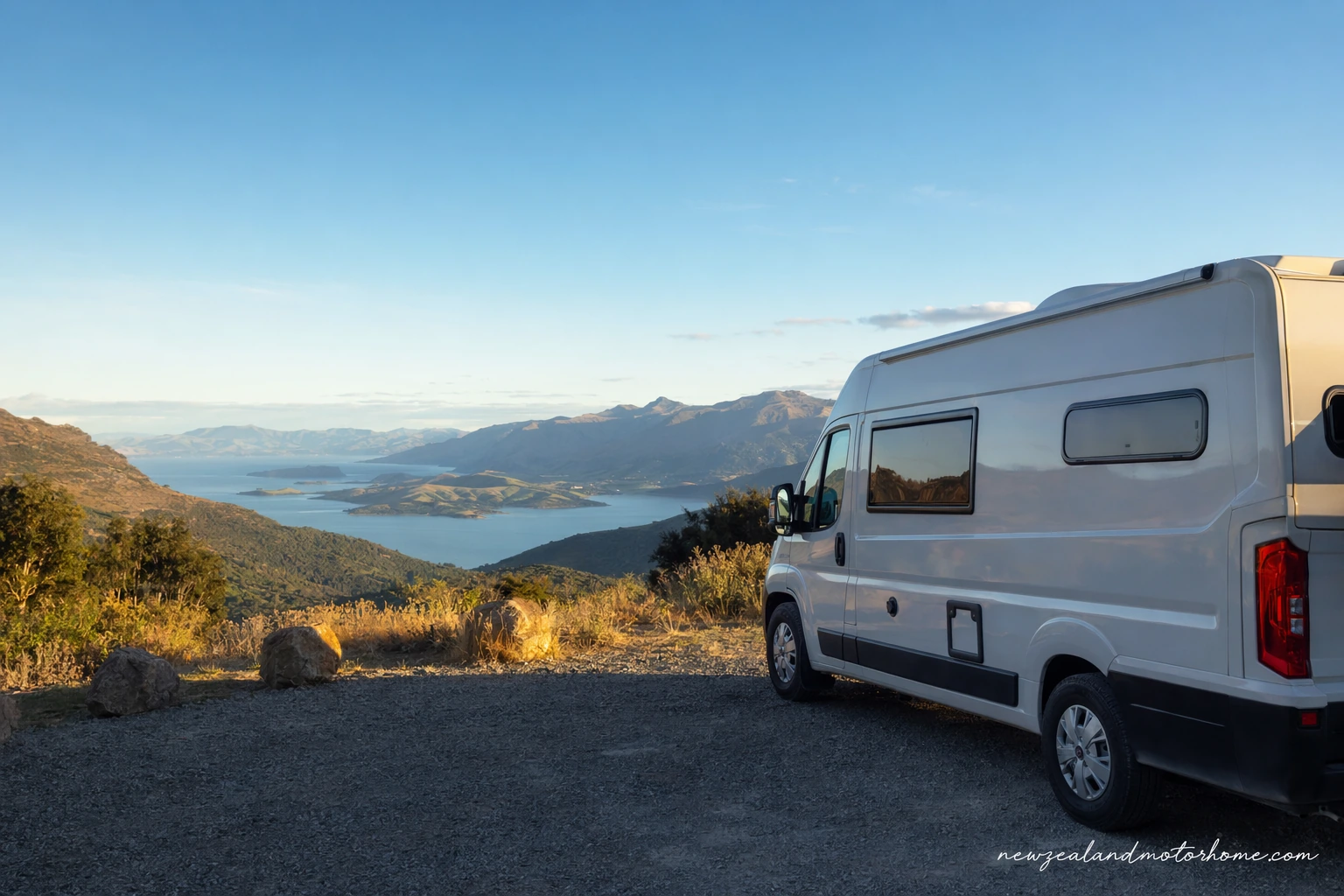
- Best in spring to autumn
- Allow 3–5 relaxed days
- Winding Sounds roads
- Powered sites in towns
- Self-contained rules apply
Marlborough is made for travelling by campervan: sheltered Sounds, vineyard plains, short harbour walks and coastal gravel roads that reward a slow approach. The trick is choosing stops where you can actually pull in, turn around, top up water, empty the cassette and sleep legally without feeling wedged into a car-sized bay.
This guide strings together the best campervan stops Marlborough offers, from Picton and Queen Charlotte Drive through Havelock, Blenheim, Rarangi and down the wild east coast towards Ward. It is written for self-drive travellers parking and sleeping in their hired van, with notes on powered sites, freedom camping Marlborough rules, road widths and sensible overnight bases.
Picton: harbour views, supplies and an easy first night
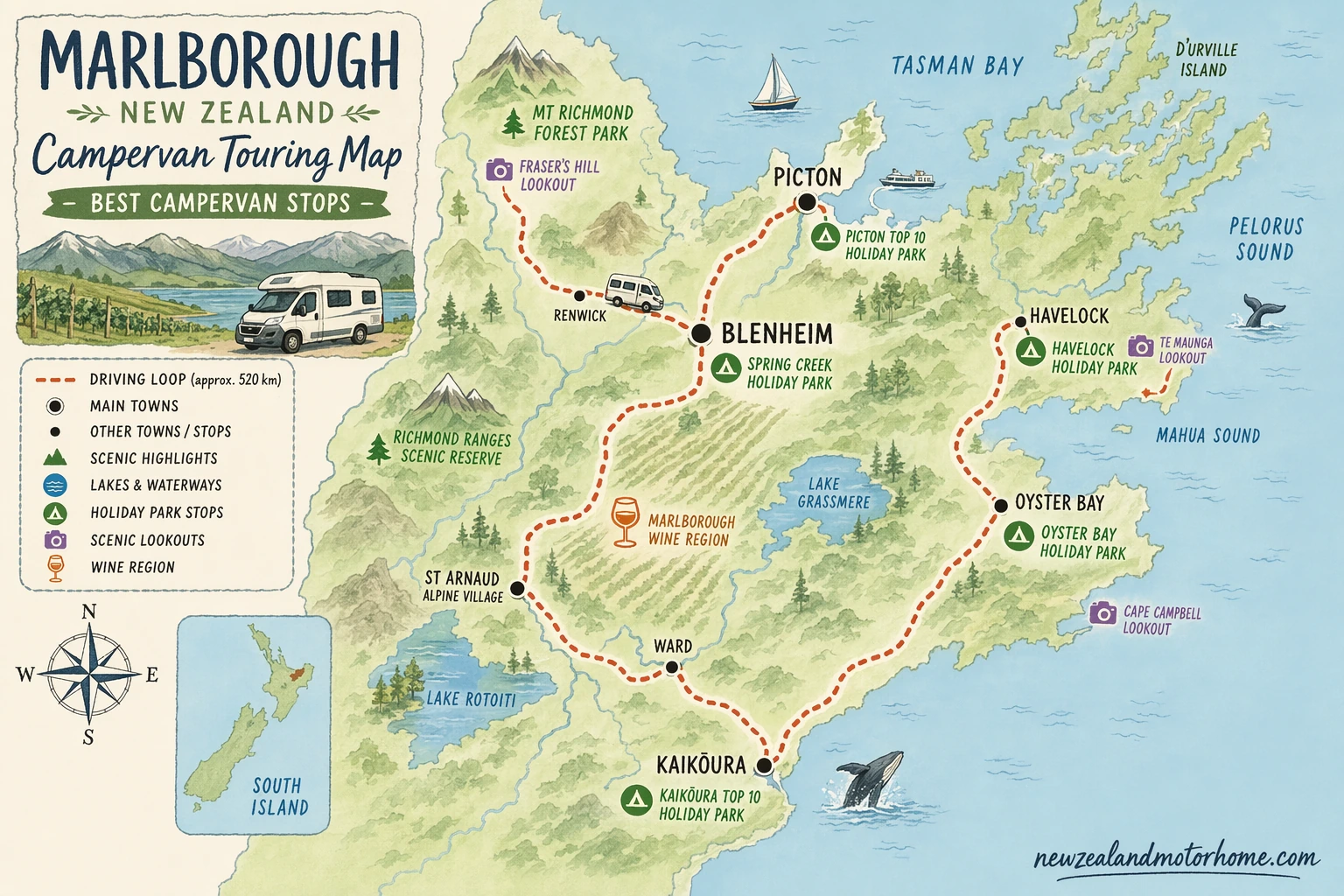
Picton is the soft landing if you have just rolled off the ferry or are about to cross Cook Strait. The foreshore has good daytime parking for a wander along the marina, though larger motorhomes are usually easier to manage in the longer bays away from the busiest waterfront spaces. Arrive early if you want a relaxed park before lunch or a ferry sailing.
For an overnight, use a proper campground or a clearly signed council-approved area if your van is certified self-contained. Picton is also a practical service stop: fuel, groceries, LPG swaps or fills, fresh water at campgrounds, and dump station access in town or at holiday parks are the things to sort before heading deeper into the Sounds.
- Best for: ferry timing, harbour walks, groceries and first-night powered sites.
- Van note: the waterfront can be tight for long vehicles; look for end bays and avoid blocking boat-trailer access.
- Sleep plan: book a powered site if you need to recharge after several unpowered nights.
Queen Charlotte Drive: slow viewpoints between Picton and Havelock
Queen Charlotte Drive is one of Marlborough’s prettiest van drives, but it is not a road to rush. It twists above coves and forested arms of the Sounds, with short pull-ins where a compact campervan fits more easily than a long motorhome. Use passing opportunities generously and avoid stopping half in a lane for photos.
Good pauses include signed lookouts over Queen Charlotte Sound, small beach access points where parking is marked, and the Cullen Point area near Havelock for a leg-stretch with big Pelorus Sound views. If your van is tall or wide, check the weather, keep your speed down on shaded bends, and let faster local traffic pass when safe.
- Best for: scenic pull-ins, picnic stops and short walks rather than overnighting.
- Van note: winding, narrow in places; better in daylight and dry conditions.
- Practical tip: fill water and empty waste before leaving Picton if you are continuing to smaller bays.
Havelock and Pelorus Bridge: rivers, mussels and unpowered camping
Havelock makes a useful pause between the Sounds and inland Marlborough. There is generally more room to manoeuvre near the marina and town edges than in tiny bay settlements, and it is a good place to re-check fuel, food and road conditions before choosing your next leg. The waterfront is a pleasant daytime stop, but follow posted parking signs and do not assume overnight stays are allowed.
Pelorus Bridge is the classic green stop on this side of the region, with river walks, swimming holes in settled weather and a bush campground style that suits travellers happy without mains power. Expect unpowered camping, basic facilities and a quieter feel than a town holiday park; bring enough drinking water and keep your grey-water and toilet management tidy.
- Best for: river walks, shade, a slower night between driving days.
- Site type: mostly unpowered camping; check current booking and facility details before arrival.
- Van note: watch for sandflies near the river and keep food sealed inside the campervan.
Blenheim and the Wairau Plain: town comforts with vineyard detours
Blenheim is where many travellers solve the practical question of where to stay campervan Marlborough after a few scenic nights. It has the easiest access to supermarkets, fuel, laundries, dump stations, fresh-water fills and powered holiday park sites, so it is a sensible reset before heading to the coast or back into the Sounds.
Use Blenheim as a base for the Omaka aviation area, riverside paths and vineyard-country drives, but plan tastings carefully: do not drive the van after drinking. Some cellar doors have tight entrances, gravel shoulders or limited turning room, so park where longer vehicles are welcomed and avoid nosing into a driveway you cannot reverse out of comfortably.
- Best for: powered sites, laundry, dump station runs and restocking.
- Van note: vineyard roads can be narrow with irrigation edges; take wider turns and avoid soft grass verges.
- Good rhythm: two nights in town works well if batteries, washing and food boxes all need attention.
Rarangi, White’s Bay and the east coast: wilder stops with rule checks
North-east of Blenheim, Rarangi and White’s Bay bring you back to beach-and-bush Marlborough. Day parking is usually the safest approach unless you have confirmed a legal overnight site, because coastal reserves can have changing restrictions, small turning areas and busy summer traffic. White’s Bay road is sealed but narrow and winding, so larger motorhomes should take it slowly and avoid peak beach-arrival times.
Further south, the coast around Lake Grassmere, Ward and Marfells Beach feels much more open, with big skies and exposed weather. This is where freedom camping Marlborough needs careful checking: use only permitted areas, obey maximum-stay signs, and make sure your van’s self-containment certification is current if the site requires it. If you want help tying Picton, Blenheim and the east coast into a legal overnight plan, send your dates through the talk-to-us page and we can sanity-check the flow.
- Best for: beach walks, sunrise stops and quieter coastal nights.
- Van note: wind can be strong; face the van sensibly and secure awnings before leaving camp.
- Stay rule: read the sign at the actual site, not just an old app listing.
Common questions
Can I freedom camp in Marlborough in a hired campervan?
Yes, but only where local rules allow it and usually only in a certified self-contained van. Marlborough has restricted and prohibited areas, especially near beaches, reserves and town centres, so check the current council information and the signs on site before settling in for the night.
Where should I stay on my first night after the Picton ferry?
Picton is the easiest first night if your ferry arrives late or you want a simple powered site, showers and a dump station nearby. If you arrive early and are comfortable with winding roads, Havelock or Pelorus Bridge can work, but do the drive in daylight.
Is Queen Charlotte Drive suitable for a motorhome?
It is suitable for many campervans and motorhomes, but it is narrow and bendy with limited large pull-ins. Drive it slowly, use passing bays, avoid stopping on blind corners, and be realistic if you are in a long or high vehicle on a wet day.
Where can I empty the toilet cassette and fill fresh water?
Picton and Blenheim are the most reliable service hubs, with dump station and fresh-water options at public facilities or holiday parks. Havelock can also be useful, but do not leave waste management until you are deep on a coastal road with limited services.
How many days do I need for the best campervan stops in Marlborough?
Allow three days for Picton, Queen Charlotte Drive, Havelock and Blenheim at a comfortable pace. Add one or two more nights if you want Rarangi, White’s Bay, Ward or Marfells Beach without turning every day into a pack-up-and-drive day.
Have a planner shape this for your dates
Send a short outline — your dates, party size, and the kind of trip you want. A planner replies with a vehicle recommendation, a paced route, and the realistic budget.