- Best season: spring to autumn
- Allow 2–4 nights for a useful loop
- Powered sites strongest in Picton and Blenheim
- Check Sounds roads before driving in
- Certified self-contained rules apply
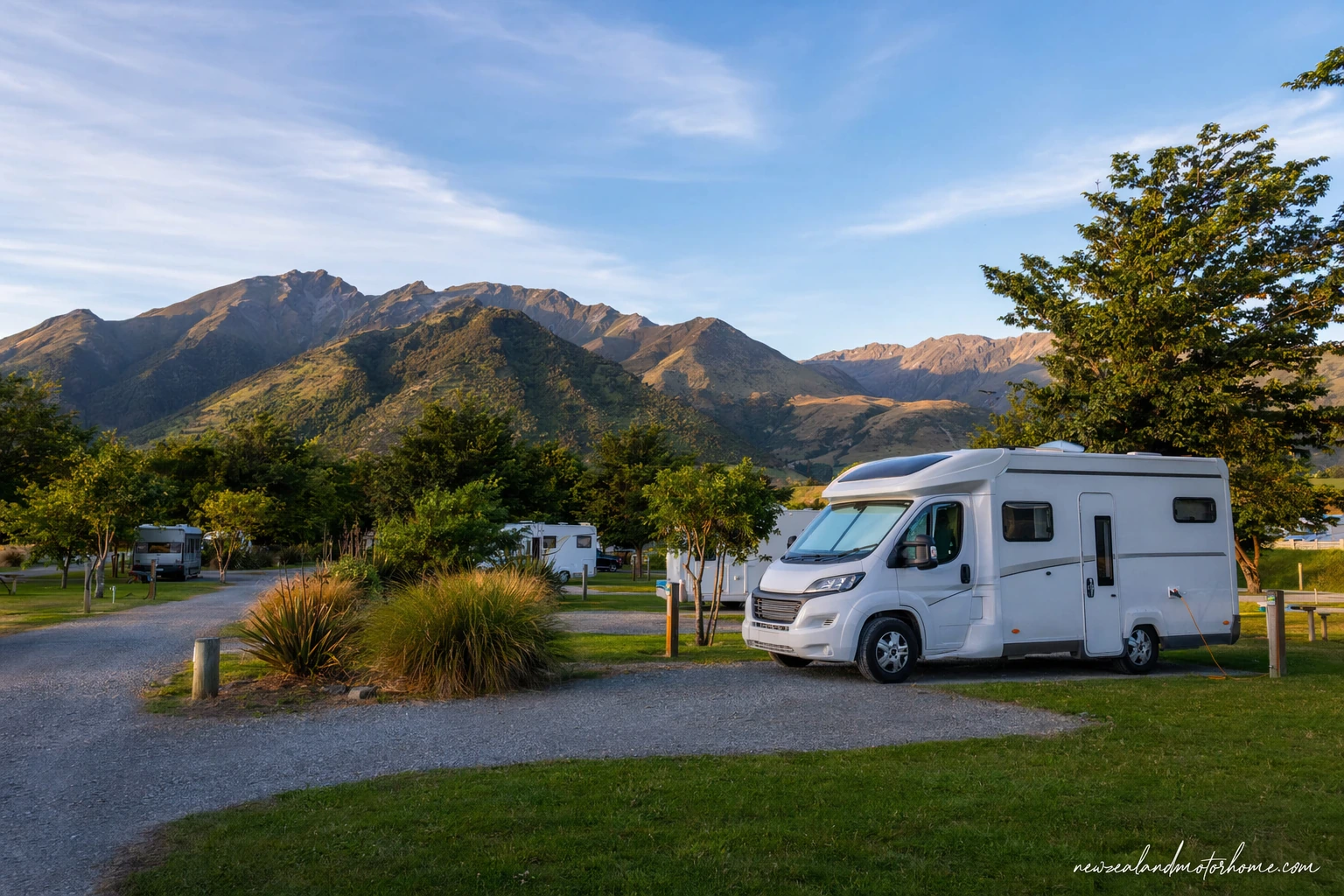
Marlborough is a practical region for a campervan holiday because the distances are short, but the bases feel very different. Park up in Picton for ferry-day ease and Queen Charlotte Sound, choose Blenheim for wineries and full van services, or tuck closer to Havelock and the Sounds when you want quieter water, bush and slower roads.
This guide is written for self-drive travellers sleeping in their hired motorhome or campervan. We look at the spread of holiday parks Marlborough offers, how powered and unpowered sites work, where freedom camping needs extra care, and what each base unlocks without pretending every campground suits every van length.
How Marlborough’s campervan bases are spread out
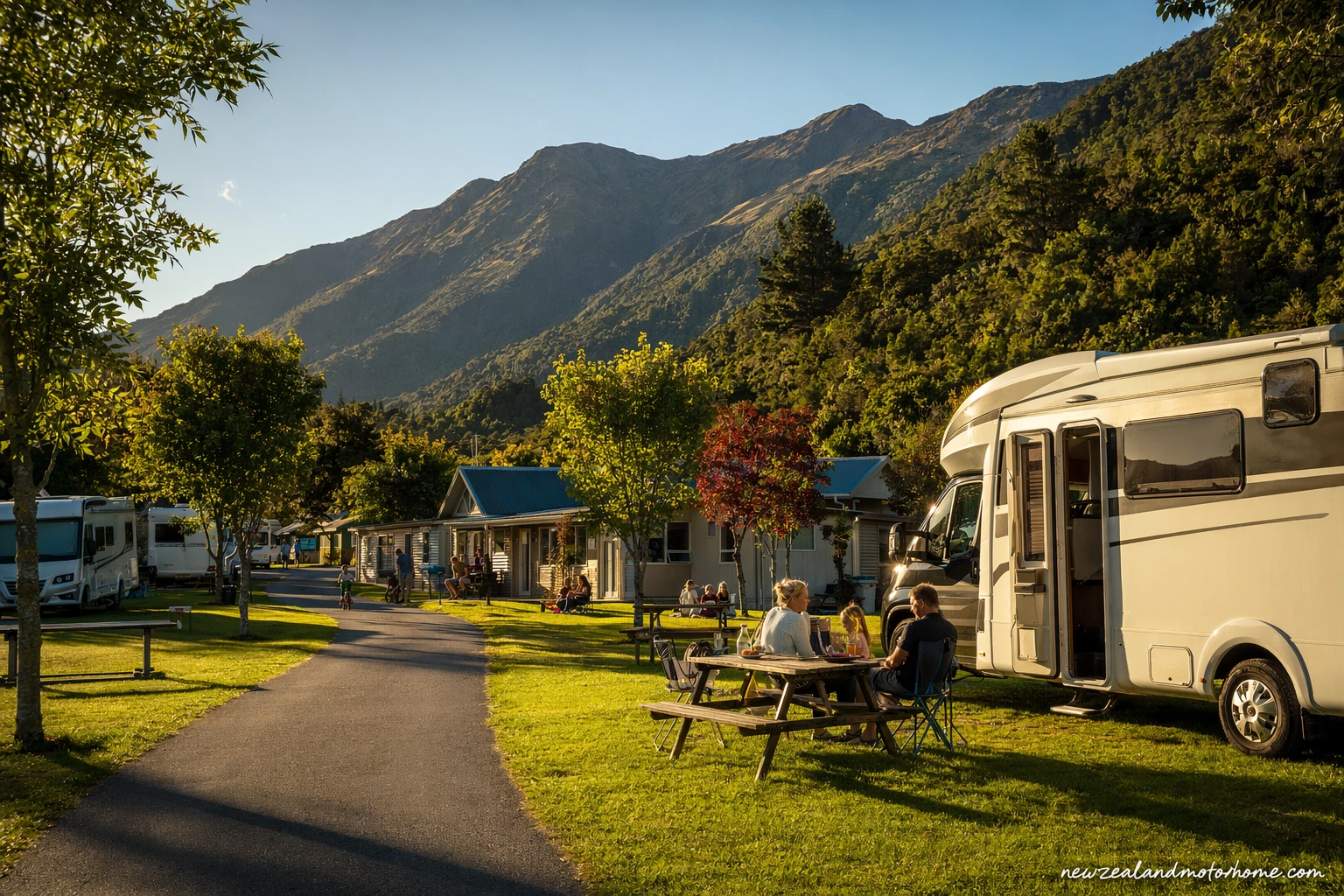
Marlborough is not a one-town camping region. Picton and Waikawa sit at the northern gateway, Blenheim is the service hub on the plains, Havelock guards the road towards Nelson and Pelorus Sound, and the Sounds roads lead to smaller campsites where a compact van is often easier than a large motorhome.
If you are comparing campsites Marlborough-wide, think first about what you want to do the next morning. A powered site in Picton is useful before or after an Interislander or Bluebridge sailing, while Blenheim is better if you need supermarkets, LPG, laundries, fresh-water fills and a dump station without hunting around.
- Picton and Waikawa: best for ferries, marina walks, Queen Charlotte Track transfers and early starts.
- Blenheim and Renwick: easiest for wine country, bike trails, groceries, LPG and full van chores.
- Havelock and Pelorus: good for quieter overnight stops, kayaking, seafood and the Nelson approach.
- Marlborough Sounds roads: scenic but narrow, winding and better suited to confident drivers or shorter vehicles.
Powered sites, unpowered sites and what to book ahead
Powered sites Marlborough holiday parks offer are especially useful in spring and autumn when nights cool down and you want to run the heater, charge devices and reset the fridge properly. In summer, powered sites in Picton and Blenheim can be the first to fill because ferry traffic and wine-region travel overlap.
Unpowered sites are usually fine for self-contained vans with good batteries and solar, but check the site surface and shade. Grass can be pleasant in dry weather and awkward after heavy rain, while tight tree-lined sites may not suit high-roof motorhomes or vans with roof vents and aerials.
- Book a powered site if you have been freedom camping for a night or two and need a battery top-up.
- Ask about site length if your motorhome is over 7 metres or you are travelling with bikes on the rear.
- Check whether the park has a dump station for guests, or whether you will need to use a public facility before arrival.
- For peak summer, long weekends and ferry-changeover days, do not leave Picton or Blenheim sites too late.
If you came searching for a top 10 holiday park Marlborough list, the better answer is to match the park to your route, vehicle and next day’s drive rather than chasing a generic ranking.
Freedom camping rules: where to be careful in a self-contained van
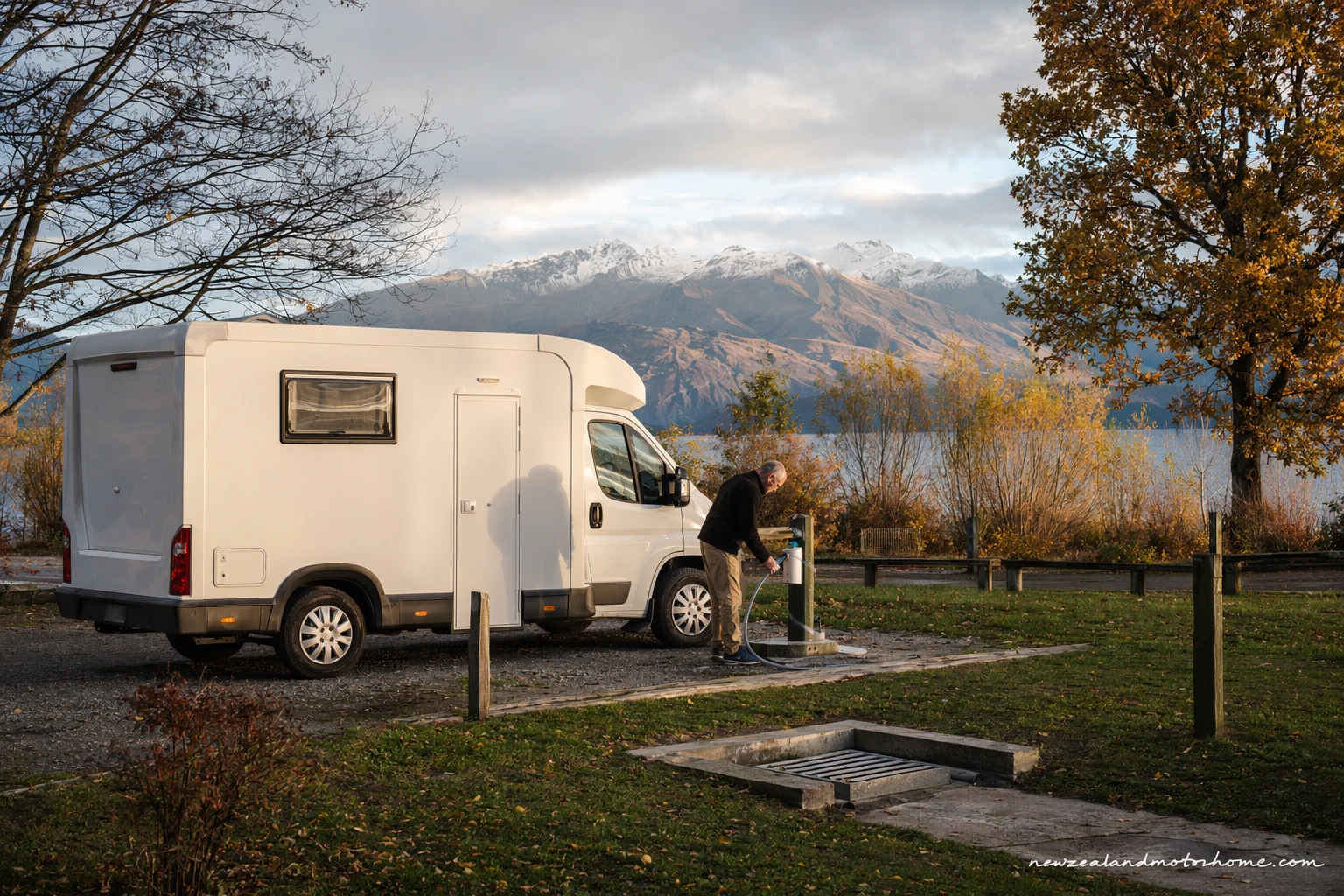
Marlborough has attractive waterfronts, reserves and quiet side roads, but that does not mean you can sleep anywhere in a campervan. Freedom camping rules are set by the council and can change by location, season and signage, so check the current Marlborough District Council information before you decide to stay outside a holiday park or designated campground.
In practical terms, expect stricter controls around Picton, Waikawa, popular beaches, boat ramps and town reserves. A certified self-contained vehicle is generally the starting point, but certification alone does not override a no-camping sign, a time limit or a site-specific restriction.
- Carry proof of self-containment and make sure the certificate matches the vehicle you hired.
- Arrive early enough to read signs in daylight and avoid blocking boat trailer parks or access tracks.
- Use public toilets, dump stations and fresh-water points properly; do not empty grey water into drains or on the ground.
- If a place feels busy or unclear, use a holiday park or recognised campground instead of guessing.
Freedom camping can work for a night between holiday parks, but Marlborough is a region where good paid bases often save stress, especially if you need showers, laundry, rubbish disposal and a legal place to leave the van while you walk or cycle.
Driving between campgrounds Marlborough-wide
The drive from Picton to Blenheim on State Highway 1 is straightforward by New Zealand standards, with open road, passing opportunities and useful service stops. Queen Charlotte Drive towards Havelock is the opposite: beautiful, narrow, bendy and slow, with sections where a wide motorhome needs patience and a steady line.
Do not plan Marlborough by kilometres alone. A short distance into the Sounds can take longer than expected, and turning around a long vehicle is not always simple once you are on a narrow spur road. Kenepuru Road and other Sounds roads can be affected by slips or repairs, so check current access before committing your van to an overnight stop there.
- Refuel and fill fresh water in Picton, Blenheim or Havelock before heading deeper into the Sounds.
- Use low gear on descents and pull over only where there is a proper bay, not on soft shoulders.
- Watch for cyclists, boat trailers, logging trucks, stock movements and one-lane bridges.
- Allow extra time if your van is tall, long, or new to you; there is no need to rush these roads.
What each overnight base unlocks
Picton works well when the van needs to be close to the ferry terminal, marina, cafes and short walks. A holiday park here lets you plug in, sort laundry after the crossing and avoid a late-night drive if the sailing runs behind. Waikawa is slightly more relaxed and handy for marina-based activities.
Blenheim is the most practical campervan service base in the region. From a powered or unpowered site you can organise wine touring without moving the van, restock food, find LPG, top up water and use a dump station before heading towards Kaikōura, Nelson Lakes, the West Coast or back to Picton.
Havelock and the Pelorus area suit travellers who want a quieter pause between Marlborough and Nelson. The camping style can feel more laid-back, but services are fewer than Blenheim, so arrive with your cassette empty, water topped up and groceries sorted.
- Choose Picton for ferry timing, Sounds cruises, short walks and an easy first or last South Island night.
- Choose Blenheim for wineries, bike trails, supermarkets, van servicing and flatter driving.
- Choose Havelock for Pelorus Sound, the Nelson route and a slower overnight stop.
- Choose smaller Sounds campgrounds only after checking road access, vehicle size suitability and whether they accept your style of campervan.
If you want help linking the right bases into a sensible loop, use the talk-to-us step and share your van size, ferry times and must-do stops.
Common questions
Do I need to book holiday parks in Marlborough ahead?
For Picton, Waikawa and Blenheim, booking ahead is wise in summer, school holidays, public holidays and around ferry sailings. Powered sites are usually the first to tighten up, especially for longer motorhomes that need a specific site length.
Are there dump stations at Marlborough holiday parks?
Many holiday parks provide dump stations for guests, and there are also public facilities in the main service towns. Always confirm before relying on one, because access, hours and guest-only rules can vary. Empty before driving into the Sounds, where services are more limited.
Can I freedom camp in Marlborough with a certified self-contained campervan?
Sometimes, but only where local rules and signs allow it. Self-containment certification is not a free pass to stay on reserves, waterfronts or town streets. Check current council information and choose a holiday park if the signage is unclear.
Which Marlborough base is easiest for a first night after the ferry?
Picton or Waikawa is usually the easiest, especially if your sailing arrives late or you are still getting used to the van. You can plug into power, fill or empty as needed, and tackle the Marlborough roads in daylight the next morning.
Are Marlborough Sounds campgrounds suitable for large motorhomes?
Some are, but many Sounds roads are narrow, winding and slow, with limited turning space. Before booking, check the campground’s access notes, site length and whether larger motorhomes are accepted. A shorter campervan is generally easier in the Sounds.
Have a planner shape this for your dates
Send a short outline — your dates, party size, and the kind of trip you want. A planner replies with a vehicle recommendation, a paced route, and the realistic budget.