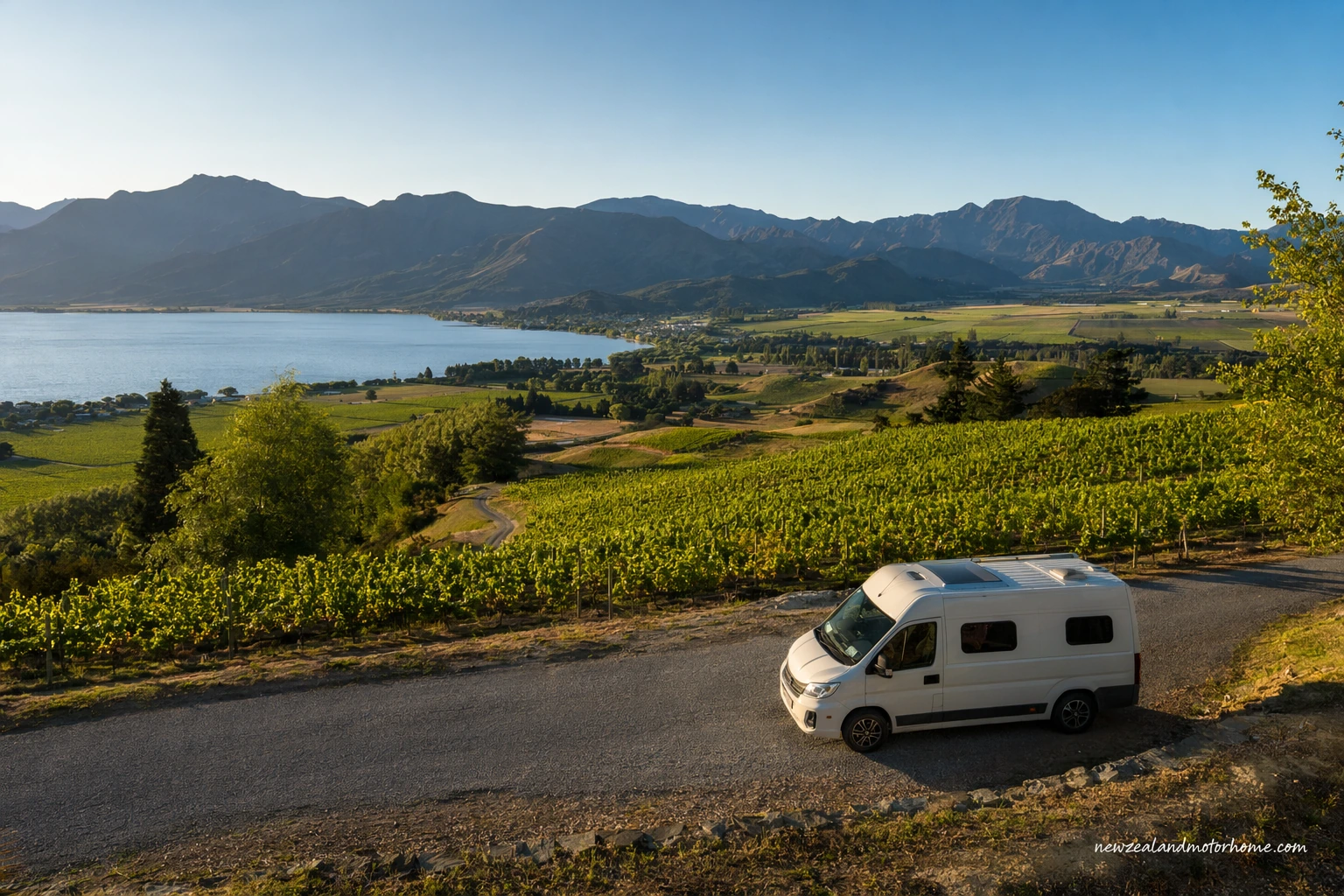
- Best season: February to April
- Allow 3 to 5 days by campervan
- Book summer powered sites early
- Sounds roads are slow for long vans
- Self-contained only for permitted freedom camping
Marlborough is one of those regions where your campervan rhythm changes by the valley. You might wake beside the Picton harbour, spend the afternoon among Blenheim’s vineyards, then nose the van along a Sounds road where every bend asks for patience and a low gear.
This guide is written for self-drive campervan and motorhome travellers deciding when to visit Marlborough. You’ll get a practical read on seasons, marlborough weather by month, holiday-park availability, freedom camping rules, dump stations, water fills, LPG, and the driving conditions that matter when your bed is also your vehicle.
Quick answer: February to April is the sweet spot
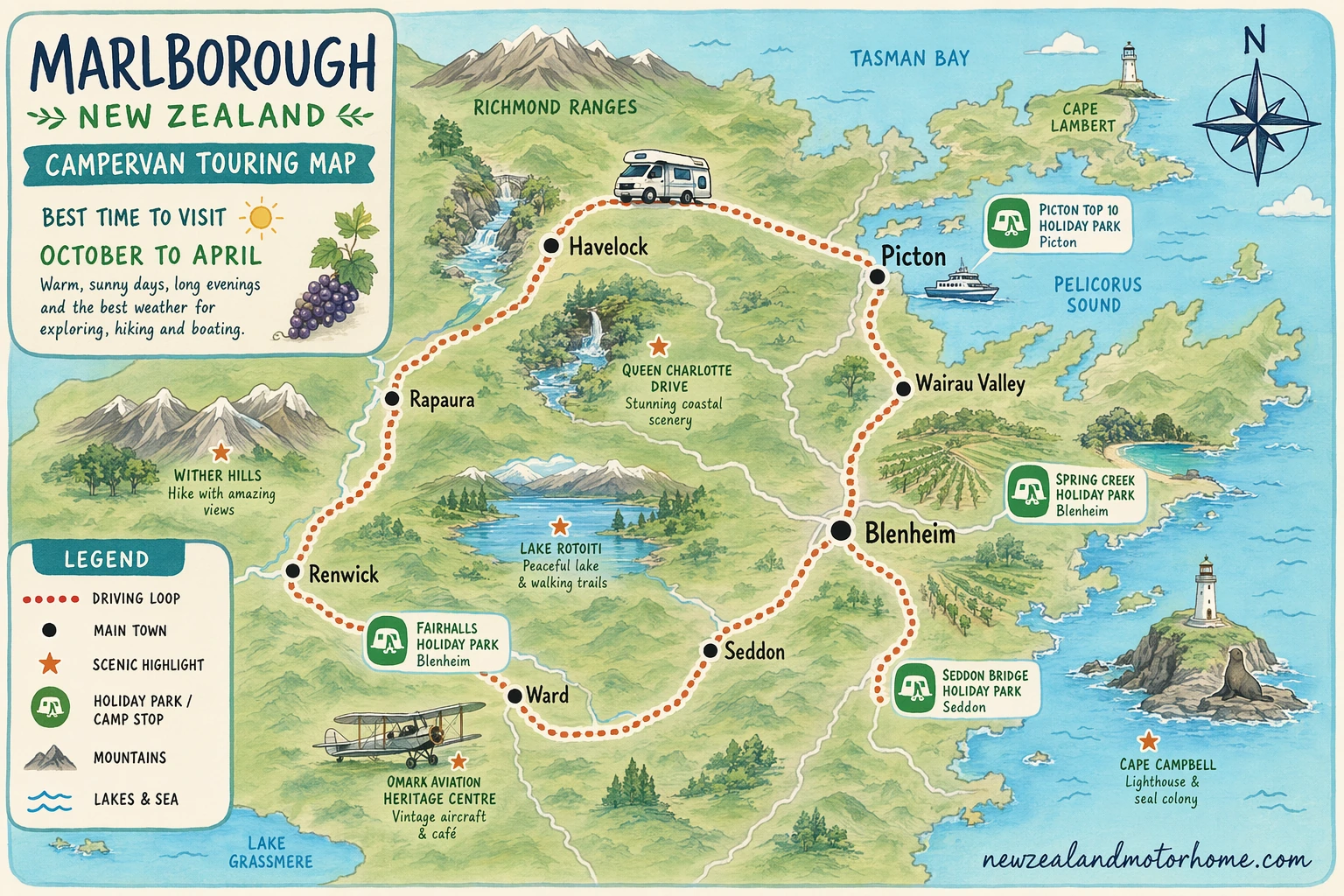
For most campervan travellers, the best time to visit Marlborough NZ is from February to April. The summer rush has eased, the sea in the Marlborough Sounds still feels inviting, vineyard country around Blenheim is warm and golden, and powered sites are usually easier to secure than over Christmas and New Year.
December and January are still excellent if you want long daylight and swimming stops, but you need to book holiday parks and DOC-style camps earlier, especially around Picton, Havelock and the Queen Charlotte Drive. Winter is quieter and atmospheric, but expect cold nights, shorter days, and a stronger need for a powered site if you rely on heaters or battery charging.
- Best all-round months: February, March and April.
- Best for warm swimming and long evenings: late December to February.
- Best for quieter van sites: May, June, August and September, outside school holidays.
- Best for vineyard colour and food stops: March and April, during and after harvest.
Marlborough weather by month for van travellers
Marlborough is one of New Zealand’s sunnier regions, but the weather is not the same everywhere. Blenheim and the Wairau Valley are often dry, hot and still in summer, while Picton and the Sounds can feel more humid, breezy and changeable. In a campervan, that means packing for both vineyard heat and cool evenings near the water.
As a rough guide, January and February are the warmest months, with busy beaches, hot sealed roads and strong sun on exposed freedom camping areas. March and April are settled and slightly cooler, often the most comfortable months for sleeping in the van without needing either a fan or a heater all night. May to August brings frosts inland, damp mornings near the Sounds, and occasional southerly spells that make a powered site feel worthwhile.
- September to November: spring winds, fresh vineyard growth, fewer crowds, but changeable rain around the Sounds.
- December to February: hot days, high UV, busy coastal camps, and demand for shade or a powered fan.
- March to April: settled autumn weather, harvest traffic near vineyards, cooler nights and excellent road-trip light.
- May to August: quiet sites, frosty inland starts, limited daylight and more need to check road conditions before Sounds detours.
Camping availability, freedom camping and services by season
Marlborough has a useful spread of campervan bases: Picton for ferry arrivals and Sounds access, Blenheim and Renwick for vineyards, Havelock for the Pelorus and Kenepuru side, and Seddon or the Awatere Valley for a quieter southbound night. In peak summer, choose and book your overnight stops before you drive into the Sounds, because turning a long motorhome around on a narrow bay road is nobody’s idea of a relaxed evening.
Freedom camping is controlled by local bylaws and signage, and you should only use permitted areas in a certified self-contained vehicle. Rules can vary between foreshore reserves, town edges and rural pull-ins, so do not rely on an old app pin without checking the council information on the day. If you are not self-contained, plan on holiday parks, campgrounds or DOC-managed sites with toilets.
Dump stations, fresh-water fills and LPG are easiest to plan around Picton and Blenheim, with more limited options once you head deeper into the Sounds. Before leaving a main town, empty grey and black water, top up fresh water, and check gas if you are heading for an unpowered site.
- Peak demand: late December, January, Easter and school holidays.
- Powered sites: book ahead in summer and for winter weekends if you need heating.
- Unpowered sites: easier in shoulder seasons, but battery management matters on cloudy Sounds days.
- Servicing habit: dump, fill water and check LPG in town before driving into bay roads.
Driving conditions: Sounds roads, vineyards and winter starts
Marlborough looks compact on the map, but campervan driving times can stretch quickly. Queen Charlotte Drive between Picton and Havelock is beautiful, narrow and bendy, with limited pull-outs for longer motorhomes. Take it slowly, use lower gears on descents, and let local traffic pass when you find a safe bay.
Side roads into the Marlborough Sounds can be steep, shaded and tight, especially after rain or during slips and roadworks. If you are driving a longer or higher motorhome, check your hire agreement before taking gravel routes, and avoid pushing into a remote bay late in the day without a confirmed overnight stop. Port Underwood Road and some Kenepuru or outer Sounds routes can be unsuitable for large vans depending on conditions.
In winter, inland mornings around Blenheim, Renwick and the Awatere can start with frost on the windscreen and shaded corners. Give yourself extra time before ferry check-in at Picton, and do not plan a tight connection after a long rural drive in wet or icy weather.
Choosing your month by the kind of trip you want
If your Marlborough trip is built around the Sounds, aim for February or March when the water is warmer, daylight is generous and the worst of the peak rush has usually passed. For a vineyard-and-food loop around Blenheim, Renwick and the Wairau Valley, March and April are especially good, with harvest energy, golden vines and comfortable sleeping temperatures in the van.
If you are arriving off the ferry into Picton, the first night matters. In busy months, book a nearby powered or unpowered site rather than trying to drive straight into the Sounds after a late sailing. In quieter months, you can be more flexible, but still check whether smaller campgrounds are open year-round before you commit to a back-road detour.
Spring suits travellers who like lighter crowds and do not mind a windier forecast. Winter suits slower trips with short driving days, warm layers and a willingness to pay for power when the house battery has had enough. If you want help matching ferry times, campsite spacing and van size to the season, use the /talk-to-us/ step and we can shape the plan around how you actually travel.
Common questions
When to visit Marlborough if we are hiring a campervan?
February to April is the easiest answer for most campervan trips: warm enough for the Sounds, calmer than peak summer, and comfortable for sleeping in the van. If you need school-holiday dates, book powered or waterfront sites early.
Is Marlborough too busy for campervans in January?
It can be busy, especially around Picton, Havelock, popular bays and ferry dates. You can still have a great trip, but pre-book your overnight stops, arrive at campgrounds earlier in the day, and do not assume a freedom camping space will be available.
Can we freedom camp in Marlborough?
Only in permitted places, and generally only if your campervan is certified self-contained under current rules. Check local signage and council information each day, because some foreshore and town areas are restricted or prohibited.
Are Marlborough Sounds roads suitable for large motorhomes?
Main routes are manageable with care, but many Sounds roads are narrow, winding, steep or partly gravel. Longer motorhomes should avoid last-minute detours into remote bays, check hire-vehicle restrictions, and turn around only where there is safe space.
Do we need powered sites in winter?
Often, yes. Winter nights can be cold inland and damp near the Sounds, so a powered site helps with heating, battery charging and drying gear. Unpowered sites are still possible if your van has good battery capacity and you drive or recharge regularly.
Have a planner shape this for your dates
Send a short outline — your dates, party size, and the kind of trip you want. A planner replies with a vehicle recommendation, a paced route, and the realistic budget.