- Allow 3–6 days
- Best with a certified self-contained van
- Coastal wind can affect high-sided motorhomes
- Powered resets in Invercargill and Te Anau
- Check local freedom camping signs
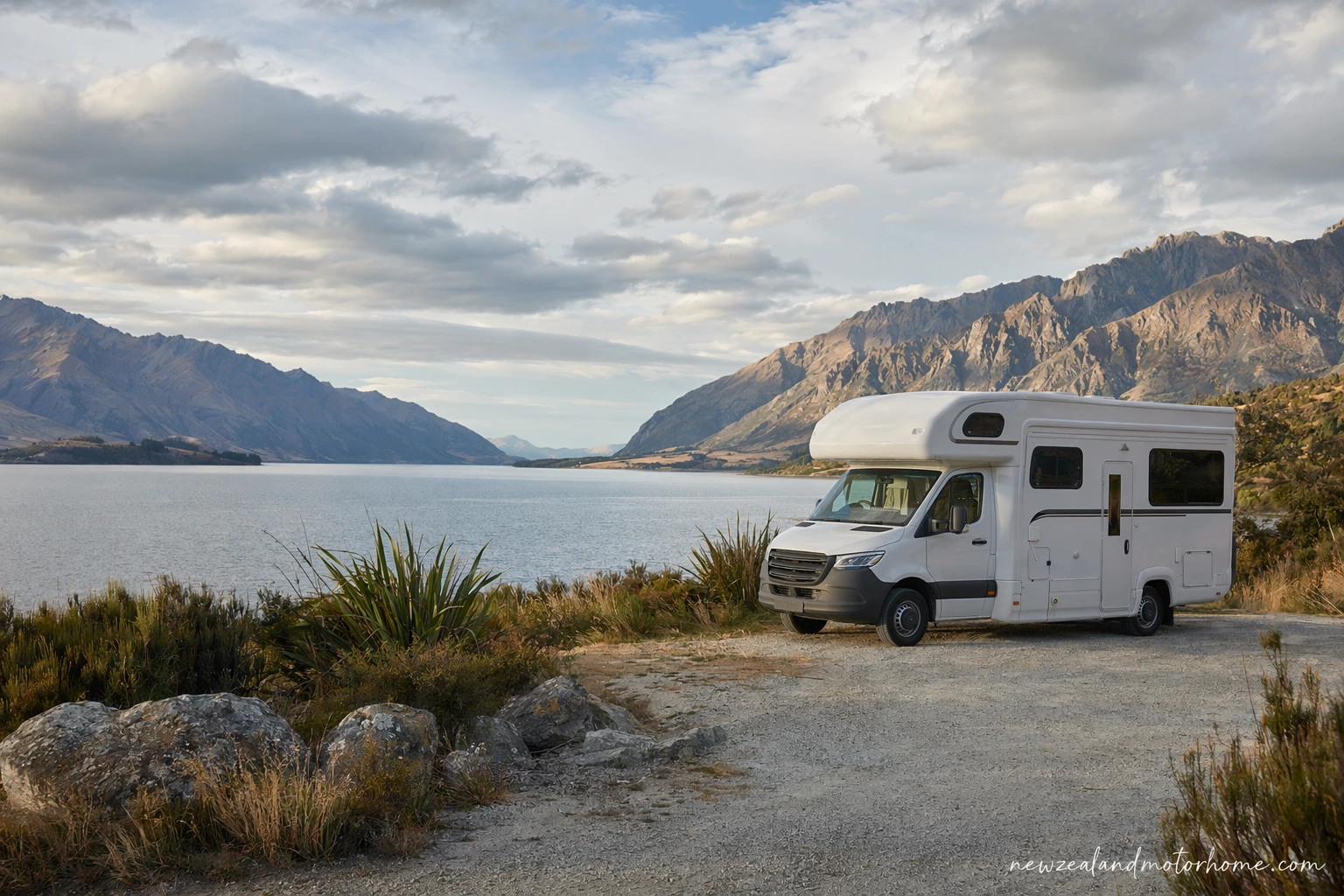
Southland suits a campervan because the distances are honest, the views open up suddenly, and the best stops are often the ones with room to pull in, make a cuppa and let the weather move through. From Bluff and Riverton to the Catlins coast and the Fiordland edge, this is a region where a van gives you time to linger without rushing back to a motel.
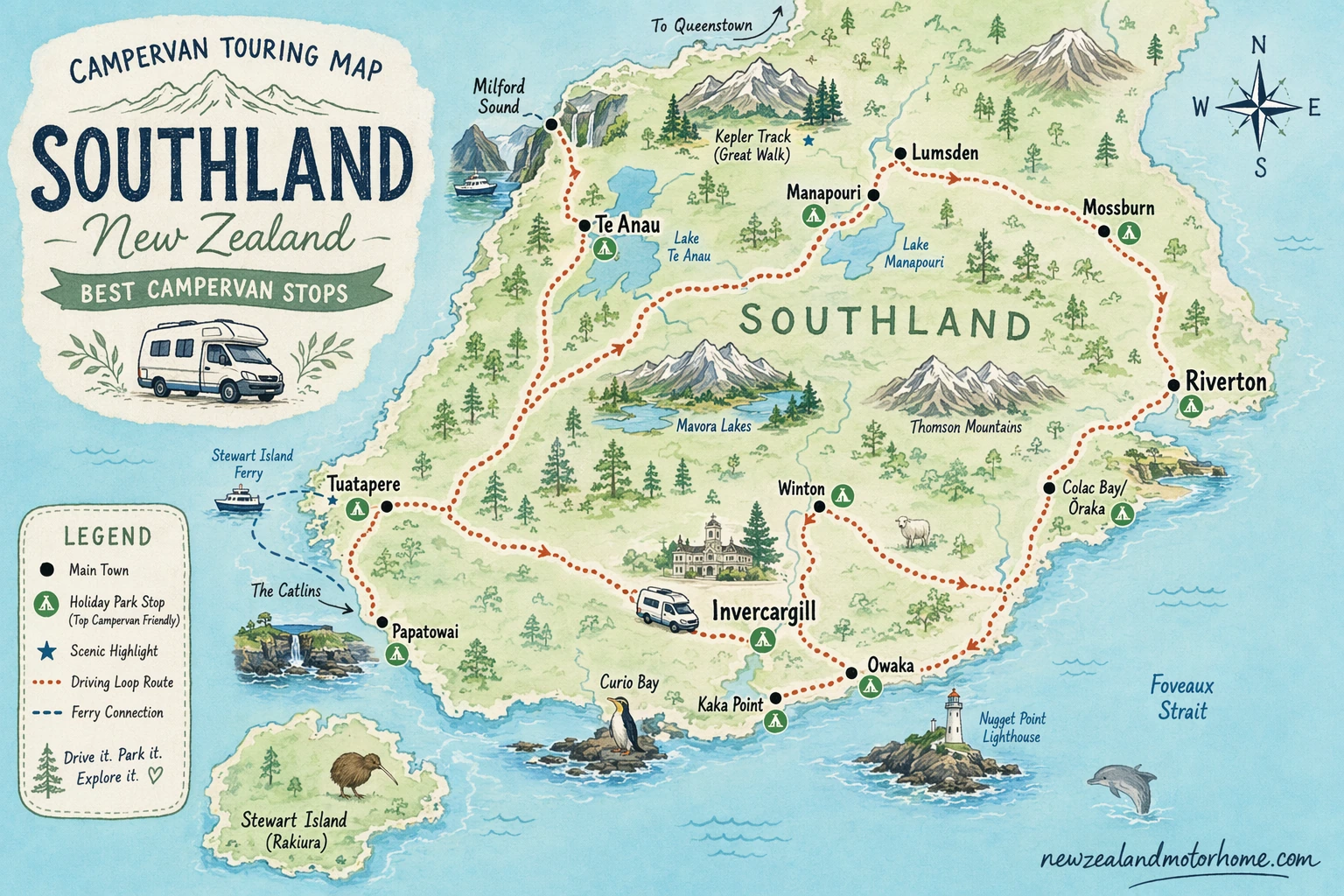
This guide focuses on the best campervan stops Southland travellers can actually use: viewpoints with sensible parking, coastal overnights, holiday parks with powered sites, dump-station planning, fresh-water top-ups and the freedom camping Southland rules that matter before you settle in for the night.
Invercargill and Bluff: stock up, park smart, then reach the southern signpost
Invercargill is the practical reset point for a Southland campervan trip. Use it for groceries, fuel, LPG bottle swaps or fills, laundries, fresh water and a dump station before you head for smaller coastal settlements where services thin out quickly. If you are in a larger motorhome, choose supermarket and town parking with obvious long bays rather than squeezing into compact angle parks.
Bluff is a classic first or last coastal stop, but treat Stirling Point as a daytime visit rather than a place to sprawl. The car park can fill with cars, coaches and turning vehicles, and the wind can be fierce around a high-sided van. Park tidily, avoid blocking photo stops, and use Bluff or Invercargill accommodation options for the night unless current local signage clearly allows otherwise.
- Good for: southern photo stops, harbour views, fuel and supply runs.
- Van note: watch crosswinds on the exposed road to Bluff, especially in tall motorhomes.
- Overnight plan: powered sites are easiest in Invercargill; only use designated freedom camping areas if your vehicle and the signs comply.
Riverton, Colac Bay and Cosy Nook: beaches with room to breathe
Riverton is one of the friendliest answers to where to stay with a campervan in Southland because it has sea views, food supplies, beach walks and a relaxed pace without feeling remote. The town and nearby bays work well as a first coastal night after Invercargill, particularly if you want a powered site, showers and an easy morning start.
West of Riverton, Colac Bay is good for a coffee stop, surf watching and wide coastal light. Cosy Nook is smaller and more delicate: the side road is narrow in places and the settlement has limited turning space, so long motorhomes should go slowly, avoid peak photo-stop congestion and be ready to turn around before the tightest bits if it feels wrong.
- Park the van: use formed beach or reserve parking only, keeping access clear for locals and boat trailers.
- Stay options: look for holiday park or campground sites around Riverton and Colac Bay if you need power.
- Driving note: coastal roads can be lumpy and exposed; secure cupboards and check your awning is locked down.
Monkey Island and the western beaches: legal nights with a big-sky feel
Monkey Island, near Orepuki, is one of Southland’s memorable coastal campervan stops because it feels open, raw and far from the main highway. It has long been used by self-contained vans, but bylaws and allowed areas can change, so check current council signage on arrival before you set up for the night.
This is not a place to arrive with empty tanks and a full toilet cassette. Come prepared from Riverton or Invercargill, keep grey water contained, and leave no food scraps or rubbish for gulls to spread around. In strong southerlies, park nose or tail into the wind where possible and avoid soft sand edges.
- Best moment: low-tide beach walks and sunset over the western coastline.
- Facilities: expect basic or limited facilities; do not rely on power, showers or a dump station here.
- Freedom camping: only stay if your van is certified self-contained and the current signs permit it.
The Southland Catlins: Fortrose, Waipapa Point, Slope Point and Curio Bay
The Catlins side of Southland is made for slow campervan travel: short drives, lighthouse stops, wind-bent paddocks and wildlife areas where you need to give the place space. Fortrose is a useful pause as you enter the coast, with room to stop and check the weather before committing to the more exposed roads.
Waipapa Point has a formed access road and lighthouse parking, but it is a sensitive coastal area, not an overnight base. Slope Point is reached by rural roads and a walk across private farmland access that may close seasonally, so it is best treated as a daylight stop in settled weather. Curio Bay is the better overnight anchor, with campground-style facilities nearby and a far more sensible setup if you want showers, power or a secure place to sit out a windy night.
- Van fit: most standard campervans are fine, but large motorhomes should take gravel and farm-edge roads slowly.
- Wildlife care: keep well back from sea lions and penguins, and never use headlights to light up wildlife at dusk.
- Overnight plan: use designated campgrounds or clearly signed legal areas; beach car parks are often day-use only.
Te Anau and Manapouri: the Southland base for water, power and Fiordland weather
Although the coast gets much of the attention, Te Anau and Manapouri are essential Southland campervan stops if your route bends towards Fiordland. Te Anau is where you sort the practical jobs: dump the cassette, refill fresh water, restock food, check LPG, charge devices on a powered site and make decisions around the next weather window.
Lakefront parking is popular and can be tight in the middle of the day, so a larger motorhome is often easier to place early in the morning or later in the afternoon. If you are driving towards Milford Sound, remember it is a mountain road with avalanche, ice and tunnel conditions in season; plan fuel, daylight and driver energy rather than treating it as a quick side trip.
- Good for: powered-site reset, lake walks, boat trips and Fiordland day planning.
- Road note: use lower gears on descents and let faster traffic pass at safe pull-outs.
- Stay options: Te Anau and Manapouri have the broadest choice for campervan overnights before more remote roads.
How to string the stops together without rushing the van
A comfortable Southland campervan loop usually works best at three to six days, depending on whether you include Fiordland. A simple coastal version runs Invercargill, Bluff, Riverton, Monkey Island, the Southland Catlins and back through Fortrose. Add Te Anau and Manapouri if you want lake time, a powered-site reset and access to Fiordland trips.
Plan your overnight stops before you lose reception, especially if you are relying on freedom camping Southland areas rather than booked holiday parks. Keep a buffer day for wind and rain; on this coast, a slow morning with the kettle on can be smarter than driving a tall van into a hard crosswind. If you want help matching your van size, travel dates and must-see stops, you can send us your outline through our plan-your-trip page and we will help shape it into a practical route.
- 3 days: Invercargill, Bluff, Riverton, Monkey Island and back.
- 4–5 days: add Fortrose, Waipapa Point, Curio Bay and relaxed Catlins time.
- 6+ days: include Te Anau or Manapouri for services, lake scenery and a Fiordland weather buffer.
Common questions
Can I freedom camp anywhere in Southland in a certified self-contained campervan?
No. Certification helps, but you still need to follow the current council bylaw and the signs at each reserve, beach and car park. Freedom camping Southland rules can vary between districts, so check before you settle in.
Where should I empty the toilet cassette and refill fresh water?
Use public dump stations and holiday park facilities in larger service towns such as Invercargill and Te Anau, and top up before heading to exposed coast stops. Do not assume small beach settlements have a dump station, potable water or rubbish facilities.
Are Southland roads suitable for a large motorhome?
Main highways are generally suitable, but coastal side roads can be narrow, gravel, windy and short on turning space. Drive slowly, watch for soft shoulders, and avoid committing a long vehicle to a small beach access if you cannot see a safe turnaround.
Do I need powered sites in Southland?
You do not need power every night if your van is set up well, but powered sites are useful after cold, wet or windy days when batteries and heating have worked hard. Te Anau, Invercargill and established coastal campgrounds are good places to reset.
What is the best season for campervan stops in Southland?
Late spring to early autumn gives longer daylight and more comfortable coastal stops, but Southland weather can change in any season. Winter can be beautiful in a campervan, provided you plan shorter driving days, check road conditions and prioritise powered sites for warmth.
Have a planner shape this for your dates
Send a short outline — your dates, party size, and the kind of trip you want. A planner replies with a vehicle recommendation, a paced route, and the realistic budget.