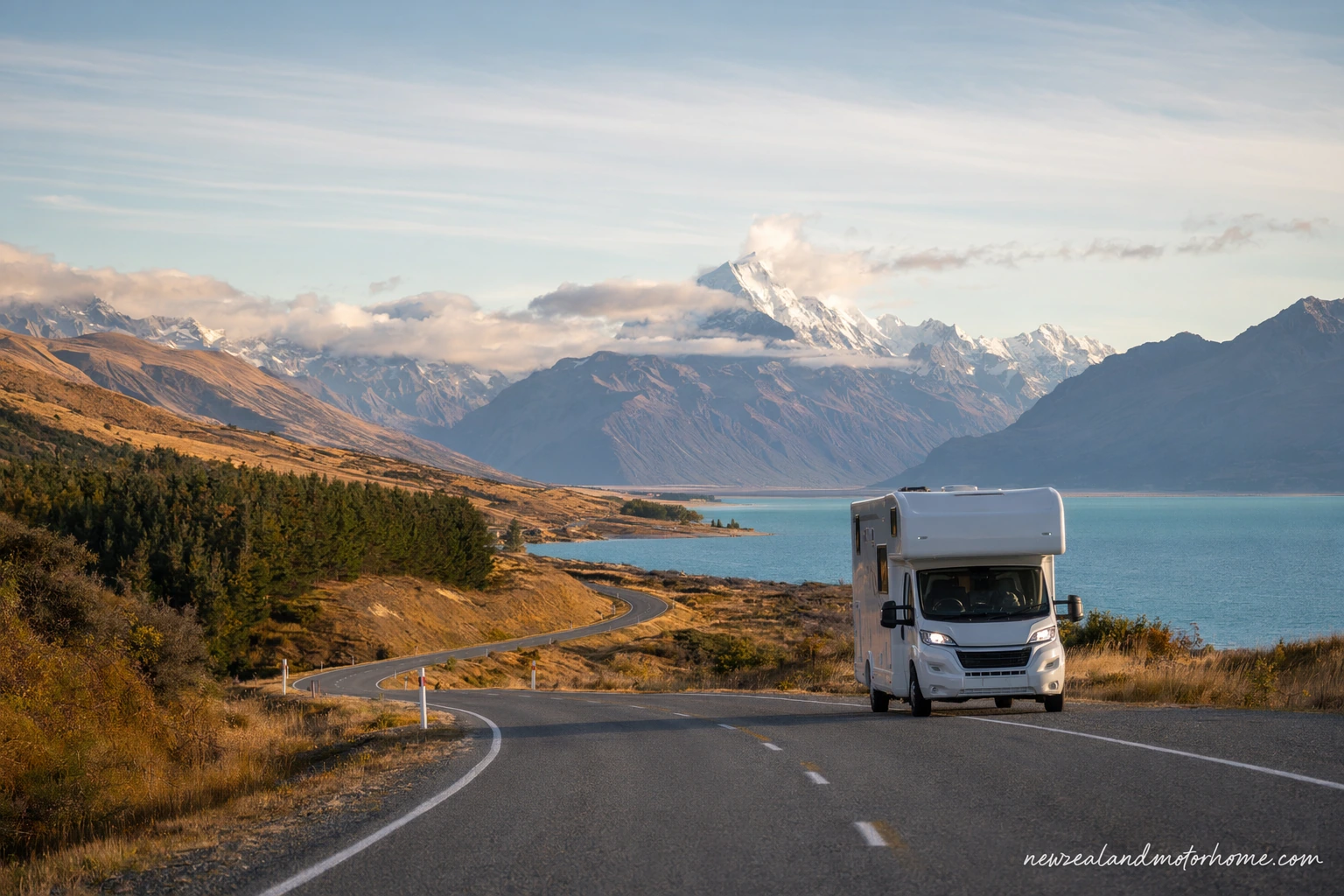
Your campervan guide Southland NZ: coast, Catlins and big-sky driving
- Allow 4–10 days
- Best with certified self-contained van
- Powered resets in main towns
- Watch Catlins gravel access roads
- Windy coast driving possible
Southland is made for a slower self-drive van trip: wide rural highways, surf beaches you can hear from your bunk, forested Catlins side roads, and the long run west towards Fiordland. It is not a region to rush through on the way to somewhere else; the best stops often sit at the end of a gravel lane, beside a small harbour, or just past a paddock full of sheep.
This campervan guide Southland NZ is written for travellers driving and sleeping in a hired campervan or motorhome. You’ll find practical notes on where to park the van, how to think about powered and unpowered nights, where dump stations and fresh-water planning matter, and which roads need a little more patience in a larger vehicle.
How many days to allow for a Southland campervan loop
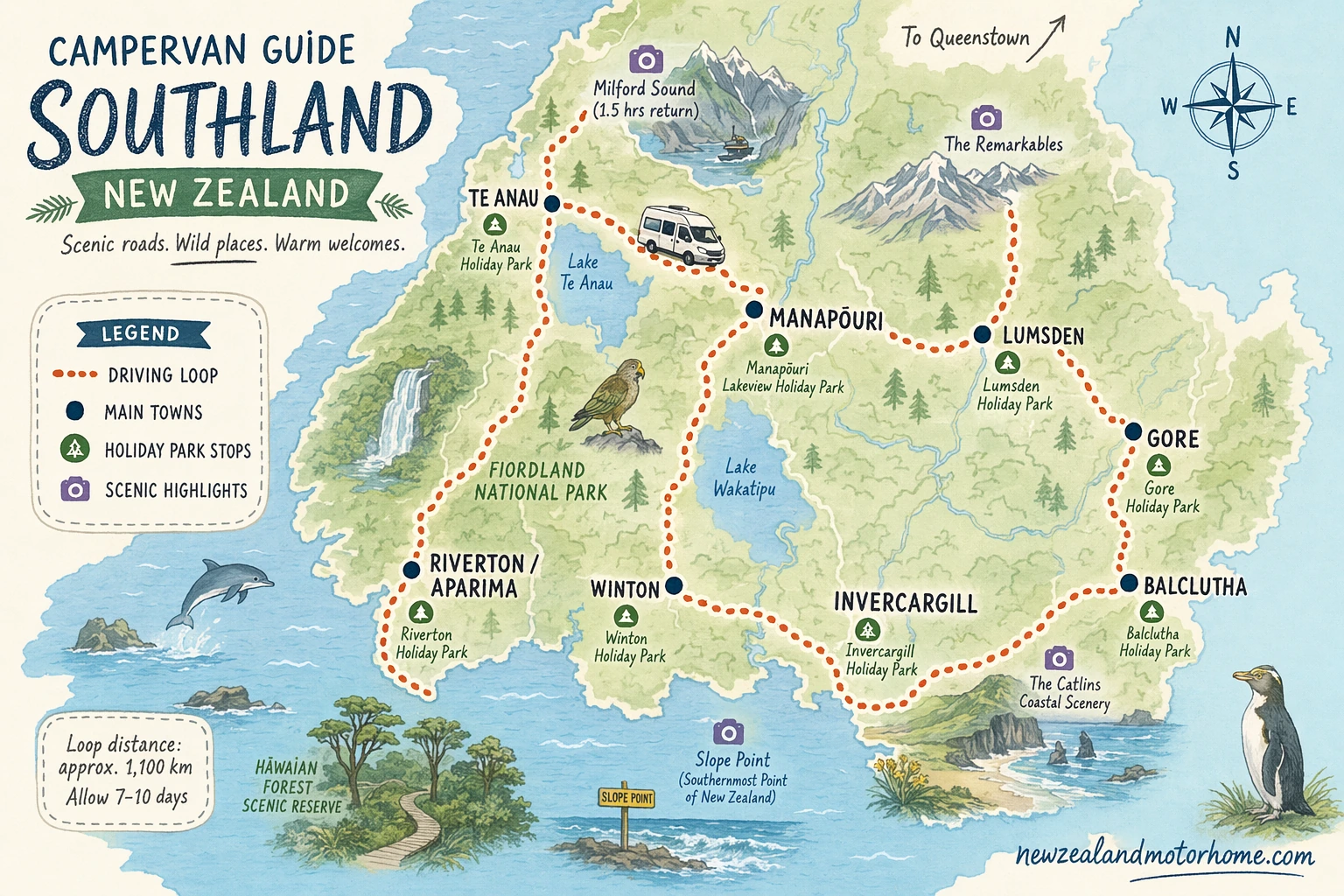
For a first Southland campervan trip, allow at least four to six days if you want Invercargill, Bluff, Riverton and a taste of the Catlins without spending every afternoon behind the wheel. Seven to ten days gives you space to add Tuatapere, Lake Manapouri or Te Anau, plus a weather day for the coast.
A simple loop works well: arrive from Dunedin or Queenstown, stock up in Invercargill, run out to Bluff, follow the coast through Riverton and Colac Bay, then choose either the western lakes or the Catlins. Distances are not huge by New Zealand standards, but wind, rain and photo stops slow the day down.
- Quick taste: Invercargill, Bluff, Riverton and one coastal overnight.
- Best balance: 5–7 days with Catlins waterfalls, Curio Bay or Purakaunui Bay, and a night near Te Anau or Manapouri.
- Slower motorhome Southland trip: 10 days with time for short walks, laundry, powered-site resets and a Stewart Island day trip from Bluff.
Where to stay: powered sites, DOC-style nights and freedom camping
Southland has a useful mix of holiday parks, council-managed camping areas, DOC campsites and limited freedom camping. In a hired van, it pays to alternate cheaper unpowered nights with powered stays so you can recharge house batteries, use showers, do laundry and empty waste legally.
Invercargill, Te Anau, Gore and smaller coastal settlements usually have established campground options, but facilities vary from full powered sites to basic toilets and no dump station. In the Catlins and along the southern coast, book ahead in summer and during long weekends; some of the prettiest spots have limited flat ground for longer motorhomes.
- Powered reset nights: plan these around Invercargill, Te Anau, Gore or a full-service coastal campground.
- Unpowered scenic nights: look for marked sites near beaches, rivers and forest edges, but check whether your self-containment certification is required.
- Freedom camping: use current district council maps and obey on-site signs; rules can change between car parks only a few kilometres apart.
- Longer vans: arrive before dark so you can assess slope, turning room and soft grass before committing.
Best stops for van travellers: coast, wildlife and short walks
The things to do Southland campervan travellers tend to remember are often easy to fit between drives: a beach coffee with the sliding door open, a short waterfall walk in the Catlins, or watching the light shift over Foveaux Strait. Park only in marked areas at wildlife spots, especially around penguin and sea-lion habitat, and keep the van well back from soft sand and dunes.
Bluff is worth more than a quick photo at the signpost. Park the van in town and walk sections of the harbour and lookout tracks, or leave the camper securely parked while taking a passenger ferry to Stewart Island. Riverton and Colac Bay are good coastal pauses, with room to slow down and check weather before deciding whether to push west or east.
- Bluff: harbour views, short walks and Stewart Island connections; avoid squeezing a large van into tight residential streets.
- Riverton/Aparima: sheltered town parking, estuary views and good overnight positioning before the Southern Scenic Route.
- Catlins: waterfalls, forest walks, lighthouses and surf beaches; expect short gravel access roads to some stops.
- Te Anau and Manapouri: lakefront walking, fuel and supplies before any longer Fiordland day driving.
Road notes for campervans and motorhomes in Southland
Most main Southland roads are straightforward for a well-driven campervan: sealed, open and not especially steep. The challenge is exposure. Crosswinds can be strong on coastal and rural stretches, and rain can turn a relaxed drive into one where you want both hands on the wheel and extra stopping distance.
The Catlins has narrower roads, blind corners, one-lane bridges and short gravel approaches to beaches or waterfalls. Drive as if a local ute, tractor or stock truck could be around the next bend. If your motorhome is long, avoid turning into small unsealed lay-bys unless you can see the exit and have room to swing wide.
- Southern Scenic Route: excellent touring road, but allow time for slow corners and viewpoints.
- Milford Road add-on: if heading from Te Anau, check winter chain requirements, avalanche controls and fuel before leaving town.
- Gravel access roads: slow right down; rental agreements may restrict some unsealed roads, so read your hire conditions.
- Height and length: watch overhanging branches at forest car parks and choose pull-outs that suit your van’s turning circle.
Dump stations, fresh water, LPG and stocking the van
Do the unglamorous jobs before you chase the empty beaches. Invercargill is the easiest place to stock groceries, refill LPG if your hire setup requires it, top up fresh water where permitted, and empty grey and black water at an approved dump station. Te Anau, Gore, Winton, Bluff and some campgrounds on the coast also commonly feature in van-service planning, but always check current locations before you rely on them.
In a self-contained campervan, do not assume every scenic campsite has drinking water or rubbish disposal. Carry enough fresh water for cooking and handwashing, pack out rubbish when bins are absent, and empty the toilet cassette well before it is urgent. Southland distances are manageable, but services thin out quickly once you leave the main towns.
If you want help turning this into a day-by-day route with sensible service stops and overnight spacing, you can send us your dates through /talk-to-us/ and we’ll shape it around the van you’re hiring.
- Best service base: Invercargill for supermarket runs, fuel, LPG planning and dump station checks.
- Before remote nights: fill fresh water, charge devices, confirm toilet capacity and check battery levels.
- After beach camps: empty waste legally and rinse sand from steps and mats before it gets through the van.
Common questions
Is Southland good for a first campervan trip in New Zealand?
Yes, if you are comfortable with changeable weather and slower rural driving. The main roads are generally van-friendly, and towns like Invercargill and Te Anau make good service bases for fuel, groceries, dump stations and powered-site resets.
Can I freedom camp in Southland with a hired campervan?
Sometimes, but only where local rules allow it and usually only if your van is certified self-contained. Check current council maps and on-site signs before settling in, because restrictions can differ between beaches, town car parks and reserves.
Do I need a powered site every night?
No, but most travellers are happier mixing powered and unpowered nights. A powered site every few days helps recharge the house battery, run heaters or appliances within your hire conditions, use hot showers and reset laundry and water routines.
Are Catlins roads suitable for a motorhome?
Many are suitable if driven slowly, but expect narrower sealed roads, gravel access tracks, one-lane bridges and limited turning space at some viewpoints. Longer motorhomes should avoid tight roadside pull-offs unless there is clear room to turn around.
Where should I stock up before exploring the Southland coast?
Invercargill is the easiest full-service stop for groceries, fuel, water planning, LPG checks and waste dumping. Te Anau and Gore are also useful service towns, while smaller coastal settlements may have fewer options and shorter opening hours.
Have a planner shape this for your dates
Send a short outline — your dates, party size, and the kind of trip you want. A planner replies with a vehicle recommendation, a paced route, and the realistic budget.