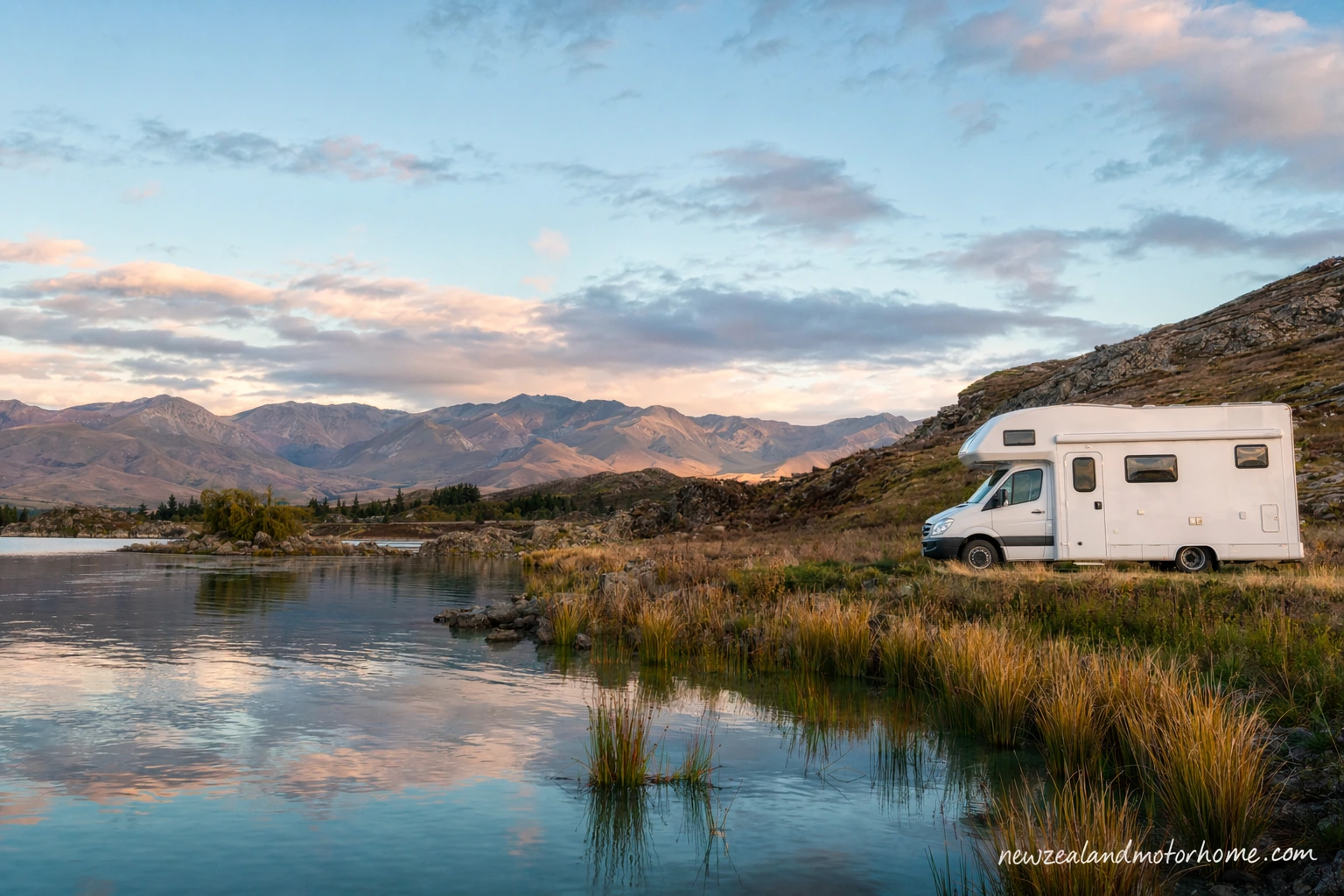
- Best overall: February to April
- Book early: Christmas, New Year and Easter
- Certified self-contained for freedom camping
- Powered sites useful in winter
- Allow short driving days on coastal roads
Southland rewards a slower van trip: long beaches, farming roads, big skies, the Catlins coast, Invercargill, Bluff, Riverton and the inland run towards Te Anau. The best time to visit southland nz is not just about sunshine; it is about wind, daylight, how wet your gear gets between stops, and whether the holiday parks and freedom camping areas fit the way you like to travel.
This guide is written for self-drive campervan and motorhome travellers. You will find season-by-season notes, Southland weather by month, campsite availability, dump station and fresh-water considerations, and road tips for taking a hired van through one of New Zealand’s cooler, wilder regions.
Best overall months for a Southland campervan trip
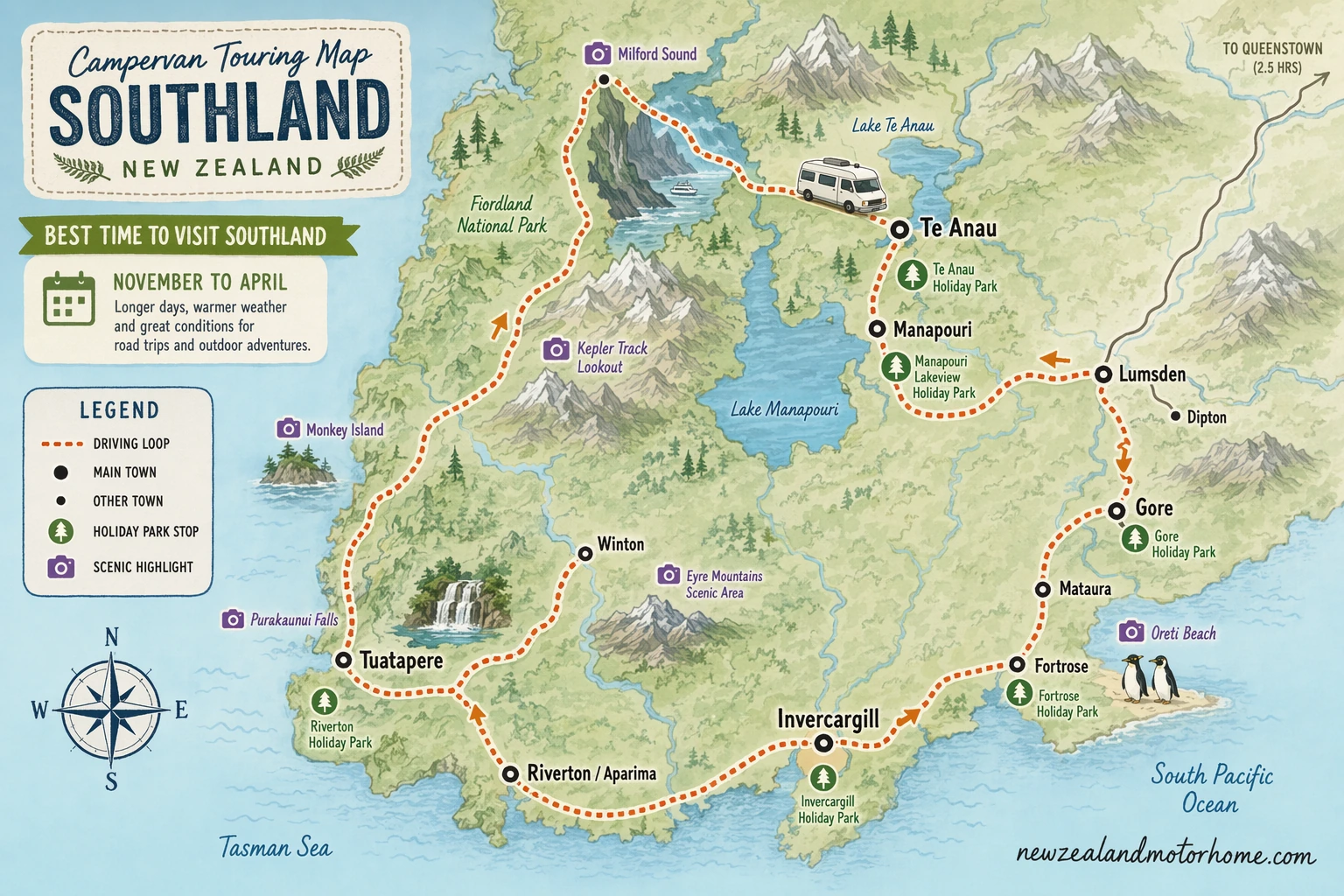
For most campervan travellers, late January to April is the easiest window. The days are still long, the strongest New Year campsite pressure has eased, and the coastal roads are usually more settled than in spring. March and April are particularly good if you like quieter holiday parks, fewer vans at popular coastal stops, and cooler sleeping temperatures without deep winter driving conditions.
December and early January can be excellent too, but you need to book powered sites in advance around Invercargill, Te Anau, Curio Bay, Riverton and anywhere near the Southern Scenic Route. If you are relying on freedom camping, check the current council maps before you park up; Southland’s rules are location-specific and usually require a certified self-contained vehicle.
- Best balance: February to April for daylight, road comfort and campsite space.
- Warmest feel: January and February, though wind can still make evenings cool.
- Quietest touring: May, June, late August and September, with more weather risk.
- Book ahead: Christmas, New Year, Easter and long weekends.
If you are trying to link Southland with Fiordland, the Catlins and Stewart Island parking at Bluff, it is worth sketching the route before you lock in overnight stops. You can talk to us if you want a practical sequence that matches your van size, travel pace and campsite style.
Southland weather by month: what it means for van travel
Southland has a cool maritime climate, so even summer can bring four-season travel habits: a rain jacket behind the driver’s seat, dry socks in the cab, and a plan B for exposed coastal overnights. The wind is often the thing visitors remember most, especially around Bluff, Oreti Beach, Slope Point and open farm country between towns.
When thinking about when to visit Southland, treat the monthly pattern as a guide rather than a promise. Weather systems move quickly, and a good motorhome day may be less about a blue sky than about having enough daylight to drive calmly, dump waste, fill fresh water and reach your overnight stop before dark.
- December to February: Long daylight and the warmest afternoons, but peak demand for powered sites and popular coastal camps.
- March to April: Cooler mornings, often calmer touring, good walking weather and easier holiday-park availability outside Easter.
- May to August: Short days, cold nights, wet ground, occasional frost or ice inland, and more need for powered sites if your van heating depends on mains power or battery capacity.
- September to November: Changeable spring weather, lambing season on rural roads, strong winds at times and improving daylight.
Pack the van so you can manage wet stops without turning the living area into a drying room. Use holiday-park laundries when you can, and keep an eye on battery use if you are staying unpowered for more than one night in cold or cloudy weather.
Summer: long days, busy sites and coastal freedom camping pressure
Summer is the most straightforward time for first-time Southland campervan travellers. You get long evenings for the drive between Riverton and Invercargill, a relaxed stop at Bluff, or a slow Catlins day with photo stops and beach walks. It is also the season when the best-known campsites fill first, particularly around Christmas, New Year and school holidays.
Powered sites are useful in summer if you want dependable fridge performance, easy device charging and a proper reset after a few freedom camping nights. Unpowered sites suit travellers with good solar, a certified self-contained van and a short freedom-camping plan rather than an open-ended one.
- Park early: Arrive at popular coastal overnight areas well before dinner, especially in January.
- Use town stops well: Invercargill, Gore, Winton and Te Anau are practical places to top up food, LPG and fresh water.
- Check freedom rules: Invercargill City, Southland District and Gore District each manage their own areas.
- Plan for wind: Avoid parking broadside to exposed coastal gusts if you have a high-roof campervan.
Summer roads are generally easy, but Southland’s rural highways still need patience. Expect slow farm vehicles, loose gravel at road edges, and sudden weather changes on coastal sections. If you are driving a larger motorhome, allow more space for turning into lookouts and beach access roads.
Autumn and spring: the sweet spots if you like room to breathe
Autumn is often the nicest compromise for Southland by campervan. March keeps enough daylight for relaxed driving, while April brings quieter towns and a more local feel at holiday parks. You are less likely to be squeezed for a powered site, and the cooler air makes short walks around the coast and wetlands more comfortable.
Spring is more unsettled, but it has its own appeal: green paddocks, fewer visitors and longer days returning after winter. The trade-off is wind, wet ground and the need to be flexible about exposed freedom camping. If a coastal stop looks gusty, it is usually better to move inland to a sheltered holiday park or designated overnight area than to tough it out beside the sea.
- Autumn van rhythm: Drive in the morning, walk in the afternoon, plug in every few nights to dry gear.
- Spring road note: Watch for stock movements, mud on rural roads and lambing-season caution near farms.
- Site availability: Easier than summer, except Easter and event weekends.
- Comfort tip: Choose powered sites after several grey days if your battery and heating are working hard.
These shoulder seasons are also good if you are combining the Catlins with Invercargill and Bluff. You can keep the route loose, use town dump stations and water points during business hours, and avoid rushing into camp after dark.
Winter driving and overnighting in a campervan
Winter in Southland can be beautiful, but it is not the easiest season for every hired van. Days are short, nights are cold, and inland roads around Gore, Lumsden, Winton and the approaches towards Te Anau can have frost or black ice. Coastal roads may be milder, but wind and rain can still make driving tiring in a high-sided motorhome.
If you travel in June, July or August, build the itinerary around shorter hops and more powered nights. Confirm your van’s heating system before you leave the depot: some heaters run on diesel or LPG, while others rely more heavily on mains power or battery capacity. Do not assume you can freedom camp comfortably for several winter nights without moving, charging and refilling.
- Road safety: Start later after frost, reduce speed on shaded corners, and check conditions before heading towards alpine or Fiordland roads.
- Van systems: Keep LPG topped up, monitor house battery levels and empty waste before remote nights.
- Overnight choice: Powered holiday parks are often worth it for heat, laundry and hot showers.
- Daylight: Plan dump station, supermarket and fuel stops before late afternoon.
Winter can suit experienced motorhome travellers who are comfortable changing plans. If the weather closes in, stay put, plug in, and wait for a clearer driving window rather than pushing across exposed rural roads in poor visibility.
Campsites, dump stations and route planning by season
Southland works best when you plan your services around towns rather than leaving them until the tank lights are flashing. Invercargill is the main reset point for supermarket supplies, fuel, LPG, fresh water and waste disposal. Gore, Winton, Lumsden and Te Anau are also useful service stops depending on your route, while smaller coastal settlements may have limited options and seasonal opening hours.
Holiday parks give you the easiest overnight structure: powered and unpowered sites, drinking-water fills, dump points or nearby facilities, laundries and staff who know the latest local road conditions. Freedom camping can be part of a good Southland trip, but only where permitted, and only if your campervan meets the current self-containment requirements.
- Before a remote coast night: Fill fresh water, empty grey and black water, and check your LPG level.
- Before booking a site: Check whether your motorhome length fits comfortably, especially if you are over 7 metres.
- Before taking a side road: Look for gravel, low branches, soft verges and limited turning space.
- Before a ferry day to Stewart Island: Park the van legally in Bluff and take valuables with you.
The best time to visit Southland NZ for campsite choice is outside the busiest summer holiday period. The best time for full services and the widest opening hours is usually summer into early autumn. Matching those two realities is the trick: travel just after peak season if you want a smoother, quieter van trip.
Common questions
What is the best month to visit Southland in a campervan?
March is a strong all-round choice: the roads are calmer than January, there is still useful daylight, and campsite availability is usually better. February and April are also excellent, depending on whether you prefer warmer afternoons or quieter overnight stops.
Can I freedom camp around Southland?
Yes, but only in permitted areas and usually only in a certified self-contained campervan. Check the current rules for Invercargill City, Southland District and Gore District before you park, because restrictions vary by location and can change.
Is winter too cold for a Southland motorhome trip?
Winter is manageable if you plan short driving days, use powered sites often and understand your van’s heating, LPG and battery setup. First-time campervan travellers may find late summer or autumn more comfortable, especially on exposed coastal routes.
Do I need to book holiday parks in Southland?
Book ahead for Christmas, New Year, Easter and popular summer weekends, especially if you need a powered site. Outside those periods you can often travel more flexibly, but it is still wise to ring or book online before arriving late in the day.
Where should I reset the van with water, LPG and dumping?
Invercargill is the most useful full-service stop, with other practical resets in larger towns such as Gore, Winton, Lumsden and Te Anau depending on your route. Do not rely on small coastal settlements for every service, particularly outside summer.
Are Southland roads suitable for larger motorhomes?
Main highways are generally suitable, but coastal and rural side roads can be narrow, windy, gravel-edged or short on turning space. If your motorhome is long or high, check access notes before committing to beach roads, lookouts or remote freedom camping areas.
Have a planner shape this for your dates
Send a short outline — your dates, party size, and the kind of trip you want. A planner replies with a vehicle recommendation, a paced route, and the realistic budget.