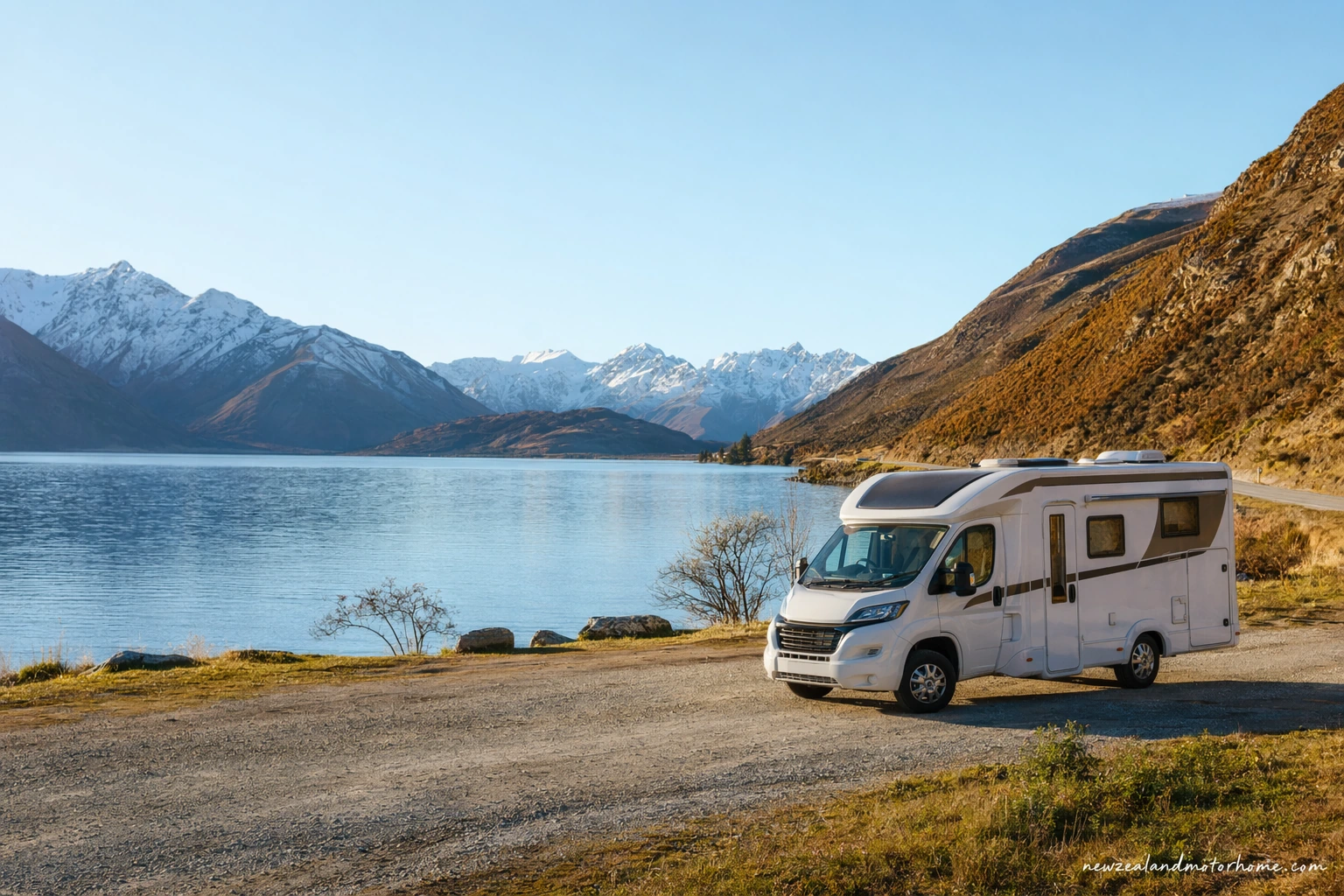
- Best overall: March-May
- Allow 3-5 nights
- Book powered sites in summer
- Winter: frost and ice risk
- Self-contained van rules apply
The Mackenzie is one of those regions where the season changes the whole feel of a motorhome trip. Lake Tekapo/Takapō can be blue and still in autumn, snow-edged in winter, busy and bright in summer, or whipped by spring nor'westers on the same route you drove calmly the day before.
For campervan travellers, the best time to visit Mackenzie NZ is not just about postcard weather. It is also about powered-site availability, frost on the windscreen, freedom camping rules, dump stations, fresh-water fills, and whether you are comfortable driving a larger van on open alpine-basin roads.
This guide sets out when to visit Mackenzie for easier driving, clearer skies, fewer crowds and better overnight options around Tekapo, Twizel, Lake Pukaki and Aoraki/Mount Cook.
The short answer: March to May is the sweet spot for most van trips
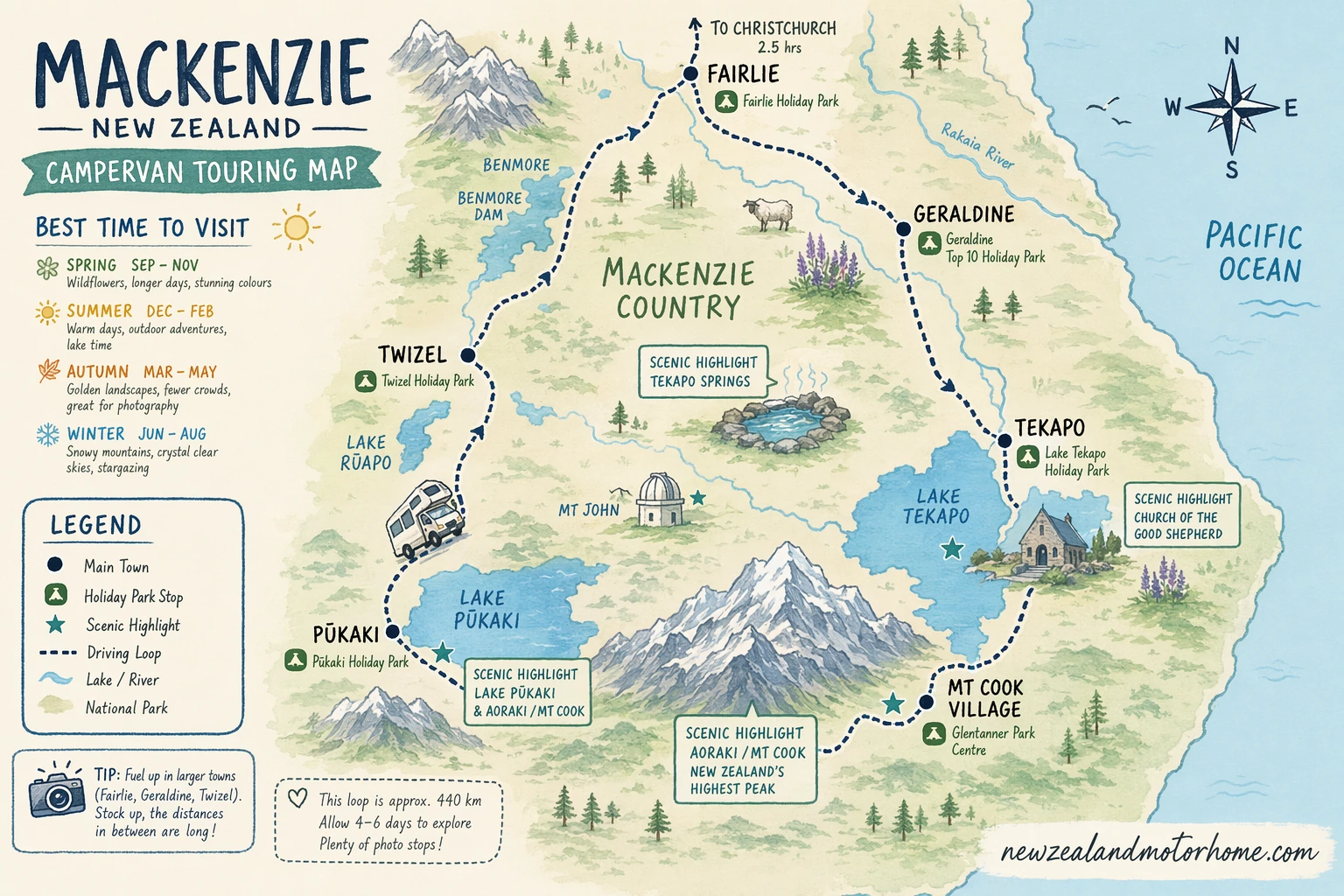
For many self-drive campervan travellers, March, April and early May are the easiest months in the Mackenzie. The school-holiday crush has eased, the days are often settled, and the nights are cool enough for proper dark-sky stargazing without the deeper winter bite.
Autumn also suits a slower motorhome loop: park up by Lake Tekapo/Takapō for a night, move through Lake Pukaki viewpoints, then spend time near Twizel or Aoraki/Mount Cook if the weather window is good. Powered sites are still useful in April and May because overnight temperatures can drop sharply, especially if your van heater relies on mains power or you want to conserve house battery.
- Best overall months: March to May for settled touring and fewer site pressures.
- Best for warm evenings: January and February, but book holiday-park sites early.
- Best for snow views: July to September, with winter-driving caution.
- Best for lupins: late November to December, with very busy roadside stops.
Mackenzie weather by month, from a motorhome point of view
Mackenzie weather by month is shaped by its inland, high-country setting. You can get hot, dry afternoons in summer, hard frosts in winter, and strong winds at almost any time of year. A calm morning at Lake Pukaki does not guarantee an easy afternoon on the road to Aoraki/Mount Cook.
Summer, from December to February, brings the longest daylight and warmest conditions, which is helpful if you are driving a larger motorhome and prefer to arrive before dark. It is also peak season: lakeside car parks, photo stops and powered sites around Tekapo and Twizel can fill quickly.
Winter, from June to August, is beautiful but less forgiving. Expect frosty starts, possible snow or ice, shorter daylight, and a stronger need for powered sites, LPG awareness and warm bedding. Spring is changeable, often windy, while autumn tends to be more settled and forgiving for first-time van travellers.
- December-February: warm days, long daylight, busy campsites and car parks.
- March-May: cooler nights, clearer air, good driving rhythm, fewer crowds.
- June-August: cold nights, frost, possible snow and ice, check road conditions daily.
- September-November: longer days, wind risk, mixed weather, quieter before late spring peaks.
Crowds, campsite availability and where to overnight
If your trip includes Tekapo/Takapō in summer, treat overnight planning seriously. The village is compact, and campervan spaces near the lake are not endless. Holiday parks and designated camping areas can book out over Christmas, New Year, public holidays and school holidays, especially powered sites for larger vans.
Twizel is often a practical base because it sits between Tekapo, Lake Pukaki, the Ōhau area and Aoraki/Mount Cook. It is handy for groceries, fuel, dump-station planning and spreading your nights out rather than trying to sleep at every scenic viewpoint. Around Aoraki/Mount Cook, options are more limited, so arrive with fresh water, empty waste tanks and enough LPG for cold nights.
Freedom camping in the Mackenzie is controlled and not something to improvise after sunset. Use only permitted locations, check current council and DOC rules, and make sure your van meets New Zealand self-containment certification requirements. Even if a lakefront pull-off looks tempting, it may be day-use only, too exposed for wind, or unsuitable for overnight stays.
Driving conditions: open basins, wind, ice and van size
The Mackenzie looks wide and simple on a map, but campervans feel the landscape differently. Long exposed straights can catch side winds, and gravel pull-offs near lakes can be rough, soft or tight for turning a longer motorhome. Before you pull in for a photo, check you can get out again without reversing into traffic or dragging a low rear over the edge.
In winter and early spring, leave room in the day for de-icing the windscreen, slower braking, and changing road conditions around Tekapo, Burkes Pass, the Lake Pukaki road and the approach to Aoraki/Mount Cook. Carry chains if your hire agreement or the conditions require them, and know how they fit before you need them in sleet.
- Fill fresh water and empty grey/black waste before heading into more remote overnight areas.
- Do not leave arrival at a campsite until after dark in winter; entrances and pitch markers can be hard to see.
- Use lower gears on descents and allow extra stopping distance in a loaded van.
- Watch height and length signs at smaller parking areas, especially around busy lake viewpoints.
What is open by season for campervan travellers
Most main roads through the Mackenzie operate year-round, but services can feel very different between January and July. In summer, you get longer opening hours, more visitor services and easier walking conditions, but also more pressure on dump stations, water points and campsite facilities. In winter, the place is quieter, yet you need to be more self-sufficient.
Holiday parks around Tekapo and Twizel are the most useful for laundry, hot showers, charging devices and topping up water, especially if you have had a few nights off-grid. DOC-style or basic camp areas can be wonderful in settled weather, but they may have fewer facilities, no powered sites and less shelter from wind.
If your dates are fixed and you want help balancing scenic nights with practical stops for LPG, dump stations and powered-site resets, the talk-to-us trip-planning step is a good place to sanity-check the route before you lock in bookings.
Choosing your season: what suits your travel style
Choose summer if you want long evenings, swimming edges, easy daylight driving and a more social campsite feel. It is the simplest season for first-time visitors, provided you book ahead and accept that popular car parks around Tekapo, Pukaki and Aoraki viewpoints will be busy.
Choose autumn if you value calmer roads, cooler sleeping temperatures and clearer skies for photography or stargazing. This is the season we would point many campervan travellers towards if they want the Mackenzie without feeling rushed.
Choose winter only if you are comfortable managing cold-weather van life: condensation, battery use, LPG levels, icy steps, frozen hoses and earlier sunsets. Choose spring if you are flexible, because it can be beautiful one day and gusty the next, and you may need to shift walking or overnight plans around the forecast.
Common questions
What is the best month to visit the Mackenzie by campervan?
April is a strong all-round choice: cooler nights, often settled weather, fewer crowds than summer, and good conditions for stargazing. March and early May are also excellent if you want a slower motorhome trip with less pressure on powered sites.
Can I freedom camp around Lake Tekapo or Lake Pukaki?
Only in places where overnight camping is specifically allowed, and your van must meet the required self-containment rules. Do not assume a scenic pull-off is legal for the night; check current Mackenzie District and DOC information before parking up.
Do I need a powered site in the Mackenzie?
In summer, an unpowered site may be fine if your house battery, fridge and solar setup are coping. In autumn and winter, powered sites are much more useful for heating, charging, drying gear and avoiding battery stress during cold nights.
Is winter safe for driving a campervan to Aoraki/Mount Cook?
It can be, but only if conditions are suitable and you are confident with cold-weather driving. Check forecasts and road updates daily, allow extra time, carry chains if required, and avoid pushing on in ice, snow or strong wind.
How many days should I allow for a Mackenzie motorhome trip?
Allow at least three nights if you want Tekapo, Lake Pukaki, Twizel and Aoraki/Mount Cook without constantly packing up. Four to five nights gives you a weather buffer, which matters in a region where one cloudy day can hide the mountains completely.
When is the Mackenzie busiest for campervans?
Late December through February is the busiest period, especially around Christmas, New Year and school holidays. Late November and December can also be crowded near lupin viewpoints, where parking a larger van takes patience.
Have a planner shape this for your dates
Send a short outline — your dates, party size, and the kind of trip you want. A planner replies with a vehicle recommendation, a paced route, and the realistic budget.