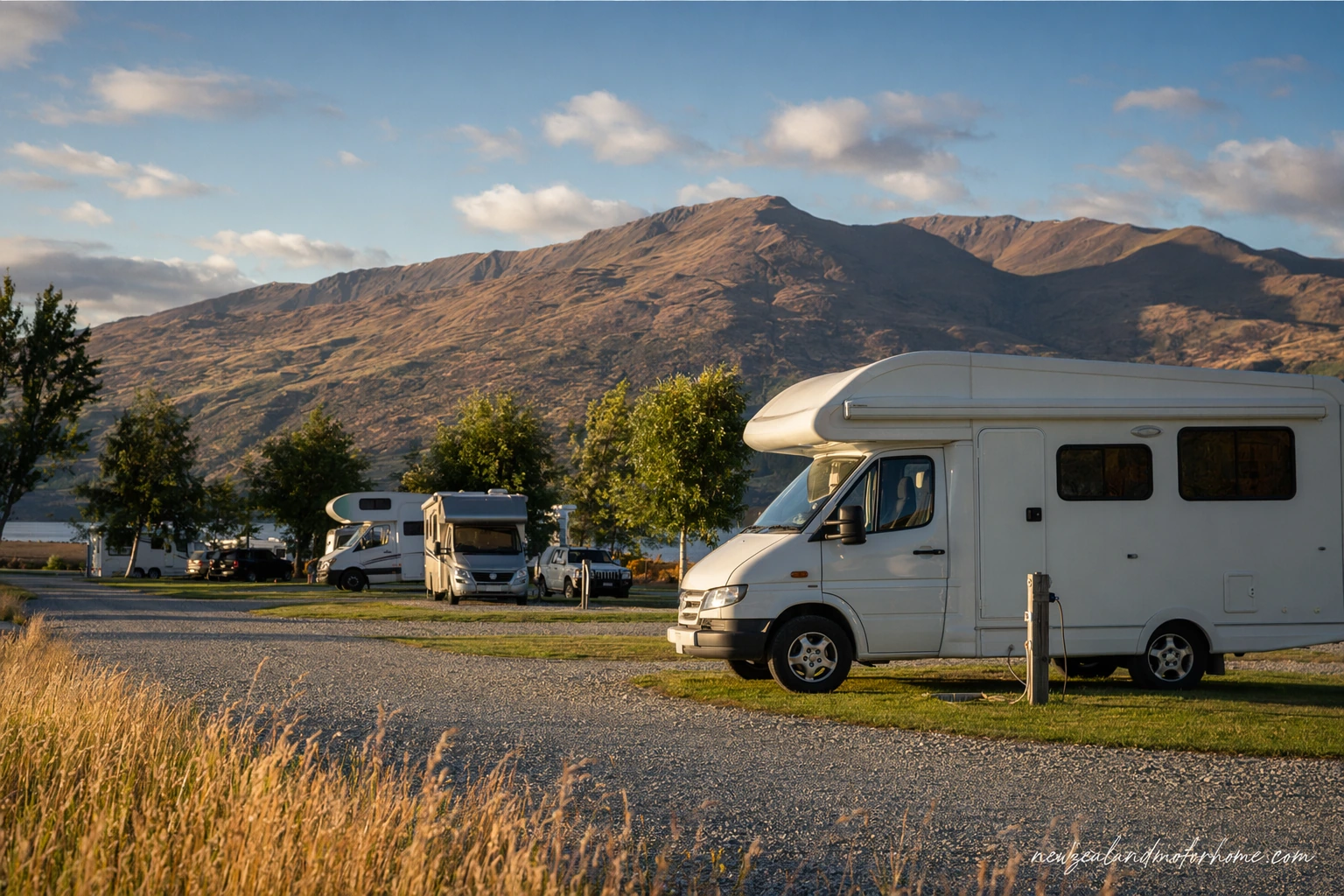
- Best bases: Tekapo, Twizel, Fairlie
- Powered sites book out in peak season
- Freedom camping only where permitted
- Plan dump and water before Aoraki road
- Wind and frost can affect larger vans
The Mackenzie Country is made for slow campervan travel: long lake edges, clear night skies, dry tussock country and big alpine views from the moment you roll over Burkes Pass. Choosing between holiday parks Mackenzie wide is less about finding one “best” park and more about picking the right overnight base for your van, your driving day and the weather.
This guide is written for self-drive motorhome travellers who need practical detail: where powered and unpowered sites tend to sit, how the main campsites Mackenzie travellers use fit together, what to know about dump stations and fresh-water fills, and how to avoid arriving at a lakeside car park that is day-use only.
How the Mackenzie holiday park spread works
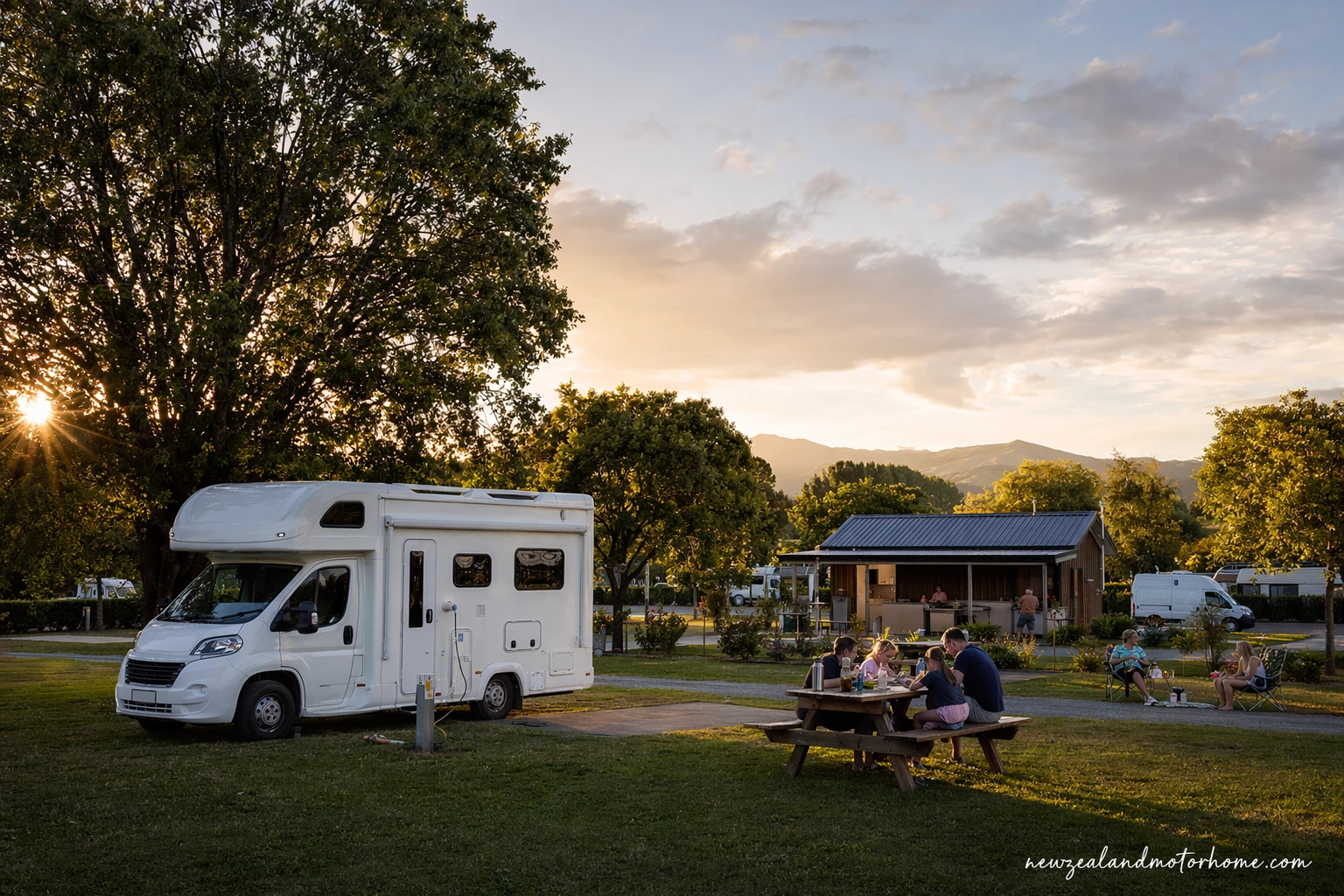
Holiday parks and campgrounds Mackenzie travellers use are clustered around the service towns rather than scattered evenly across the high country. Fairlie gives you a gentle first or last night on the eastern side, Lake Tekapo puts you close to the hot pools, lake walks and stargazing, Twizel is the most practical hub for supplies and Aoraki day trips, and the Glentanner/Aoraki side suits travellers who want to wake close to the mountains.
If you arrived here searching for a top 10 holiday park Mackenzie list, think in bases instead. A park that is perfect for a short wheelbase campervan in summer may not suit a larger motorhome needing a powered site, dump point and easy manoeuvring after dark.
- Fairlie: handy for fuel, groceries and a quieter night before crossing into or out of the basin.
- Lake Tekapo: popular, scenic and often busy; book powered sites ahead in peak holiday periods.
- Twizel: practical for longer stays, laundry, food top-ups and trips to Lake Pukaki or the canals.
- Aoraki / Glentanner side: best for mountain access, but plan services before you go in.
Lake Tekapo and Fairlie: easy first-night bases
Coming from Christchurch or Timaru, Fairlie is the calmer place to stop if you have had a late van pick-up, bought groceries on the way, or do not want to cross Burkes Pass tired. It is also useful in winter, when road conditions can change quickly between the foothills and Tekapo.
Lake Tekapo is the better-known overnight stop, with holiday park-style camping close to the lake, village paths and the main visitor activities. Powered sites Mackenzie visitors ask for most often are snapped up here first, especially around school holidays, long weekends and clear-sky stargazing periods.
- Arrive before dusk if you are in a longer motorhome; lakefront roads and park internal lanes can feel tighter when busy.
- Do not assume every lakeside gravel area allows overnighting; check signs and council freedom camping maps before putting the bed down.
- Use a proper holiday park night here if you need showers, laundry, a mains charge and a reliable fresh-water top-up.
Twizel, Lake Pukaki and the Aoraki approach
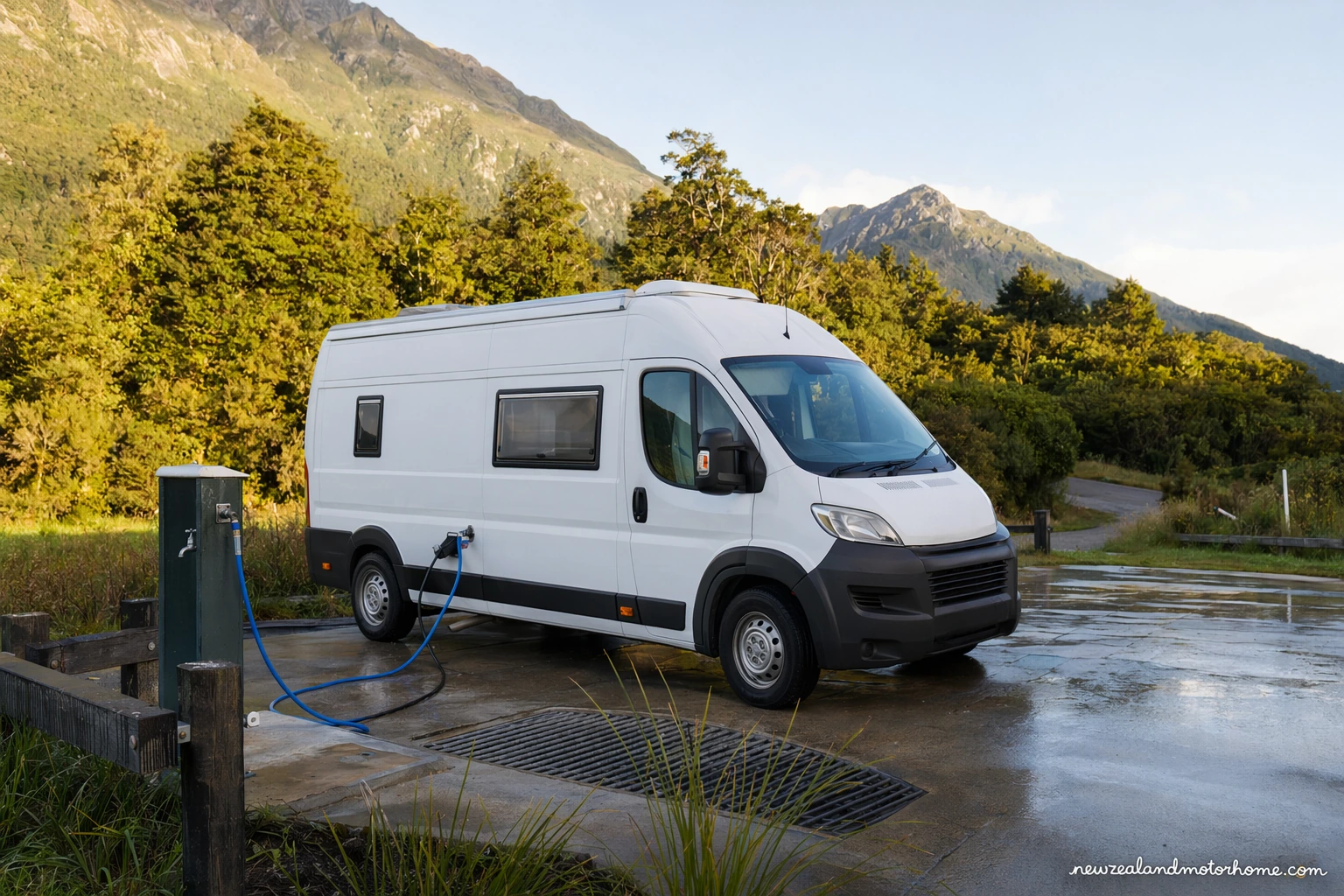
Twizel is the workhorse campervan base of the Mackenzie. It is not as postcard-immediate as Tekapo, but it makes van life easier: shorter supermarket runs, easier meal planning, more room to reposition, and good access to Lake Pukaki, the canals and the road to Aoraki/Mount Cook.
The drive along the western side of Lake Pukaki and up SH80 is one of the great motorhome roads in New Zealand, but it is also a dead-end valley. Once you leave Twizel, expect fewer services, more wind exposure and fewer options if you decide your van needs fuel, LPG, dumping or a powered night.
- For Aoraki day walks, base in Twizel or near the Aoraki road and start early so you are not looking for a large-vehicle park at peak time.
- Check your fuel and fresh water before heading towards Mount Cook Village; do not plan on full campervan servicing at the road end.
- In strong nor’west winds, keep both hands on the wheel around Lake Pukaki, especially in high-sided motorhomes.
Powered, unpowered and self-contained site choices
Most holiday parks Mackenzie travellers consider will offer a mix of powered sites, unpowered sites and cabins, but the site layout matters as much as the label. If your camper is tall, long or has a rear bike rack, ask for a site with straightforward access rather than a pretty corner that needs several tight reverses.
Unpowered sites can be perfectly comfortable in summer if your van has a good house battery, solar and efficient heating or cooling habits. In winter and shoulder seasons, a powered site is often worth planning around: frosty mornings, diesel heater use, wet gear and shorter daylight hours all put more load on the van.
- Powered site: best for winter, e-bike charging, laptop work, electric cooking appliances and longer stays.
- Unpowered site: good for self-contained vans in settled weather when you can manage battery and water carefully.
- Grass vs hardstand: hardstand is easier after rain or frost; grass can be more pleasant but may be softer for heavier motorhomes.
- Self-containment: carry proof of current certification and use the onboard toilet and grey-water tank where required.
Dump stations, fresh water, LPG and rubbish
The Mackenzie is not the place to run every tank to the edge. Distances are not huge, but services are concentrated in townships, and queues can build around check-out time at busy parks. Treat dump stations, fresh-water fills and LPG as part of your route planning, not as something to sort out once the warning light is already on.
Holiday parks often have guest facilities for waste and water, while public dump stations are generally found around the larger service towns such as Fairlie, Tekapo and Twizel. Availability and access can change, so check local signage and your current camping app before you commit to an overnight stop.
- Empty grey and black water before driving into more remote lake or mountain areas.
- Fill fresh water where it is clearly marked as potable; not every tap beside a toilet block is for drinking water.
- Dispose of rubbish in town or at your holiday park rather than leaving it beside full public bins at lake access points.
- If you are unsure how to pace services for your van size, mention your tank capacity when you talk to us about your route.
Freedom camping and driving between bases
Freedom camping rules in the Mackenzie are tightly managed because the lake edges and alpine viewpoints are under heavy pressure. As a practical rule, overnight only where signs, council information or DOC notices clearly allow it, and only if your vehicle meets the current self-containment requirements for that place.
Do not use a scenic lay-by as a substitute campsite just because other vans are parked there after sunset. Many beautiful stops around Tekapo, Pukaki and the canals are intended for day parking, boat access or short breaks, not overnight stays.
- Allow extra time on SH8 and SH80 for photo stops, wind, frost, roadworks and slower hill sections.
- Keep an eye on vehicle height when entering older service stations, tree-lined park entrances or sheltered site rows.
- In winter, check road conditions before Burkes Pass, the Tekapo-Twizel stretch and the Aoraki road; carry chains if your hire agreement and forecast require them.
- Plan each night before mid-afternoon in peak season so you are not hunting for legal parking in the dark.
Common questions
Do I need to book holiday parks in the Mackenzie ahead?
Yes for peak periods, especially Lake Tekapo and powered sites near school holidays, long weekends and clear-sky summer weeks. Outside peak times you may have more flexibility, but winter travellers still benefit from booking powered sites because weather can narrow your options.
Can I freedom camp beside Lake Tekapo or Lake Pukaki?
Only where overnight camping is clearly permitted and your campervan meets the self-containment rules for that site. Many lakefront areas are day-use only, so check current council or DOC information and obey signs on the ground.
Are there dump stations near the main Mackenzie campsites?
Dump station access is generally easiest around the main service towns such as Fairlie, Tekapo and Twizel, with some holiday parks offering facilities for guests. Do not leave dumping until you are already on the Aoraki road or at a remote lake access point.
Which base is best for visiting Aoraki/Mount Cook in a motorhome?
Twizel is the most practical all-round base for supplies, fuel and campervan services, while the Glentanner/Aoraki side puts you closer to the walking tracks. If your van is large, start early and expect busy car parks on fine days.
Are unpowered sites comfortable in the Mackenzie?
They can be in settled summer weather if your van is properly self-contained and your battery system is in good shape. In colder months, a powered site is more comfortable for heating, drying gear and keeping devices or e-bike batteries charged.
Have a planner shape this for your dates
Send a short outline — your dates, party size, and the kind of trip you want. A planner replies with a vehicle recommendation, a paced route, and the realistic budget.