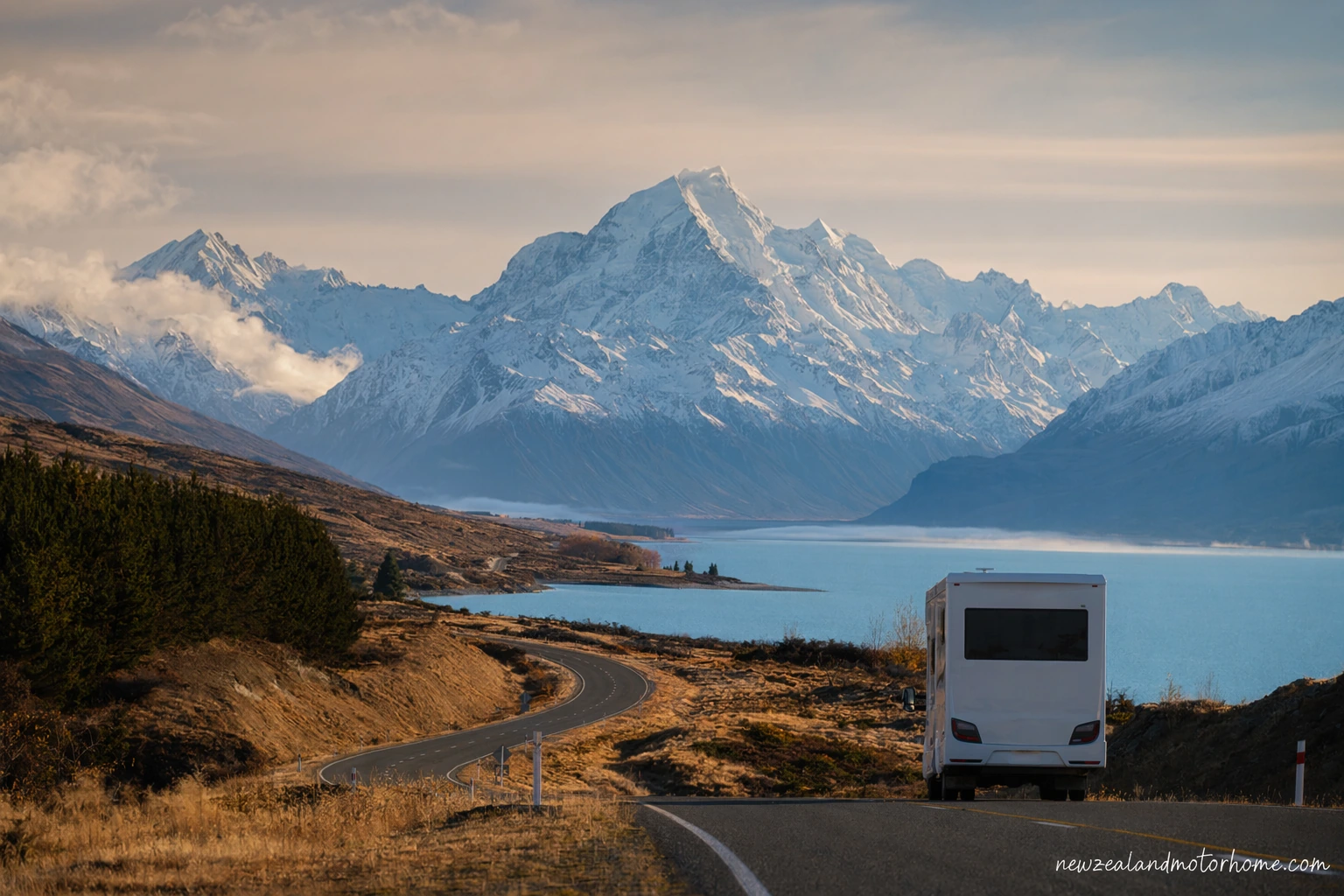
Campervan guide Mackenzie NZ for self-drive lake-and-alps travel
- Allow 3–5 nights
- Best bases: Tekapo, Twizel, Aoraki
- Powered sites useful in cold months
- Freedom camping is tightly controlled
- Watch wind on SH80 and Lake Pukaki
The Mackenzie is made for slow campervan travel: wide tawny basins, glacier-blue lakes, dark-sky nights and a horizon that keeps pulling you towards Aoraki / Mount Cook. It is also a place where your van choices matter — where you park, whether you need a powered site, how much fresh water you carry, and how early you arrive at the popular trailheads.
This campervan guide Mackenzie NZ page is written for travellers sleeping in their hired van, not just passing through in a car. You’ll find practical notes on Lake Tekapo / Takapō, Lake Pukaki, Twizel, Aoraki / Mount Cook, Burkes Pass and Omarama, with road tips, overnight options, dump stations, water and LPG planning, and the best things to do Mackenzie campervan travellers can fit around driving days.
How many days to allow in a Mackenzie campervan trip
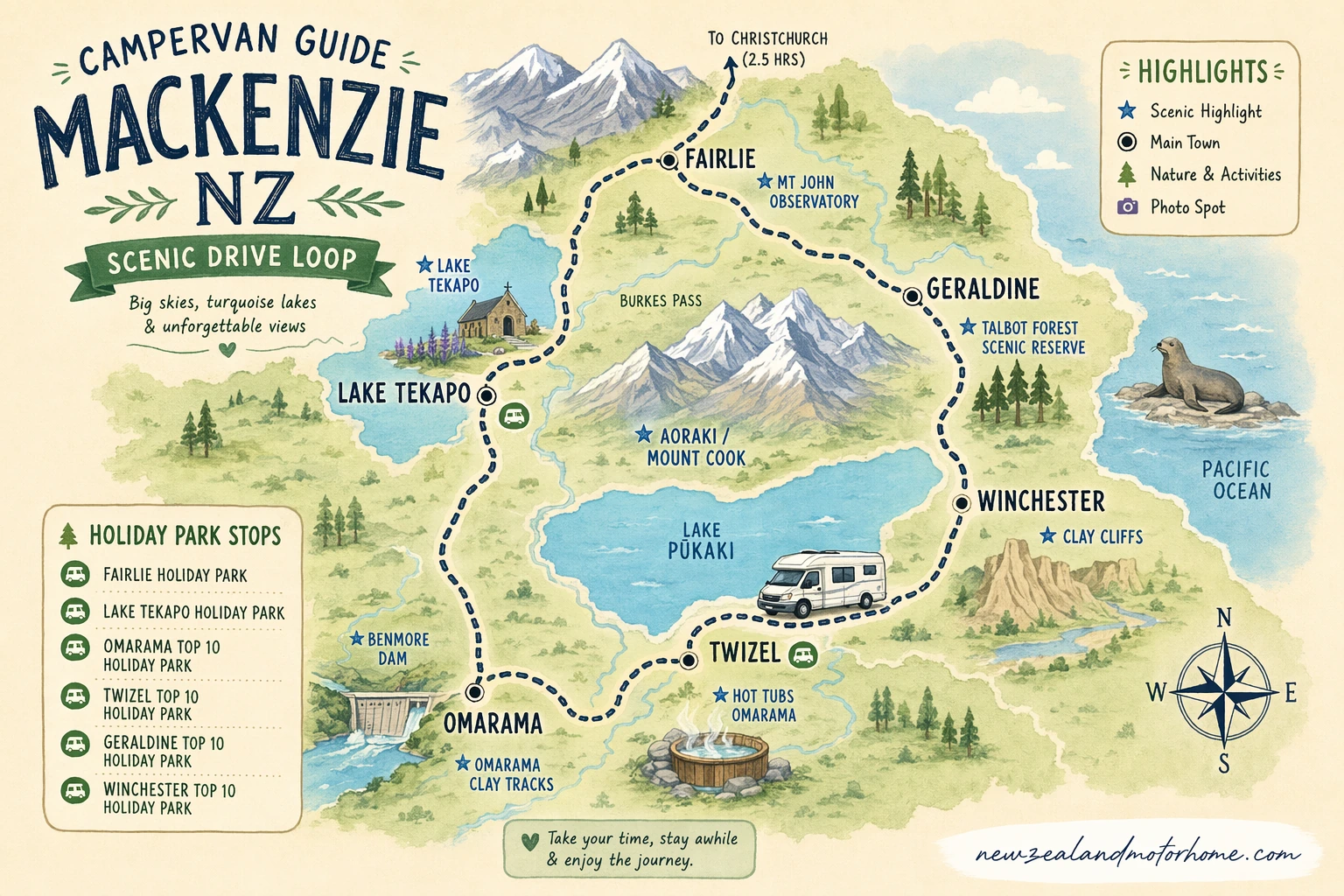
You can cross the Mackenzie in a day on SH8, but it would be a shame to treat it as a transit leg. A comfortable motorhome Mackenzie loop needs at least three nights: one around Lake Tekapo / Takapō, one around Twizel or Lake Pukaki, and one up the Aoraki / Mount Cook road if the weather is settled. Five nights lets you add a rest day for walking, cycling, laundry, recharging batteries and simply sitting outside the van watching the light move across the hills.
Distances look short on the map, but the region rewards early starts and unhurried afternoons. Tekapo to Twizel is an easy drive, while Twizel to Aoraki / Mount Cook Village is only around an hour in good conditions, yet you will want time for photo stops and wind-aware driving beside Lake Pukaki.
- 2 nights: best for a quick Tekapo and Pukaki taster, with one powered site to reset the van.
- 3–4 nights: a more relaxed campervan guide Mackenzie NZ pace, including Aoraki / Mount Cook and Twizel.
- 5+ nights: ideal if you want canals, cycling, stargazing, short walks and a weather buffer.
Best bases: Tekapo, Twizel, Pukaki and Aoraki / Mount Cook
Lake Tekapo / Takapō is the classic first stop, especially if you are arriving from Christchurch, Geraldine or Fairlie. Use signposted long-vehicle parking where available and avoid squeezing a tall van into tight lakefront car spaces during peak hours. The Church of the Good Shepherd area is busy, tightly managed and not an overnight stop; it is best visited early or later in the day, then move the van before settling into your campsite.
Twizel is the most practical service base in the Mackenzie. It has easier supermarket access, fuel, places to refill or organise LPG, and a choice of holiday park-style stays where powered sites are useful after a run of cold nights. It is also a sensible place to empty grey water and top up fresh water before driving the more exposed lake and mountain roads.
Lake Pukaki is more about daytime pull-offs than full-service camping. Choose large, sealed viewpoints where you can enter and exit without reversing into traffic, and leave bus bays clear. Up the Aoraki / Mount Cook road, White Horse Hill is the key van-friendly walking base for Hooker Valley Track and other short walks, but it is unpowered and can fill early in settled summer weather.
- Tekapo / Takapō: scenic lake base, busy parking, good for a first or final night.
- Twizel: practical resupply stop for food, fuel, water, dump station access and powered sites.
- Lake Pukaki: superb day stops; check signs carefully before assuming you can stay overnight.
- Aoraki / Mount Cook: dramatic overnight scenery, fewer services, cold nights even outside winter.
Overnight stays: powered, unpowered and freedom camping rules
The Mackenzie is not a place to wing it with freedom camping. Lakeshores, reserves and roadside areas are carefully controlled, and rules can change by season or site. If your hired campervan is certified self-contained, that does not mean you can park anywhere; it only means you may use designated self-contained areas where local rules allow it. Always check the current district signs on arrival, because fines and closures are common where camping pressure is high.
For a low-stress trip, mix paid powered sites with one or two simple unpowered nights. Powered sites are especially useful in spring, autumn and winter when heater use, damp gear and short daylight hours can drain batteries. Unpowered DOC-style or basic sites work well if your house battery is healthy, your fresh-water tank is topped up and you do not need long showers or laundry that night.
Book ahead for the main summer period, school holidays and clear-sky weekends around stargazing and walking. If you would like help shaping the route around site availability and your van size, the soft planning step is to use /talk-to-us/ before you lock in dates.
- Powered sites: best in Tekapo or Twizel when you need heat, charging, laundry and a proper reset.
- Unpowered sites: workable for self-contained vans with full water and good battery management.
- Freedom camping: only where explicitly permitted; lakefront signs matter more than old app comments.
- Late arrivals: avoid arriving after dark on unfamiliar gravel access roads or tightly parked campgrounds.
Road notes for motorhome drivers in the Mackenzie
Most main Mackenzie routes are sealed and suitable for campervans, including SH8 through Fairlie, Tekapo, Pukaki and Twizel, and SH80 to Aoraki / Mount Cook Village. The challenge is not usually road width; it is wind, glare, sudden weather changes and drivers slowing for views. Keep both hands on the wheel around Lake Pukaki when nor’west winds are running, and give yourself more braking room than you would in a car.
Winter and shoulder-season mornings can bring black ice, frost and snow on higher sections such as Burkes Pass and the approaches around Tekapo. If your hire agreement has snow-chain or alpine-road conditions, read them before you leave the depot, not when you are already in a car park with frozen fingers. In summer, heat shimmer and bright lake glare can be tiring, so plan shorter legs and use sunglasses.
- SH80 to Aoraki / Mount Cook: sealed, scenic and exposed; no major service stops between Pukaki and the village.
- Canal roads: some sections are narrow, exposed or gravel; check your rental agreement before exploring.
- Lake Alexandrina and back-country access: often narrower and slower; avoid after dark in a large motorhome.
- Length and height: watch for tight campground turns, overhanging trees and low branches at informal pull-offs.
Things to do Mackenzie campervan travellers can fit around the van
The best Mackenzie days are built around parking the van once, then walking, cycling or watching the sky change. In Tekapo, arrive early for easier parking, then leave the van settled while you walk the lakefront or climb towards the observatory area if conditions suit. At Lake Pukaki, use designated viewpoints rather than rough shoulders; the photos are better when you are not worrying about traffic rushing past your side mirror.
Aoraki / Mount Cook is the big-ticket walking area, but treat it as weather-led. The Hooker Valley Track starts from the White Horse Hill area, where parking for campervans can become tight by late morning. Go early, carry warm layers even in fine weather, and secure loose items inside the van before you leave — alpine gusts can turn a half-open cupboard into a mess.
Twizel works well for lower-key days: canal rides, short walks, café stops, grocery restocking and a powered-site night. It is also a good pause point if the mountains are clouded in; do your dump-station run, refill water, sort LPG if needed, and wait for a clearer window rather than forcing the Aoraki drive in poor visibility.
- Stargazing: choose a legal overnight site first, then step outside the van after quiet hours.
- Walking: Hooker Valley, lakefront tracks and short viewpoint walks suit most campervan itineraries.
- Cycling: canal and lakeside sections are easiest if your van has a secure bike rack and you plan parking ahead.
- Wet-weather reset: use Twizel or Tekapo for laundry, charging, groceries and a proper warm shower.
Dump stations, fresh water, LPG and van services
Plan services before you head into the quieter corners of the Mackenzie. Public dump stations and fresh-water points are generally found around service towns such as Fairlie, Tekapo and Twizel, while holiday parks often provide facilities for guests. Do not rely on remote lakeside toilets for campervan waste; grey water and cassette toilets must be emptied only at approved dump stations.
Fresh water disappears quickly in this region if you are showering after walks or washing dishes after windy lakeside picnics. Top up whenever you have a legitimate potable-water point, and keep a little reserve for the Aoraki / Mount Cook road, where services are limited. In colder months, check hoses and fittings in the morning, as frost can make a simple refill slower than expected.
LPG is easiest to sort in the larger settlements before you commit to unpowered nights. If your van uses gas for heating, hot water or cooking, check the bottle gauge before leaving Twizel or Tekapo rather than assuming you can fix it at the next scenic stop.
- Dump before remote nights: especially before Aoraki / Mount Cook or basic lake-area stays.
- Carry drinking water: not every tap at a recreation area is potable or suitable for tank filling.
- Watch battery use: cold nights, fans, charging devices and diesel heaters can drain systems faster.
- Leave no trace: use campground kitchens and dump points rather than washing or emptying at the lakeshore.
Common questions
Is the Mackenzie suitable for a first-time campervan driver?
Yes, if you take it slowly and stick mainly to SH8, SH80 and sealed campground access roads. The main issues are wind, ice in colder months, busy scenic pull-offs and judging the size of your van in tight parking areas.
Can I freedom camp beside Lake Tekapo or Lake Pukaki?
Only where current signs and local rules specifically allow it, and usually only if your campervan is certified self-contained. Do not assume a pretty lakeside pull-off is legal for overnighting; check the district rules and on-site signage before you settle in.
Do I need to book powered sites in the Mackenzie?
In summer, school holidays and clear-weather weekends, booking is strongly recommended around Tekapo, Twizel and Aoraki / Mount Cook. Powered sites are also worth planning in winter and shoulder seasons because heating, damp clothes and short days use more battery than many travellers expect.
Where should I empty the toilet cassette and grey water?
Use approved dump stations in service towns or facilities provided by your campground. Fairlie, Tekapo and Twizel are the logical places to plan your dump and water stops, but always check current locations before you drive.
Is the road to Aoraki / Mount Cook okay for a motorhome?
SH80 is sealed and commonly driven by campervans and motorhomes, but it is exposed to wind and weather. Fill fuel, water and food before leaving the Pukaki or Twizel area, and avoid rushing the drive if visibility is poor.
What is the best season for a Mackenzie campervan trip?
Late spring to autumn gives the easiest driving and longest daylight, while winter can be beautiful but colder and more restrictive. If travelling in winter, allow extra time, check road conditions, understand your hire company’s snow and chain rules, and favour powered overnight sites.
Have a planner shape this for your dates
Send a short outline — your dates, party size, and the kind of trip you want. A planner replies with a vehicle recommendation, a paced route, and the realistic budget.