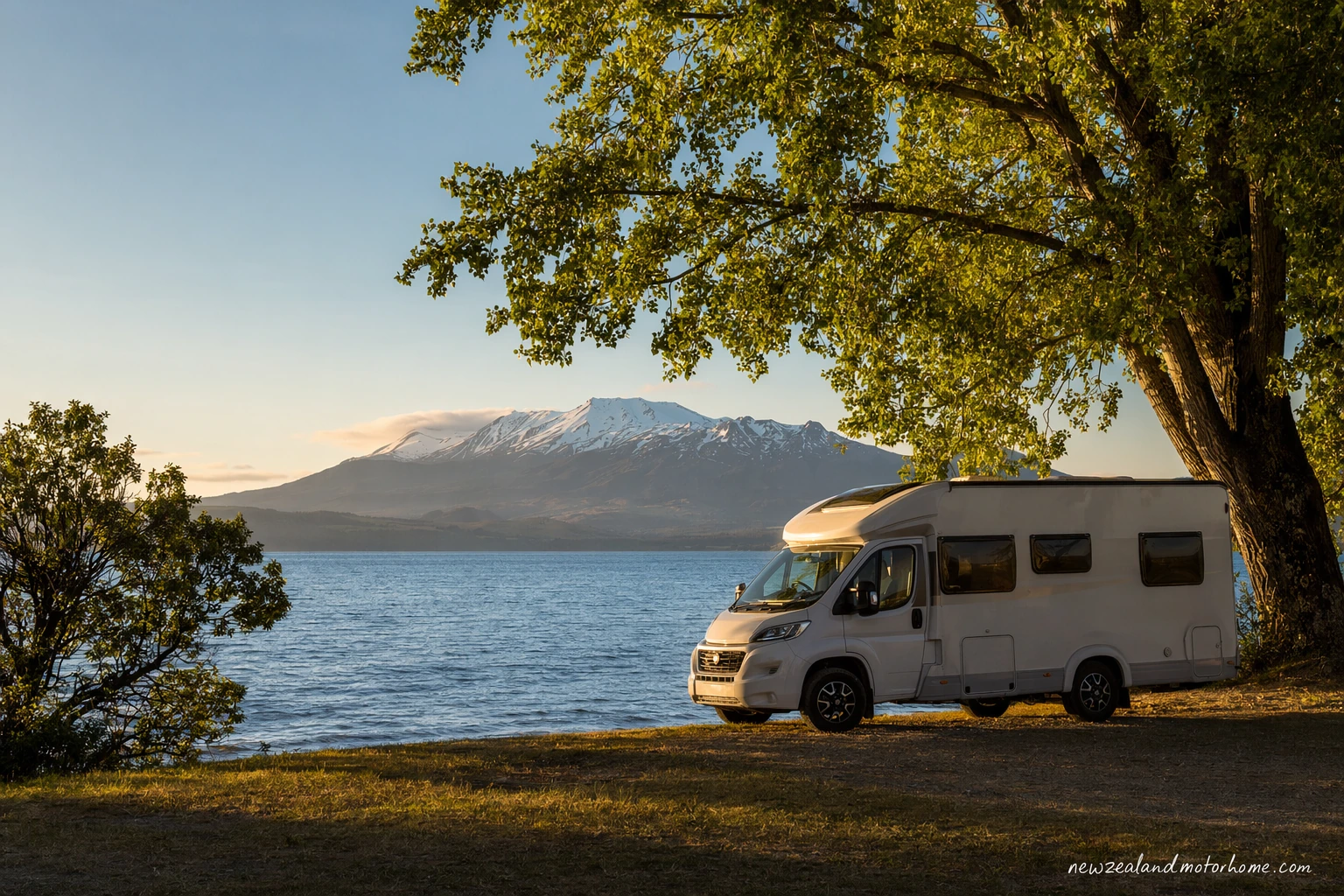
- Best months: Mar-May, Oct-early Dec
- Allow 2-3 nights
- Book powered sites in summer and winter
- Check Desert Road conditions in cold weather
- Self-contained only where freedom camping is allowed
The best time to visit Taupo NZ depends on whether you want warm lake days, quieter thermal walks, winter mountain views, or easy campsite choice. For campervan travellers, the season also changes the practical bits: how early to book a powered site, where you can park a longer van near the lakefront, and whether the Desert Road is likely to be icy at dawn.
This guide looks at Taupō through a self-drive lens: Taupo weather by month, school-holiday pressure, what tends to stay open, freedom camping rules, holiday-park availability, dump stations, fresh-water top-ups and the road conditions that matter when your bed is in the back.
Quick answer: the easiest campervan months for Taupō
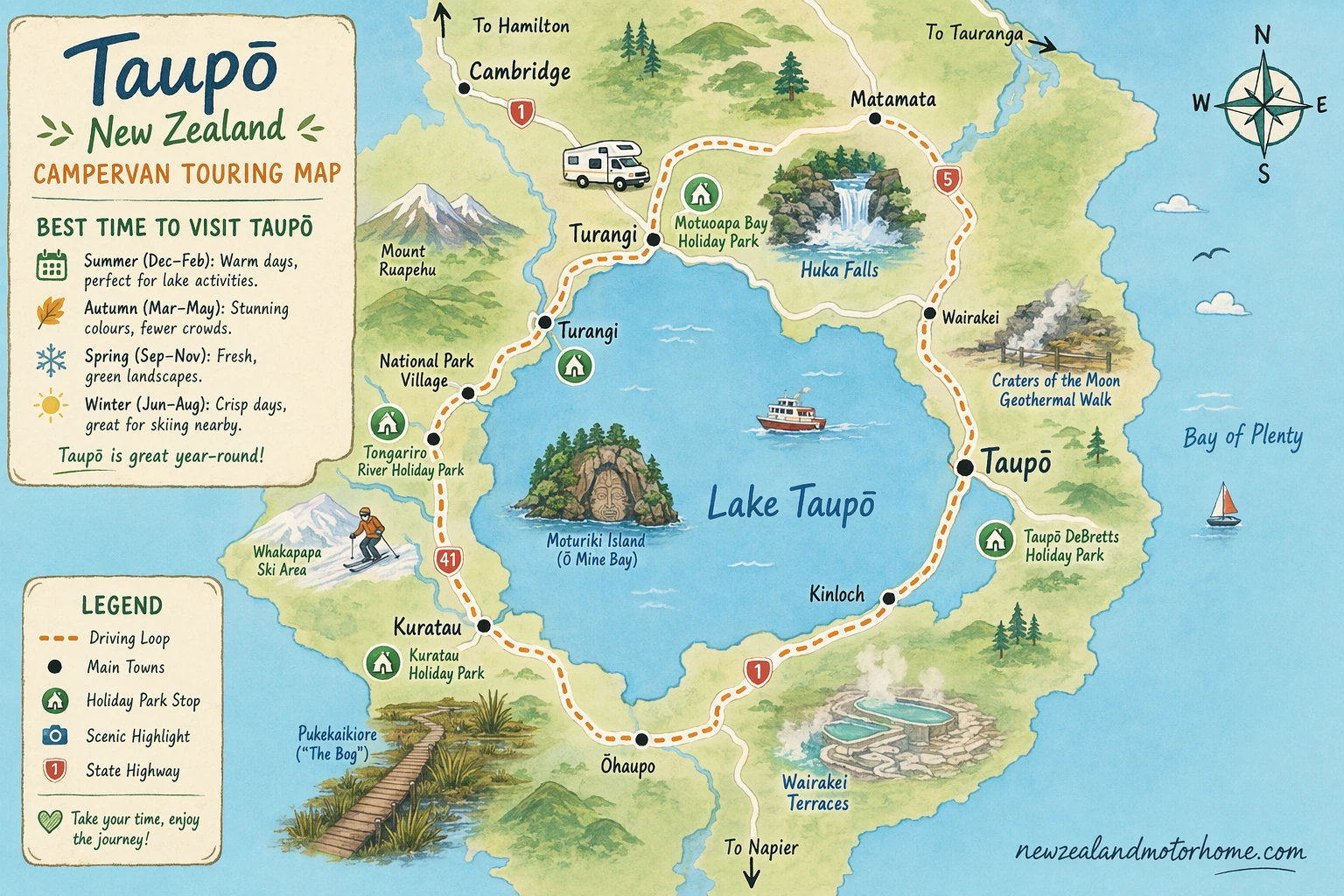
For most campervan trips, March to May and October to early December are the sweet spots. The lake is still settled enough for outdoor time, the main roads are generally straightforward, and you are not competing as hard for powered sites or lakeside pitches as you are in the Christmas and New Year rush.
January and February suit swimming, kayaking, biking and long evenings outside the van, but you need to plan overnight stops carefully. Winter, especially June to August, is quieter around town and beautiful on clear days, yet it brings frosty mornings, shorter daylight and more reason to choose a powered site with a good heater and drying space.
- Best overall: March, April, November and early December.
- Warmest lake season: January and February, with the busiest campgrounds.
- Quietest town feel: May, June and parts of August outside ski weekends.
- Best for mountain add-ons: July to September, if you are prepared for winter driving and site booking pressure near long weekends.
Taupo weather by month for van-based travel
Taupō sits high in the central North Island, so even sunny months can cool off quickly after dark. That matters in a motorhome: condensation builds faster, batteries work harder if you are off-grid, and an unpowered site that feels fine in February can feel much less comfortable in July.
As a broad guide, December to February brings the warmest days and the strongest holiday buzz. March and April are often calm and very campervan-friendly, with comfortable daytime exploring and cooler sleeping weather. May can be crisp and clear, while June to August brings the coldest mornings and the highest chance of frost or icy road warnings. September is changeable, and October to November usually becomes easier again for walking, biking and lakeside stops.
- Summer: pack shade, insect screens, togs and a plan for busy dump stations and water fills.
- Autumn: bring layers for cool evenings, but expect good touring conditions between Taupō, Tūrangi and Rotorua.
- Winter: prioritise powered sites, check LPG levels, and watch overnight temperatures if you rely on onboard water tanks.
- Spring: allow for wind and showers, but enjoy easier campsite choice before peak season.
Summer: warm lake days, tight campsites and busy parking
If you are asking when to visit Taupo for swimming and long outdoor evenings, summer is the obvious answer. Lakefront reserves, Huka Falls, Spa Thermal Park and the town centre can all be busy, especially around public holidays and school holidays. With a campervan, start earlier in the day and use signed day-parking areas rather than trying to squeeze into small town parks late in the afternoon.
Holiday parks and commercial campgrounds around Taupō and Acacia Bay can book out or have fewer powered sites available at short notice in peak weeks. If your hire van is larger than six metres, check access notes before choosing a tight site, and ask whether you are being allocated a grass or hardstand pitch. A level pitch is more than a comfort issue here; on a windy lake edge it also makes cooking, sleeping and fridge performance easier.
Freedom camping is not a fall-back for peak-season overflow. You need a certified self-contained vehicle and must follow current Taupō District signage and maps, as permitted areas can be limited and site-specific. Arrive with a proper overnight plan rather than assuming you can park beside the lake wherever the view is good.
Autumn, winter and spring: quieter roads, colder nights
Autumn is one of the best times to tour Taupō by motorhome. The days are usually comfortable for walking the Waikato River trails, cycling sections of the lake trails, or stopping at viewpoints without the summer parking scramble. Nights cool down, so a powered site can be worth it even if your van is fully self-contained.
Winter brings a different rhythm. Town services continue, cafés and supermarkets are open, and Taupō works well as a base if the weather is clear. The catch is driving: the Desert Road section of State Highway 1 can close or carry ice warnings, and the Napier-Taupō road can be exposed in rough weather. In a high-sided campervan, take wind warnings seriously, avoid predawn departures after a hard frost, and leave extra following distance on shaded bends.
Spring is changeable but rewarding. You may get sun, wind and rain in the same day, so keep your route flexible and avoid loading the itinerary with long back-to-back drives. If you want help matching travel dates with campsite style, road comfort and how many nights to allow, you can talk to us before locking in the trip.
Overnight stops, services and freedom camping by season
Taupō is well set up for campervans, but the best approach changes by month. In summer, book your first and last Taupō nights early, especially if you need power for medical gear, e-bikes, heating or reliable device charging. In winter, look for sites with good amenities, sheltered parking and easy access to LPG and groceries so you are not doing chores in sleet or darkness.
Dump stations, potable water and LPG are available in the wider Taupō area, with more choice in Taupō township than at smaller lakeside settlements. Build these stops into your day before heading to a remote overnight, and never leave grey water until the tank is nearly full if you are travelling over a holiday weekend. Queues at dump points are most common on peak check-out mornings.
- Powered sites: useful in winter and during wet spells for heating, battery recovery and drying gear.
- Unpowered sites: fine in settled months if your battery, solar and LPG set-up match your usage.
- Freedom camping: only where allowed, in a certified self-contained van, and always obey local signs.
- Longer vans: check site length, turning space and whether lakefront parking has low branches or tight exits.
How long to allow and how Taupō fits into a motorhome route
Two nights is the practical minimum for Taupō in a campervan: one arrival day, one full day for the lake, river, thermal areas or bike trails, and a calmer departure morning for water, waste and groceries. Three nights is better if you want to include Tūrangi, the southern lake bays, Orakei Korako, or a weather buffer before crossing the central plateau.
Taupō works well between Rotorua and Tongariro National Park, or as a pause between Auckland and Wellington. If you are driving a larger motorhome, avoid treating it as a quick lunch stop only; the town centre can feel tight at busy times, and attractions such as Huka Falls are much easier when you arrive outside the midday rush. Plan your parking first, then explore on foot where you can.
In winter or shoulder seasons, keep an eye on road updates before committing to the Desert Road or the Napier-Taupō route. A flexible overnight in Taupō is often better than pushing on late, especially when you still need to empty the toilet cassette, fill fresh water and find a level pitch before dark.
Common questions
What is the best month to visit Taupō in a campervan?
March or April is often the easiest choice: warm enough for outdoor time, cooler for sleeping, and less crowded than January. November is also excellent if you want spring conditions before the main holiday rush.
Do I need to book Taupō campsites in advance?
Yes for Christmas, New Year, long weekends and school holidays, especially if you need a powered site. Outside peak periods you may have more flexibility, but booking ahead still helps if your motorhome is long or you want a level hardstand.
Can I freedom camp beside Lake Taupō?
Only in places where freedom camping is currently permitted, and only if your vehicle meets self-containment requirements. Check Taupō District signage and maps on the day, because many attractive lakefront areas are day-use only or have specific restrictions.
Is winter a bad time to drive a campervan to Taupō?
Not necessarily, but it needs more care. Expect frosty mornings, possible ice warnings, and occasional closures on exposed routes such as the Desert Road; choose powered sites and avoid leaving before roads have warmed if conditions are marginal.
Where should I refill water and empty waste around Taupō?
Use official dump stations and potable water points in Taupō or nearby service towns rather than relying on small lakeside settlements. In busy summer weeks, do these chores earlier in the day and before your tanks are urgent.
How many nights should a campervan trip include in Taupō?
Allow at least two nights, and three if you want a relaxed full day plus a buffer for weather or road conditions. Taupō is also a good servicing stop between Rotorua, Tongariro, Hawke's Bay and the lower North Island.
Have a planner shape this for your dates
Send a short outline — your dates, party size, and the kind of trip you want. A planner replies with a vehicle recommendation, a paced route, and the realistic budget.