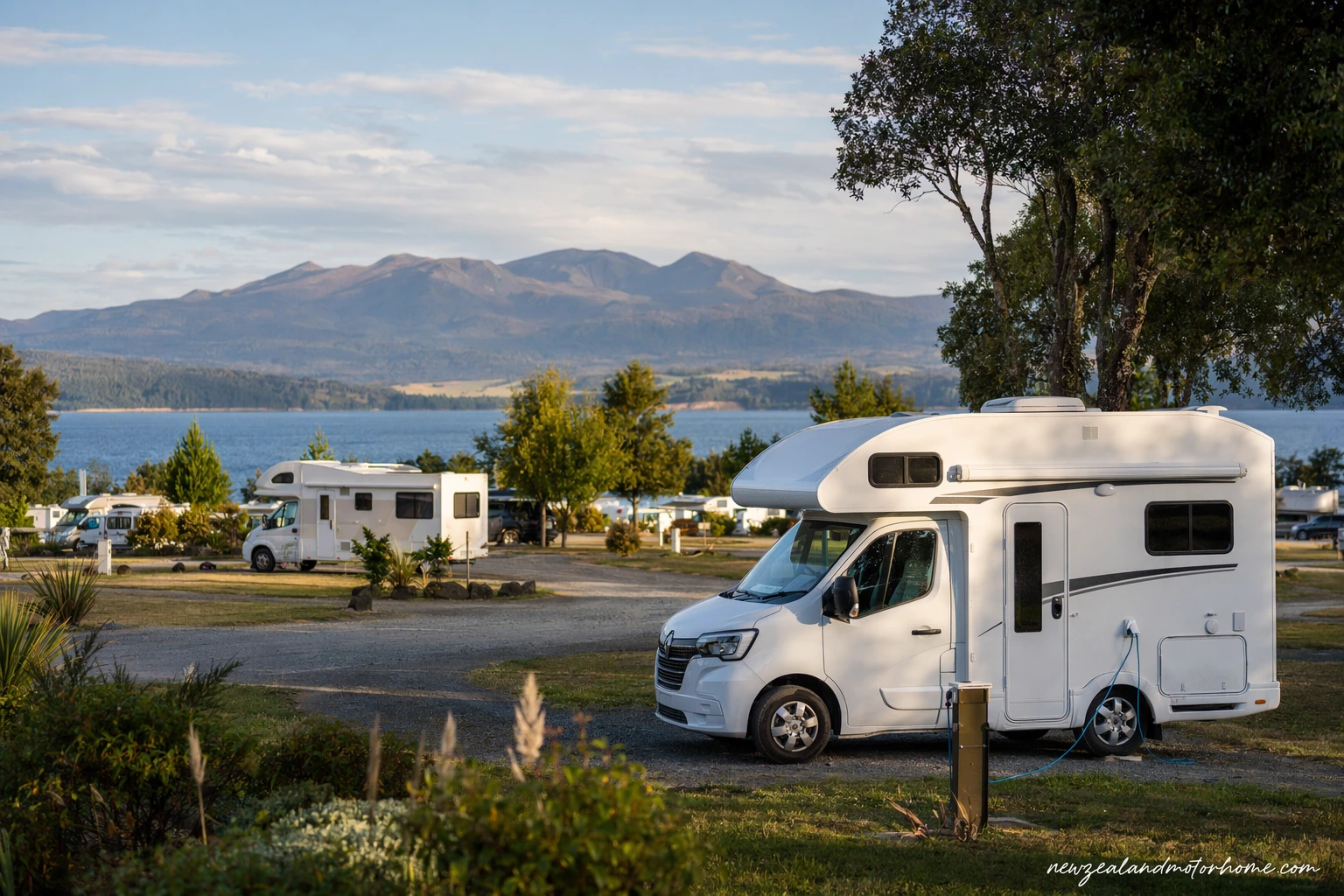
- Best with 2–3 nights
- Powered and unpowered sites
- Self-containment rules apply
- Large vans: check site length
- Town, bay and southern-lake bases
Taupō is one of the easiest North Island regions to travel by campervan: lake-edge evenings, geothermal steam on the horizon, supermarkets and fuel close by, and enough holiday parks to let you choose between town convenience and quieter bays. For a self-drive motorhome trip, the trick is matching your base to the way you actually use the van — whether you need a powered site every night, a dump station before the next leg, or a simple unpowered patch close to the water.
This guide looks at holiday parks Taupo-wide rather than ranking one winner. You will find the main campervan areas, what each base unlocks, how freedom camping rules affect overnight stops, and the practical bits that matter once the sliding door is shut: fresh water, LPG, road access, site size, and where to park without making the day harder than it needs to be.
How Taupō’s holiday park areas spread around the lake
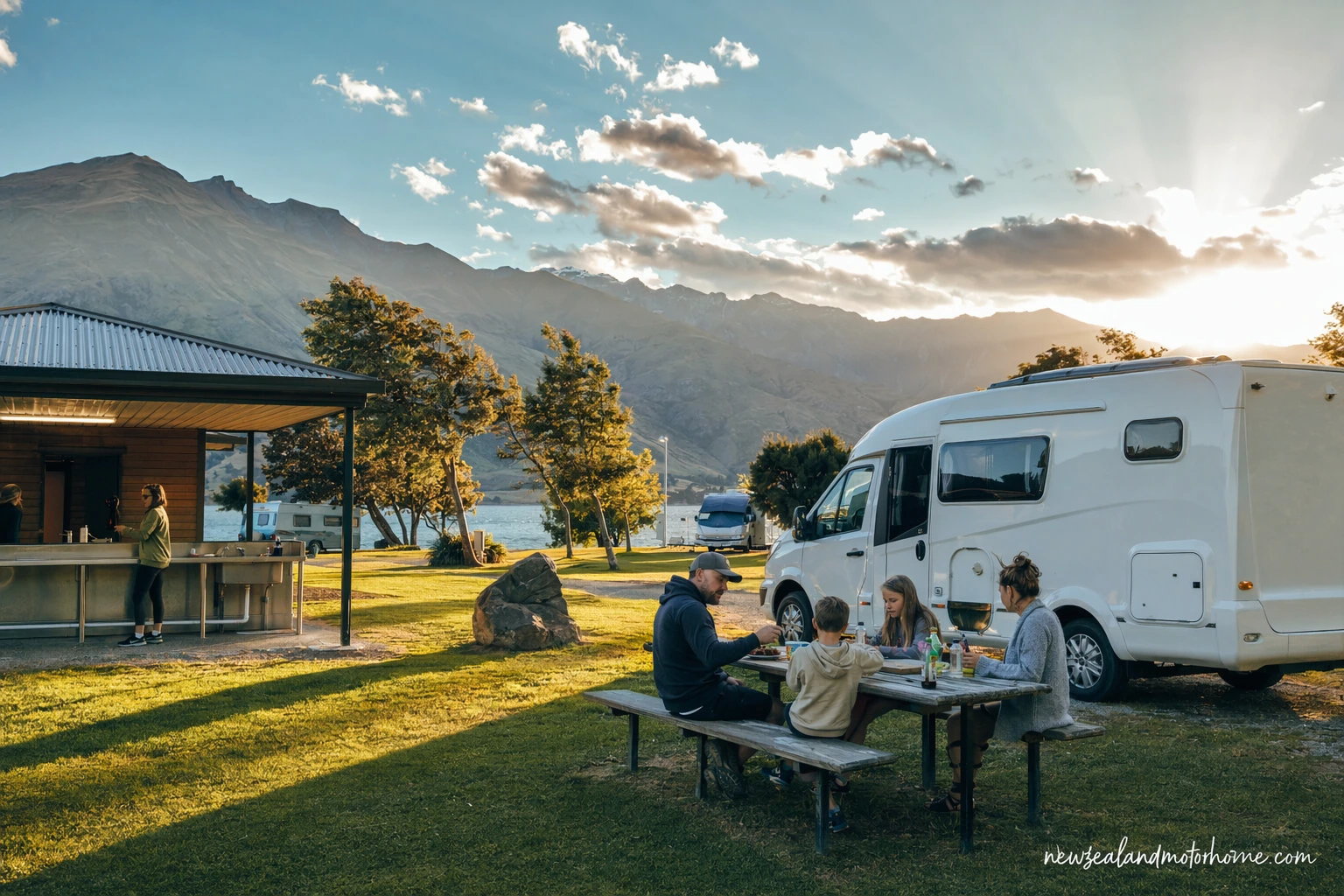
Most campgrounds Taupo travellers use sit in or near Taupō township, along the lakefront, around Acacia Bay, at Kinloch, and further south towards Tūrangi and Tokaanu. The right base depends less on a generic top 10 holiday park Taupo list and more on what you want within a short drive of the van each morning.
Taupō township suits first nights, food restocks, laundry, fuel and short hops to the lakefront. Acacia Bay and the western side feel more tucked away but still close enough for dinner supplies. Kinloch is a good call for a quieter lake village feel and easy access to the Great Lake Trail area. Tūrangi and Tokaanu put you closer to the southern lake, hot pools, fishing access, and the Tongariro National Park approach.
- Taupō town: best for serviced parks, powered sites Taupo visitors can book easily, dump station access and wet-weather options.
- Acacia Bay and western bays: good for lake views, calmer evenings and short scenic drives in a smaller campervan.
- Kinloch: handy for bikes, walking tracks and a slower village pace, with less need to cross town.
- Tūrangi and Tokaanu: practical for heading towards Tongariro, fishing rivers, hot pools and southbound touring.
Powered, unpowered and self-contained sites
Many campsites Taupo-wide cater well for campervans, but site types vary. If you are running a fridge, heater, induction cooking gear or charging e-bikes, book a powered site rather than assuming you can rely on your house battery for several cloudy lake days. Unpowered sites can work beautifully in summer if your van is self-contained, solar-equipped and you are not parked under heavy shade.
Ask about site length before you book if you are in a larger motorhome. Some lake-edge or older parks have tighter internal lanes, trees, low branches or sloping grass where a long rear overhang can be annoying. If you are towing, travelling with a high-roof van, or need room for an awning, say so upfront.
- Powered sites: best for winter stays, longer stops, dehumidifying the van and reliable device charging.
- Unpowered sites: useful for flexible one-night stops if your certified self-contained setup is genuinely independent.
- Hardstand sites: easier after rain and better for heavier motorhomes than soft grass.
- Drive-on orientation: check whether the site suits your door side, awning and lake or sun angle.
If you are choosing between several holiday parks and want the route to fit your van size and pace, our talk-to-us planning step can help you line up overnights without doubling back around the lake.
Dump stations, water fills, LPG and town chores
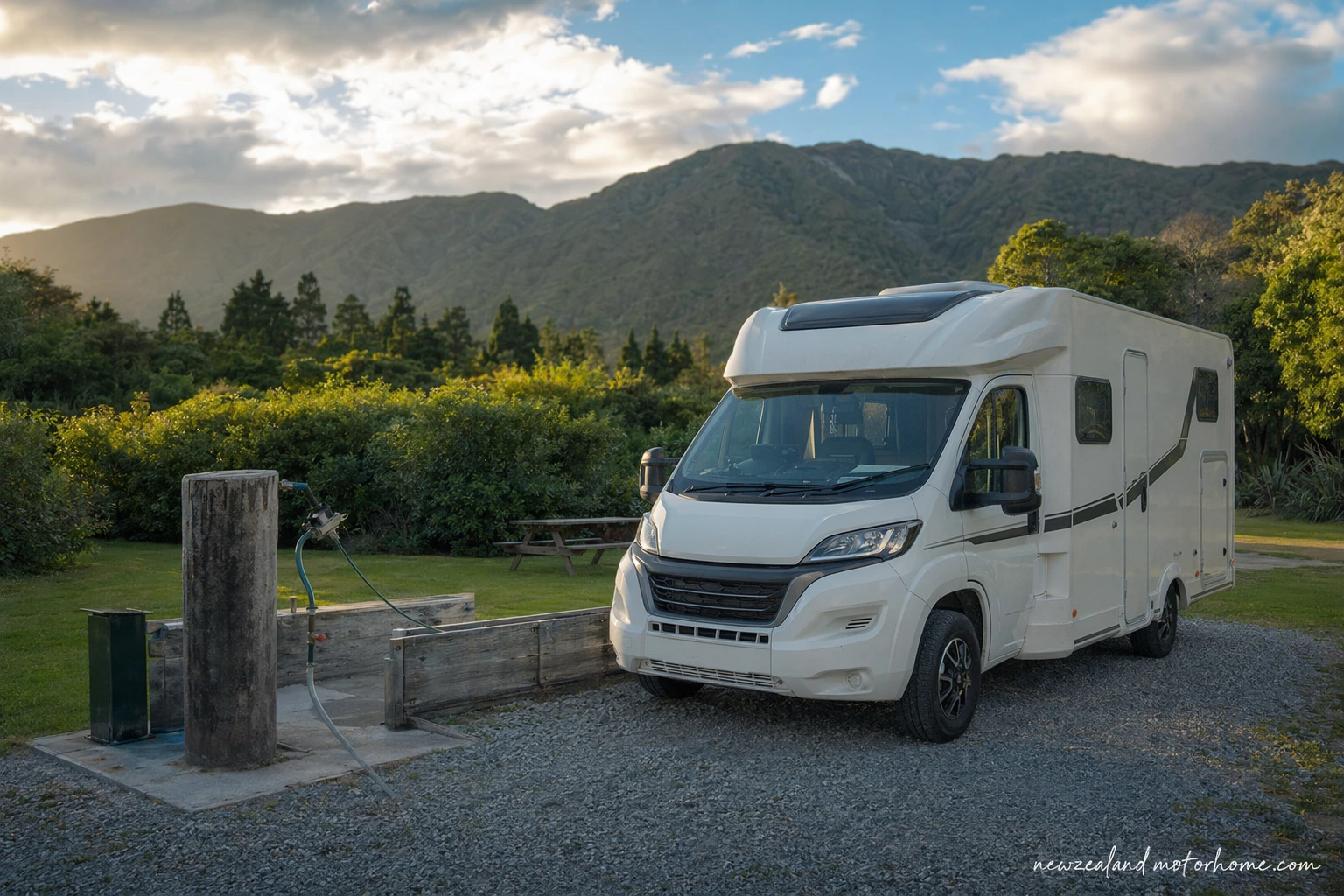
Taupō township is the practical reset point for a campervan trip. Plan to arrive with time for groceries, fuel, fresh-water top-ups and a grey-water or toilet cassette empty before you settle in for the night. Many full-service holiday parks have guest dump points and water taps, while public dump station options should be checked against current council or motorhome travel apps before you rely on them.
LPG bottle fills or swaps are generally easiest around Taupō and Tūrangi rather than in smaller lakeside settlements. Do not run the bottle right down before a cold night near the lake — heating and hot water use more than many first-time hirers expect. If your hire van uses diesel heating, still keep an eye on your fuel level before heading to quieter bays.
- Empty the toilet cassette before remote walks or two-night unpowered stays.
- Use potable water taps only for drinking-water fills, not lake or wash-down taps.
- Carry a hose fitting and keep your fresh-water hose separate from any waste gear.
- Top up fuel before driving the western lake roads or heading south to alpine areas.
Freedom camping around Taupō: what to check before you park overnight
Freedom camping around Taupō is controlled by local rules and can change by area, season and signage. A certified self-contained van is normally the starting point, but certification alone does not mean you can sleep anywhere beside the lake. Look for current council maps, on-site signs, time limits and any vehicle-only bay markings before committing to an overnight stop.
Holiday parks remain the simplest option when you need showers, laundry, a safe place to leave the van while walking into town, or a guaranteed legal overnight. Freedom camping can work for short, responsible stops, but lakefront areas are closely watched because pressure is high in summer and during events.
- Do not camp where signage says no overnight parking, even if other vans are there.
- Keep awnings, chairs and cooking gear off public car parks unless camping-style use is clearly allowed.
- Arrive early enough to read the signs in daylight and move on if the bay is full.
- Use holiday parks between freedom camping nights for dumping, water and battery recovery.
Driving between Taupō bases in a campervan
Distances around the region look small on a map, but campervan travel is slower once you factor in town traffic, lake photo stops, roadworks and finding a park that suits your vehicle height and length. Taupō town is straightforward in most vans, though lakefront parking can fill quickly on sunny weekends, school holidays and event days.
The western side towards Kinloch and the bays has more winding sections, narrower shoulders and scenic pull-offs that are not always suitable for a long motorhome. Use proper lay-bys rather than squeezing onto grass verges, and avoid committing down small lakeside roads unless you know there is a turning area. South towards Tūrangi, State Highway 1 is the main run, but weather can change quickly as you get closer to alpine country.
- Allow extra time if your motorhome is over 7 metres or you are new to left-side rural driving.
- Check bridge, tree and car park height clearances before turning into older picnic areas.
- Use lower gears on descents rather than riding the brakes in a heavy van.
- Secure drawers, the fridge latch and loose bench items before leaving a holiday park site.
What each base unlocks once the van is parked
One of the pleasures of choosing holiday parks Taupo-style is being able to park the van and keep the day simple. From a town or lakefront base you can walk for coffee, swim from the shore in settled weather, visit geothermal attractions, or take a lake cruise without moving the motorhome between every activity. That is especially useful if you have a large vehicle and do not want to hunt for daytime parking twice a day.
Kinloch is better when you want bikes, lake trails and quiet evenings, while Tūrangi and Tokaanu suit travellers building in a Tongariro day, river walks or a soak after driving. If you are linking Rotorua, Taupō and Hawke’s Bay, a township park can be the most efficient one-night stop; if Taupō is your breather in the middle of a longer hire, choose somewhere you can stay two nights and properly plug in.
- One night: stay near Taupō town for fuel, dump station access and an easy departure.
- Two nights: pick a powered site and plan one low-driving lake day.
- Three nights or more: split town convenience with a quieter bay or southern lake base.
Common questions
Do Taupō holiday parks usually have powered sites for campervans?
Yes, many holiday parks in and around Taupō offer powered campervan sites, though availability can tighten during summer, long weekends and event periods. Book ahead if you need power for heating, e-bike charging or medical equipment.
Can I freedom camp beside Lake Taupō in a self-contained motorhome?
Only in places where current local rules and signs allow it. A self-containment certificate helps, but it is not a blanket permission to sleep anywhere along the lakefront, so check council guidance and on-site signage before you set up for the night.
Where is the best Taupō base for a large motorhome?
Taupō township or a full-service park with clearly marked larger sites is usually easiest for bigger motorhomes. Ask about site length, turning space, hardstand availability and tree clearance before booking, especially if your vehicle is over 7 metres.
Should I stay in Taupō town or Tūrangi with a campervan?
Choose Taupō town for lakefront walks, supplies, fuel, dump station options and central sightseeing. Choose Tūrangi or Tokaanu if you are heading towards Tongariro, want a quieter southern-lake base, or plan to spend more time around rivers and hot pools.
Are unpowered campsites around Taupō suitable in winter?
They can be, but winter nights near the lake are cold and damp. A powered site is more comfortable for heating, battery care and drying gear, especially if you have been walking, biking or travelling with children.
Do I need to book Taupō campgrounds in advance?
Booking ahead is wise from late spring through autumn, during school holidays, and whenever major events are on. Outside peak periods you may have more flexibility, but phone or book online before driving to a quieter bay in a larger van.
Have a planner shape this for your dates
Send a short outline — your dates, party size, and the kind of trip you want. A planner replies with a vehicle recommendation, a paced route, and the realistic budget.