A practical campervan guide Taupo NZ for lake stays and easy driving
- Best with 2–3 nights
- Powered sites useful in winter
- Self-contained only for freedom camping
- Service hub for water, LPG and dumping
- Check Desert Road in bad weather
Taupō is one of those North Island stops that makes sense in a campervan: a big blue lake, geothermal steam rising beside the road, easy supermarket runs, and enough overnight options to slow down without feeling stuck in town. It is also a handy reset point between Auckland, Rotorua, Napier, Wellington and Tongariro National Park.
This campervan guide Taupo NZ is written for travellers driving and sleeping in their own hired van. You will find where to park the van for Huka Falls and lakefront walks, how to think about powered versus unpowered nights, what to know about dump stations and water fills, and which roads suit a larger motorhome Taupo trip.
How many days to allow in a Taupō campervan trip
One night in Taupō works if you are simply breaking the drive, but two to three nights is the sweet spot for most campervan travellers. That gives you time for Huka Falls, a swim or soak, a lake-edge walk, and a quieter bay without packing the van up every morning.
If Taupō is part of a longer North Island loop, use it as a practical service stop as well as a scenic one. Fill fresh water, empty the toilet cassette and grey-water tank where permitted, top up groceries, and check LPG before you head towards the Western Bays, Tongariro or the Napier-Taupō Road.
- 1 night: arrive, plug into a powered site, visit Huka Falls early or late.
- 2 nights: add lakefront time, Spa Thermal Park or Aratiatia Rapids.
- 3 nights: include Kinloch, Whakaipo Bay, or a Turangi-side lake drive.
- 4+ nights: slow travel, bike trails, fishing, rainy-day buffers and van admin.
If you are stitching Taupō into a bigger route and want the overnight spacing checked against real driving days, mention it through our plan-your-trip step before you lock in campsites.
Where to stay: powered sites, unpowered bays and freedom camping
Taupō has a good mix of holiday parks close to town, lake-edge camping areas further out, and some restricted freedom camping where current local rules allow it. For a first night after a long drive, a powered site near town is often easiest: you can charge devices, run a heater in winter, do laundry, and walk or drive a short distance for supplies.
Unpowered stays suit fine-weather travellers with decent battery capacity, especially if you are parked by the lake rather than sitting in town traffic. Around Kinloch, Acacia Bay, Whakaipo Bay and the southern lake approaches, expect quieter evenings but fewer services, so arrive with water on board and your waste tanks empty.
- Holiday parks: best for powered sites, showers, laundry, water fills and dump points.
- DOC or basic-style camps: often scenic and unpowered; check booking, access and toilet facilities before driving in.
- Freedom camping: only use areas where overnighting is currently permitted and only if your van is certified self-contained.
- Busy weekends: book ahead around summer, long weekends, school holidays and major Taupō events.
Do not assume a pretty lakefront reserve allows overnight parking. Taupō District rules are site-specific and signs matter; if the sign says day use only, move on before dark. A taupo campervan stay is much easier when you separate scenic picnic parking from legal overnight parking.
Parking the van for Huka Falls, the lakefront and town
Huka Falls is the classic first stop, and the car park can handle campervans, but it fills quickly. Arrive early, late, or outside peak summer hours if you are in a longer motorhome, and avoid squeezing across marked bays. The walkways are close to the parking area, so you do not need to leave the van unattended for long.
For Taupō town, treat the lakefront and central streets as short-stay parking rather than a place to settle in. Use larger marked bays where available, fold mirrors in on narrow streets, and watch for low branches around lakeside reserves. If your van is over about 7 metres, it is often calmer to park slightly away from the busiest cafés and walk in.
- Huka Falls: good for a quick visit; busiest through the middle of the day.
- Aratiatia Rapids: check release times, park only in marked areas, and do not overnight.
- Spa Thermal Park: popular for walks and hot-stream access; lock the van and keep valuables out of sight.
- Lakefront reserves: great for lunch stops, but many are not legal overnight sites.
For things to do Taupo campervan travellers can reach without complicated logistics, keep the day simple: falls in the morning, town and lakefront in the middle of the day, then drive to your booked overnight site before dusk.
Driving notes for larger vans and motorhomes
Taupō is straightforward compared with many New Zealand regions, but the roads leading in can still catch tired drivers. SH1 is the main north-south route and can be busy with freight; keep left, use slow-vehicle bays when traffic builds behind you, and allow extra stopping distance around the lake and through roadworks.
The Desert Road south of Taupō is exposed and can close or become unpleasant in snow, ice, high wind or poor visibility. The Napier-Taupō Road is a beautiful but serious drive with hills, bends and limited services between ends. The western side of Lake Taupō has quieter scenery but narrower sections, forestry traffic and fewer easy turnarounds for long vehicles.
- SH1 north/south: easiest through-route, but expect trucks and changing speed zones.
- SH5 to Rotorua or Napier: allow more time than the distance suggests, especially in a heavy van.
- Western Bays: scenic and quieter; fill fuel and water first and drive patiently.
- Winter travel: check road conditions before committing to the Desert Road.
Height is rarely the issue around Taupō; length and turning space are. Before pulling into a small beach access or lakeside track, check that you can turn around without reversing onto a busy road.
Dump stations, fresh water, LPG and everyday van services
Use Taupō as your service hub. The town has supermarkets, fuel stops, hardware-style supplies, LPG swap or refill options, laundries and public or holiday-park dump facilities. Exact access can change, so confirm the nearest legal dump station through current council listings, your camping app, or your holiday park before you roll up with full tanks.
A sensible rhythm is to empty grey water and the toilet cassette before leaving town, refill fresh water, then head for the quieter lake edges. Do not rely on small bay settlements for potable water or waste disposal, and never empty grey water into roadside drains, gravel pull-offs or lakefront vegetation.
- Before a remote night: fresh water full, grey water empty, cassette empty, rubbish contained.
- Before a cold night: check LPG, house battery level and whether you need a powered site.
- After lake or hot-pool stops: manage wet towels early so the van does not steam up overnight.
- Rubbish: carry it out until you reach proper bins or your campground facilities.
In a motorhome Taupo is one of the easier places to reset, but it pays to do it before late afternoon. Dump stations and service areas are far less stressful when you are not racing sunset or trying to find a campsite with a full cassette.
Easy campervan loops from Taupō
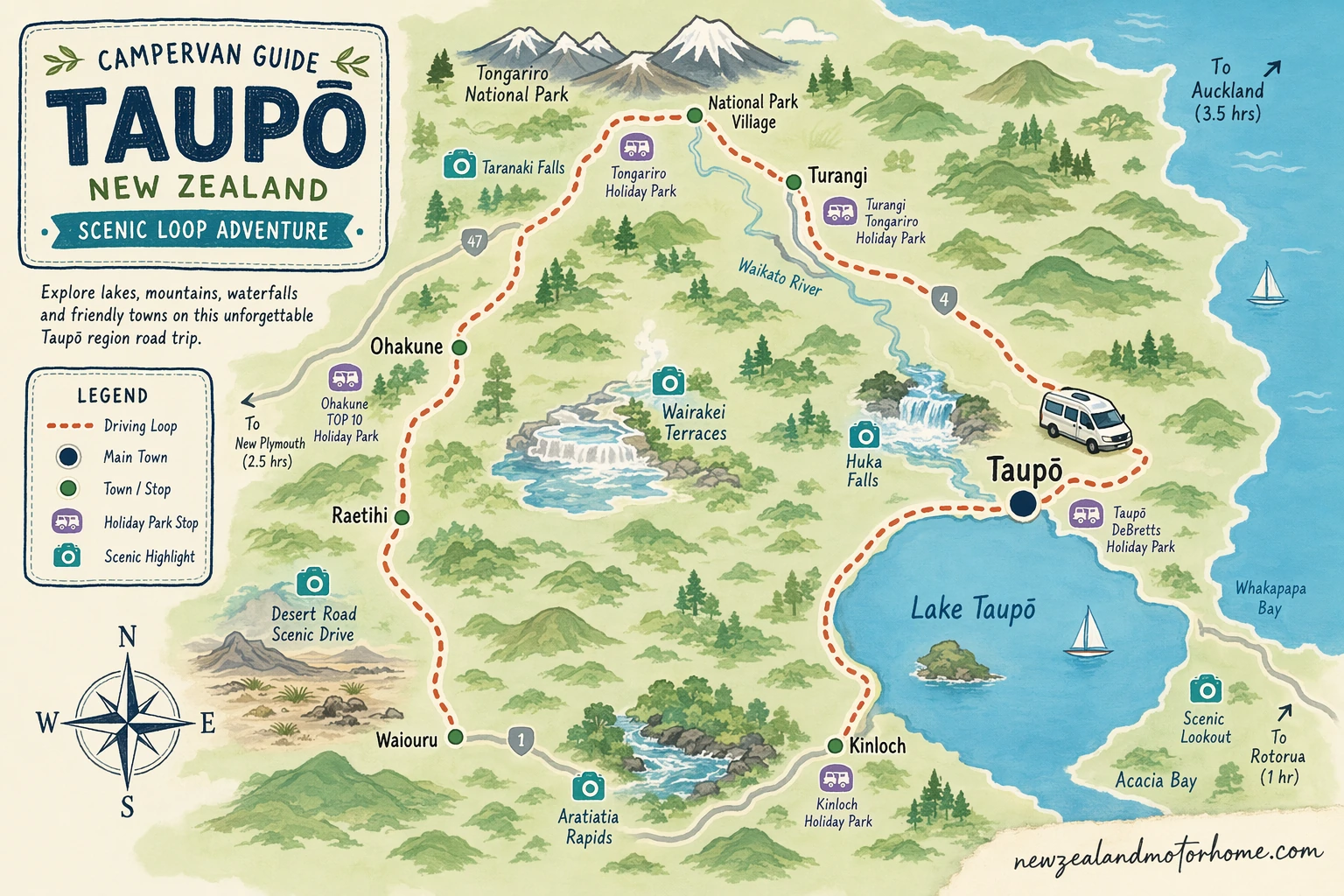
For a gentle day in the van, loop from town to Huka Falls, Aratiatia Rapids and back along the lakefront, keeping driving short and parking simple. Another relaxed option is Acacia Bay and Kinloch, where you get lake views and a quieter feel without committing to a long rural drive.
If the weather is clear and you are comfortable with longer roads, head south towards Turangi for lake views and access to walking, fishing and Tongariro connections. In winter or unsettled weather, check the forecast before planning anything that depends on the Desert Road or high-country conditions.
- Short loop: Taupō town, Huka Falls, Aratiatia Rapids and lakefront picnic parking.
- Quiet lake loop: Acacia Bay, Kinloch and Whakaipo Bay with services handled first.
- South lake day: Turangi side, lake pull-offs and Tongariro views when the weather plays along.
- Rainy-day option: choose a powered site, do laundry, stock the van and keep distances short.
Whichever loop you choose, avoid arriving at an unfamiliar overnight spot in the dark. Taupō’s lakeside roads are prettier, safer and easier to navigate when you still have daylight to read signs, check slope and find a level bay.
Common questions
Can I freedom camp in Taupō in a campervan?
Is Taupō easy with a larger motorhome?
Should I book a powered site in Taupō?
Where should I dump waste and fill fresh water?
How long should I stay in Taupō on a campervan road trip?
Have a planner shape this for your dates
Send a short outline — your dates, party size, and the kind of trip you want. A planner replies with a vehicle recommendation, a paced route, and the realistic budget.