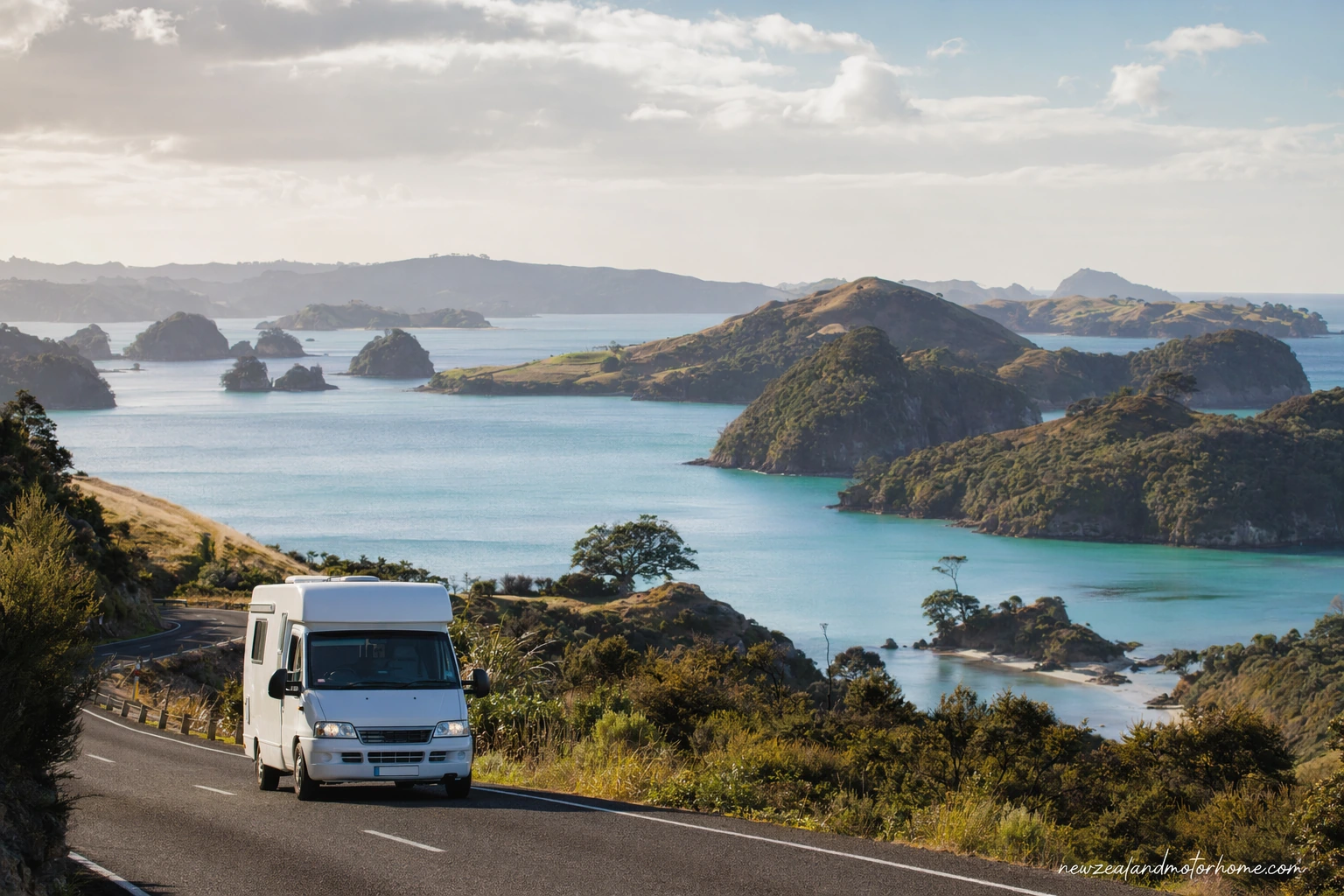
A practical campervan guide Bay of Islands NZ for self-drive vans
- Best pace: 3–5 days
- Main bases: Paihia, Waitangi, Russell, Kerikeri
- Use the Opua ferry for Russell
- Certified self-contained needed for freedom camping
- Book powered sites in summer
The Bay of Islands is made for slow campervan travel: sheltered bays, pōhutukawa-fringed beaches, short ferry hops and townships close enough that you can park the van for a night or two instead of packing up every morning. It is also a place where parking rules, narrow coastal roads and summer crowding matter, especially if you are travelling in a longer motorhome.
This campervan guide Bay of Islands NZ covers the driving pattern from Paihia, Waitangi, Russell and Kerikeri, plus where to base yourself, how to handle freedom camping, and the practical bits: dump stations, fresh water, LPG, groceries, ferry access and van-suitable day stops. Think of it as a grounded Bay of Islands campervan plan, written for people sleeping in the vehicle they drive.
Getting your bearings in a Bay of Islands campervan
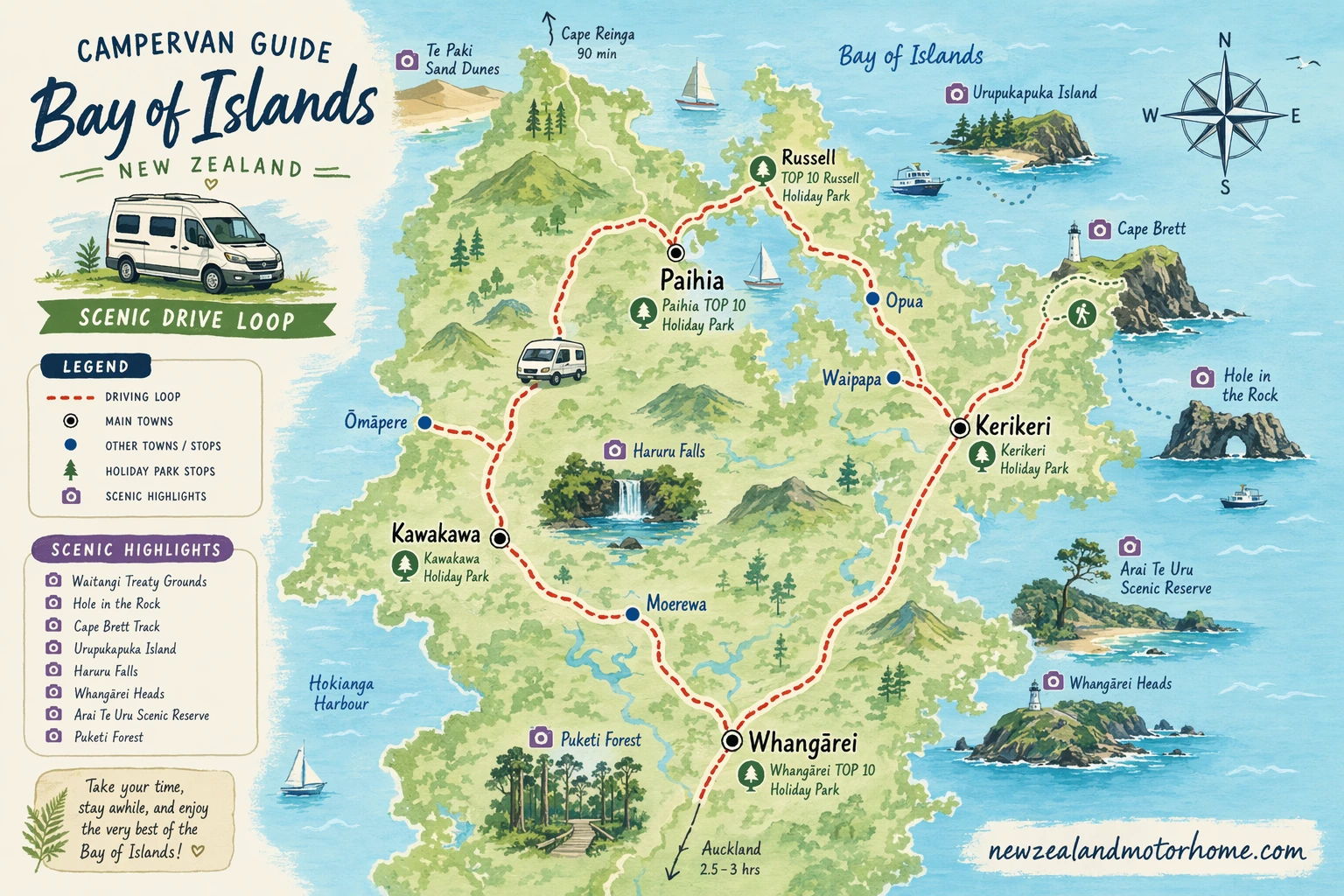
Most motorhome Bay of Islands trips settle into one of three bases: Paihia or Waitangi for wharf access and boat trips, Russell for a quieter historic village feel, or Kerikeri for supplies, food stops and a bit more room to move. Paihia is the easiest first night if you are arriving from Whangārei or Auckland because you can park once, plug in if needed, and walk to the waterfront.
Russell looks close on the map but works differently in a van. The Opua to Okiato vehicle ferry is the simplest approach for most hired campervans, while the inland road via Waikare is narrower and more winding. If your motorhome is long, high, or you are new to left-side driving, use the ferry and arrive outside the busiest part of the day.
- Paihia/Waitangi: best for first-timers, wharf departures, Treaty Grounds access and serviced holiday parks.
- Russell: good for a slower two-night stay, but village parking is tighter and summer spaces fill early.
- Kerikeri: useful for supermarket runs, fuel, fresh produce, cafés and a calmer inland overnight.
- Opua: your ferry link to Russell and a handy place to pause before deciding which side of the bay to sleep on.
Where to stay: powered sites, unpowered nights and freedom camping
For most self-drive travellers, the easiest Bay of Islands campervan rhythm is to book a powered site for the first night, then switch to unpowered or a certified freedom camping spot once your batteries, water use and toilet cassette are under control. Paihia, Waitangi, Russell and Kerikeri all have holiday park-style options, with powered sites, showers, laundry and dump facilities varying by property.
Freedom camping in the Far North is tightly managed and changes can happen, so do not assume a beachfront pull-off is legal just because another van is there. You will generally need a certified self-contained vehicle, and you must follow the current council signage for designated areas, maximum stay limits and any seasonal closures. In busy summer weeks, the safe plan is to have a paid site booked, then use freedom camping only where the signs clearly allow it.
- Powered sites: useful after a long drive north, before a boat day, or when you need to recharge devices, house batteries and fridge confidence.
- Unpowered sites: good for one or two mild nights if your solar, battery and water levels are healthy.
- Freedom camping: only in permitted locations, with your self-containment certification displayed and all grey water and toilet waste retained.
- Summer note: Paihia, Russell and beach approaches get congested; arrive early rather than hunting for a site after dark.
Things to do Bay of Islands campervan travellers can enjoy without shifting camp
The best things to do Bay of Islands campervan travellers can plan are the ones where the van stays parked for half a day. From Paihia or Russell you can walk to wharf departures for island cruises, dolphin-watching operators, sailing trips and passenger ferries. That saves you from squeezing a motorhome into waterfront spaces during the school-holiday rush.
Waitangi Treaty Grounds is a strong anchor stop if you are based nearby; allow time rather than treating it as a quick photo stop. Kerikeri adds a different pace, with the Stone Store area, river walks, waterfalls and food stops that suit a van day when the coast is windy. Haruru Falls is close to Paihia, but parking can be limited, so go early and avoid blocking turning areas.
- Park-and-walk days: base in Paihia or Russell, walk to the wharf, and leave the van on your overnight site if possible.
- Waitangi: suitable for a slower morning, with larger-vehicle parking usually easier earlier in the day.
- Kerikeri: good for supplies, short walks and a break from tight waterfront streets.
- Beach stops: choose signed parking areas, avoid soft verges, and never drive onto sand in a hired campervan.
Road notes, ferries and parking for longer motorhomes
The main roads into the Bay of Islands are straightforward by New Zealand standards, but they are not motorway driving. Expect bends, short passing lanes, local traffic, cyclists near townships and occasional roadworks. If you are coming from Auckland in one push, give yourself daylight for the final stretch north of Whangārei; it is much nicer to arrive with time to level the van and connect power before dinner.
Russell, Rāwhiti and some of the smaller coves ask more of the driver. Roads can be narrow, shoulders soft, and turning spaces limited. A compact campervan will handle more side trips than a large six-berth motorhome, but even in a smaller van it pays to check the road on satellite view and avoid committing to unsigned beach tracks.
- Opua vehicle ferry: the easiest Russell approach for most vans; queue space is limited at peak times, so be patient and follow crew directions.
- Russell village: park on the edge and walk in where you can, especially if your vehicle is long or has a rear overhang.
- Rāwhiti and Cape Brett access roads: scenic but tighter; better suited to confident drivers in smaller vans.
- Height and length: watch for overhanging trees, tight fuel station canopies and small car parks designed for utes rather than motorhomes.
Dump stations, fresh water, LPG and food supplies
Do the practical jobs before you are desperate. In the Bay of Islands, dump stations and potable water are most reliably found through holiday parks, marina or service areas, and council-listed facilities around Paihia/Waitangi, Kerikeri, Russell/Opua and nearby service towns. Access rules can change, and some facilities are for guests only, so check the current listing or ask before opening your cassette hatch.
Kerikeri is the most useful resupply town for a campervan fridge: supermarkets, fuel, hardware-style basics and easy food stops are all close together. Paihia and Russell cover day-to-day needs but are tighter for parking, particularly in high season. LPG bottle swaps or refills are easier to sort in larger service towns than at the end of a beach road, so top up before a run of unpowered nights.
- Before leaving a paid site: empty the toilet cassette, drain grey water only at an approved dump point, fill fresh water and check rubbish disposal.
- Before freedom camping: confirm your toilet, grey tank and water capacity will last the full stay without leaking or venting.
- Before Russell or remote coves: buy groceries, check LPG and avoid relying on late-night fuel or large-vehicle parking.
- Trip help: if you want the stops matched to your van size and comfort level, you can talk to us before locking in your route.
How many days to allow for a motorhome Bay of Islands loop
Two nights gives you a taste, but three to five days is the sweet spot for a relaxed motorhome Bay of Islands stay. With three days, base in Paihia or Waitangi, visit Waitangi Treaty Grounds, take a boat or ferry day, and add Kerikeri before heading on. With five days, include Russell or a quieter coastal night without turning every drive into a packing exercise.
If you are linking the Bay of Islands into a bigger Northland loop, avoid scheduling long driving days back-to-back. Roads north of Auckland can be slower than the distance suggests, and the best moments here are the unhurried ones: morning coffee with the sliding door open, a swim after the day-trippers leave, or a walk to the wharf while the van stays level on site.
- 2 nights: Paihia/Waitangi base, one major activity, quick Kerikeri stop.
- 3 nights: add Russell by ferry or a slower Kerikeri day.
- 4–5 nights: mix powered and unpowered stays, include a beach day and leave room for weather.
- Best pace: move the van every second day rather than every morning.
Keep planning
Common questions
Can I freedom camp in a campervan in the Bay of Islands?
Only in places where the current Far North signage and rules allow it, and usually only in a certified self-contained vehicle. Do not rely on old app comments or vans parked illegally; check the sign at the site and be ready to use a paid campground if limits are full.
Is the road to Russell suitable for a motorhome?
Yes, but the easiest route for most motorhomes is via the Opua to Okiato vehicle ferry. The alternative inland road is narrower and more winding, so it is less comfortable for larger vehicles or drivers still getting used to New Zealand roads.
Where should I base my campervan for a first Bay of Islands visit?
Paihia or Waitangi is the simplest first base because you can walk to wharves, access the Treaty Grounds, and choose from serviced overnight options. Russell is lovely for a quieter stay once you are comfortable with ferry logistics and tighter parking.
How long should I spend in the Bay of Islands by campervan?
Allow at least three days if you can. Two nights works for a quick look, but three to five days gives you time for a boat trip, Waitangi, Kerikeri, Russell and a slower beach stop without moving the van every morning.
Are dump stations and fresh water easy to find?
They are available around the main service areas, but access varies between public facilities and guest-only holiday park facilities. Empty and refill whenever you have a confirmed opportunity, especially before unpowered nights or heading towards smaller coves.
Can I take a large six-berth motorhome to the beaches?
You can visit many signed beach areas, but avoid soft verges, sand, unsigned tracks and tight car parks with no turning room. For remote coves, check the road first and consider leaving the larger motorhome on site while you use a walk, ferry or local transfer option.
Have a planner shape this for your dates
Send a short outline — your dates, party size, and the kind of trip you want. A planner replies with a vehicle recommendation, a paced route, and the realistic budget.