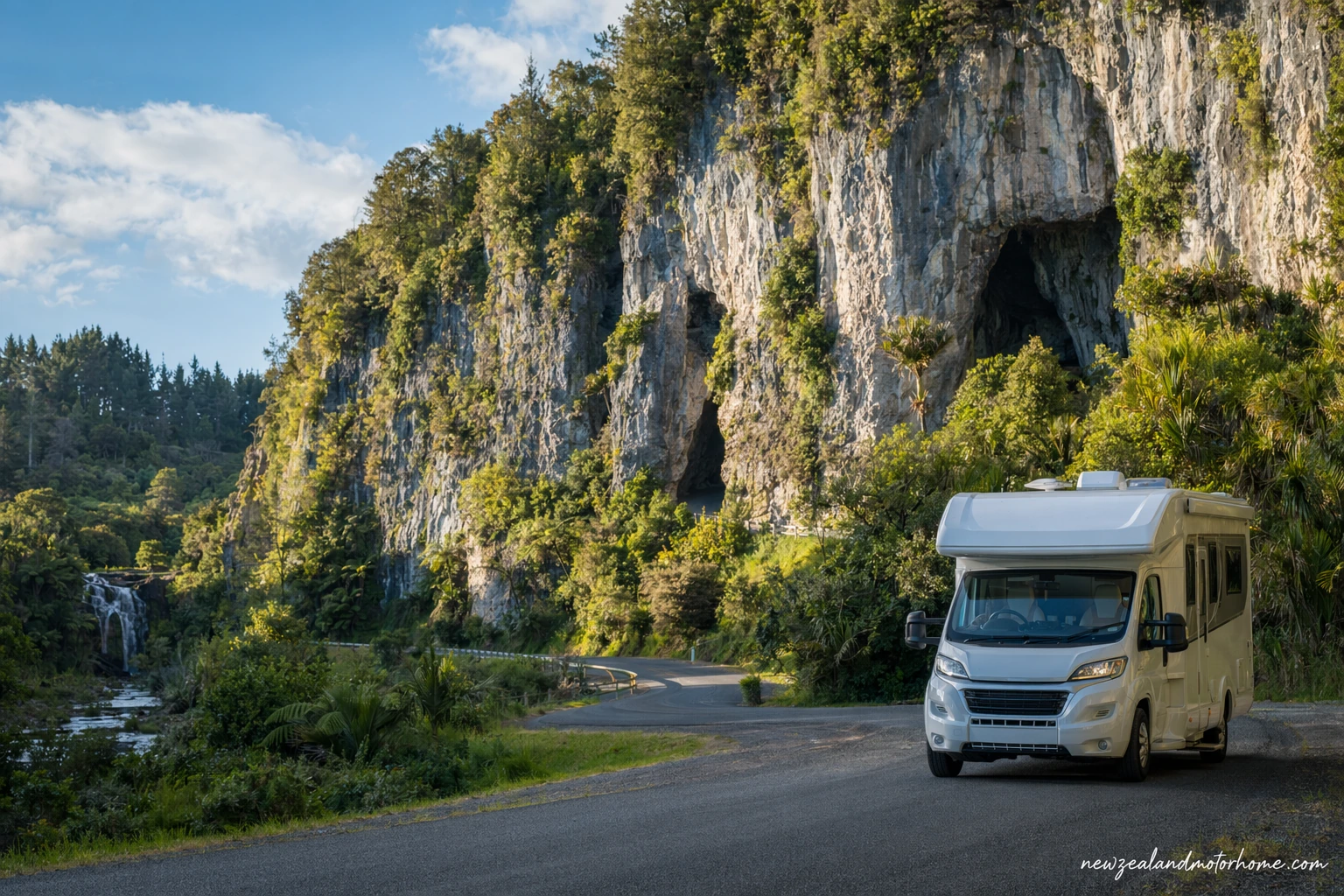
- Best as a 1–2 night stop
- Powered sites useful after wet cave days
- Arrive early for easier van parking
- Check freedom-camping signage carefully
- Fuel and LPG easier in larger towns
Waitomo is a compact stop with a big underground drawcard: glowworm caves, limestone bluffs, damp green paddocks and winding King Country roads that feel made for an unhurried van day. For a self-drive traveller, it is less about rushing between attractions and more about choosing where to park the campervan, where to sleep legally, and how much time to leave between cave tours, bush walks and laundry-drying.
This waitomo campervan guide is written for people travelling and sleeping in their own hired campervan or motorhome. You will find practical notes on arriving by van, parking near the caves, camping near Waitomo, dump-station and water planning, plus how to fit Waitomo into a wider North Island route without overloading your day.
Getting to Waitomo by campervan
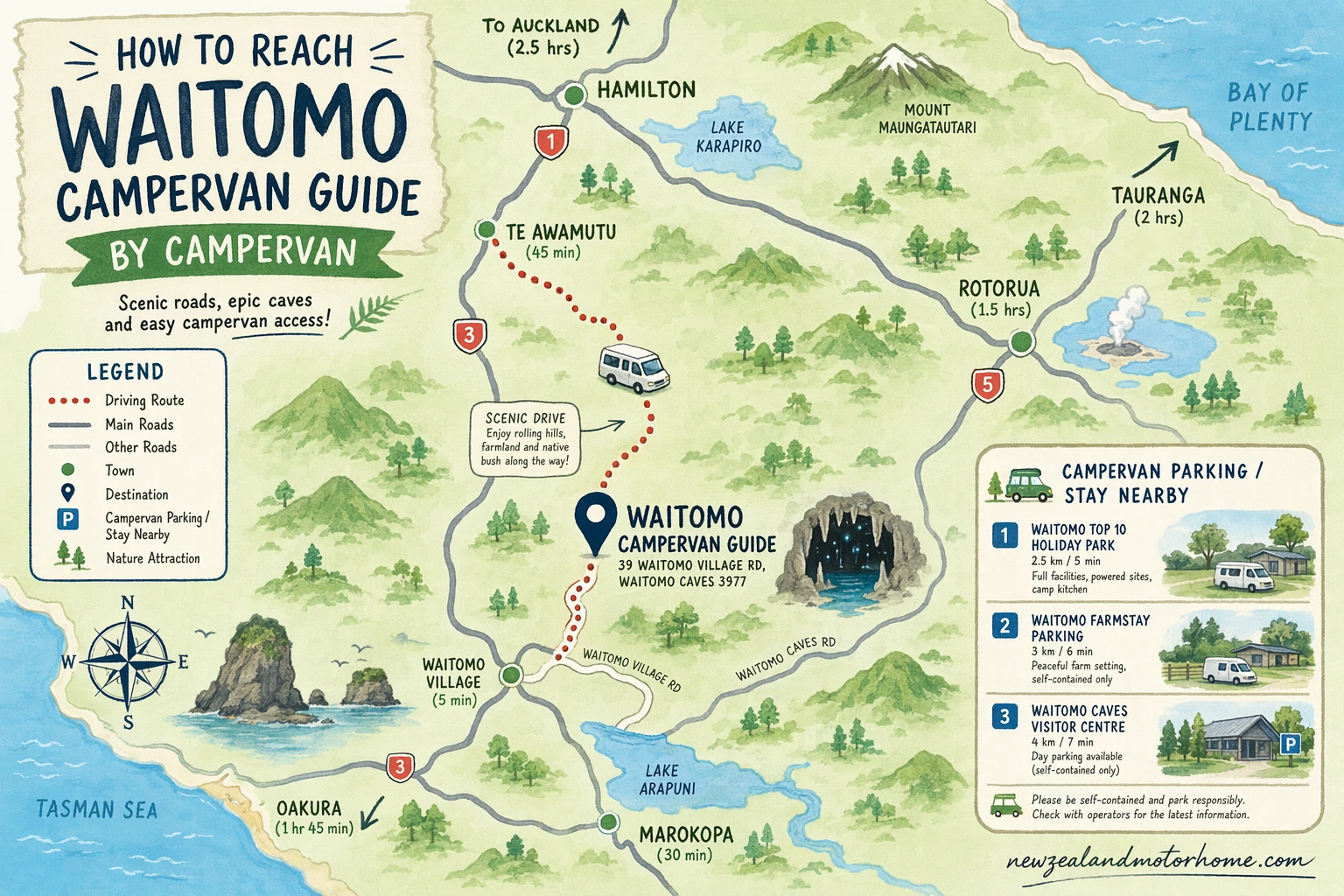
Waitomo sits in the King Country, west of SH3 and south of Otorohanga. In a campervan, most travellers arrive from Auckland, Hamilton, Rotorua, Taupo, Raglan or New Plymouth, making it a useful inland hinge between the central North Island and the west coast. The final approach into Waitomo Village is on sealed rural roads with rolling bends, farm driveways and the occasional slow stock truck.
Allow more time than a car-style map estimate if you are in a longer motorhome. The roads are not frightening, but they do ask for patience: use slow-vehicle bays where you can, keep an eye on your rear-view mirrors, and avoid arriving after dark if it is your first day in the van.
- From Auckland or Hamilton: expect mostly highway driving before the quieter approach through Otorohanga and Waitomo Caves Road.
- From Rotorua or Taupo: the drive crosses rural Waikato and King Country roads; plan fuel before you leave the larger towns.
- From New Plymouth or the west coast: SH3 is scenic but can be bendy, so secure cupboards and fridge latches before you roll.
- In wet weather: limestone country can mean slippery edges, puddled parking areas and slower cornering in a high-sided van.
Parking the van for caves and short walks
The main cave attractions around Waitomo Village have visitor parking designed for daytime use, but spaces can fill quickly around tour departure times. If you are travelling in a motorhome, Waitomo is easiest when you arrive early, park once, and walk between the nearby visitor centre areas rather than shuffling the van for every booking.
For the Waitomo Glowworm Caves area, use the signed visitor parking and check the on-site directions for larger vehicles. Ruakuri and Aranui cave visits, plus the Ruakuri Bushwalk, have their own access roads and car parks; take the bends slowly and do not assume every bay will suit a long rear overhang. These car parks are for visits, not informal overnight camping.
- Lock the van and keep passports, tablets and camera gear out of sight before heading underground.
- Fold mirrors in if you are parked beside a narrow internal lane or hedge.
- Leave space for tour buses and turning traffic; do not block gravel shoulders or farm gates.
- If your hired campervan is tall, watch overhanging branches near bush-walk parking areas after rain.
Where to stay overnight near Waitomo
Camping near Waitomo is best planned rather than guessed on arrival. The village and nearby towns have commercial camping options, with a mix of powered sites, unpowered sites and shared facilities. Powered sites are useful here, especially if you have been running the heater, charging camera batteries or drying damp caving clothes in a van with limited ventilation.
Otorohanga and Te Kuiti are both practical backup bases if Waitomo Village sites are full or you want easier access to supermarkets, fuel and town facilities. Staying slightly out of the village can also make sense for larger motorhomes, as town-edge holiday parks often have easier internal turning space than small rural sites.
Freedom camping rules vary by council area and can change, so do not treat a scenic lay-by or cave car park as an overnight stop unless it is clearly signed as permitted. You will need a compliant self-containment certification for most freedom-camping situations, and even then you must follow local signage, length limits and any time restrictions.
Dump stations, water, fuel and LPG planning
Waitomo Village itself is small, so arrive with the boring van jobs handled if you can. Fill fresh water, top up groceries and check fuel in larger service towns such as Otorohanga, Te Kuiti, Hamilton, Rotorua or Taupo, depending on your direction of travel. LPG availability is also more reliable in bigger towns than in small visitor villages.
Dump-station access is something to confirm before you settle in for the night. Some holiday parks provide dump points and fresh-water fills for staying guests, while public dump stations are usually found in larger towns rather than beside the cave attractions. If your grey-water tank is getting full, do not leave it until after a morning cave tour when everyone else is trying to depart.
- Empty toilet cassettes only at approved dump stations, never in public toilets or drains.
- Use a potable-water tap for filling the fresh tank; do not assume every outdoor tap is drinking water.
- Carry rubbish out of bush-walk car parks, as bins may be limited or absent.
- After wet cave activities, ventilate the van well to reduce condensation overnight.
What to do in Waitomo without moving the van all day
The classic reason to bring a campervan to Waitomo is the glowworm cave experience, but the area rewards a slower day. Book cave tours with enough buffer to park, collect tickets, change layers and return to the van without rushing. Underground temperatures can feel cool even in summer, so keep a fleece and dry socks easy to reach.
Ruakuri Bushwalk is a strong campervan Waitomo option because it adds a limestone-gorge walk without needing a full-day drive. If you stay nearby, an evening wander can reveal glowworms along the track, but take a torch for your feet and be careful on wet steps. Further west, Mangapohue Natural Bridge and Marokopa Falls are memorable side trips, though the road is narrower and better suited to confident van drivers with daylight to spare.
- One-night stay: arrive mid-afternoon, take a short walk, sleep nearby, then do a morning cave tour before driving on.
- Two-night stay: add Ruakuri Bushwalk, a second cave or a west-coast limestone-and-waterfall loop.
- Wet-day plan: lean into the caves, use a powered site, and give gear time to dry properly.
How Waitomo fits a wider motorhome route
For motorhome Waitomo planning, think of the village as a tidy one- or two-night pause rather than a long base. It links naturally with Hobbiton and Rotorua to the east, Taupo and the central plateau to the south, Raglan to the north-west, and New Plymouth or the Forgotten World Highway further west. That makes it especially useful when you want a break from big driving days without losing route momentum.
If you are coming off a long first day from Auckland, stay the night before your cave booking rather than trying to squeeze in a late tour. If you are heading to Rotorua or Taupo afterwards, dump, fill and refuel before leaving the main service towns so the next leg starts clean and easy.
If you would like help placing Waitomo in a North Island campervan itinerary, use our talk-to-us step and tell us your van size, travel dates, must-do caves and whether you prefer powered sites or more self-contained overnight stops.
Common questions
Can I freedom camp in Waitomo in a certified self-contained campervan?
Only where local rules and signage allow it. A self-containment certification does not give automatic permission to sleep in cave car parks, rural lay-bys or reserves, so check current council information before you park up for the night.
Is Waitomo suitable for a larger motorhome?
Yes, but it is easier if you plan your movements. The main roads are sealed, while some attraction access roads and car parks have bends, slopes or tighter bays, so arrive in daylight and avoid unnecessary reversing.
Do I need a powered site near Waitomo?
You do not always need one, but powered sites are handy in Waitomo because cave and black-water activities can leave clothes damp. Power also helps if you are running heating, charging devices or managing condensation after a wet day.
Where should I fill water and empty waste before visiting the caves?
Use larger towns such as Otorohanga, Te Kuiti, Hamilton, Rotorua or Taupo for the easiest fuel, groceries, LPG and service planning. Confirm dump-station and fresh-water access with your overnight site or current public dump-station listings before you arrive.
How long should I allow for Waitomo in a campervan?
One night works for a cave tour and a short walk. Two nights are better if you want Ruakuri Bushwalk, a second cave, or the westward side trip to Mangapohue Natural Bridge and Marokopa Falls without rushing the van on narrow roads.
Have a planner shape this for your dates
Send a short outline — your dates, party size, and the kind of trip you want. A planner replies with a vehicle recommendation, a paced route, and the realistic budget.