- Best stay: 1–2 nights
- Powered and unpowered sites
- Book ahead in holidays
- Rural roads near caves
- Check dump and water access
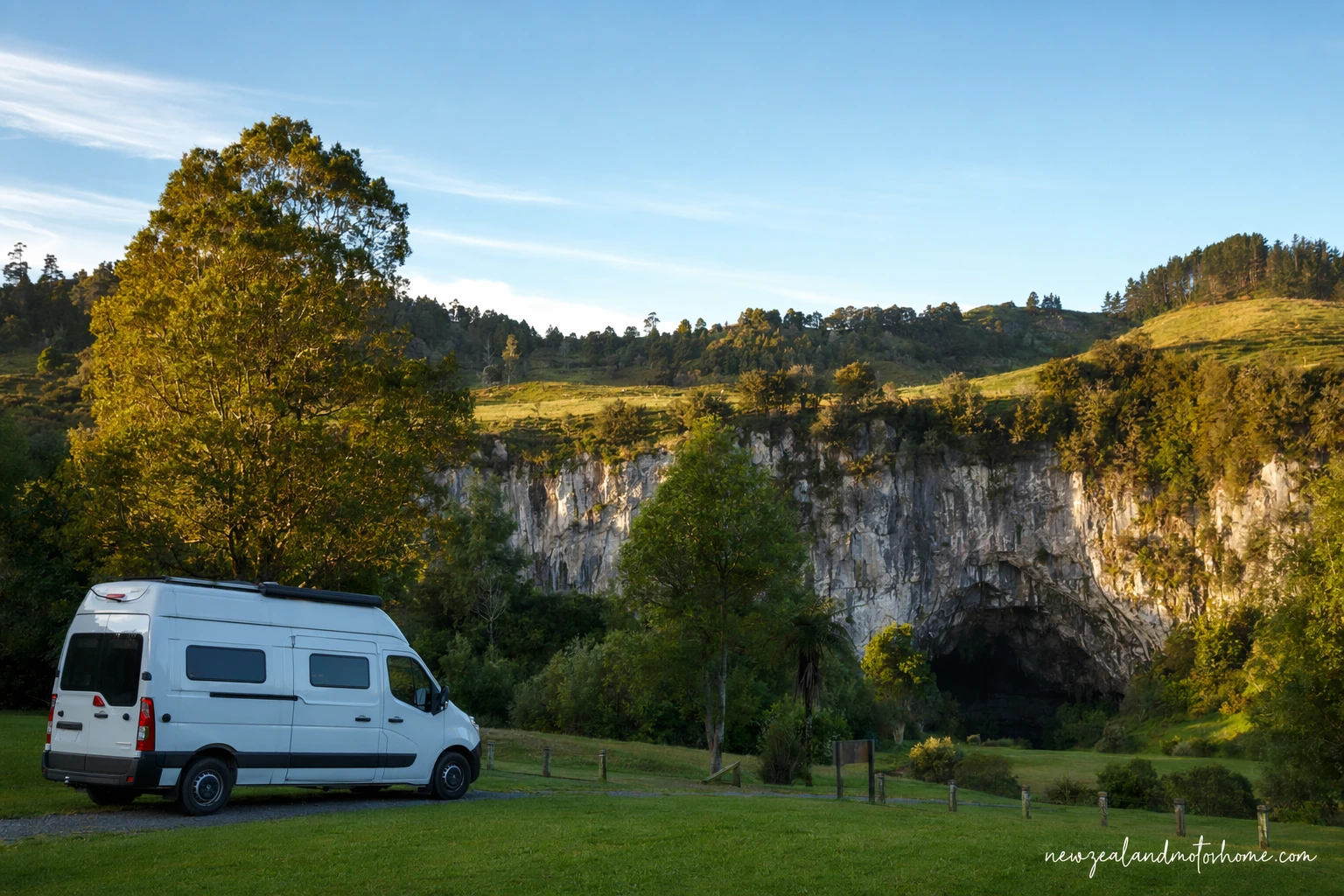
Waitomo is one of those places that suits a campervan stop: green King Country hills, short drives between caves and walks, and enough practical services nearby to make a night or two feel easy. The best holiday parks Waitomo travellers use are close to the village and cave tours, so you can park the van, plug in if needed, and avoid driving narrow rural roads after dark.
This guide is written for self-drive motorhome travellers looking at camping Waitomo rather than just passing through. You’ll find notes on powered and unpowered sites, where to park campervan Waitomo way, dump station and fresh-water planning, road access, and things to do near Waitomo once the van is settled for the night.
Why stay in Waitomo in a campervan
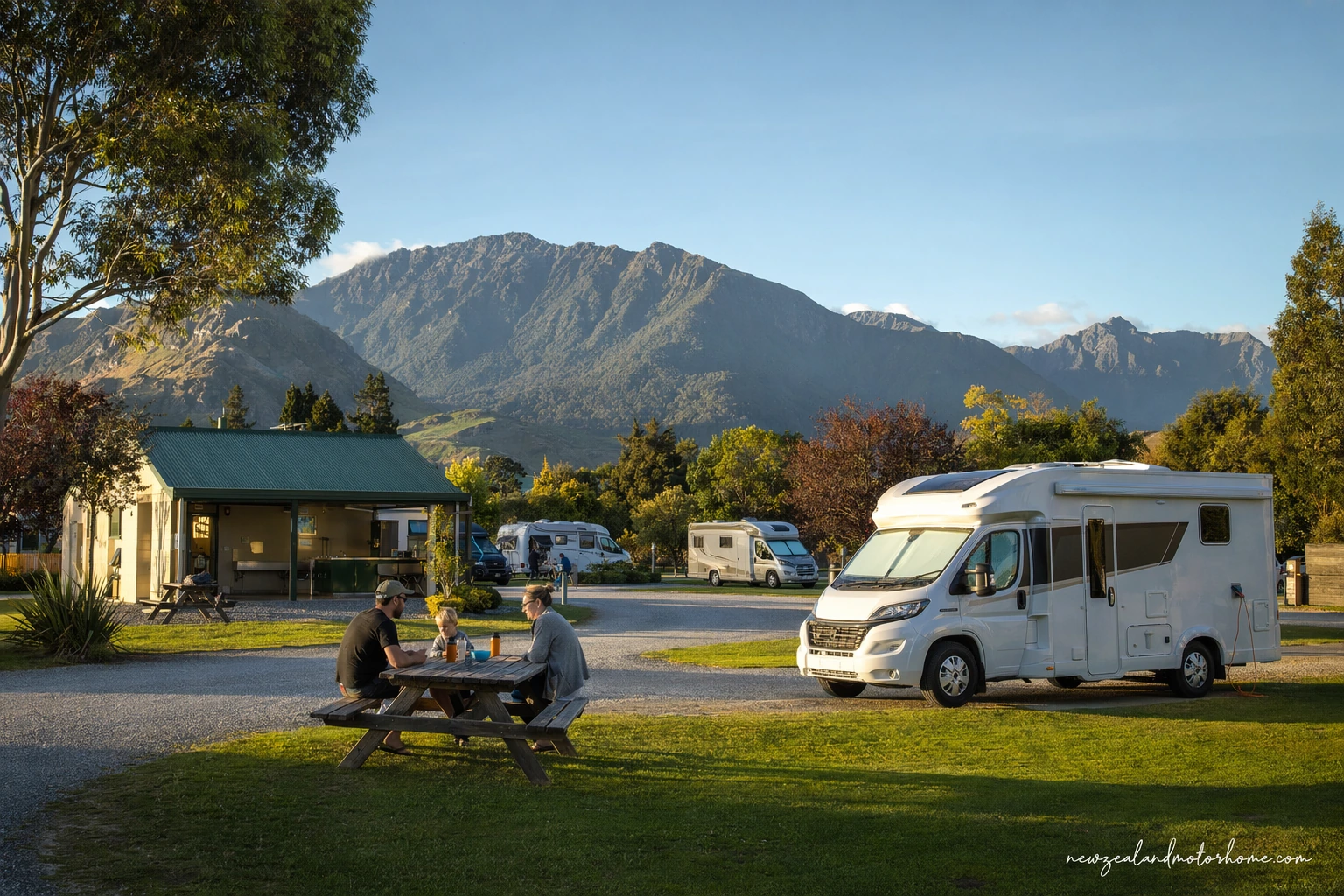
Waitomo is compact, but it is not a place where you want to rely on random roadside parking. The cave roads are rural, often edged by grass verges and farm entrances, and the main attractions have their own visitor parking that is intended for daytime use, not overnight camping. A holiday park gives you a legal overnight base, easier shower and laundry access, and a place to manage grey water before heading deeper into the King Country.
The village itself is small, so being close to it matters. If you are booked on an early cave tour or a night-time glowworm experience, staying nearby saves a long drive from Te Kūiti or Otorohanga in the dark. It also lets you leave the van parked and walk short distances where paths allow, rather than searching for another space at each stop.
- Good for: one or two-night stays between Auckland, Hamilton, Rotorua, New Plymouth or the central North Island.
- Site style: expect campervan-friendly powered sites, some unpowered options, and shared facilities at established parks.
- Van practicality: flatter sealed or gravel parking areas are easier after rain than informal grassy pull-offs.
- Self-containment: still carry proof of certification, even if you are using a holiday park, as it affects where you can legally stop elsewhere.
Where to park campervan Waitomo for caves and village walks
If you are asking where to park campervan Waitomo for the day, start with the signed visitor car parks at the cave centres and walks you have booked. Arrive early if you are in a longer motorhome, as turning space is more comfortable before the midday rush. Avoid squeezing into roadside shoulders on Waitomo Village Road or access roads; they are used by locals, tour traffic and service vehicles.
For overnight parking, use a booked site at a holiday park or another permitted camping area. The property commonly referred to by travellers as the Waitomo TOP 10 Holiday Park sits in a convenient village position for cave tours and local food stops, and it is the style of place many campervan hirers look for: marked sites, amenities, and staff who are used to vans. Always check current availability, site length limits and facility details directly before you arrive.
- Day parking: use official attraction car parks and follow any signs for long vehicles.
- Overnight parking: do not assume cave car parks, picnic areas or rural lay-bys allow camping.
- Large vans: reverse slowly, watch overhanging branches, and avoid soft grass after wet weather.
- Quiet arrival: if arriving late, book ahead and know your site number or after-hours instructions.
Powered sites, unpowered sites and van services
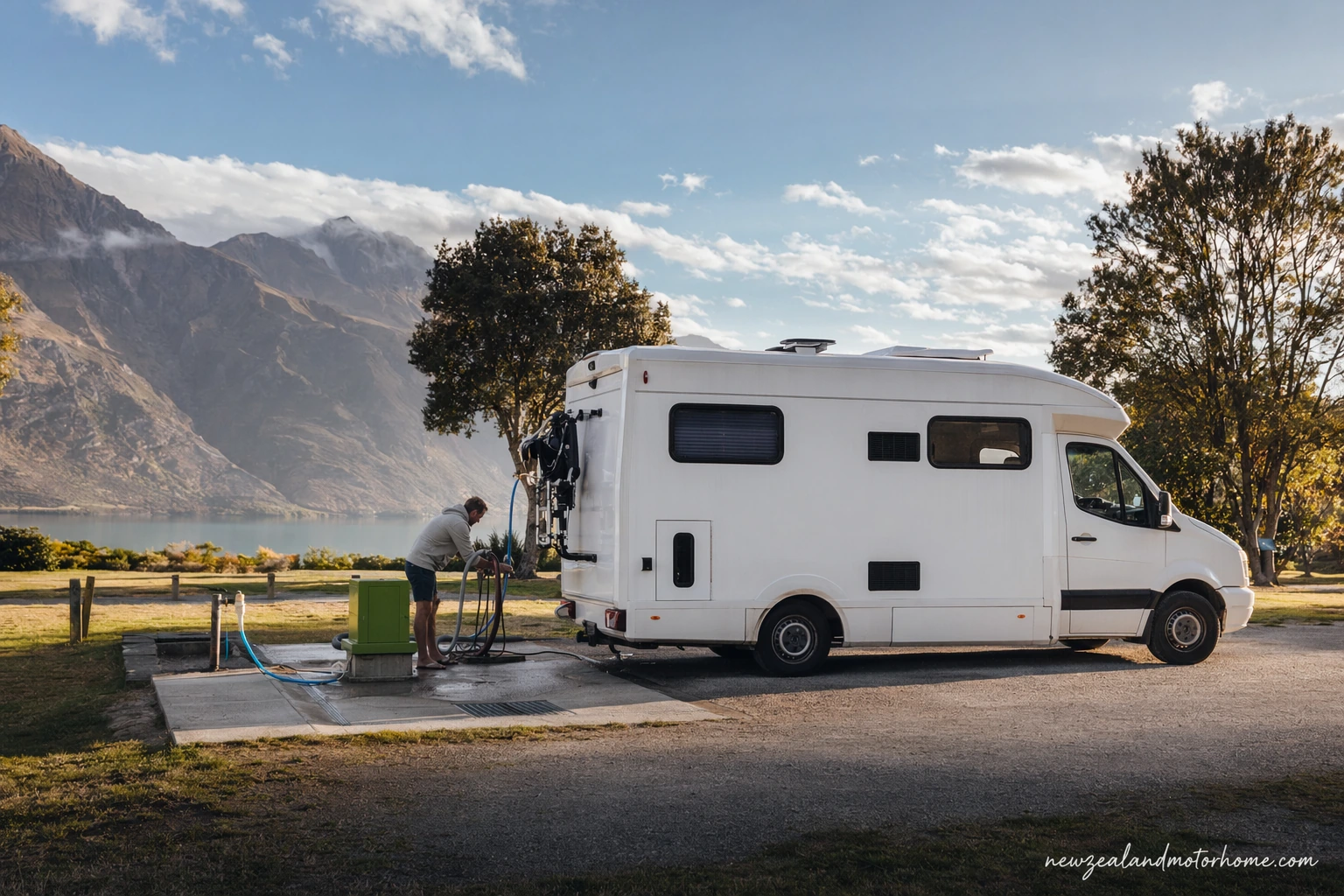
Waitomo’s damp cave-country climate can make a powered site worth it, especially outside summer. Plugging in lets you run heating or charge house batteries after a day with lights, fridge and devices working hard. If your van has solar and you are travelling in warm weather, an unpowered site may be enough for a short stay, but shaded sites and misty mornings can slow recharging.
Before you settle in, ask where the fresh-water tap and dump station are located and whether access is easy for your vehicle length. Some parks have a drive-through service point; others require a tighter manoeuvre, which is worth knowing before you unhitch bikes or set up your awning. Treat Waitomo as a good reset stop before continuing to more rural parts of the King Country.
- Powered site: useful for heating, battery top-ups and wet-weather comfort.
- Unpowered site: fine for self-contained vans if your battery and water levels are healthy.
- Dump station: confirm on arrival, and empty grey water and toilet cassettes before longer drives.
- Fresh water: fill only from marked potable taps, not garden hoses or wash-down points.
- LPG: plan bottle swaps or fills in larger service towns such as Te Kūiti, Otorohanga or Hamilton rather than relying on the village.
Getting there by motorhome: roads, hills and weather
Most campervans reach Waitomo via State Highway 3 and the local roads in from Otorohanga or Te Kūiti. The driving is not extreme, but it is more rural than it looks on a map: expect rolling farmland, occasional narrow sections, stock movement, farm driveways and tour traffic. Give yourself time rather than arriving right on dusk, particularly if you are new to driving a larger van on New Zealand roads.
After heavy rain, take extra care with grassy parking edges and gravel pull-ins. Waitomo’s limestone landscape drains in unusual ways, and surfaces can be slippery around shaded areas. Keep speed down, use lower gears on descents, and remember that a high-roof motorhome can move more in crosswinds than a car.
- From Hamilton: allow a relaxed rural drive south through the Waikato rather than treating it as motorway time.
- From Rotorua: check your route before leaving reception, as mobile coverage can be patchy in places.
- From New Plymouth: build in breaks; the west-coast approach can feel longer in a heavy van.
- Height and width: watch for tree overhangs, tight attraction entrances and smaller village parking bays.
Things to do near Waitomo once the van is parked
The caves are the headline, but Waitomo works best when you slow down. Book your glowworm or cave experience, then leave time for short walks, viewpoints and a meal close to your site. If the weather turns, being based at a holiday park means you can wait out a shower with the van plugged in instead of trying to fill a wet afternoon from a roadside stop.
Popular things to do near Waitomo for campervan travellers include guided cave visits, the Ruakuri bush walks, Marokopa Falls and the Mangapohue Natural Bridge area if road and weather conditions suit your vehicle. Check access before taking a long motorhome down narrow rural roads, and avoid driving to remote spots late in the day if you still need to return to your overnight site.
- Cave tours: book ahead in busy seasons and arrive with time to park a larger vehicle.
- Short walks: carry a torch, rain jacket and shoes that can handle mud.
- Scenic drives: confirm road suitability if your hire agreement limits gravel or remote roads.
- Food and supplies: stock up in Otorohanga or Te Kūiti if you want more choice for van meals.
How long to stay and when to plan ahead
One night is enough if you only want a cave tour and a powered-site reset. Two nights gives you a calmer stay, especially if you are travelling with children, arriving from a longer drive, or wanting to explore beyond the main village. In school holidays and long weekends, book your campervan site early rather than assuming there will be room for a larger motorhome.
Freedom camping options around Waitomo are limited and can change, so do not build your plan around finding a last-minute legal spot. If you want help shaping a Waikato or central North Island loop around holiday parks Waitomo and nearby overnight stops, you can send us your rough dates through our plan-your-trip page and we’ll help you think it through from a campervan point of view.
- Fast stop: one night with a morning or afternoon cave booking.
- Better pace: two nights for caves, walks and weather flexibility.
- Busy periods: book powered sites early if you need electricity or have a longer van.
- Before departure: empty waste, refill fresh water and check fuel before heading to smaller rural roads.
Common questions
Can I freedom camp in Waitomo in a self-contained campervan?
Do not assume you can freedom camp near the caves or village. Local rules and permitted areas can change, and many attraction car parks are for daytime visitors only. If in doubt, use a holiday park or check the current council information before you stop for the night.
Is the Waitomo TOP 10 Holiday Park suitable for motorhomes?
The holiday park commonly known as the Waitomo TOP 10 Holiday Park is used by campervan and motorhome travellers because it is close to the village and cave attractions. Check directly for current site types, vehicle length limits, dump station access and whether you need a powered or unpowered site.
Where should I park my campervan for a Waitomo cave tour?
Use the official visitor parking for the attraction you have booked and follow any long-vehicle signs. Arrive early if you are in a longer or wider motorhome, as turning space is easier before peak tour times. Do not leave the van on rural road shoulders unless signs clearly permit it.
Do holiday parks in Waitomo have dump stations and fresh water?
Established holiday parks often provide campervan services, but facilities vary, so confirm when booking or at check-in. Ask where the potable water tap and dump point are before setting up your site, especially if you need to manoeuvre a larger van.
How many nights should I allow for camping Waitomo?
Allow one night for a simple cave stop, or two nights if you want a relaxed pace with walks and nearby scenic drives. Two nights also gives you a buffer if rain affects outdoor plans or you are travelling in a larger motorhome and prefer not to rush rural roads.
Have a planner shape this for your dates
Send a short outline — your dates, party size, and the kind of trip you want. A planner replies with a vehicle recommendation, a paced route, and the realistic budget.