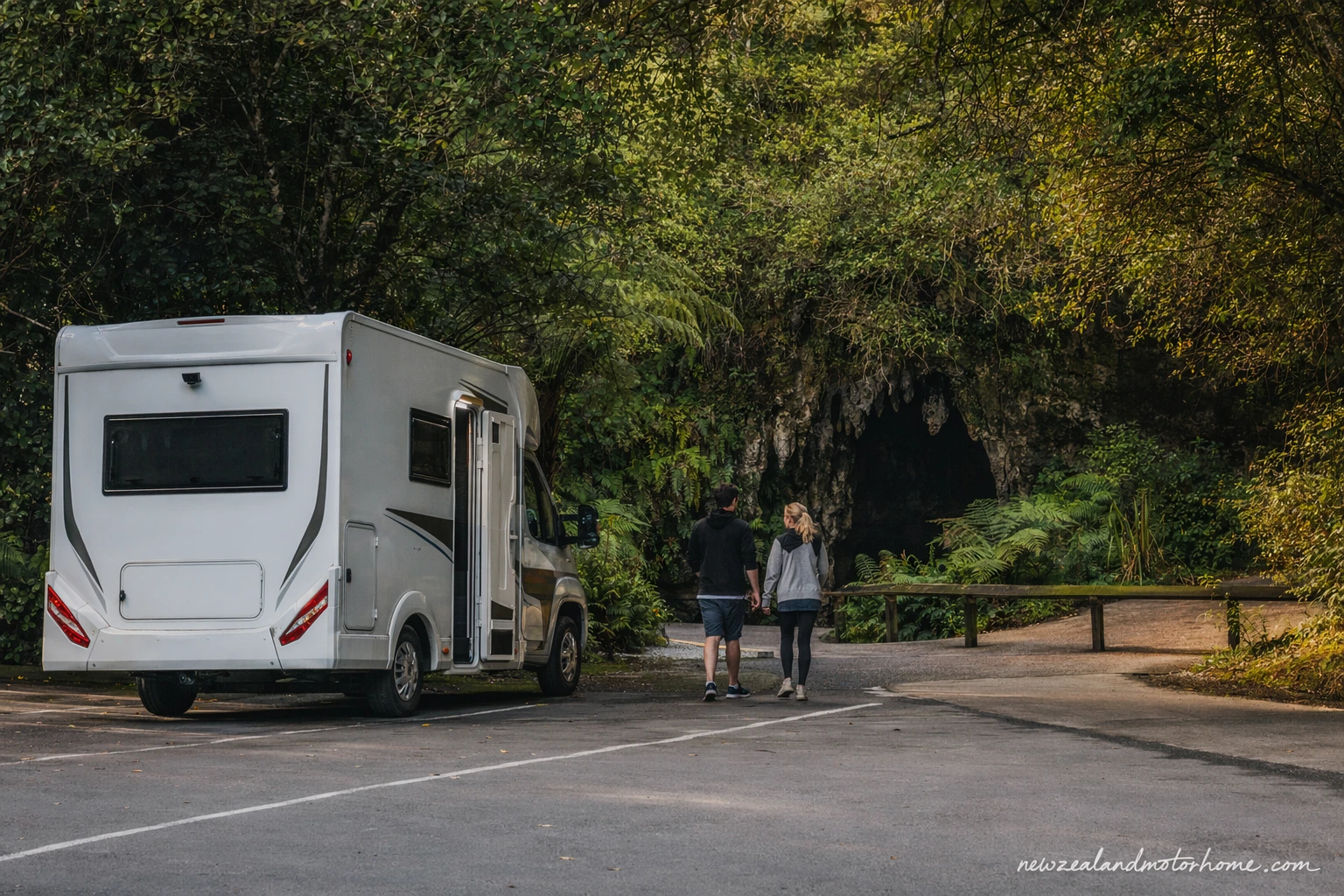
Visiting Waitomo Glowworm Caves by campervan: practical van logistics
- Allow 2–3 hours for the cave stop
- Use main outdoor visitor parking
- No overnighting in attraction car park
- Powered sites available nearby
- Service the van in Ōtorohanga or Te Kūiti
Waitomo is one of those North Island stops that works well in a campervan when you plan the small details: where the van will fit, how long the cave tour really takes, and whether you want to sleep nearby rather than driving on in the dark. The glowworm caves sit in a compact village surrounded by rolling King Country farmland, with Hamilton, Rotorua, Taupō and New Plymouth all within reach on a self-drive route.
This guide is for visiting Waitomo Glowworm Caves by campervan, not just arriving in a car for an hour. You’ll find notes on Waitomo Glowworm Caves campervan parking, road access, nearby powered and unpowered sites, dump station planning, fresh-water and LPG practicalities, and a few close-by stops that suit a van day.
How to get to Waitomo Glowworm Caves in a campervan
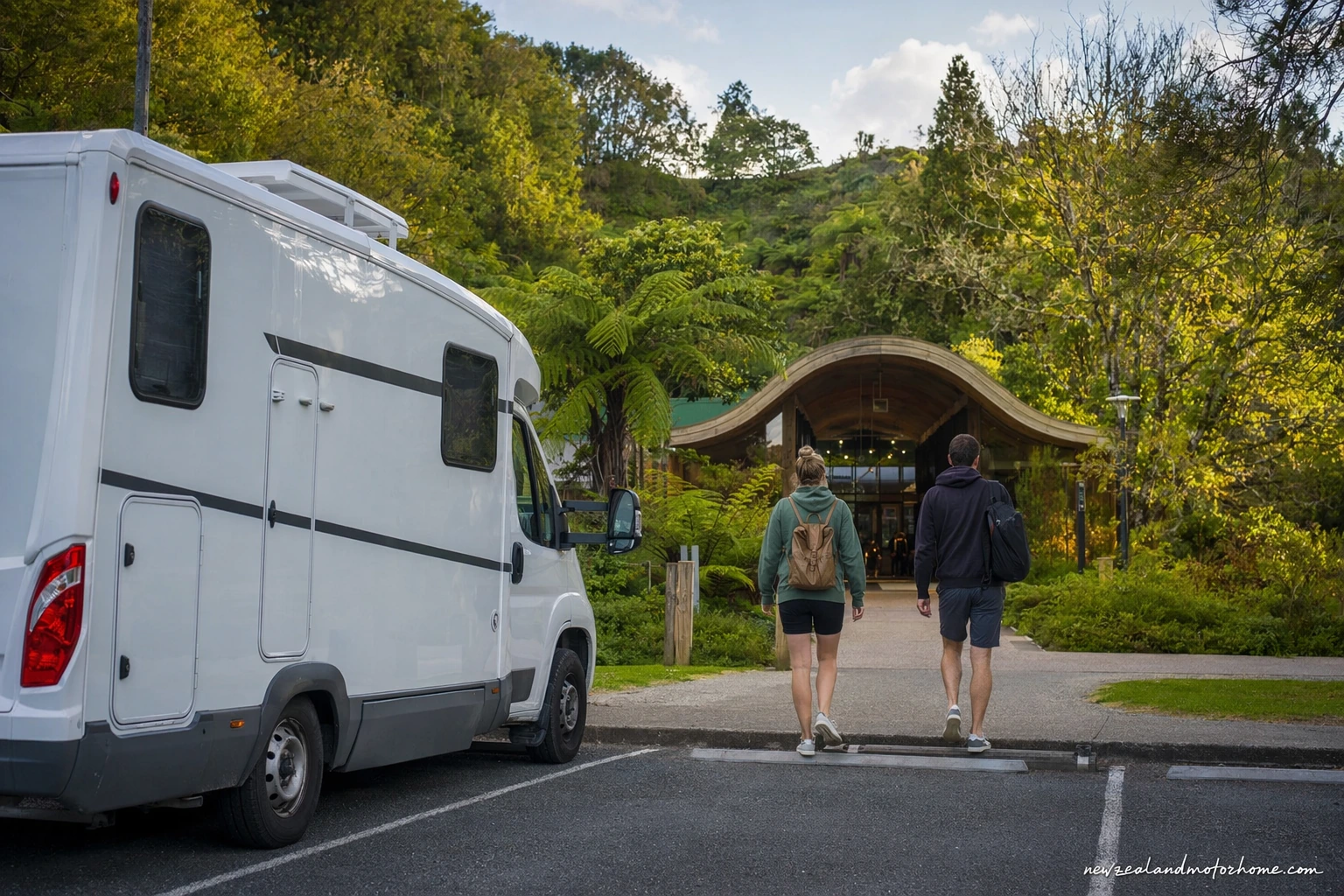
If you’re working out how to get to Waitomo Glowworm Caves, the main access is via State Highway 3 and State Highway 37. From Hamilton you generally come south through Ōtorohanga, from Te Kūiti you head north briefly then turn into Waitomo, and from Rotorua or Taupō you’ll link across through the central North Island before joining the King Country roads.
The final approach into Waitomo Village is sealed and suitable for most hired campervans and motorhomes, but it is not motorway-style driving. Expect rural bends, changing speed limits, farm entrances, and the odd local vehicle appearing around a corner. In a longer van, give yourself time rather than trying to squeeze the caves into a late-afternoon dash.
- Best driving style: steady and unhurried; use pull-offs where safe if traffic builds behind you.
- Large motorhomes: the main approach roads are fine, but some scenic side roads west of Waitomo become narrower and more winding.
- After dark: avoid unnecessary rural driving if you are new to NZ roads; stock, rain and tight bends are easier in daylight.
Campervan parking at the caves and how long to allow
Waitomo Glowworm Caves campervan parking is generally handled in the main visitor parking area, with outdoor spaces rather than height-restricted undercover parking. Follow the signs on arrival and use the larger bays or directed parking areas rather than trying to tuck a long van into a tight car space near the entrance.
Arrive earlier than your tour time, especially in summer, school holidays or on wet days when more travellers choose indoor activities. You’ll want time to park without rushing, lock the van, check in, use toilets, and get your layers sorted before going underground. The classic cave visit itself is not a full-day activity, but the campervan logistics stretch it beyond a quick roadside stop.
- Allow: about 2–3 hours in total for parking, check-in, the guided cave experience and a relaxed departure.
- Height: outdoor parking suits typical campervan heights, but always obey current site signage and staff directions.
- Length: longer motorhomes should arrive early and avoid peak arrival clumps where possible.
- Overnighting: do not plan to sleep in the attraction car park; use a legal campsite or holiday park instead.
Where to stay: campsites near Waitomo Glowworm Caves
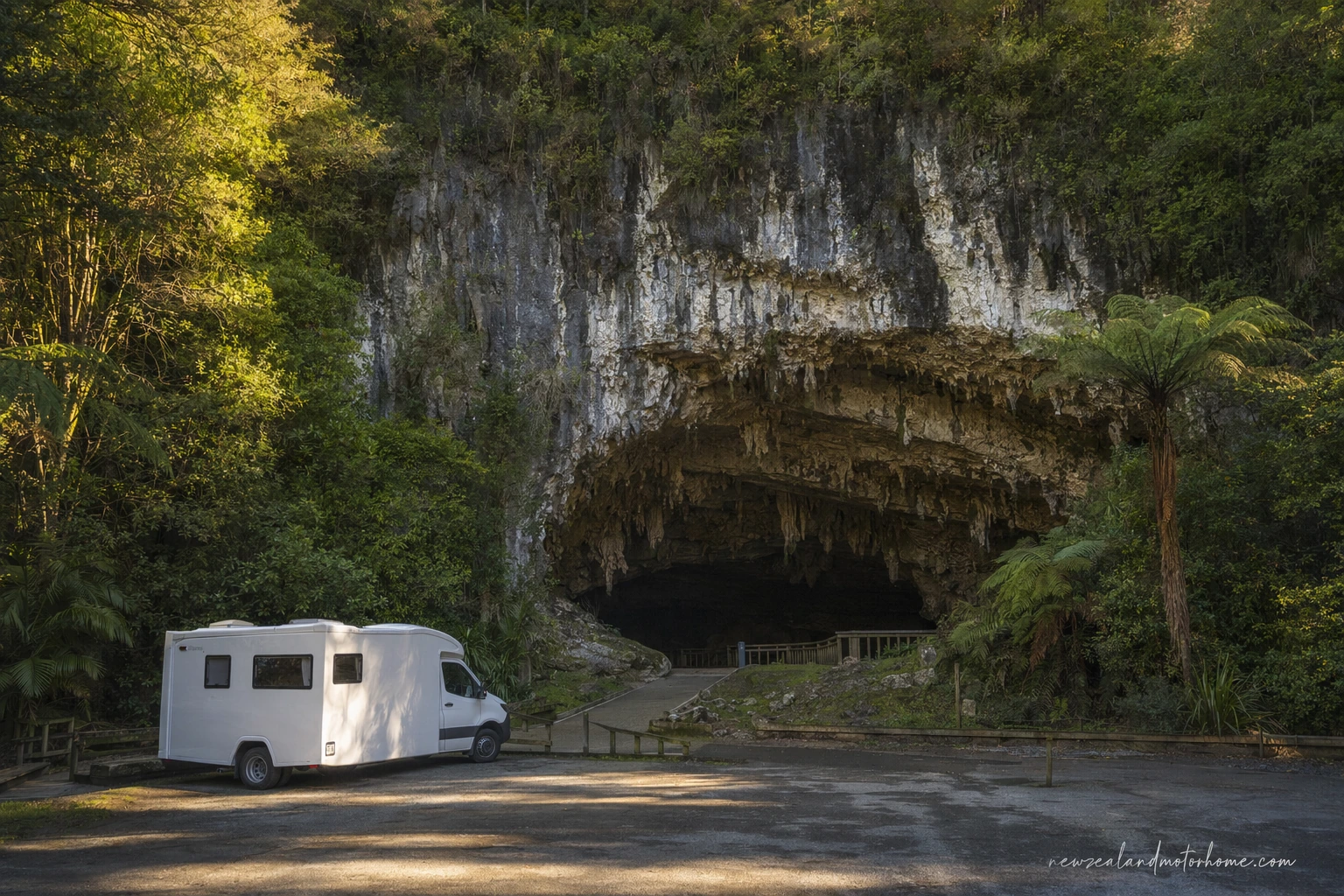
The easiest overnight is a holiday park or campground in or close to Waitomo Village. This keeps the day simple: park once, do the cave tour, walk or drive a short distance back to your site, and avoid a tired evening drive on rural roads. When comparing campsites near Waitomo Glowworm Caves, check whether they offer powered sites, level hardstand or grass sites, showers, laundry, potable water and a dump point.
A powered site is handy here if you’ve had a damp day, want to recharge devices, or are running a fridge and lights heavily. Unpowered sites can work well for certified self-contained vans in good weather, but make sure your house battery, fresh water and toilet capacity are realistic before you commit.
Freedom camping rules vary by district and can change, so do not assume you can stop just because there is a quiet lay-by. Your campervan should be certified self-contained if you are relying on freedom camping anywhere in New Zealand, and you still need to check local signage before settling in for the night.
Dump stations, water, LPG and stocking the van
Waitomo Village is small, so treat it as an attraction stop rather than your main resupply base. For groceries, fuel, LPG bottle swaps or refills, and more reliable dump station options, plan around the larger service towns on either side, particularly Ōtorohanga and Te Kūiti. Check current dump station access before you rely on one, as opening conditions and fees can change.
If you are staying at a holiday park, ask on arrival about fresh-water fill points, grey-water disposal and cassette toilet emptying. Some facilities are for guests only, and it is better to know before you unroll hoses or block a narrow service lane with a 7-metre motorhome.
- Before arriving: top up diesel or petrol if you are running low; rural detours use more fuel than they look on a map.
- Before overnighting: empty grey water and toilet cassette at a legal dump station if your tanks are close to full.
- Before scenic side trips: carry drinking water and snacks; facilities thin out quickly once you leave the village.
Nearby stops that suit a campervan day
Waitomo is more than the main glowworm cave, but the best campervan day is usually a short loop rather than trying to chase every signpost. Ruakuri bush walks and limestone scenery are close to the village and can be a good way to stretch your legs after sitting in the van. Parking is more limited at smaller walking tracks than at the main cave complex, so arrive outside the busiest part of the day if you are driving a larger motorhome.
Further west, the roads towards Mangapohue Natural Bridge and Marokopa Falls are scenic but narrower and more winding. They are manageable for confident drivers in many campervans, but not a route to rush in poor weather, at dusk, or in a large vehicle you are still getting used to. Turn around only where there is proper space; farm gateways are not parking bays.
If you would like this stop placed into a wider North Island motorhome route, with sensible driving distances and legal overnights, you can use our plan-your-trip step and we’ll help shape the day around your van rather than just the map.
Keep planning
Holiday parks waitomo
Read onWaitomo campervan guide
Read onVisiting zealandia wellington by campervan
Read onVisiting weta workshop wellington by campervan
Read onVisiting wai o tapu thermal by campervan
Read onVisiting tongariro alpine crossing by campervan
Read onCommon questions
Can I park a campervan at Waitomo Glowworm Caves?
Yes, campervans can usually use the main visitor parking area, following current signs and staff directions. Outdoor parking means typical van heights are less of an issue than in a covered car park, but longer motorhomes should arrive early and use appropriate larger spaces.
Can I sleep overnight in the Waitomo Glowworm Caves car park?
No, you should not plan to overnight in the attraction car park. Book a nearby holiday park, campground or other legal overnight stop, and check local freedom camping rules if you are travelling in a certified self-contained van.
How long should campervan travellers allow for the caves?
Allow around 2–3 hours for the stop, even if the cave tour itself is shorter. That gives you time to park the van, check in, use facilities, enjoy the tour and leave without reversing a large vehicle in a hurry.
Are the roads to Waitomo suitable for a motorhome?
The main sealed routes via SH3 and SH37 are suitable for campervans and motorhomes. Some nearby scenic roads are narrower and more winding, so drive them in daylight and avoid ambitious detours if you are in a long vehicle or new to NZ rural roads.
Where should I empty grey water or refill fresh water near Waitomo?
Use legal dump stations and potable-water points at holiday parks or in nearby service towns such as Ōtorohanga and Te Kūiti. Confirm access on the day, as some facilities are guest-only or may have changed conditions.
Have a planner shape this for your dates
Send a short outline — your dates, party size, and the kind of trip you want. A planner replies with a vehicle recommendation, a paced route, and the realistic budget.