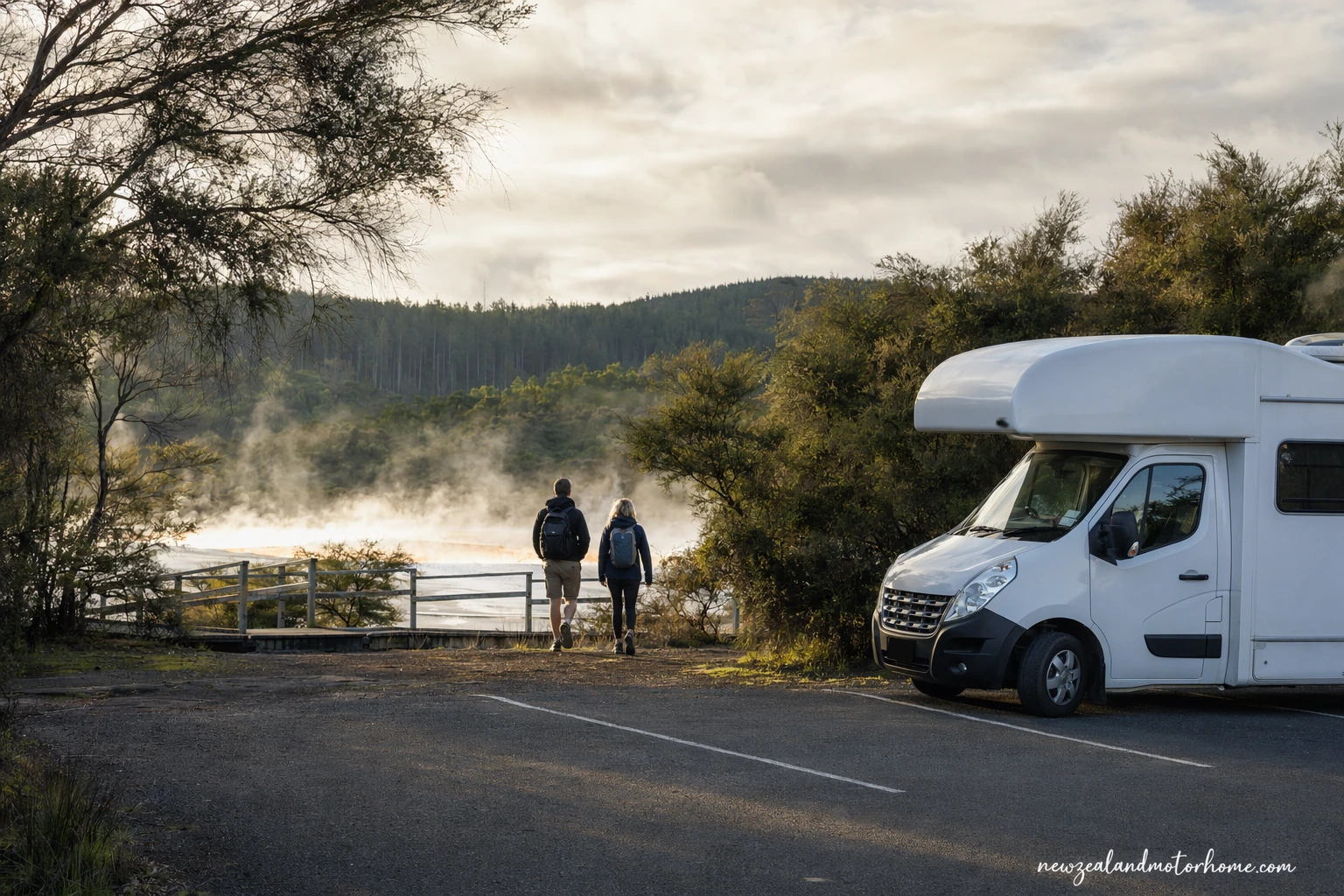
Visiting Wai o Tapu Thermal by campervan: parking, timing and overnight stops
- Best as a half-day stop
- Open-air day parking
- No overnighting in car park
- Use Rotorua or Taupō dump stations
- Suitable for most hired vans
Wai-O-Tapu sits in that steamy, sulphur-scented stretch between Rotorua and Taupō, where the roadside vents remind you this is an active geothermal area. It is an easy self-drive stop in a campervan, but it works best when you arrive with a simple plan for parking, timing, and where you will sleep afterwards.
This guide is written for travellers driving and sleeping in their hired motorhome or campervan. You will find practical notes on how to get to Wai o Tapu Thermal, what to expect with campervan parking, how long to allow on the boardwalks, and sensible campsites near Wai o Tapu Thermal for the night before or after.
Getting there by road in a campervan
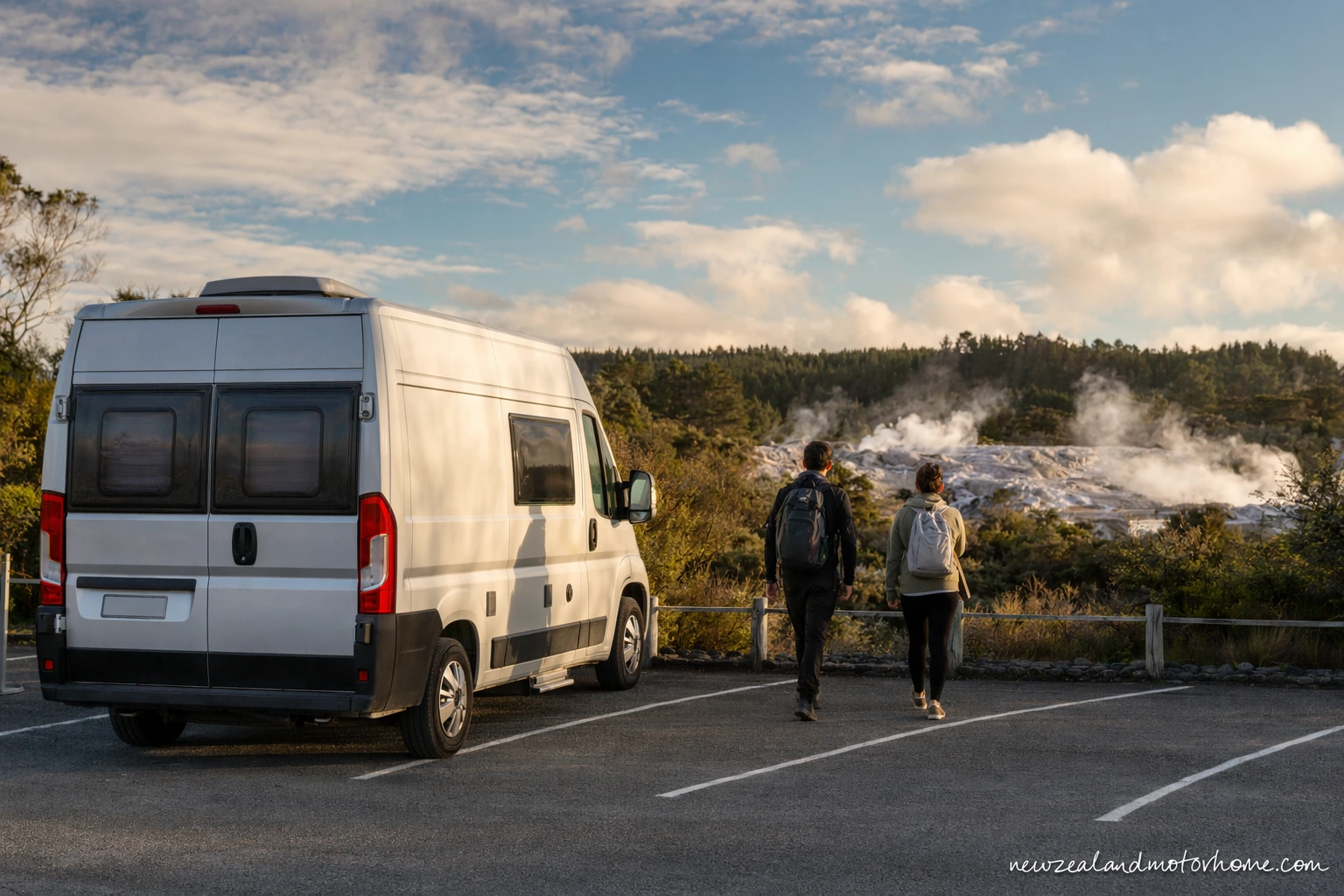
Wai-O-Tapu is just off State Highway 5, the main Rotorua to Taupō road. From Rotorua, you drive south through forest and geothermal country; from Taupō, you head north towards Rotorua and turn off near Waiotapu. The road is sealed all the way to the attraction entrance, so it is straightforward for most hired campervans and motorhomes.
The last approach is on a local access road, so slow down early, indicate clearly, and avoid late braking with traffic behind you. SH5 can be busy with freight, day-trippers, and rental vehicles, and it has sections where faster traffic may sit close behind a fully loaded van.
- From Rotorua: allow for a relaxed drive south, with time added if you are leaving during morning traffic or stopping for fuel.
- From Taupō: the drive is direct on SH5, but keep an eye on speed changes and safe following distances.
- Winter note: fog, heavy rain, and occasional icy mornings can make the highway feel slower, especially in a high-roof van.
- Supplies: fill fresh water, fuel, and LPG in Rotorua or Taupō rather than relying on services right beside the attraction.
Wai o Tapu Thermal campervan parking on arrival
The visitor parking area is open-air, which is helpful if you are travelling in a high-roof campervan. Standard bays can be tight for longer motorhomes, so look for outer spaces or areas where you can park without leaving the rear overhanging a driving lane. If staff are directing traffic, follow their advice; they will know where larger vehicles are best placed on the day.
Do not use coach bays unless you are specifically directed there, and avoid squeezing into spaces where your side door opens into traffic. The car park is for day visits only, not overnight camping, so plan your next stop before you go in.
- Best arrival time: earlier in the day gives you the easiest choice of van-length spaces.
- Height: parking is generally open-air, but always check signs on arrival for any temporary restrictions.
- Long vehicles: park at the edge where you can drive out cleanly rather than reversing through pedestrians.
- Security: close curtains, lock the van, and keep valuables out of sight before walking the tracks.
How long to allow for the thermal walk
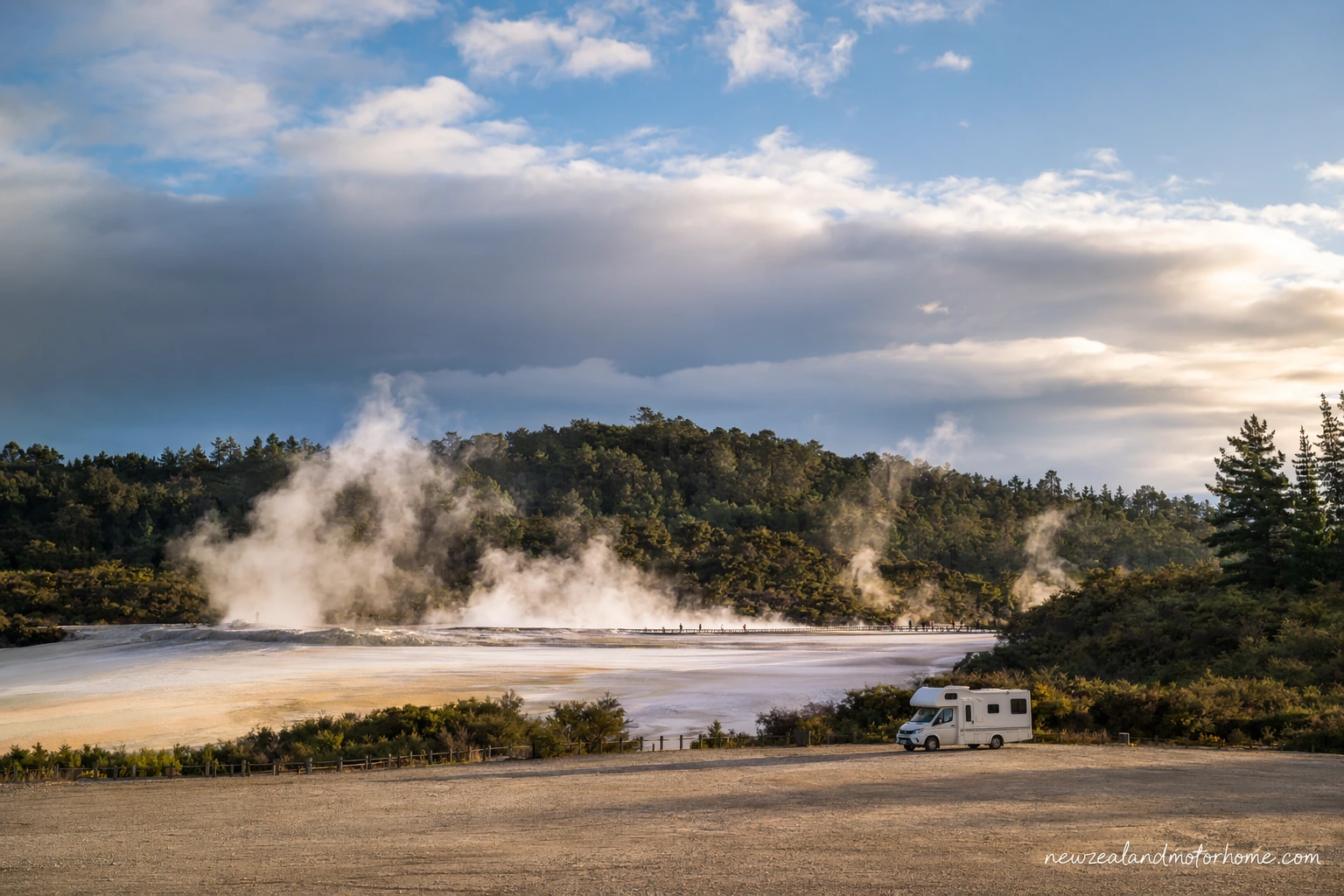
Most campervan travellers should allow half a day for Wai-O-Tapu rather than trying to squeeze it between long drives. The main thermal area is walked on formed tracks and boardwalks, with several loops of different lengths. Champagne Pool, Artist’s Palette, steaming vents, and mineral terraces are the places where you will naturally slow down for photos.
If you want to include the Lady Knox geyser viewing, check the current schedule before you set out, as it is managed separately from simply wandering the main walk. Give yourself time to park the van, use the facilities, walk at an unhurried pace, and have lunch back at the campervan afterwards if you are travelling with your own food.
- Quick stop: allow around 2 hours for parking, entry, and a shorter walk.
- Comfortable visit: allow 3 to 4 hours, especially if you like reading interpretation signs.
- With children: plan extra toilet and snack time; the sulphur smell can be strong in places.
- Van rhythm: avoid booking a distant overnight stop that forces you into a tired late-afternoon drive.
Where to stay before or after: campsites near Wai o Tapu Thermal
There is no overnight camping in the Wai-O-Tapu visitor car park, and the surrounding roads are not a place to improvise a sleep stop. For a smoother trip, choose a legal campsite or holiday park either around Rotorua, towards Taupō, or in the rural geothermal valley area nearby.
Rotorua is the easiest base if you want powered sites, showers, laundry, fresh-water fills, and a dump station within reach. Staying closer to Taupō can make sense if Wai-O-Tapu is your morning stop on the way north or south. Rural campgrounds and thermal-pool-style stops in the wider Waikite Valley and Reporoa area can be handy, but check access, site size, and whether they suit your van length before committing.
- Powered sites: best found at established holiday parks in Rotorua or Taupō.
- Unpowered sites: useful for self-contained vans, but confirm toilet access and arrival times.
- Freedom camping: only use places where overnight stays are explicitly allowed for certified self-contained vehicles.
- Dump stations: plan to empty grey and black water at a holiday park or public dump station in Rotorua or Taupō.
Nearby stops that work well with a van
Wai-O-Tapu pairs naturally with a wider Rotorua or Taupō campervan route. Waimangu Volcanic Valley is nearby and suits travellers who want another geothermal walk, while Waikite Valley is a logical direction if you are looking for a soak and a legal overnight base. Rainbow Mountain has walking options, though you will want to check parking space and weather before leaving the van for a longer tramp.
Be cautious about side trips down rougher gravel roads, especially after rain or in a larger motorhome. Some well-known swimming spots in the area have limited turning space, uneven surfaces, and no facilities, so they are not always a relaxed fit for a long or low-clearance vehicle.
If you are still shaping the wider loop, you can talk to us about fitting Wai-O-Tapu into a Rotorua, Taupō, or central North Island campervan itinerary without backtracking.
- Good before Wai-O-Tapu: Rotorua lakes, redwood walks, or a serviced holiday park night.
- Good after Wai-O-Tapu: Waimangu, Waikite Valley, Taupō, or Huka Falls depending on your direction.
- Van caution: check gravel access and turning space before committing to minor-road detours.
Keep planning
Visiting hanmer springs thermal pools by campervan
Read onVisiting zealandia wellington by campervan
Read onVisiting weta workshop wellington by campervan
Read onVisiting waitomo glowworm caves by campervan
Read onVisiting tongariro alpine crossing by campervan
Read onVisiting te papa wellington by campervan
Read onCommon questions
Can I park a campervan at Wai-O-Tapu?
Yes, day parking is available, and the open-air layout is generally workable for campervans. Longer motorhomes should aim for edge spaces where they can avoid blocking lanes or overhanging foot traffic.
Can I stay overnight in the Wai-O-Tapu car park?
No. Treat the attraction car park as day-use only and book or choose a legal overnight stop nearby. Rotorua, Taupō, and the wider Waikite Valley area have more suitable options for powered and unpowered sites.
What is the easiest way to get to Wai o Tapu Thermal in a motorhome?
The simplest route is via State Highway 5 between Rotorua and Taupō, then the signposted local road to the attraction. It is sealed and suitable for normal hired campervans, but keep your speed steady and allow faster traffic to pass where safe.
Are there dump stations or water fills at Wai-O-Tapu?
Do not rely on the attraction for campervan servicing. Fill fresh water, refuel, and empty waste at your holiday park or a public dump station in Rotorua or Taupō before heading into the geothermal area.
How long should I allow if I am travelling by campervan?
Allow at least 2 hours for a short visit, and 3 to 4 hours for a more relaxed stop with the main walk, photos, toilets, and lunch back at the van. If you are also planning another attraction that day, keep your overnight stop close enough to avoid driving tired.
Have a planner shape this for your dates
Send a short outline — your dates, party size, and the kind of trip you want. A planner replies with a vehicle recommendation, a paced route, and the realistic budget.