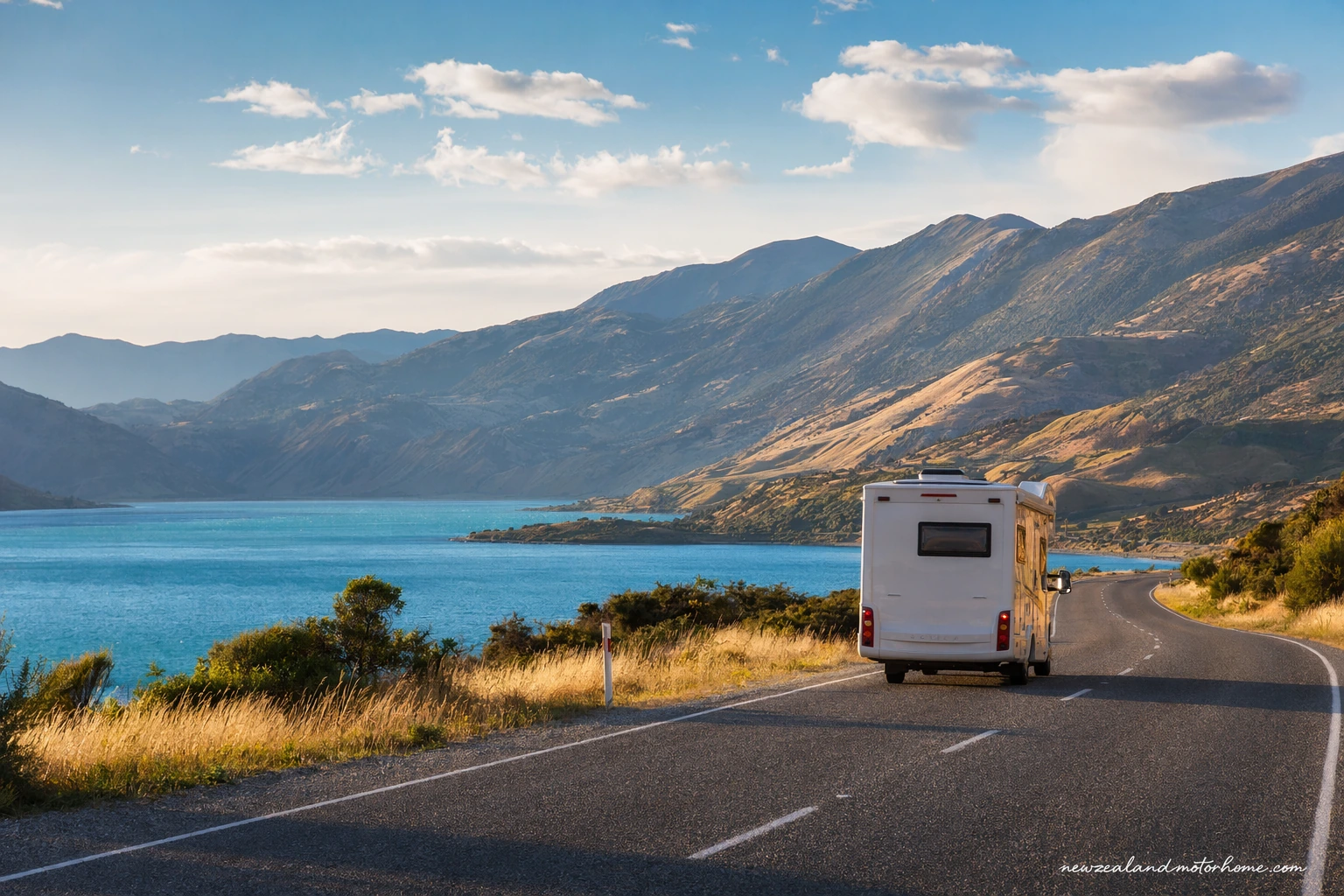
- Best done in 2 days
- Sealed SH1 coastal route
- Kaikōura is the key overnight
- Plan dumps in main towns
- Windy for high-roof vans
The Christchurch to Blenheim campervan route is one of the South Island’s great point-to-point drives: flat Canterbury plains, vineyard country, the Kaikōura coast, seal-haulout pull-ins, then the dry hills and river valleys of Marlborough. It is all sealed on State Highway 1, but it still rewards unhurried van travel — especially around the coastal roadworks, tight town parking, and windy exposed stretches north of Kaikōura.
This guide is written for travellers sleeping in their hired campervan or motorhome, not just ticking off the kilometres. You’ll find sensible legs, where to break the Christchurch to Blenheim drive, what to watch for in a larger vehicle, and how to think about powered sites, unpowered overnights, freedom camping, dump stations, fresh water and LPG along the way.
Route overview: distance, timing and the best pace
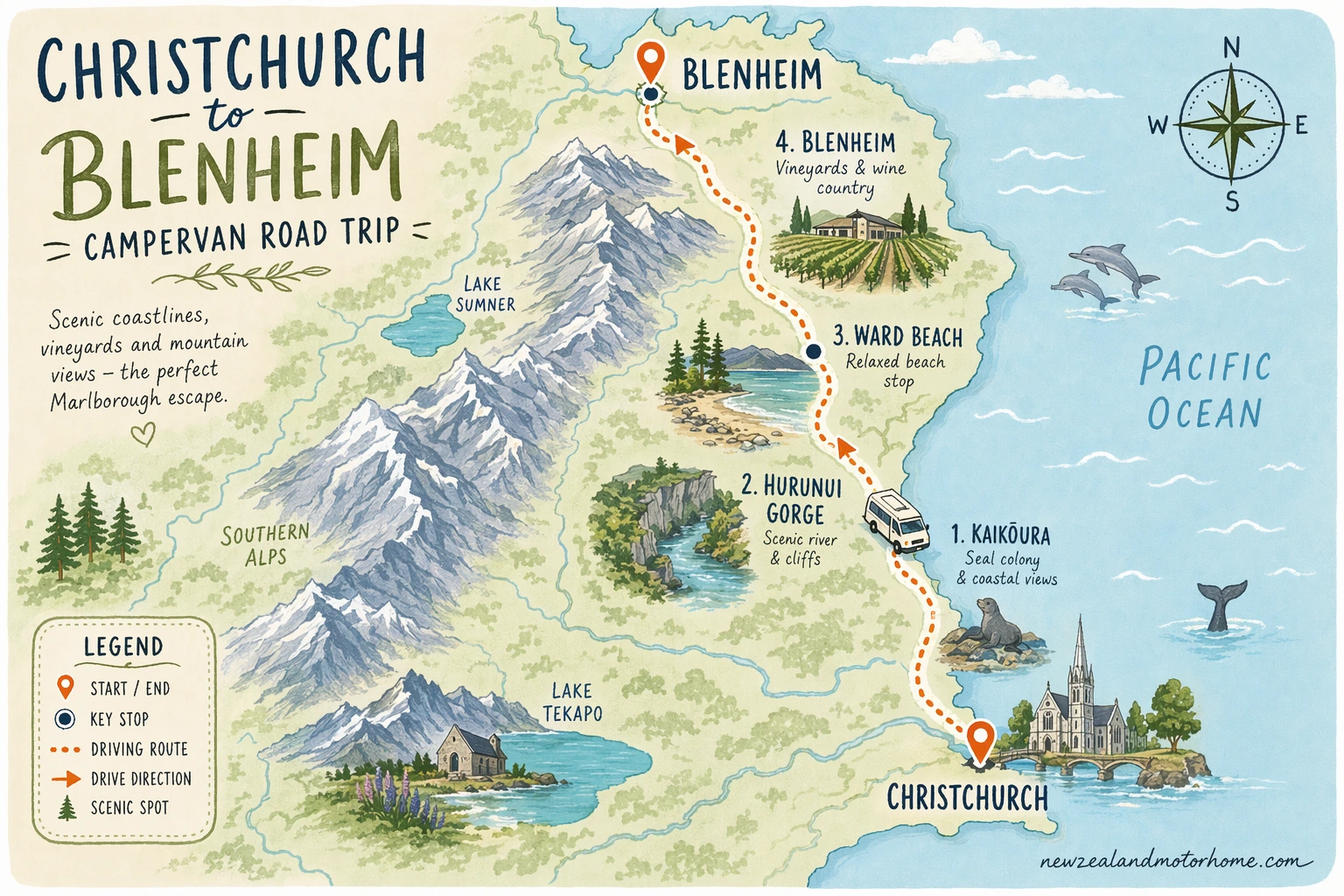
The direct Christchurch to Blenheim drive follows SH1 north through Kaiapoi, Amberley, Cheviot, Kaikōura, Kekerengu, Seddon and into Blenheim. In a car it can look like a straightforward half-day, but in a campervan you’ll want to allow for slower hill sections, photo stops, roadworks, fuel and the odd supermarket run before you settle in for the night.
A comfortable Christchurch to Blenheim motorhome road trip is usually one to three days. One day works if you are simply repositioning the van and have your overnight already sorted in Blenheim. Two days lets you sleep around Kaikōura and enjoy the coast without arriving tired. Three days gives you time for winery-country wandering, a peninsula walk, and a slower morning with the dump station and fresh-water fill.
- Fast but tidy: 1 long driving day, best for confident drivers with daylight to spare.
- Recommended: 2 days, with an overnight near Kaikōura or Cheviot.
- Slow route: 3 days, adding beach walks, wildlife stops and Marlborough cellar-door time with the van parked for the night.
- Road style: Sealed SH1, with coastal curves, rail crossings, occasional tunnels, wind exposure and limited overtaking in places.
Leg 1: Christchurch to Cheviot or Kaikōura
Leave Christchurch with the practical jobs done: full fuel, groceries, fresh water, charged devices and LPG checked if you’re relying on the hob or heater. The northern edge of Christchurch and Kaiapoi are easier places to handle a longer motorhome than the central city, with larger supermarket car parks and service-station forecourts, though you should still park well away from busy entrances and avoid taking up multiple short-stay spaces.
The road through Amberley and Waipara is open and generally easy in a van. Amberley is a useful early stop for a leg-stretch, coffee and a quick check that cupboards, fridge latches and gas bottles are secure before the more rolling country beyond. Waipara’s vineyards are tempting, but if you plan to taste wine, keep the van parked for the night or nominate a sober driver.
Cheviot makes a practical halfway pause if you’re not rushing to Kaikōura. There are basic overnight options in and around the district, often quieter than the coast in peak summer. If you continue to Kaikōura, expect a more scenic but busier arrival, with town parking filling quickly on fine afternoons.
Kaikōura coast: parking the van and choosing an overnight
Kaikōura is the natural overnight on this route, but it is also where campervan planning matters most. Central streets and waterfront parks can be tight, time-limited or busy with tour traffic, so read signs before you leave the van. Larger motorhomes are often easier to manage at roomier signed parking areas near South Bay or the peninsula access points, then you can walk rather than squeeze into the busiest blocks.
For the night, choose the style that fits your van and your battery setup. A powered site is useful if you have been freedom camping already, need to recharge house batteries, run a heater, or do laundry. Unpowered campground sites can suit certified self-contained vans with decent solar and water capacity. Freedom camping is only for vehicles that meet current self-containment rules, and local district signs always override anything you saw online last season.
- Powered sites: Best after a long drive, in cooler months, or when you need showers, laundry and a full reset.
- Unpowered sites: Good for one night if your fresh water, grey-water capacity and batteries are in good shape.
- Freedom camping: Check Kaikōura District restrictions on the day; use only signed/legal areas and keep your self-containment proof handy.
- Dump and water: Kaikōura has dump-station and fresh-water options through public facilities or campgrounds, but confirm access before relying on them late in the day.
Leg 2: Kaikōura to Blenheim via Kekerengu and Seddon
North of Kaikōura, SH1 hugs the coast before turning inland through drier Marlborough country. This is the most memorable part of the Christchurch to Blenheim campervan route, but it asks for steady driving. Keep left, let faster traffic pass where it is safe, and do not pull a long van onto soft shoulders for photos. Use formed pull-offs only, especially around seal-viewing areas and narrow coastal bends.
The coast can be windy, and roadworks are not unusual on this corridor. In a high-roof campervan, give yourself extra following distance around trucks and be ready for short delays. Fuel and food choices thin out between townships, so do not treat every settlement as a guaranteed LPG, diesel or fresh-water stop. If your gas bottle is low, sort it in Christchurch, Kaikōura or Blenheim rather than hoping for a small roadside refill.
Seddon is the last useful pause before Blenheim, with open country, vineyard views and a chance to check cupboards before the final urban stretch. As you reach Blenheim, choose your overnight first, then think about wine tasting or supermarket stops — it is much easier to relax once the van is parked legally for the night.
Blenheim arrival: campgrounds, dumps, water and wine country
Blenheim is set up better for motorhomes than it first appears, but the town centre is not the place to improvise with a large van at the end of the day. Look for holiday parks, council-approved camping areas, or rural-style stays on the edge of town if you want quieter evenings. Powered sites are handy here if you have crossed from Christchurch in one push and need to reset tanks, batteries and laundry before heading to Picton, Nelson or the West Coast.
Dump-station and fresh-water options are available around Blenheim through public facilities and campgrounds, and it is a sensible place to empty grey and black water before continuing. Do not leave it until you are parked among vineyards or heading into smaller Marlborough Sounds roads, where turning space and services can be limited. If you need LPG, Blenheim is a better bet than the smaller settlements south of town.
If you want help matching this route to your ferry time, van size, power needs or preferred overnight style, use the talk-to-us trip planning step and we can help shape the order of stops. The biggest difference with this route is not the distance — it is whether you arrive with enough daylight and enough battery, water and patience left to enjoy Blenheim properly.
Keep planning
Common questions
Can I drive from Christchurch to Blenheim in one day in a campervan?
Yes, you can do it in one day if you start early and keep stops short. In a campervan, it is more comfortable to allow a full day rather than treating it as a quick transfer, especially with coastal roadworks, slower traffic and parking breaks.
Where should I overnight between Christchurch and Blenheim?
Kaikōura is the most popular overnight because it sits well along the route and has campground and service options. Cheviot can be a quieter alternative if you want a shorter first day or prefer to avoid arriving into Kaikōura at peak time.
Is freedom camping allowed on the Christchurch to Blenheim route?
Freedom camping rules vary by district, and only properly certified self-contained vehicles may use many legal freedom camping areas. Always check current council signage at the site, carry proof of self-containment, and use a campground if you need toilets, showers, rubbish disposal or a guaranteed legal overnight.
Are there dump stations and fresh-water fills on the way?
Yes, but do not leave tank management until the last minute. Christchurch, Kaikōura and Blenheim are the most sensible places to plan for dump stations, fresh-water fills and campground facilities, while smaller settlements may have limited or no services.
Is SH1 suitable for a large motorhome?
SH1 is the standard sealed route and is suitable for hired campervans and motorhomes, but larger vehicles need care on the Kaikōura coast. Expect curves, wind, roadworks, narrow shoulders and limited overtaking areas, and only stop in formed pull-offs with enough room to rejoin traffic safely.
Have a planner shape this for your dates
Send a short outline — your dates, party size, and the kind of trip you want. A planner replies with a vehicle recommendation, a paced route, and the realistic budget.