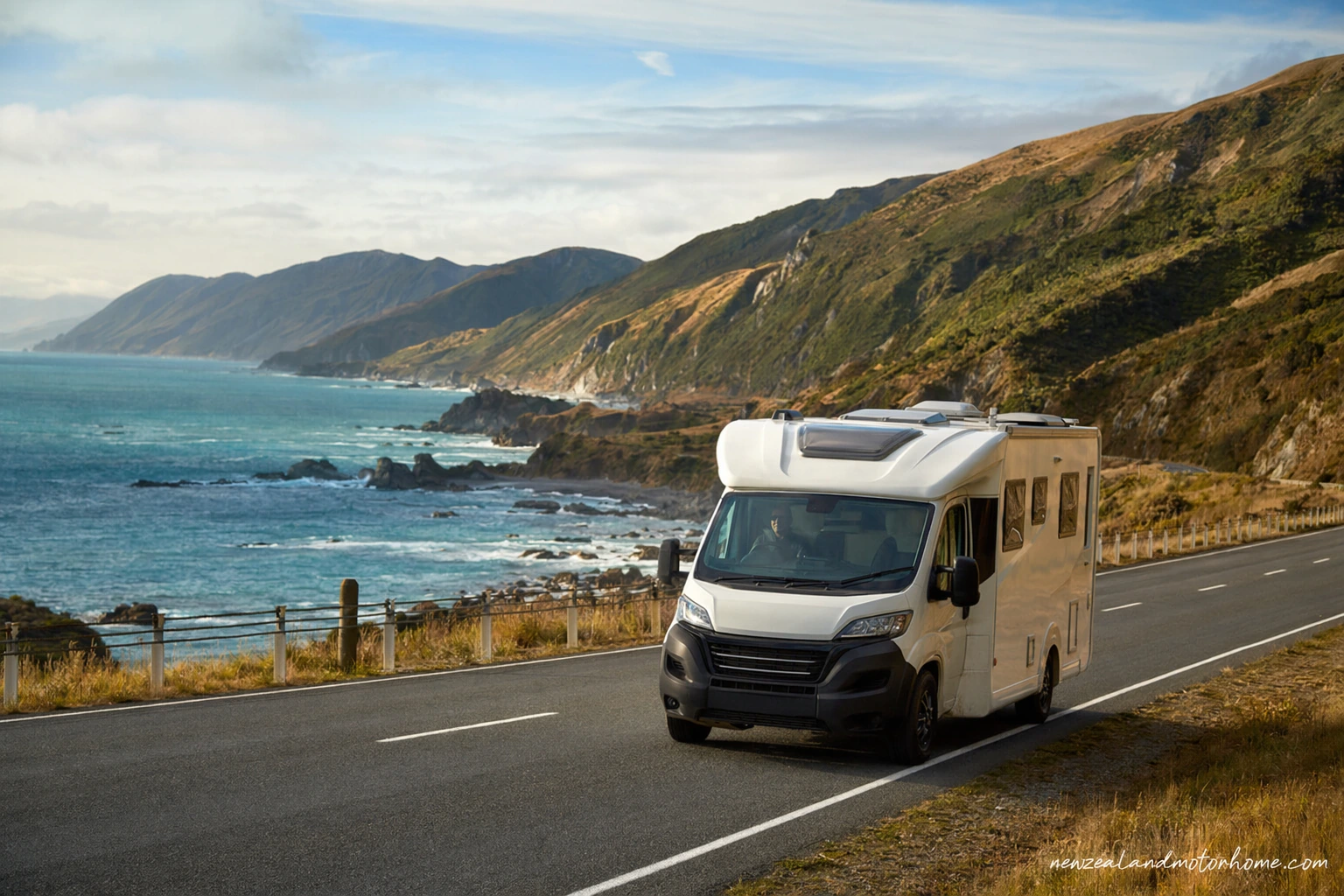
Christchurch to Dunedin campervan route: coast, towns and overnight stops
- Allow 2–3 days
- Approx. 360 km via SH1
- Best overnight: Timaru or Oamaru
- Main road suits most motorhomes
- Check freedom camping bylaws
The Christchurch to Dunedin campervan run is one of those South Island drives that looks simple on the map but rewards a slower pace. State Highway 1 does most of the work, linking the Canterbury Plains, Timaru’s sheltered bay, Oamaru’s limestone streets and the Otago coast before you roll into Dunedin.
You can drive it in a long day, but it is much better as a two or three-night christchurch to dunedin motorhome road trip. This guide is written for travellers sleeping in the van: where to break the drive, what roads feel easy in a larger vehicle, where services are usually found, and how to think about powered sites, unpowered stops and freedom camping rules along the way.
How long to allow for the Christchurch to Dunedin drive
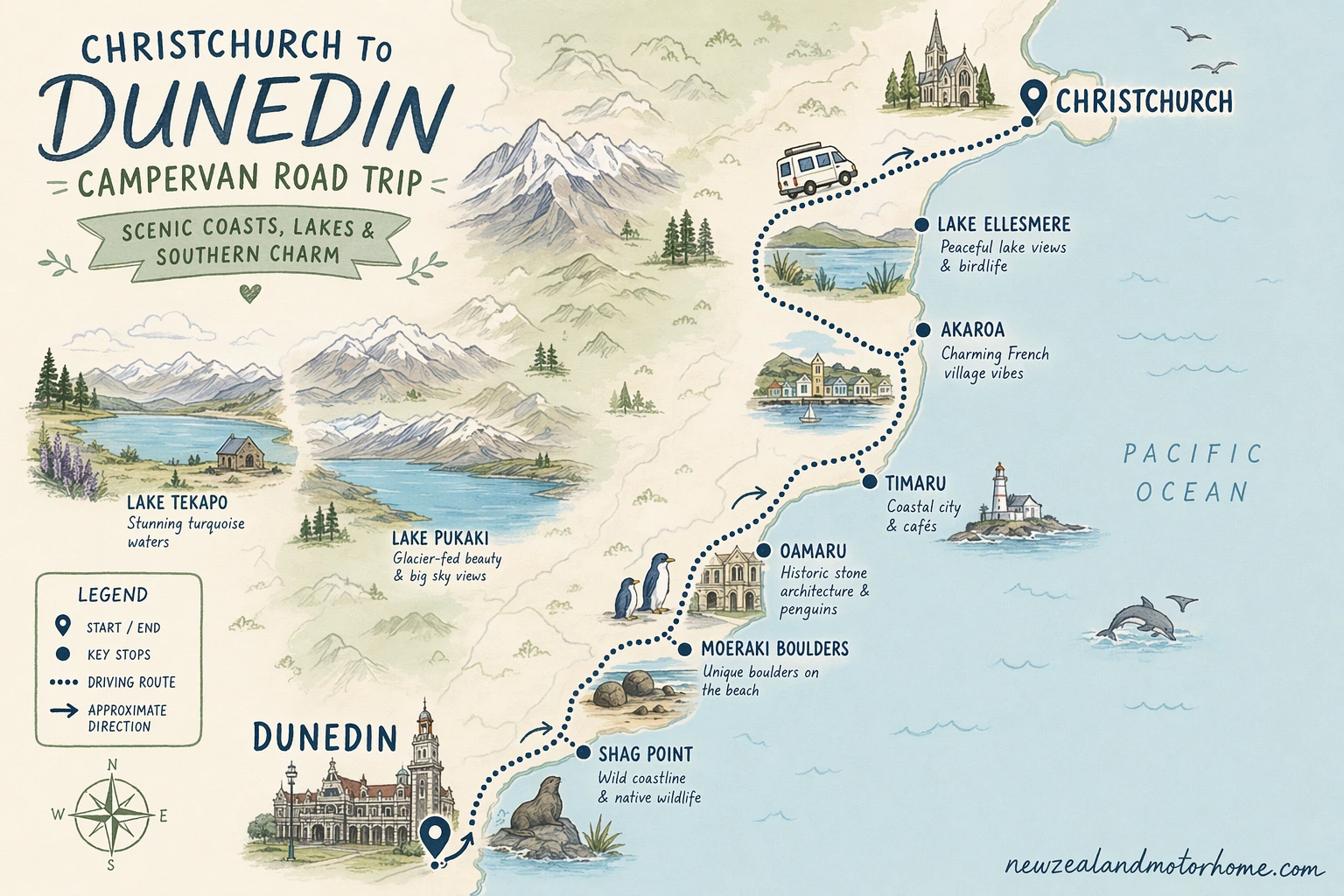
The direct christchurch to dunedin drive is about 360 kilometres via SH1, usually around 4.5 to 5.5 hours of wheel time before stops. In a campervan, allow extra time for fuel, fresh-water fills, slower hill sections near Dunedin, and parking the van when you want to wander a town centre.
For most self-drive travellers, two days is comfortable and three days is more enjoyable. A single-day run is possible if you are relocating a van, but it turns the route into a transport leg rather than a coastal South Island trip.
- 1 day: practical but rushed; leave early and pre-plan your Dunedin overnight site.
- 2 days: overnight around Timaru or Oamaru for an easy split.
- 3 days: add Moeraki, the Waitaki coast, or a slower Oamaru evening.
- 4 days: best if you want short driving days and time in Dunedin before checking into a powered site.
Leg 1: Christchurch to Timaru by campervan
Leaving Christchurch, SH1 is flat and open across the Canterbury Plains. It is an easy road for most hired campervans and motorhomes, but it can feel exposed in strong norwest winds, especially in a high-sided van. Give trucks room, keep your speed steady, and use the longer pull-offs rather than narrow farm entrances if you need a break.
Good first stops include the Rakaia River area for a leg stretch, Ashburton for supermarket supplies, and Geraldine if you choose the slightly inland detour for a quieter town stop. Timaru makes a sensible first overnight because it has fuel, groceries, holiday parks, public toilets and a waterfront that works well for an afternoon wander after driving.
- Van parking: use larger supermarket, beach or domain-style car parks where signed, rather than squeezing into short town-centre bays.
- Overnight style: Timaru has powered and unpowered holiday park options; freedom camping depends on current council rules and self-containment.
- Services: plan to top up groceries and LPG in the larger towns; fresh water and dump points are easiest at holiday parks or designated council facilities.
Leg 2: Timaru to Oamaru, with room for the Waitaki coast
South of Timaru, the route stays straightforward, passing Waimate turn-offs and crossing wide river country before reaching Oamaru. If you are in a longer motorhome, this is a relaxed section: the road is generally broad, sightlines are good, and there are enough towns to break the day without hunting for tiny lay-bys.
Oamaru is one of the best overnight stops on the route because it gives you a proper reason to park up early. The harbour area, Victorian streets and coastal walking are all better enjoyed when the van is settled for the night and you are exploring on foot.
- Where to park: aim for signed larger vehicle parking near the harbour or edge of town, then walk into the compact centre.
- Powered sites: useful here if you have been free camping or running the fridge and heater off-grid.
- Dump and water: check council-listed dump stations or ask your campground before you settle in; do not assume every public toilet area has a dump point.
- Evening note: if visiting wildlife viewing areas, park only where signed and avoid blocking narrow coastal roads after dark.
Leg 3: Oamaru or Moeraki to Dunedin
From Oamaru, many campervan travellers add Moeraki before continuing south. The Moeraki Boulders area is popular and the main parking can fill quickly in summer, so arrive early or late in the day if you are driving a larger van. Keep an eye on tide timing and avoid making tight turns in informal roadside spots.
The final approach to Dunedin changes the feel of the trip. The road becomes hillier and busier, with more merging traffic and suburban driving. Take it slowly on descents, especially in a heavier motorhome, and choose your Dunedin overnight stop before you arrive so you are not searching narrow streets at peak traffic time.
- Best break points: Moeraki, Hampden and Waikouaiti all work as short stops if you do not want one long run into Dunedin.
- Driving note: use lower gears on steeper sections and let faster traffic pass where safe.
- Dunedin parking: choose edge-of-centre or holiday park parking for the van, then use walking, buses or taxis for the steep central streets.
Overnight stops, freedom camping and van services
This route is well suited to a mix of holiday parks and occasional approved freedom camping, but rules change by district and are enforced. If you plan to freedom camp, your vehicle needs to meet current self-containment requirements and you still need to check the local council map for exactly where overnighting is allowed.
Powered sites are worth booking in Christchurch, Oamaru or Dunedin during busy periods, particularly if you need laundry, long showers, battery charging, WiFi or a reliable dump station. Unpowered sites suit a simpler night if your house battery is healthy and you have enough water on board.
- Fresh water: refill before remote coastal detours rather than waiting until the tank is low.
- Waste water: use designated dump stations only; never drain grey water at a roadside stop.
- LPG: top up in larger towns where service stations are more frequent.
- Rubbish: keep a sealed bag in the van and use proper town transfer or campground facilities.
If you want help choosing which nights should be powered, unpowered or freedom camping, send us your dates and van size through our plan-your-trip page and we can shape the route around how you actually travel.
Road notes for larger campervans and motorhomes
SH1 between Christchurch and Dunedin is a main road, so it is suitable for standard rental campervans and most motorhomes. The main things to watch are wind on the Canterbury Plains, fatigue on the straight sections, and the hillier approaches around coastal Otago and Dunedin.
If your van is tall or long, be fussy about where you turn around. Small beach access roads and old town streets can narrow quickly, and some car parks are designed for cars rather than motorhomes. It is usually easier to park once, walk further, and keep your mirrors out of trouble.
- Fuel planning: do not run the tank low; fill in Christchurch, Ashburton, Timaru, Oamaru or Dunedin.
- Height awareness: watch for service station canopies, low trees in older campgrounds and covered parking signs.
- Weather: allow extra time in heavy rain, fog or strong crosswinds.
- Season: summer brings busier campgrounds; winter brings shorter daylight and colder nights, so powered sites can be more comfortable.
Keep planning
Visiting larnach castle dunedin by campervan
Read onHoliday parks dunedin
Read onHoliday parks christchurch
Read onCampervan supplies dunedin
Read onCampervan supplies christchurch
Read onCampervan hire dunedin
Read onCommon questions
Can I drive from Christchurch to Dunedin in one day in a campervan?
Yes, but it is a long day once you add fuel, food stops and slower driving in a loaded van. If your hire schedule allows it, overnighting around Timaru or Oamaru makes the route safer and much more enjoyable.
Is the Christchurch to Dunedin route suitable for a large motorhome?
Yes, the main route via SH1 is suitable for larger motorhomes. The trickier parts are not the highway itself but town parking, coastal detours and turning around in small beach access areas.
Where should I stay overnight between Christchurch and Dunedin?
Timaru and Oamaru are the easiest overnight stops because they have supplies, dump options, fuel and holiday parks. Moeraki or Hampden can work for a quieter coastal night, but always check current camping rules before relying on freedom camping.
Do I need a powered site on this route?
Not every night, but a powered site is useful if you are running heating, charging devices, doing laundry or resetting after freedom camping. Many travellers choose at least one powered night in Oamaru or Dunedin.
Are there dump stations on the Christchurch to Dunedin campervan route?
Yes, dump facilities are available in larger towns and many holiday parks, but locations and access can change. Check council information or confirm with your campground before you need to empty the cassette or grey-water tank.
Is freedom camping allowed along the way?
Only in approved places and usually only for vehicles that meet current self-containment requirements. Each district has its own bylaw, so check the local council map for Christchurch, Timaru, Waitaki and Dunedin before you park for the night.
Have a planner shape this for your dates
Send a short outline — your dates, party size, and the kind of trip you want. A planner replies with a vehicle recommendation, a paced route, and the realistic budget.