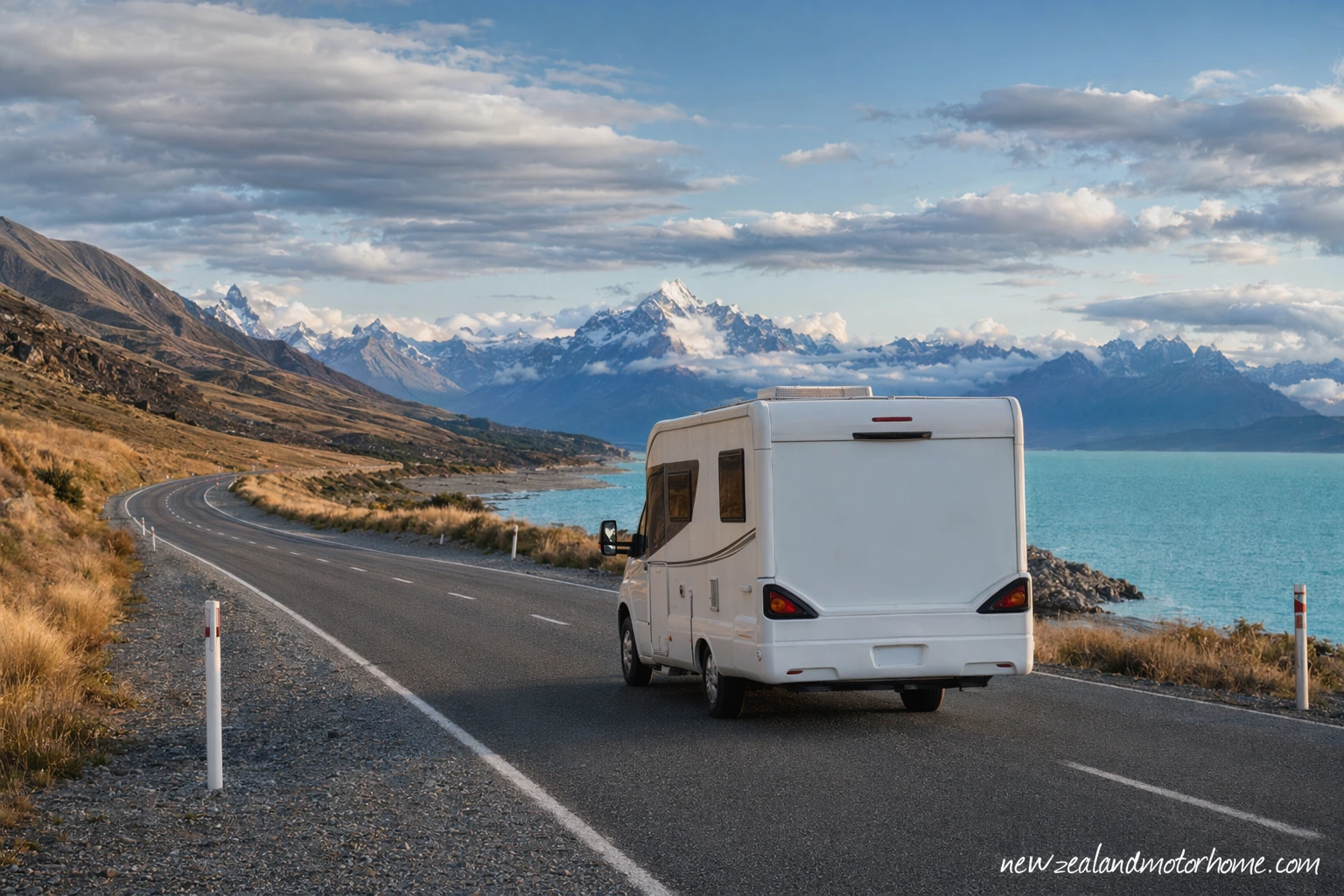
Christchurch to Napier campervan route: coast, ferry and Hawke’s Bay
- Allow 5–7 days for comfort
- Includes Cook Strait ferry
- Best with booked powered sites in summer
- Remutaka Hill needs careful driving
- Certified self-contained van recommended
A Christchurch to Napier campervan trip is not just a long drive north — it is a proper inter-island route, with coastal South Island roads, a Cook Strait ferry crossing, the Remutaka Hill, and a gentle run through Wairarapa into Hawke’s Bay. It suits travellers who want to sleep in their own hired van each night rather than rush between motels or fixed tours.
This guide breaks the christchurch to napier drive into sensible motorhome legs, with notes on where to park the van, when to book powered sites, where dump stations and fresh-water fills are easy to plan around, and which road sections need a slower hand on the wheel.
Best route and how many days to allow
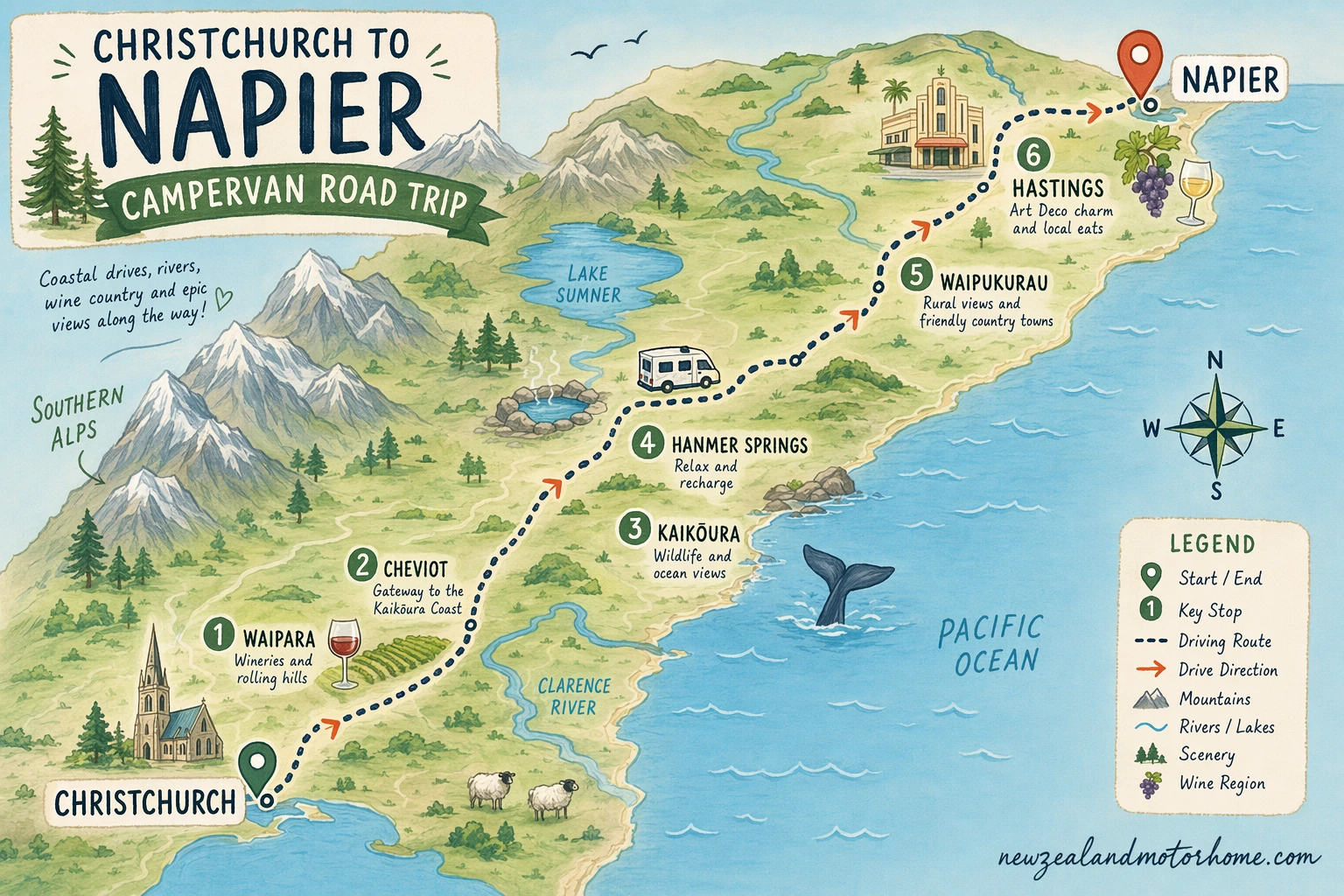
The most direct christchurch to napier motorhome road trip runs Christchurch to Kaikōura, on to Blenheim and Picton, across Cook Strait to Wellington, then north-east through Wairarapa and Central Hawke’s Bay to Napier. Allow roughly 660–700 kilometres of road driving, plus the ferry crossing, depending on where you overnight and whether you detour for vineyards, seals or beach stops.
You can do it in three long travel days, but five to seven days feels much better in a campervan. That gives you time to plug into power every few nights, empty grey water properly, top up fresh water, and avoid arriving at winding hill roads tired or in the dark.
- Fast but workable: Christchurch to Kaikōura, Kaikōura to Wellington via Picton ferry, Wellington to Napier.
- Balanced: Christchurch, Kaikōura, Picton or Blenheim, Wellington/Hutt Valley, Wairarapa, Napier.
- Relaxed: add an extra night around Marlborough Sounds, Martinborough, or Central Hawke’s Bay.
If you want this shaped around your ferry time, van size and preferred mix of powered sites and freedom camping, use the talk-to-us trip planning step and we’ll help line the legs up sensibly.
Leg 1: Christchurch to Kaikōura, then Marlborough
Leaving Christchurch, the usual route follows SH1 north through North Canterbury to the Kaikōura coast. It is a beautiful campervan drive, but it is also a working state highway with trucks, rail crossings, coastal wind and occasional roadworks. In a larger motorhome, take the bends north and south of Kaikōura steadily and use signed slow-vehicle bays when traffic builds behind you.
Kaikōura is a natural first overnight stop. Use proper campervan parking rather than squeezing into small town kerbside parks, especially near the waterfront where spaces can be tight in summer. Holiday parks give you powered sites, showers and dump-station access; certified self-contained vans may have limited council-approved freedom camping options, but always check current signs before settling in.
- Good van tasks: refill fresh water in Christchurch before leaving, then plan a dump station stop at Kaikōura or Blenheim/Picton.
- Parking tip: choose signed long-vehicle or visitor parking for seal colony and coastal stops; do not block narrow pull-offs.
- Overnight style: powered site in Kaikōura if you have been running the fridge, heater or devices hard.
From Kaikōura to Blenheim and Picton, the road stays scenic but can be exposed to wind. Blenheim is useful for supermarkets, LPG bottle swaps or refills where available, and dump stations, while Picton is the easier base if your ferry sails early the next morning.
Cook Strait ferry notes for campervans
The ferry is the hinge point of this route, so book it as soon as your dates are firm. When booking, enter the true length and height of your campervan, including bike racks, roof vents, aerials or storage boxes. Turning up longer or higher than booked can create problems at check-in.
Arrive with time to spare, fuelled, with loose gear secured inside the van. Gas bottles generally need to be turned off for the crossing, and staff will direct you on vehicle-deck procedures. You will leave the campervan during the crossing, so take warm layers, snacks, chargers and anything you need from the living area before the deck is closed.
- Before boarding: empty rubbish, secure cupboards, turn the fridge to a safe travel setting, and shut roof vents.
- Picton side: stay overnight nearby if you have an early sailing rather than driving down from Kaikōura in the dark.
- Wellington side: if you arrive late, pre-book a powered site in Wellington, Lower Hutt or the wider Hutt Valley instead of hunting for a park after dark.
Cook Strait can be calm and sparkling or lumpy and delayed. Build slack into the day after the crossing, particularly if you still need to drive over the Remutaka Hill towards Wairarapa.
Leg 2: Wellington to Wairarapa and Hawke’s Bay
From Wellington, the classic route to Napier follows SH2 through the Hutt Valley, over the Remutaka Hill, then through Featherston, Greytown, Carterton, Masterton, Eketāhuna, Dannevirke and Waipukurau before reaching the Hawke’s Bay plains. It is fully suitable for campervans and motorhomes, but the Remutaka section is steep, winding and best driven in daylight.
Use lower gears on the descent, keep your speed modest, and pull over only where there is a proper bay. In strong wind or heavy rain, consider waiting it out in Wellington or the Hutt Valley rather than taking a high-sided van over the hill. Once in Wairarapa, the driving opens out, with good chances to stop for coffee, groceries and a walk without pushing the day too far.
- Easy overnights: Masterton for a powered-site reset, Dannevirke or Waipukurau for a shorter final run to Napier.
- Dump and water planning: use town dump stations through Wairarapa and Central Hawke’s Bay rather than arriving in Napier with full tanks.
- Road note: watch for stock trucks, rural side roads, and slower town speed limits through the small settlements.
This is the part of the christchurch to napier campervan route where an extra night pays off. Wairarapa has wide streets and practical services, so it is a comfortable place to do laundry, recharge batteries and tidy the van before the warmer Hawke’s Bay finish.
Arriving in Napier and where to base the van
Napier is compact, sunny and busy around the waterfront, so choose your base before you roll into town. Beachfront holiday parks and established campgrounds are the simplest option for powered sites, showers, laundry and dump-station access. They also make it easier to leave the van parked while you walk Marine Parade, Ahuriri and the Art Deco streets.
Day parking a motorhome in central Napier needs a bit of patience. Look for signed longer-vehicle parking and avoid squeezing into angle parks designed for cars. If you are carrying bikes, Napier is a good place to unload them and use the waterfront paths rather than moving the van for every small stop.
- Best base style: powered site for two nights if you want wineries, cycle trails and a town day without driving constantly.
- Freedom camping: only use areas where overnight campervan stays are clearly permitted, and only if your van is certified self-contained.
- Wine country note: park up before tastings or arrange transport; do not use the campervan as your tasting-room shuttle.
Napier also has the practical end-of-route jobs covered: groceries, fuel, LPG options, fresh water and dump stations in the wider area. Sort tanks before heading on to Taupō, Gisborne or back down the island.
Freedom camping, self-containment and seasonal road notes
Freedom camping rules change by district on this route, and they are enforced more tightly in popular coastal and urban areas. A certified self-contained campervan gives you more options, but it does not mean you can overnight anywhere. Always check local signs, council maps and any conditions around maximum nights, vehicle type and distance from waterways.
In summer, book powered sites ahead in Kaikōura, Picton, Wellington and Napier, especially around school holidays and long weekends. In winter, the route is quieter, but shorter daylight and wet, windy conditions make the hill sections more tiring. Keep the diesel tank comfortably topped up and do not leave dump-station stops until the cassette or grey tank is urgent.
- Height and length: know your van’s measurements for ferry booking, parking buildings, tree-lined campgrounds and tight town streets.
- Power: plan a powered night every second or third night if you rely on heating, laptops, medical devices or heavy fridge use.
- Water: refill fresh water at official points only, and empty grey/black water at designated dump stations.
- Wind: take extra care on exposed coastal SH1 sections, Cook Strait travel days and the Remutaka Hill.
Treat this as a linked series of manageable campervan days rather than one big transfer. The road is straightforward when paced well, and the route gives you a satisfying cross-section of coast, ferry, hill country and Hawke’s Bay warmth.
Keep planning
Common questions
How many days should I allow for a Christchurch to Napier campervan trip?
Can I drive a large motorhome from Wellington to Napier via the Remutaka Hill?
Do I need to book the Cook Strait ferry for my campervan?
Is freedom camping easy on this route?
Where should I plan dump station stops?
Have a planner shape this for your dates
Send a short outline — your dates, party size, and the kind of trip you want. A planner replies with a vehicle recommendation, a paced route, and the realistic budget.