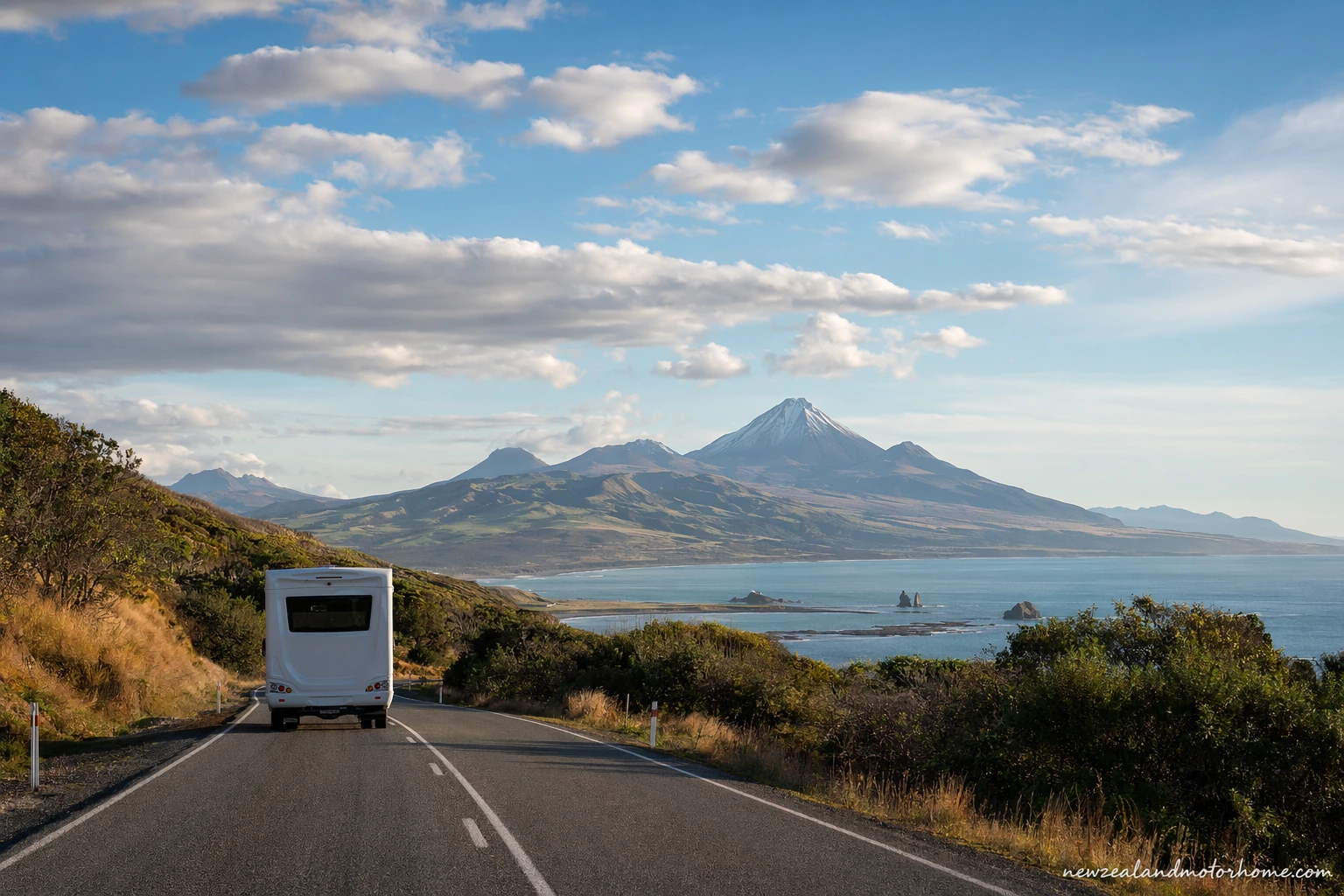
Christchurch to New Plymouth campervan route across the Strait
- Allow 4–6 days
- Cook Strait ferry required
- Best with booked ferry-night sites
- Main highways suit motorhomes
- Freedom camping rules vary
A christchurch to new plymouth campervan trip is a proper two-island run: Canterbury plains, the Kaikōura coast, the Cook Strait ferry, Wellington traffic, river country around Whanganui, then the green shoulder of Taranaki. It is not a hard drive, but it rewards tidy timing, especially around ferry check-in and where you sleep on either side of the Strait.
This guide is written for travellers driving and sleeping in their hired van. You will find a practical day-by-day shape, road notes for larger motorhomes, suggestions for powered and unpowered overnight stops, and reminders for dump stations, LPG and fresh-water fills before you point the bonnet at Mt Taranaki.
How long to allow and the best route shape
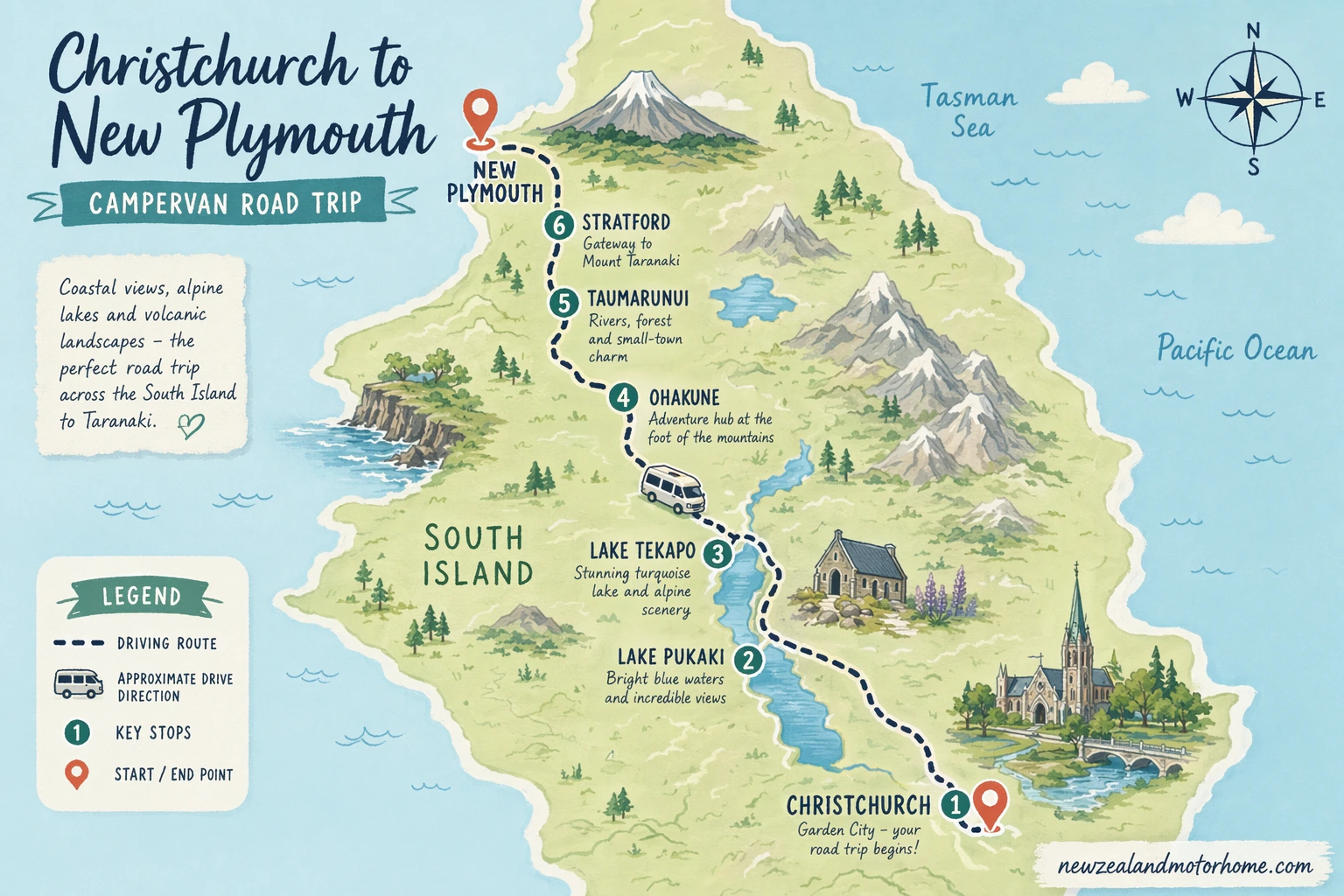
The christchurch to new plymouth drive is roughly 690 to 720 kilometres on the road, plus the Cook Strait ferry between Picton and Wellington. In a campervan, the sweet spot is four to six days: enough time to break the Kaikōura coast, avoid arriving at ferry check-in flustered, and still have a night in Whanganui or South Taranaki before New Plymouth.
The simplest route is SH1 from Christchurch to Kaikōura and Picton, ferry to Wellington, then SH1 and SH3 through Kāpiti, Bulls, Whanganui, Hāwera and into New Plymouth. It is a straightforward christchurch to new plymouth motorhome road trip, but it includes narrow coastal sections, city motorway driving and a ferry crossing where your van length, height and LPG set-up matter.
- Fast but sensible: 3 nights, using Kaikōura or Blenheim, Wellington or Kāpiti, then Whanganui.
- Comfortable: 5 nights, with time for Kaikōura, Picton, Wellington region, Whanganui and New Plymouth.
- Best for first-time van travellers: book powered sites for the ferry nights so you can top up batteries, water and showers.
If your ferry date is fixed but the overnight pattern is not, you can ask us to sense-check the route through the /talk-to-us/ trip-planning step before you lock in campsites.
Christchurch to Kaikōura and Marlborough in a campervan
Leave Christchurch with a full fresh-water tank, groceries packed low, and your toilet cassette empty if you can. The first part across North Canterbury is easy open-road driving, but once SH1 reaches the Kaikōura coast it becomes more scenic and more attention-hungry, with curves, rail crossings, pull-outs and occasional roadworks after weather events.
Kaikōura is a good first overnight if you want a gentle start. Larger motorhomes are better off using signed public parking and holiday park spaces rather than trying to squeeze into small kerbside spots near the cafés. South Bay and the town-side holiday park areas are usually easier for turning, while the waterfront is best treated as a short stop unless signs clearly allow longer parking.
- Overnight options: powered holiday park sites in Kaikōura, unpowered sites where available, or certified self-contained freedom camping only where local signs permit.
- Servicing: look for dump station signs in Kaikōura or continue to Blenheim/Picton if you have capacity; fill potable water only from marked taps.
- Road note: keep your speed modest on the coast, especially in a high-roof van in wind or rain.
For a ferry the next morning, Blenheim or Picton makes a more relaxed base than pushing all the way from Christchurch on sailing day. Picton streets can be tight with ferry traffic, so arrive before dark if you are parking a 7-metre-plus motorhome.
Cook Strait ferry logistics for vans and motorhomes
The ferry is the hinge of this route. When booking, enter the true length and height of your campervan, including bike racks, roof boxes, rear steps and any towbar-mounted gear. Turning up with a longer or higher vehicle than booked can complicate loading, particularly in busy summer sailings.
Before check-in, secure loose items inside the van, close roof vents, and turn LPG bottles off as instructed by the ferry crew. You generally cannot access the vehicle deck during the crossing, so take warm layers, medication, chargers, snacks and anything needed for children upstairs with you.
- Before Picton check-in: fuel up if needed, empty rubbish responsibly, and avoid relying on last-minute town parking for a long motorhome.
- On arrival in Wellington: expect busy urban roads and strong harbour winds; take it slowly until you are clear of the central city.
- Overnight tip: if your ferry arrives late, book a proper powered site in the Wellington, Hutt Valley, Porirua or Kāpiti area rather than hunting for a freedom spot in the dark.
Cook Strait weather can shift quickly. Build slack into the plan, especially if you have New Plymouth accommodation or activities tied to a fixed day.
Wellington to Whanganui: easier miles after the city
From Wellington, use the main signed routes north and give yourself patience through the first hour of traffic. Once you are beyond the city and Kāpiti, the drive settles into a more relaxed rhythm, though crosswinds can still be noticeable in a tall campervan on exposed stretches.
Whanganui is a useful overnight because it breaks the North Island section without making the day too short. Park the van in larger riverside or town-fringe spaces rather than narrow central streets, and walk in if you want the heritage area, riverfront or cafés. Holiday parks around the river and beach edges are usually better suited to motorhomes than squeezing into inner-town kerb parks.
- Good break points: Kāpiti Coast for beaches and groceries, Bulls for a leg stretch, Whanganui for an overnight.
- Powered site value: handy here if you have spent the previous night unpowered or had a long ferry day.
- Servicing: Whanganui is a sensible place to empty the cassette, take on potable water and check gas before heading into Taranaki.
If you are travelling with a longer rear overhang, take care entering small beach car parks along this section. Some have steep lips or soft edges that are more annoying in a motorhome than they look from the road.
Whanganui to New Plymouth via South Taranaki
The final leg follows SH3 through Pātea, Hāwera and Inglewood before dropping into New Plymouth with Mt Taranaki appearing and disappearing as the cloud allows. The road is sealed and commonly used by motorhomes, but it still has enough bends, small towns and passing areas that you should let faster traffic go when safe.
Hāwera is a practical midway stop for groceries, fuel, LPG and a dump station check before you reach New Plymouth. If you are fresh-water low, refill from a marked potable source rather than assuming every public tap is drinkable. In New Plymouth itself, choose your overnight location before you arrive if you are travelling in school holidays or around events.
- Overnight in New Plymouth: powered holiday park sites near the coast are handy for walking and cycling the Coastal Walkway.
- Unpowered option: works well if your batteries are healthy, but check local camping rules and weather exposure.
- Freedom camping: only use permitted areas, follow the posted time limits, and make sure your self-containment certification is current and displayed if required.
Once parked, the best New Plymouth sightseeing is easier without shifting the van constantly. Walk the Coastal Walkway, use local buses or pick one roomy car park for a daytime stop, then return to your campsite rather than hunting for small central parks.
Season, road conditions and van-ready packing
This route works year-round, but each season changes the driving feel. Summer brings the easiest daylight and the busiest campsites. Winter can be calm and beautiful, but you will want warm bedding, a powered-site budget for cold nights, and flexibility around ferry weather.
For larger campervans, the main concern is not mountain driving but wind, turning room and fatigue. The Kaikōura coast, Wellington harbour approaches and exposed Taranaki stretches can all feel different in a high-sided van than in a car. Keep heavier items low, latch cupboards properly, and avoid pulling into soft grass unless a campsite manager or sign clearly says it is suitable.
- Carry: drinking-water hose, power lead, levelling chocks, torch and a spare rubbish bag for windy stops.
- Check daily: grey-water level, toilet cassette capacity, battery charge and LPG before leaving a serviced town.
- Respect local rules: freedom camping bylaws differ between Kaikōura, Marlborough, Wellington region, Whanganui and New Plymouth.
A well-paced plan turns the route from a long transfer into a satisfying coast-to-coast journey. The trick is to service the van before you need to, sleep somewhere legal and easy, and let the ferry set the rhythm rather than fight it.
Keep planning
Holiday parks new plymouth
Read onHoliday parks christchurch
Read onCampervan supplies new plymouth
Read onCampervan supplies christchurch
Read onCampervan hire new plymouth
Read onCampervan hire christchurch airport
Read onCommon questions
Can I drive from Christchurch to New Plymouth in one day in a campervan?
No, not practically. The route requires a Cook Strait ferry crossing as well as about 700 kilometres of road driving, so it is best split over at least three days and much more comfortable over four to six.
Where should I stay the night before the ferry?
Picton is the easiest choice for an early sailing, with Blenheim also workable if you leave enough time. For a campervan, book a proper site or a clearly permitted camping area rather than relying on finding street parking near the terminal.
Do I need a self-contained campervan for this route?
You can travel the route using holiday parks and campgrounds without relying on freedom camping. If you want to use freedom camping areas, your van should meet current self-containment requirements and you must follow each council’s local rules.
Is the road suitable for a large motorhome?
Yes, the main route via SH1, the ferry, and SH3 is suitable for motorhomes, including larger hired vehicles. Drive more slowly on the Kaikōura coast, allow extra space in Wellington traffic, and be mindful of wind on exposed sections.
Where can I empty the toilet cassette on the way?
Plan for dump stations in the larger service towns such as Kaikōura, Blenheim or Picton, the Wellington region, Whanganui, Hāwera and New Plymouth. Always use signed dump stations and check local signage or your camping app before relying on a specific location.
Should I book powered sites in advance?
Book ahead for the nights around the ferry, weekends, school holidays and summer in New Plymouth. Powered sites are especially useful after a long driving day because you can recharge, run heating or cooling as allowed, and reset the van before the next leg.
Have a planner shape this for your dates
Send a short outline — your dates, party size, and the kind of trip you want. A planner replies with a vehicle recommendation, a paced route, and the realistic budget.