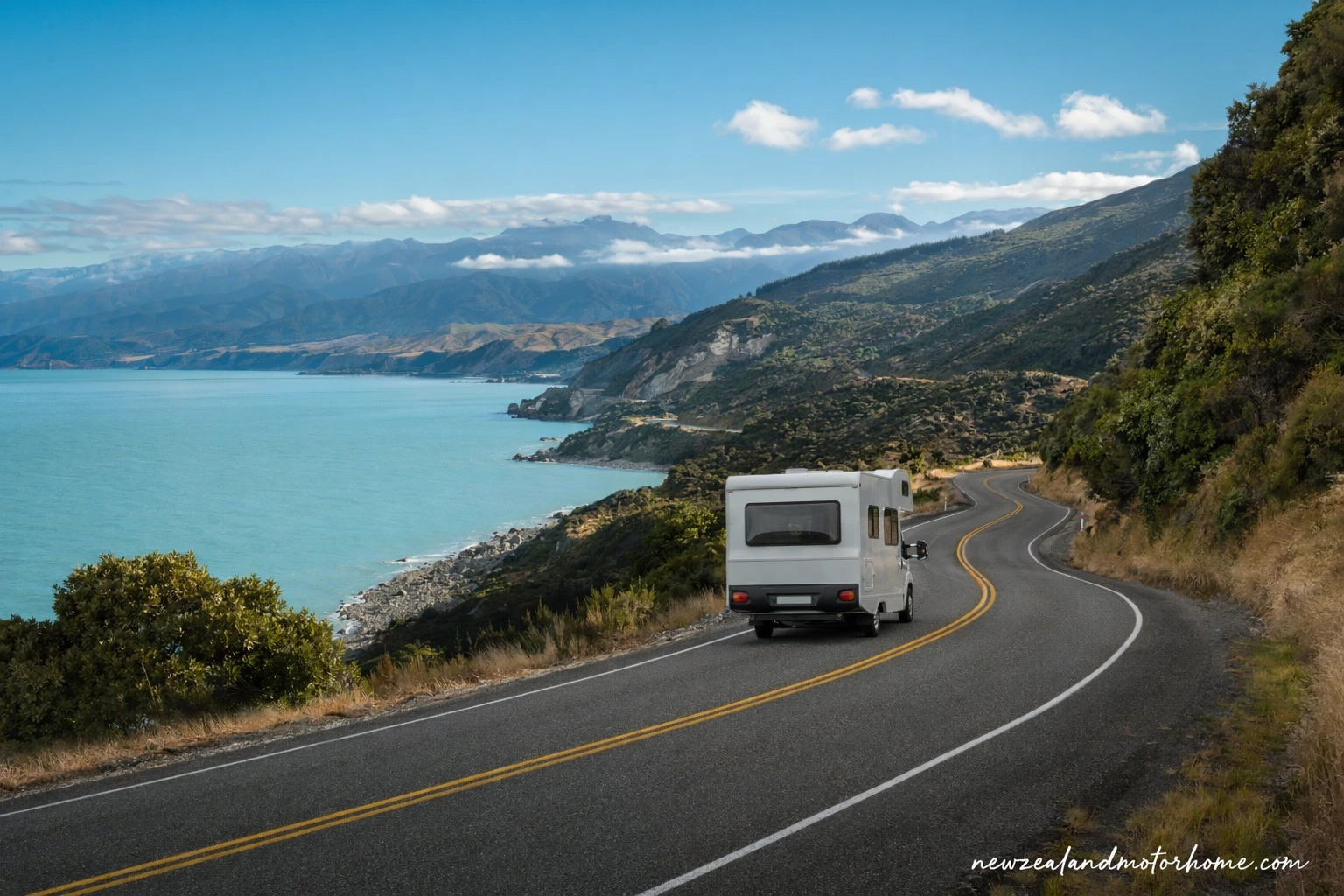
- Allow 3–5 days
- Approx. 670 km via SH1
- Best with certified self-contained van
- Book powered sites in peak season
- Watch Kaikōura coast road conditions
The Dunedin to Blenheim campervan run is a proper South Island east-coast journey: old harbour streets, Waitaki limestone country, big Canterbury skies, the Kaikōura coast, then the dry Marlborough valleys. You can technically do the Dunedin to Blenheim drive in a long day, but in a motorhome that usually means rushing past the best van-friendly stops and arriving tired.
This route is written for self-drive travellers sleeping in their hired campervan or motorhome. You’ll find sensible driving legs, where to aim for powered or unpowered nights, what to watch on the roads, and how to keep on top of fresh water, LPG and dump stations without turning the trip into a logistics exercise.
Best timing and how many days to allow
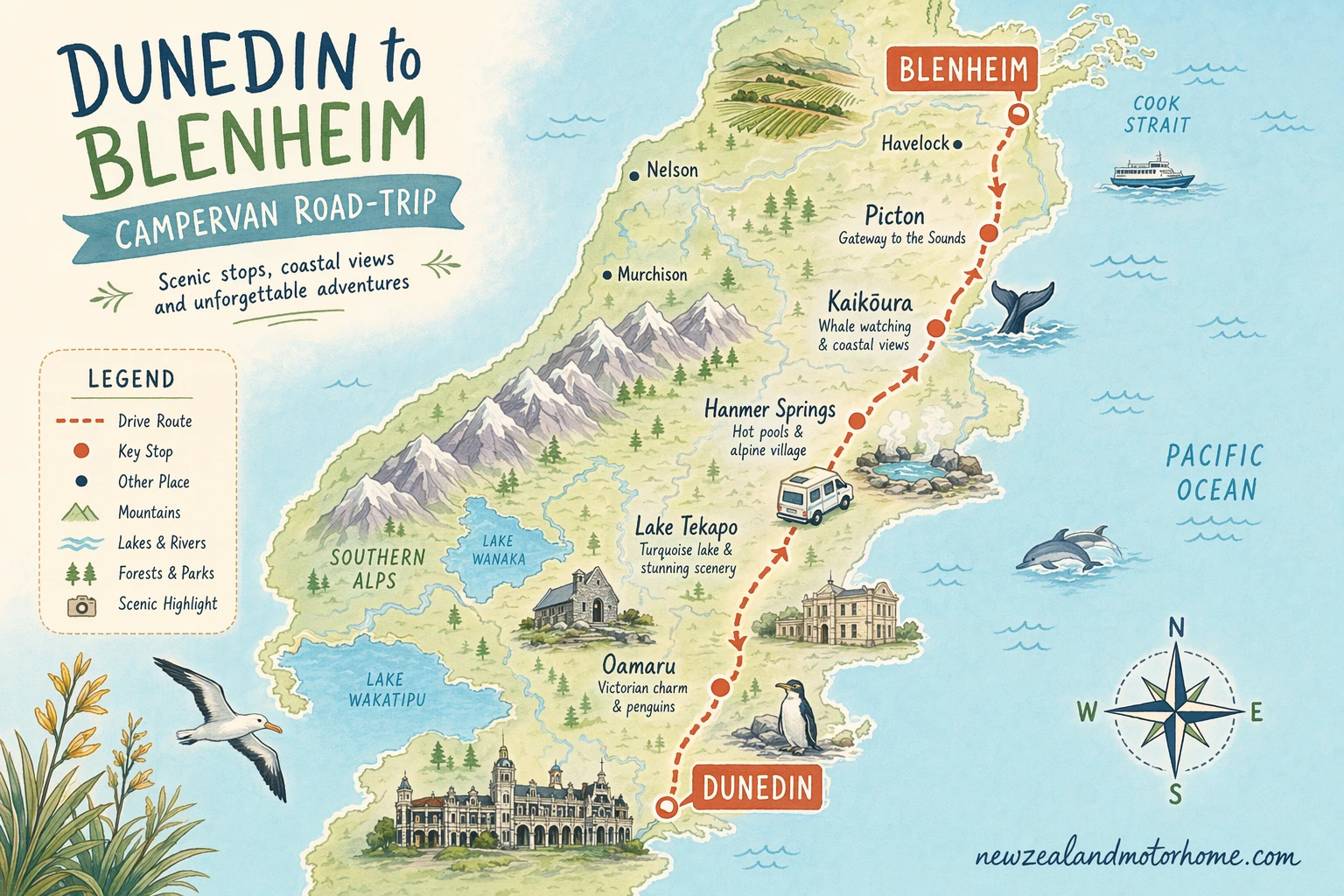
The direct Dunedin to Blenheim motorhome road trip follows State Highway 1 for most of the way and is roughly 670 kilometres, depending on your overnight stops. In a car it can look simple on a map; in a campervan, the hills north of Dunedin, Christchurch traffic, coastal roadworks and the winding Hundalees all slow the pace.
Three days is the comfortable minimum if you want time to empty the cassette, fill fresh water and stop without squeezing the van into awkward town parks at peak hour. Four or five days gives you room for Moeraki, Oamaru, Timaru or Geraldine, Kaikōura, and a gentler arrival into Blenheim.
- Fast but still sensible: Dunedin to Oamaru, Oamaru to Christchurch or Amberley, then on to Blenheim.
- More relaxed: Dunedin to Moeraki/Oamaru, then Timaru/Geraldine, then Kaikōura, then Blenheim.
- Winter note: the route is usually lower-altitude than inland crossings, but frost, rain and short daylight still matter in a heavier van.
Leg 1: Dunedin to Moeraki or Oamaru
Leave Dunedin with the fuel tank, fresh water and gas sorted if you can, especially if you are new to the van and still learning how quickly your heater, fridge and hot water use LPG. The first part north of the city climbs and winds over the hills; keep left, use slow-vehicle bays, and let local traffic pass rather than pushing a high-sided motorhome through the bends.
Moeraki is a classic first pause, but do not expect endless large-vehicle parking right beside the beach. Use marked parking, avoid blocking turning space, and check tide timing if you are walking down to the boulders. Oamaru is an easier first overnight for many vans, with holiday park options, town services, supermarkets and places to refill before the longer Canterbury run.
- Overnight style: powered sites are useful here if you have had a cold Otago start and want to top up batteries; unpowered sites suit vans with good solar in settled weather.
- Freedom camping: Waitaki District rules are location-specific, so only use designated areas and only if your vehicle is currently certified self-contained.
- Servicing: look for official dump station signs in Oamaru or use your campground facilities; never empty grey water at beach or reserve drains.
Leg 2: Oamaru to Timaru, Temuka or Geraldine
North of Oamaru the road opens out through the Waitaki and South Canterbury. It is good motorhome country, with fewer tight corners than the Dunedin hills, but crosswinds can push a tall van around the more exposed stretches. Take your time on bridge approaches and leave extra stopping distance behind stock trucks and farm traffic.
Timaru works well if you want an easy services night, with supermarkets, fuel, laundries and holiday parks near the coast or on the town edge. Temuka and Geraldine are quieter alternatives if you want a smaller-town stop before Christchurch. Geraldine is slightly inland from SH1, so it adds a small detour, but it can be a pleasant place to park up if you prefer trees and space over city convenience.
- Parking the van: in Timaru, use signed public parking and avoid squeezing into angle parks if your rear overhang will sit across the footpath.
- Water and waste: top up potable water only from marked taps at campgrounds or official service points; South Canterbury councils and holiday parks provide the most reliable dump options.
- Food stop: this is a good leg for restocking before the busier Christchurch-to-Kaikōura section.
Leg 3: South Canterbury to Christchurch, Amberley or Cheviot
The run into Christchurch is straightforward but not especially scenic once you are on the busier approaches. For larger motorhomes, it is usually easier to plan a route around the city edge rather than diving into tight central streets. If you want a city night, book a powered site ahead in summer and on event weekends; turning up late with a long van can limit your choices.
If you would rather keep moving, Amberley or Cheviot can make practical stops north of Christchurch and set you up for the Kaikōura coast the next morning. This also avoids doing Christchurch traffic and the Hundalee hills in the same tired afternoon.
- Powered night option: useful if you have been freedom camping or running the fridge, heater and device charging for a couple of days.
- LPG and groceries: Christchurch has the widest choice on the route, so refill gas bottles and stock up here if anything is running low.
- Vehicle size: watch low branches and tight supermarket car parks; choose edge parks where you can drive through rather than reverse blindly.
If you want this route shaped around your van length, arrival time and the sort of sites you prefer, you can use our talk-to-us step and we’ll help you sketch a realistic day-by-day plan.
Leg 4: Christchurch or North Canterbury to Kaikōura
This is the most memorable driving leg of the route, and the one where motorhome drivers should be most patient. State Highway 1 climbs and bends through the Hundalees, then drops towards the coast where the road, railway and sea sit close together. After heavy rain or earthquake repair work, delays and temporary speed limits are possible, so check current road conditions before leaving.
Kaikōura is worth an overnight rather than a rushed lunch stop. It gives you time for the peninsula walkway, seal viewing from a safe distance, and a quieter evening once the day traffic has thinned. Use designated parking for longer vehicles and be careful around beach access roads, which can be narrow with limited turning room.
- Overnight style: holiday parks are the easiest choice for powered sites, showers, laundry and dump facilities; unpowered sites are fine if your batteries are healthy.
- Freedom camping: Kaikōura District has strict rules and many coastal areas are prohibited, so use current council maps and signage.
- Road courtesy: pull over where safe if traffic builds behind you on the coastal curves; do not stop on the shoulder for seal photos.
Leg 5: Kaikōura to Blenheim and arriving well
The final stretch to Blenheim is a rewarding finish to the Dunedin to Blenheim campervan route, following more coast before turning into Marlborough’s drier, wider country. It is not a leg to rush: there can be rail crossings, roadworks, wind, and slow vehicles, and the coastal pull-offs vary in size. If a viewpoint is already crowded, keep going rather than trying to wedge a motorhome into a car-sized gap.
Arriving in Blenheim, decide whether you want a serviced holiday park, a quieter unpowered night, or a certified self-contained freedom camping option where permitted. Wine country is a lovely place to slow down, but remember you still need a legal, sober driver if you are moving the van between cellar doors.
- Dump and refill: use official Marlborough dump stations or campground facilities before settling in for winery days.
- Fresh water: fill from potable taps only; do not assume every public tap is drinking water.
- Parking: central Blenheim parking is easiest outside peak shopping times; longer vans are often better on the edge of town or at your overnight site.
- Next route: from Blenheim you can continue to Picton for the ferry or head west towards Nelson, but service the van first so you are not chasing basics on departure morning.
Keep planning
Common questions
Can I drive from Dunedin to Blenheim in one day in a campervan?
You can, but it is a very long day in a motorhome and leaves little margin for roadworks, weather, meals, fuel or waste stops. Most self-drive travellers are happier allowing at least three days.
Where should I stop overnight between Dunedin and Blenheim?
Good campervan overnight areas include Oamaru or Moeraki, Timaru or Geraldine, Christchurch or North Canterbury, and Kaikōura. Choose holiday parks when you need power, showers and dump facilities; use freedom camping only where it is clearly permitted for certified self-contained vehicles.
Is the Dunedin to Blenheim drive suitable for a large motorhome?
Yes, the main route is on sealed state highways, but it includes winding hills north of Dunedin and through the Hundalees, plus narrow-feeling coastal sections near Kaikōura. Drive to the conditions, use slow-vehicle bays, and avoid tight town-centre parking when you can.
Do I need to book powered sites on this route?
In summer, school holidays and long weekends, booking powered sites is a good idea, especially in Oamaru, Christchurch and Kaikōura. Outside peak periods you may have more flexibility, but a booking still helps if you are arriving late in a larger van.
Are there dump stations on the route?
Yes, the main towns on this route have official dump stations or holiday park facilities, including around Oamaru, Timaru, Christchurch, Kaikōura and Blenheim. Check current council or app listings as locations and access conditions can change.
Can I freedom camp all the way from Dunedin to Blenheim?
Not everywhere. Freedom camping rules vary by district and many beaches, reserves and town areas are restricted or prohibited, even for certified self-contained vans. Always follow local signs and use designated sites rather than assuming a quiet car park is legal overnight.
Have a planner shape this for your dates
Send a short outline — your dates, party size, and the kind of trip you want. A planner replies with a vehicle recommendation, a paced route, and the realistic budget.