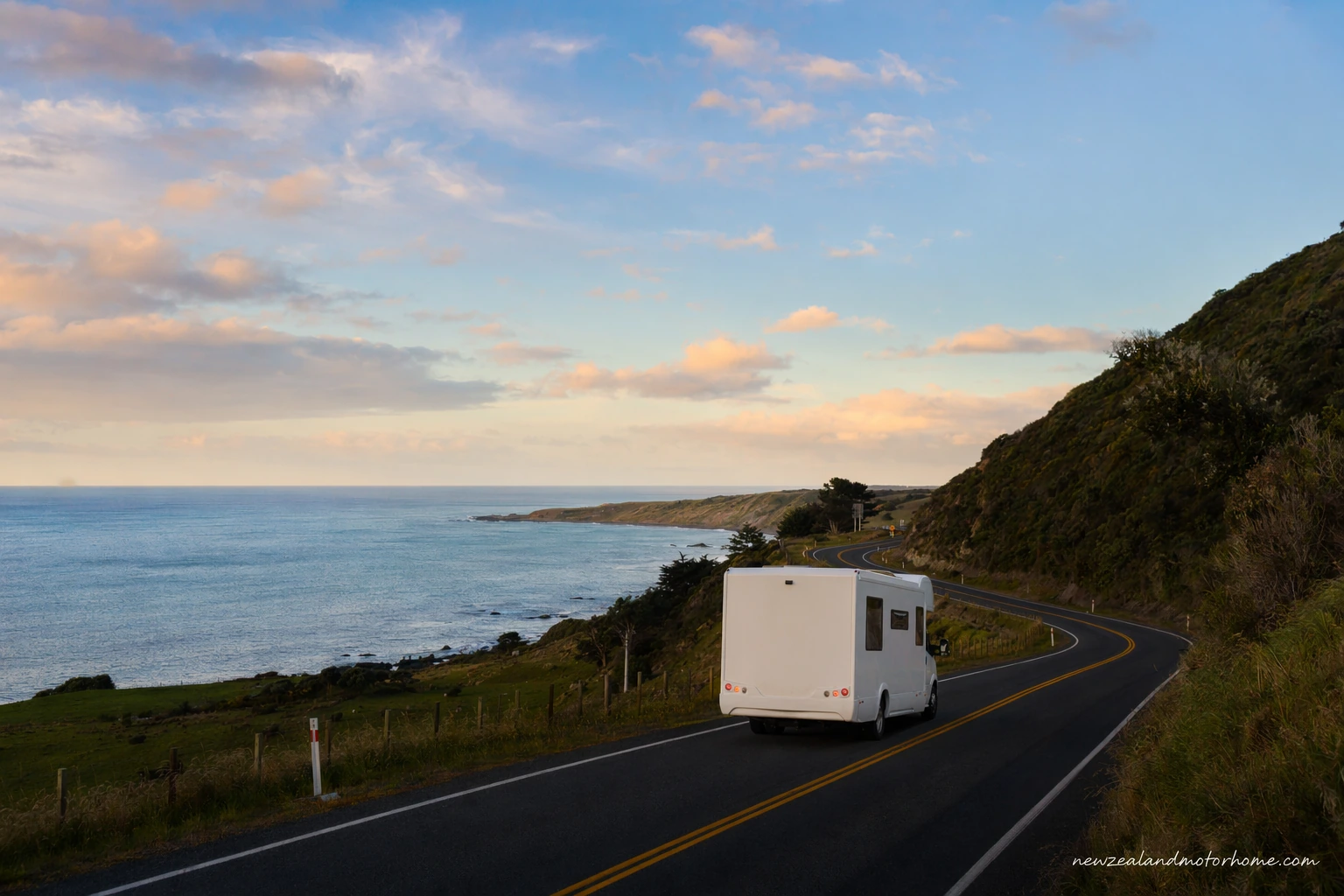
- Best over 2–4 days
- Sealed roads, slow Catlins bends
- Powered sites useful in cooler months
- Self-contained rules for freedom camping
- Stock up in Dunedin, Balclutha or Invercargill
The Dunedin to Invercargill campervan route can be a quick state highway hop, but it is far better as a slow coastal run through the Catlins. This is a drive of surf beaches, podocarp forest, short waterfall walks, lighthouse headlands and small settlements where you need to think ahead about fuel, fresh water and where your van is allowed to stay overnight.
This guide is written for self-drive campervan and motorhome travellers: where to park the van without getting boxed in, which roads suit larger vehicles, how to pace the Dunedin to Invercargill drive, and where to plan powered sites, unpowered campgrounds, dump stations and supply stops.
How many days to allow, and which way to drive
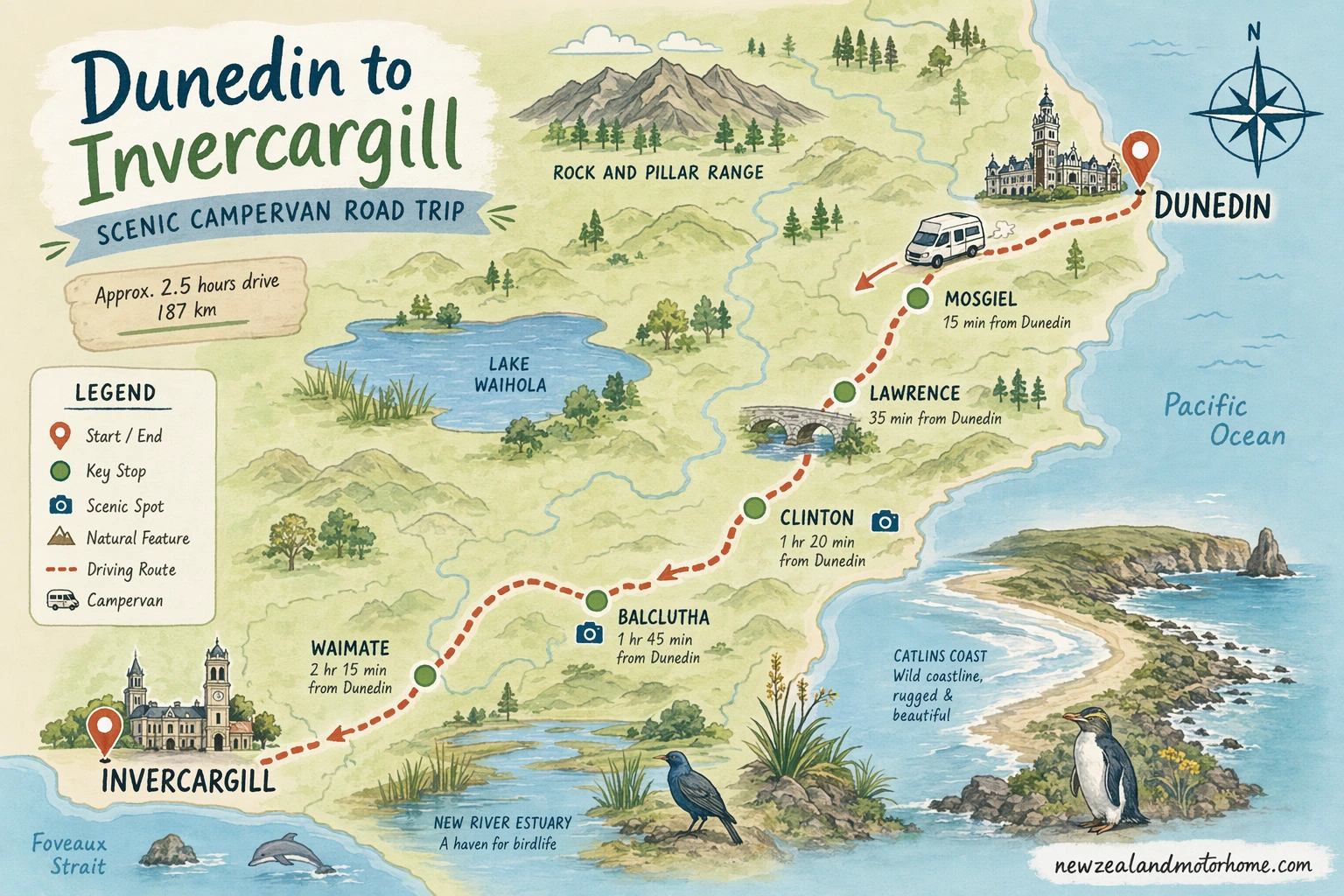
You can drive Dunedin to Invercargill in a day on SH1, but that misses most of what makes this coast worth doing in a campervan. For a relaxed Dunedin to Invercargill motorhome road trip, allow two nights as a minimum and three to four if you want unhurried walks, tide-dependent wildlife viewing and a buffer for Southland weather.
The most rewarding route leaves Dunedin for the coast south of the city, drops through Balclutha and Owaka, then follows the Catlins to Curio Bay, Fortrose and Invercargill. Roads are mostly sealed, but they are often narrow, rolling and exposed, so your average speed in a larger motorhome will be lower than the map suggests.
- Fastest drive: SH1 via Milton, Balclutha and Gore, best if weather is poor or time is tight.
- Best campervan route: Southern Scenic Route through the Catlins, with one to three overnight stops.
- Suggested pace: Dunedin to Owaka or Papatowai, then Curio Bay or Fortrose, then Invercargill.
- Stock up before leaving: fill LPG, fresh water, groceries and fuel in Dunedin or Balclutha.
If you want help matching your van size, season and preferred campsite style to the route, you can talk to us before locking in your stops.
Dunedin to Balclutha: leaving the city in a campervan
Leaving Dunedin, give yourself time for city traffic, steep streets and supermarket parking. If you are in a longer motorhome, choose larger retail car parks on the edge of town for final groceries rather than trying to thread through tight central streets. This is also the sensible place to top up LPG, fuel and fresh water before the smaller Catlins settlements.
The direct run to Balclutha follows SH1 and is generally straightforward for campervans, with passing lanes and service towns along the way. If you detour to Taieri Mouth or coastal viewpoints, expect narrower roads and take care with roadside pull-offs after rain.
- Van-friendly pause: Balclutha is a practical stop for fuel, groceries, public toilets and a leg stretch near the Clutha River.
- Overnight option: choose a serviced holiday park or council-style campground around Dunedin, Balclutha or nearby coastal settlements if you want power before the Catlins.
- Dump stations: check current council listings for Dunedin, Mosgiel and Balclutha before you leave mobile coverage behind.
- Road note: SH1 is easier for large motorhomes than the hillier coastal detours south of Dunedin.
Freedom camping rules change by council area, and Dunedin City and Clutha District have their own bylaws. Only rely on marked, permitted places, and make sure your vehicle meets current self-containment requirements if you plan to stay outside a campground.
Balclutha to Owaka, Nugget Point and the Catlins coast
From Balclutha, the drive bends towards the Catlins and starts to feel properly rural. Owaka is the key little service stop in this section: useful for a meal break, basic supplies, toilets and checking conditions before you commit to beach roads and headlands.
Nugget Point is one of the headline stops, but it needs a little campervan judgement. The road out to the lighthouse area is sealed for much of the way but can feel tight and exposed in places, with limited turning space at busy times. Go early or later in the day if you are driving a long vehicle, and avoid blocking access when you park for the walk.
- Good stops: Kaka Point, Nugget Point, Roaring Bay, Owaka and nearby short forest walks.
- Parking tip: use formed parking areas only; soft verges can swallow heavy vans after rain.
- Overnight style: look for powered or unpowered sites around Kaka Point and Owaka if you want an easy first Catlins night.
- Supplies: do not assume late-opening shops or LPG in small settlements; treat Balclutha as the reliable supply point.
Wildlife areas along this coast are sensitive. Keep your van well back from beach access, obey no-camping signs and use toilets in settlements or campgrounds rather than relying on your onboard cassette for every stop.
Owaka to Papatowai and Curio Bay: waterfalls, forest and exposed roads
This is the slowest and most scenic part of the Dunedin to Invercargill campervan journey. The road passes close to places such as Purakaunui Falls, Matai Falls, Florence Hill Lookout and Papatowai. Most access roads are manageable in a standard campervan, but some car parks are small, sloping or busy with day visitors, so arrive early and keep your overhang in mind.
Curio Bay is a memorable overnight area when the weather behaves, with big sea views, a petrified forest and wildlife viewing nearby. It is also exposed to wind and salt spray, so secure roof vents, awnings and outside gear before leaving the van. If you need power to recharge batteries or run heating, book a powered site rather than counting on freedom camping.
- Best overnight bases: Papatowai, Waikawa or Curio Bay, depending on whether you want forest, quiet harbour edges or a coastal campground feel.
- Site choice: powered sites suit colder nights and wet gear; unpowered sites are fine if your house battery and solar are keeping up.
- Water and waste: fill fresh water before this section and plan your next cassette dump for a listed station in Owaka, Waikawa, Invercargill or Bluff.
- Driving note: watch for loose stock, logging traffic, tight bends and short gravel access roads to some scenic spots.
In winter and shoulder seasons, daylight disappears quickly under the bush canopy. Aim to be parked up well before dark, especially if you are still getting used to the width and rear swing of a hired motorhome.
Curio Bay to Invercargill and Bluff: finishing the route well
From Curio Bay, the road runs through Waikawa, Fortrose and the open farmland approach to Invercargill. It is a beautiful final leg, but it can be windy, and crosswinds matter in a high-sided campervan. Keep speeds modest, leave space for locals and pull over only where the shoulder is firm and wide enough.
Invercargill is the practical reset point at the end of the route. Use it for a full grocery shop, laundry, LPG, fuel, fresh water and a dump station visit before continuing to Bluff, the Southern Scenic Route, Fiordland or back north. Larger motorhomes are usually easier to manage in Invercargill’s wider streets than in the tighter Catlins car parks.
- Final stops: Fortrose estuary, Invercargill, Queens Park, Oreti Beach access areas and Bluff if conditions suit.
- Overnight choice: Invercargill has the best range of powered sites and services after several low-service Catlins days.
- Bluff note: check wind and weather before driving out, and use signed parking rather than squeezing into small roadside viewpoints.
- Before the next leg: empty grey water and toilet cassette, refill fresh water, check tyre pressure visually and secure all cupboards.
If you have time, stay one night in or near Invercargill instead of rolling straight onward. It gives you a calm reset after the coast and avoids arriving late at your next campground with full waste tanks and low batteries.
Keep planning
Visiting larnach castle dunedin by campervan
Read onHoliday parks invercargill
Read onHoliday parks dunedin
Read onCampervan supplies invercargill
Read onCampervan supplies dunedin
Read onCampervan hire invercargill
Read onCommon questions
How long is the Dunedin to Invercargill drive in a campervan?
Is the Catlins route suitable for a large motorhome?
Can I freedom camp between Dunedin and Invercargill?
Where should I empty waste and refill fresh water?
Do I need powered campsites on this route?
What is the best season for a Dunedin to Invercargill campervan trip?
Have a planner shape this for your dates
Send a short outline — your dates, party size, and the kind of trip you want. A planner replies with a vehicle recommendation, a paced route, and the realistic budget.